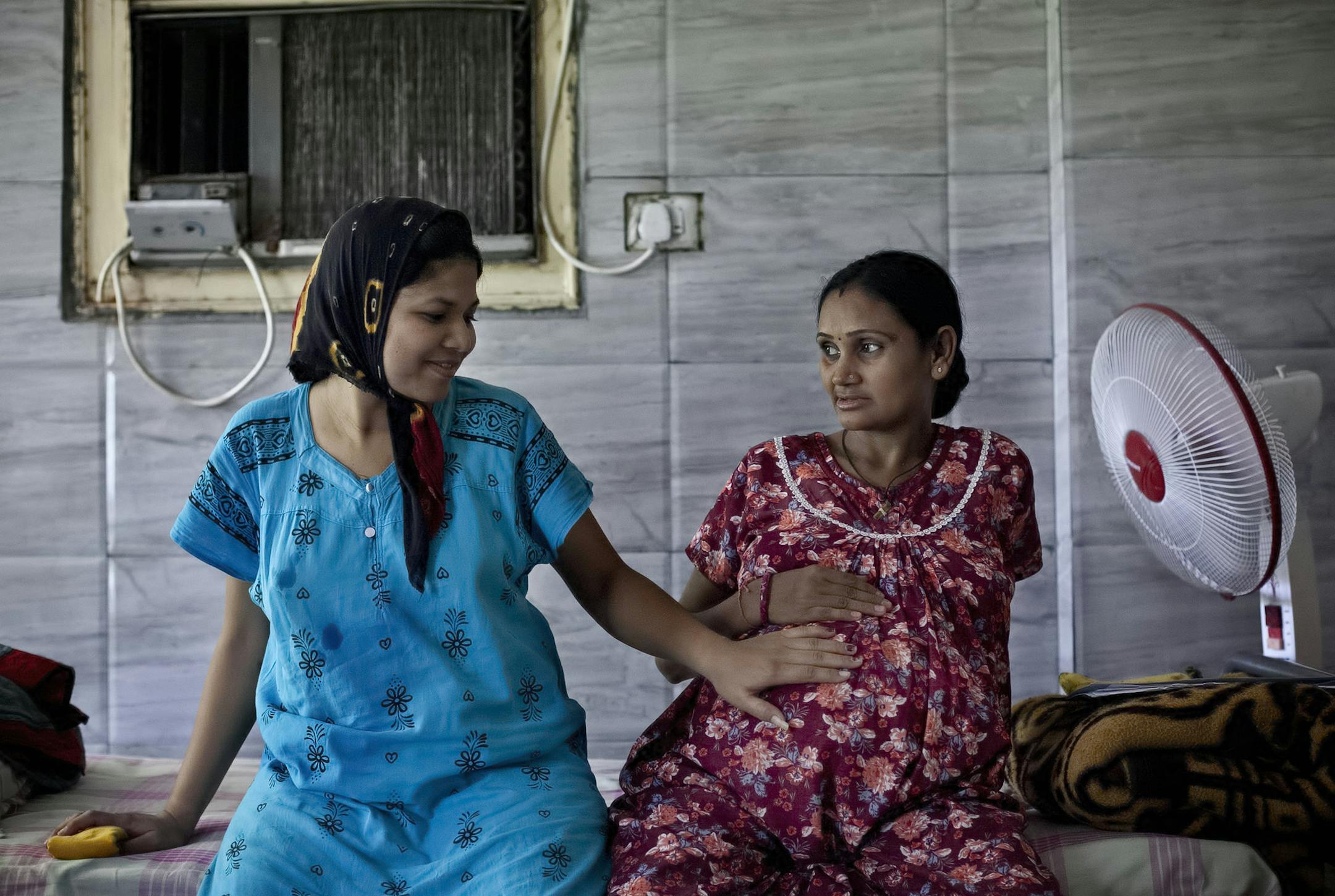
For thousands of childless couples the world over, India has been the go-to destination to fulfill their dreams of becoming parents, thanks to its well-trained doctors, well-appointed fertility clinics and vast numbers of poor women willing to serve as surrogate mothers.
Not anymore.
The Indian government recently banned surrogate services for foreigners and ordered fertility clinics to stop the practice of hiring Indian women to bear children for them. It's said to be intended to protect the women from exploitation, though some who have worked as surrogates say the ban actually hurts them.
"Becoming a surrogate mother is our one chance to build a house, or get a new roof. We earn more from one surrogacy than from 10 years of working as domestic help," said Tina Rajesh Chavan, speaking by telephone from Anand, a major hub of fertility clinics, in the western Indian state of Gujarat.
India was among the few countries in the world that allowed surrogacy — where a woman could be hired to carry the child of a couple through a process of in-vitro fertilization and embryo transfer.
India's home ministry has ordered Indian embassies abroad not to grant visas to couples visiting the country for surrogacy, or "reproductive tourism," as the practice has come to be known.
Though laws governing surrogacy have yet to be passed, the government outlined its position in an affidavit placed before the Supreme Court on Oct. 28. It said India "does not support commercial surrogacy and the scope of surrogacy is limited to Indian married infertile couples only, and not to foreigners."
A government official, who spoke on condition of anonymity, said the tightening of rules concerning surrogacy was to protect poor women from being exploited in the absence of legal safeguards.