

Medtronic has more than $10 billion in cash and cash investments on its balance sheet, yet it has to borrow money for its stock buyback program. Why? Because 94 percent of the company's cash and cash investments are overseas.
Donaldson Co., with more than 80 percent of its operating income generated outside the U.S., has virtually all of its $318 million in cash and short-term investments deposited offshore, a situation that clearly complicates the calculus of its own stock buyback and dividend policies.
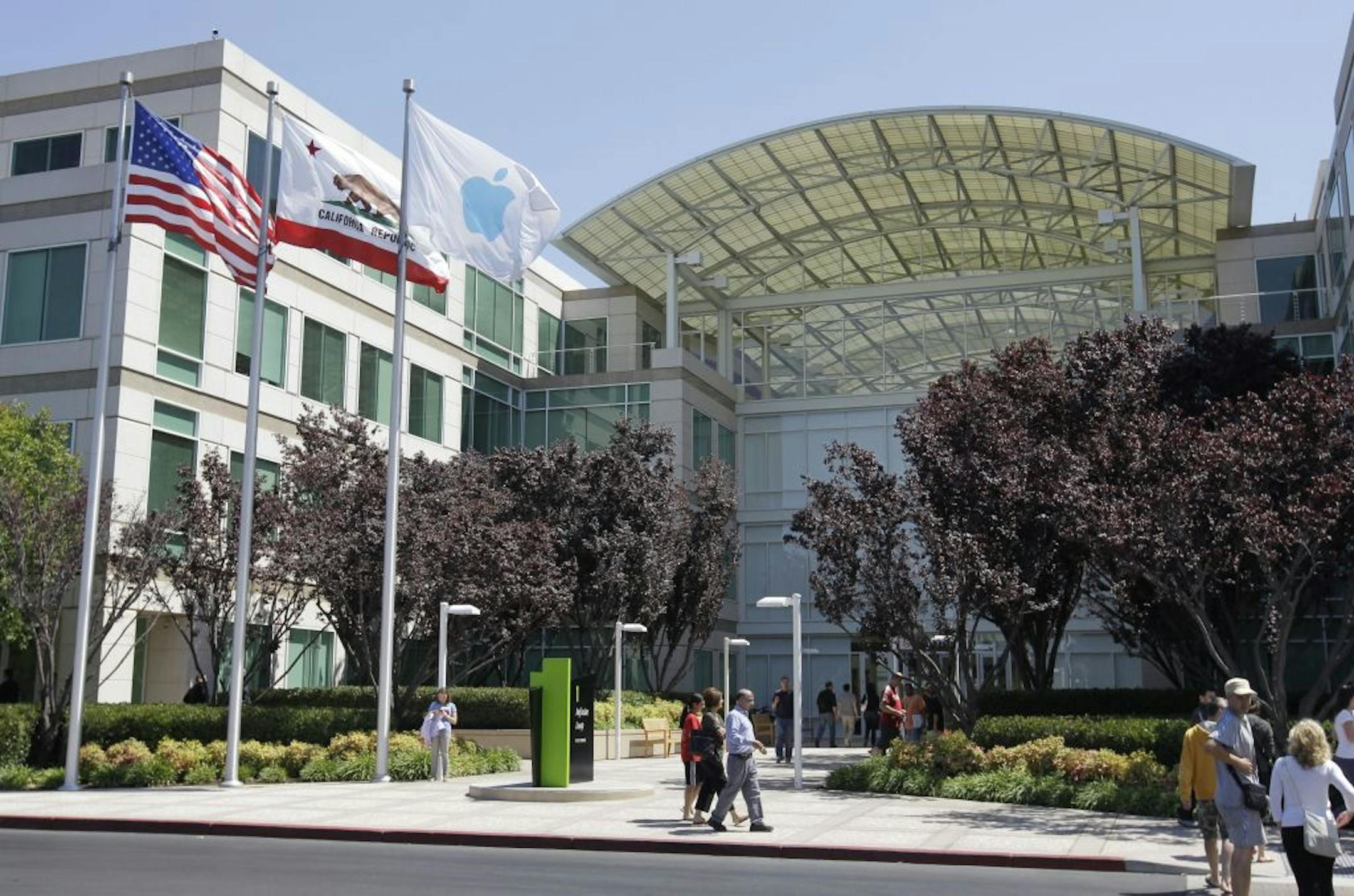
Cash might be king, but as far as U.S. corporations are concerned, cash is all too often an exiled monarch. For example: Apple Inc., with nearly $122 billion in cash and cash equivalents on its balance sheet, reported in a recent filing that $82.6 billion, or 68 percent, of its cash is parked overseas. Microsoft: $67 billion in cash and cash equivalents, more than 80 percent of which is offshore. Cisco: 90 percent of its $48.7 billion -- almost $44 billion -- overseas.
All these companies, international enterprises with extensive operations in Europe, South America and Asia, have a problem. If they bring any of the cash they generate overseas back into the United States, it will be taxed at rates as high as 35 percent, a corporate tax rate that is one of the highest in the world.
As a result, while U.S. corporations hold an estimated $2 trillion in cash on their balance sheets, many are unable to efficiently put their cash to work because it's trapped on foreign soil. Even though they're able to take a tax deduction for the foreign taxes they pay, moving that cash back to the U.S., for whatever reason, is not in the best interest of shareholders simply because it's too expensive to do so.
This means that companies seeking to build market share in the U.S. -- either through acquisition or organic investment -- may turn away from the opportunity because they don't have the cash or can't make such a strategy work with borrowed money.
Locating jobs overseas becomes more attractive as low foreign tax rates more than offset the sometimes-higher costs of offshore operations.
And the economics of buying and expanding overseas becomes more attractive. Just this past September, for example, Medtronic announced it was acquiring Kanghui Holdings in China in an $816 million all-cash deal. Last year, Microsoft used $8 billion of its offshore cash to buy Luxembourg-based Skype, barely putting a dent in the $42 billion of foreign cash the company had overseas at the time.


