1:38
1:38For the St. Pepin grapes at St. Croix Vineyards, it had been a long, languid, blissful summer. Their prime predators, the birds and the bees, had been kept at bay. Their mortal enemy, hail, had not reared its golf-ball-sized head.
By the end of Sept. 21 -- a bright, sunshiney day -- they would be crushed. And pressed. And hosed into a storing tank, en route to fermentation and bottling and consumption, maybe with an apple fritter from the adjacent Aamodt's farm.
Such is the lot in life of Minnesota-grown grapes, which begin their transformation to wine on sun-kissed autumn days such as this one. (Picking in rain is bad for the grapes, which absorb water. "We did that two years ago, and we had to store them before crushing," said operations manager Martin Polognioli. "That didn't work out too well.")
The amber grapes' journey from vine to tank took place on one of the most hectic days of the year at the Stillwater vineyard. The fields, the machine-laden winery and the tasting room were as busy as the bees trying to get one last nibble of the surprisingly sweet grapes.
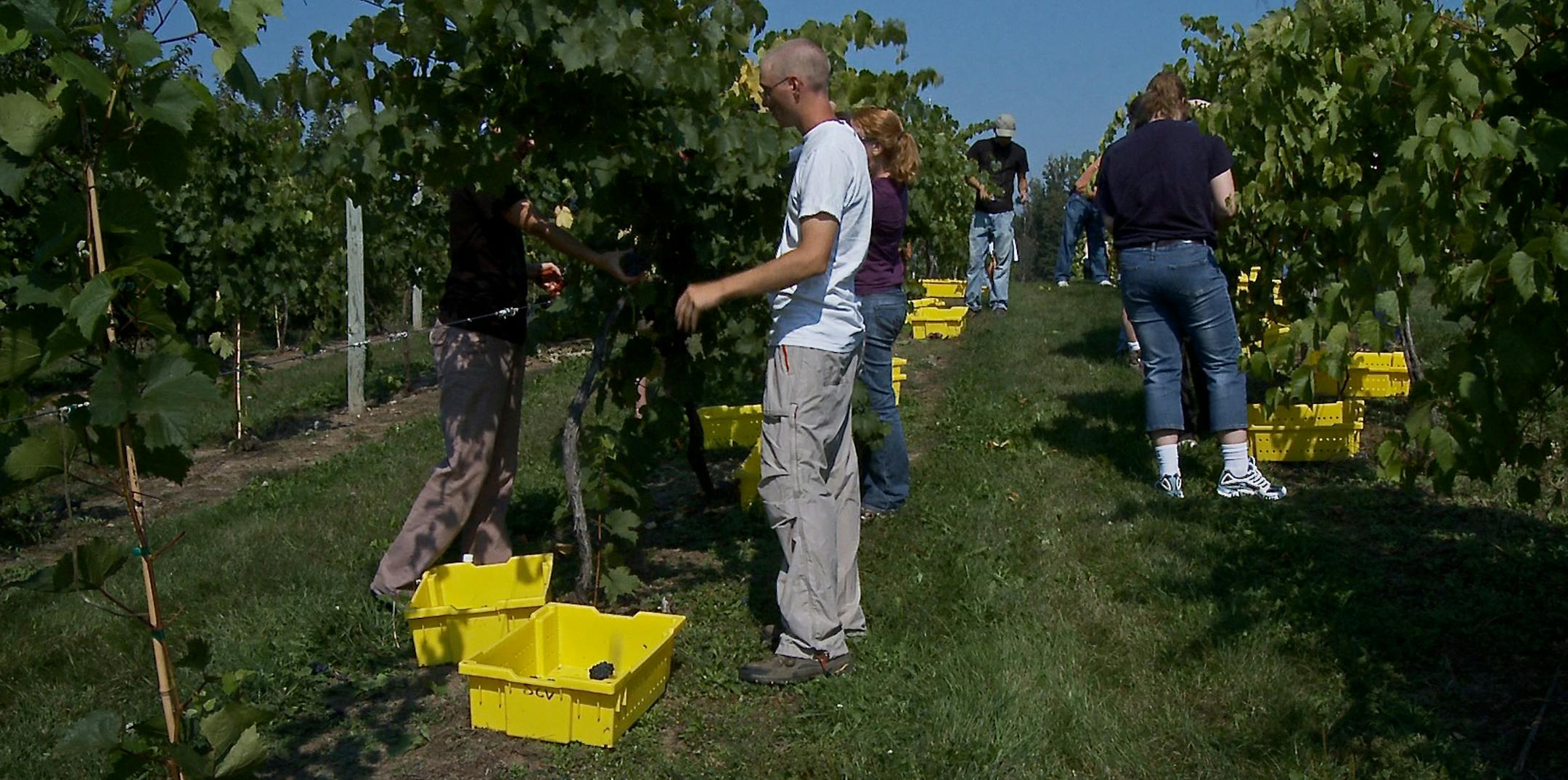
Yellow jackets swarmed around the rejected Maréchal Foch grapes that volunteer picker Katie Smith had discarded. These were more likely to have cracks, which are a magnet for the bee's stingers. Most of the grapes, however, were healthy and destined for crushing.
"Being in Minnesota and being outside in a vineyard, I love the novelty of that," said Smith, 23, an Atlanta-area native. "It's just such perfect weather, I couldn't resist." Her rewards for picking grapes all day: a sandwich lunch from Jimmy John's, a couple of bottles of wine and almost certainly a gleaming suntan.
She was one of about a dozen volunteer pickers, none of whom appeared to be over 30. All of them, though, were older than Noah Hemstad, son of Peter Hemstad, a co-owner of the winery. Noah was working up a serious sweat a few hundred feet away, where a truckload of 8,600 pounds of La Crescent grapes from a Janesville, Minn., farm had arrived.
•••