

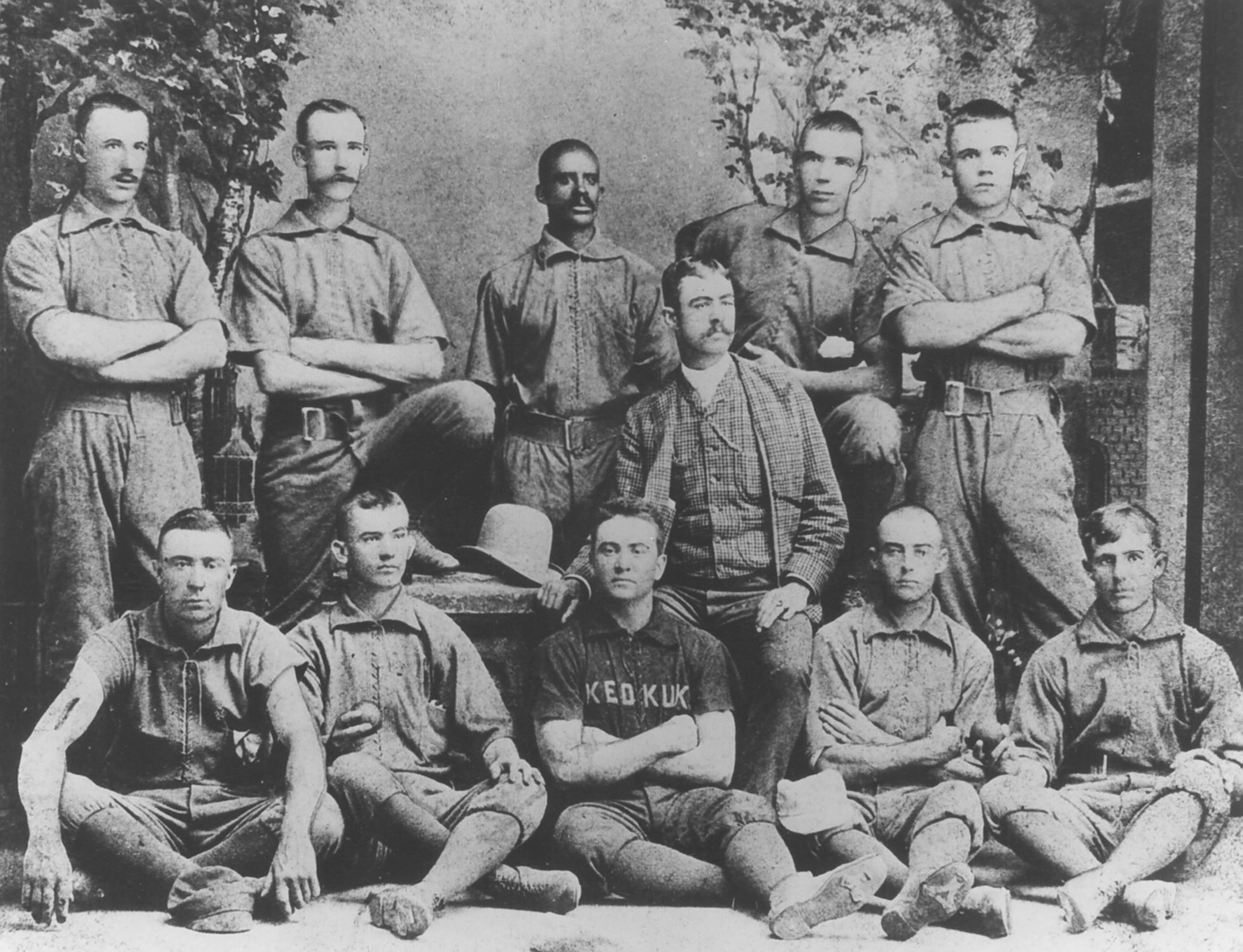
The boxscores, the 465 of them that researchers have found in a career that spanned two decades, tell of one of the better baseball players of the late 19th century — sharp-hitting, fleet of foot and versatile, playing every position, even pitcher.
What the numbers don't describe about John "Bud" Fowler is the overarching injustice of racism that so defined and limited his life. Nor do the statistics tally the overt cruelties and subtle indignities he endured on and off the baseball field, nor the endless what-might-have-been questions he must have asked himself.
Fowler, whose experience as a pioneering black baseball player would be echoed by Jackie Robinson nearly 70 years later, is at last earning the recognition he was denied in a colorful and well-traveled lifetime.
Tuesday, the 100th anniversary of Fowler's death converging against a backdrop of a budding baseball season and Black History Month, was declared "Bud Fowler Day" by the Washington County Board and the city of Stillwater — where he played brilliantly for one season in 1884.
Beyond that, the first-base entrance into Doubleday Field two blocks from the National Baseball Hall of Fame and Museum in Cooperstown. N.Y. — where Fowler grew up — is going to be renamed "Fowler Way" at ceremonies in April.
And Brent Peterson — who in dual roles as executive director of the Washington County Historical Society and manager/player for the St. Croix Base Ball Club that plays by 1860 baseball rules was behind the proclamations — is hoping to get the old athletic field near Stillwater Junior High School named for Fowler, as well.
It is a fitting tribute, Peterson said, to the man considered by historians to be the first professional black baseball player and whose many blazed trails included Stillwater.
By the time Fowler arrived in Stillwater in the spring of 1884, he was already a polished six-season baseball veteran. He had made his professional debut with the Lynn Live Oaks in Massachusetts in 1878, said Jim Overmyer, a baseball historian and co-author of "Shades of Glory: The Negro Leagues and the Story of African-American Baseball." Fowler, filling in for an ill pitcher, led the team to a 3-0 victory.


