

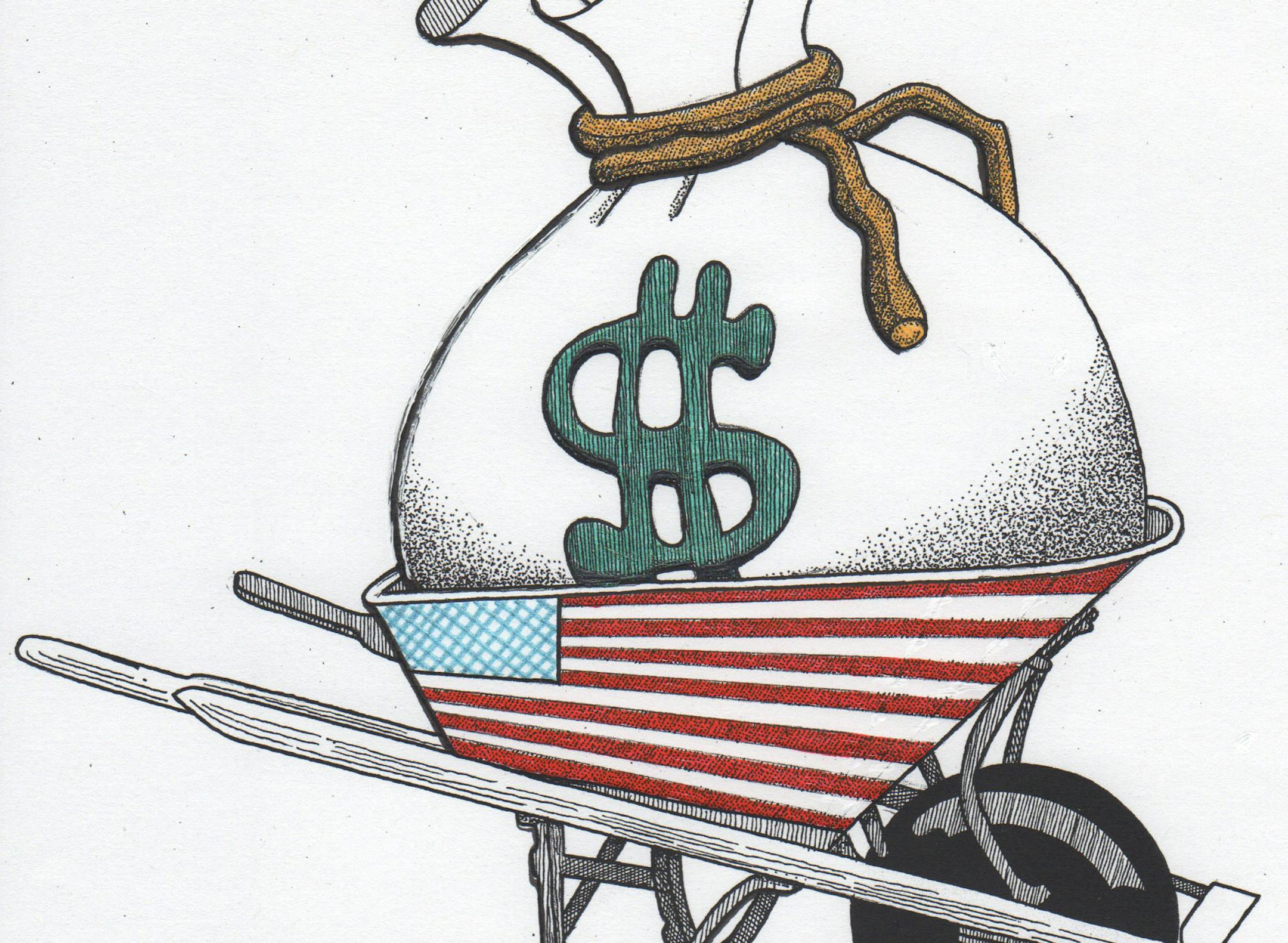
Like most Americans, I awaken each day haunted by one chief question: "Are political lobbyists paying too much in taxes?"
The Supreme Court and Congress have toiled tirelessly in recent years to ease that fear. They merit the thanks of a grateful nation — or at least a high-five from well-heeled lobbyists shilling for everything from hospitals to handguns.
A confection of the federal tax code known as 501(c)(4) — a name that barely hints at the obfuscation it fosters — has been the focus of some public discussion lately. But often not for the right reasons.
The right reason is the paragraph in the statute that allows any group that claims to be acting primarily in the "public welfare" — including by lobbying — to avoid taxes. Donations to such groups are not tax-deductible, but the enterprises, which themselves are fast-growing, thriving businesses, go untaxed.
In election year 2012, these lobbying groups spent $310.2 million trying to influence voters and politicos — nearly 60 times the spending of 2006. The growth was fueled by two key factors. First, the "Citizens United" ruling, in which the Supreme Court equated the free flow of political donations with free speech. And second — and here's the big attraction — the tax code allows donors to such groups to remain anonymous.
Thus, the public-spirited but ever-so-modest benefactors who nourish these groups will not be mortified by public acclaim.
The outcomes are at best incoherent and often absurd.
The U.S. tax code is subsidizing: groups that want to build oil pipelines, and groups that oppose them; efforts to promote abortion rights, and drives to restrict them; labors to limit the sale of guns, and campaigns to ensure that every man, woman and child has a pistol on the nightstand.


