

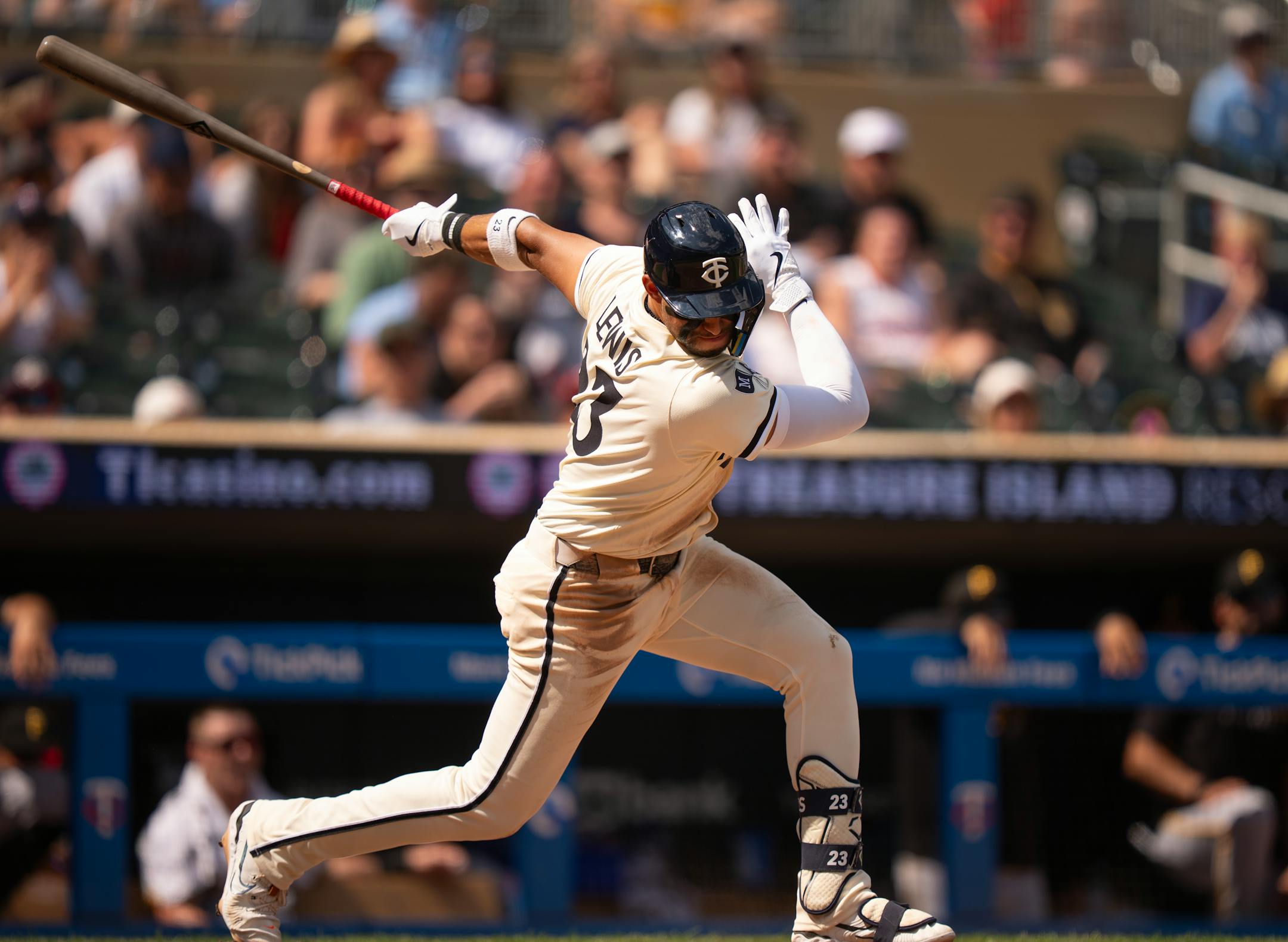
Let’s start with the obvious: There is no magic answer to solve all the issues that vexed young Twins hitters last season.
During a 92-loss season, the Twins watched many of the young players they want to build their roster around flounder in the batter’s box. Royce Lewis, who played in a career-high 106 games, had his worst offensive season. Matt Wallner didn’t provide as much impact in the middle of the lineup. Jose Miranda was released last month, and Edouard Julien, who was so important in 2023, ended this past season in a reserve role.
Luke Keaschall looked great when he was on the field, but Brooks Lee has yet to break through after hitting well in the minor leagues. As the Twins prepare to usher in the next wave of prospects, like outfielders Walker Jenkins and Emmanuel Rodriguez and shortstop Kaelen Culpepper, their success hinges on improving their ability to develop young hitters.
The Twins are far from the only team that has been trying to decode the development of young hitters. But if ownership is cutting payroll, there is a greater emphasis on transforming homegrown players into capable regular starters.
A half-dozen heads of baseball operations at the MLB General Managers Meetings last week were almost all in agreement that the gap between Class AAA and the major leagues has widened. The level of pitching, particularly velocity, has reached new heights. The executives viewed the reasoning for a shift in a few buckets:
- Teams are rushing their top pitchers to the big leagues at a quicker pace, so minor league hitters aren’t seeing elite arms as often, said Dave Dombrowski, the president of baseball operations for the Philadelphia Phillies. Most starting pitchers are using a max-effort delivery in shorter stints, so it can mean they don’t need as much development time. National League Cy Young winner Paul Skenes, a special talent, required only 12 minor league starts before he broke into the majors.
- There is a major gulf between pitchers’ ability to command off-speed pitches in the strike zone in the big leagues compared with any level in the minors, said Peter Bendix, who runs the Miami Marlins. Pitchers are throwing fewer fastballs each season, relying more on their best wipeout pitches, a trend that has moved into the minors, except they don’t have as good command.
- Pitchers are better equipped to exploit weaknesses in scouting reports, and it starts immediately. There is so much data on minor league hitters that there is no feeling-out period, said Brad Meador, the Cincinnati Reds’ general manager. Not only are relievers throwing harder — seeing 100 mph isn’t rare anymore — but they have deepened their pitch mix, too.
Despite a 10-player fire sale at last year’s trade deadline, the Twins’ position player core remains mostly unchanged. Carlos Correa was the only position player traded away who wasn’t eligible for free agency this winter.
Derek Falvey, the Twins’ president of baseball operations, acknowledged the team will rely on internal improvement as a major part of its plan to boost an offense that ranked 23rd in runs scored this past season.
“We just don’t think that because we’re wishful,” Falvey said. “We’ve seen stretches from some of the guys on our roster that they’ve been elite offensive talents at different junctures whether it’s Royce Lewis, Matty Wallner we’ve seen carry our offense at different stretches in time, and Byron Buxton is Byron Buxton. We know there are pieces.”


