

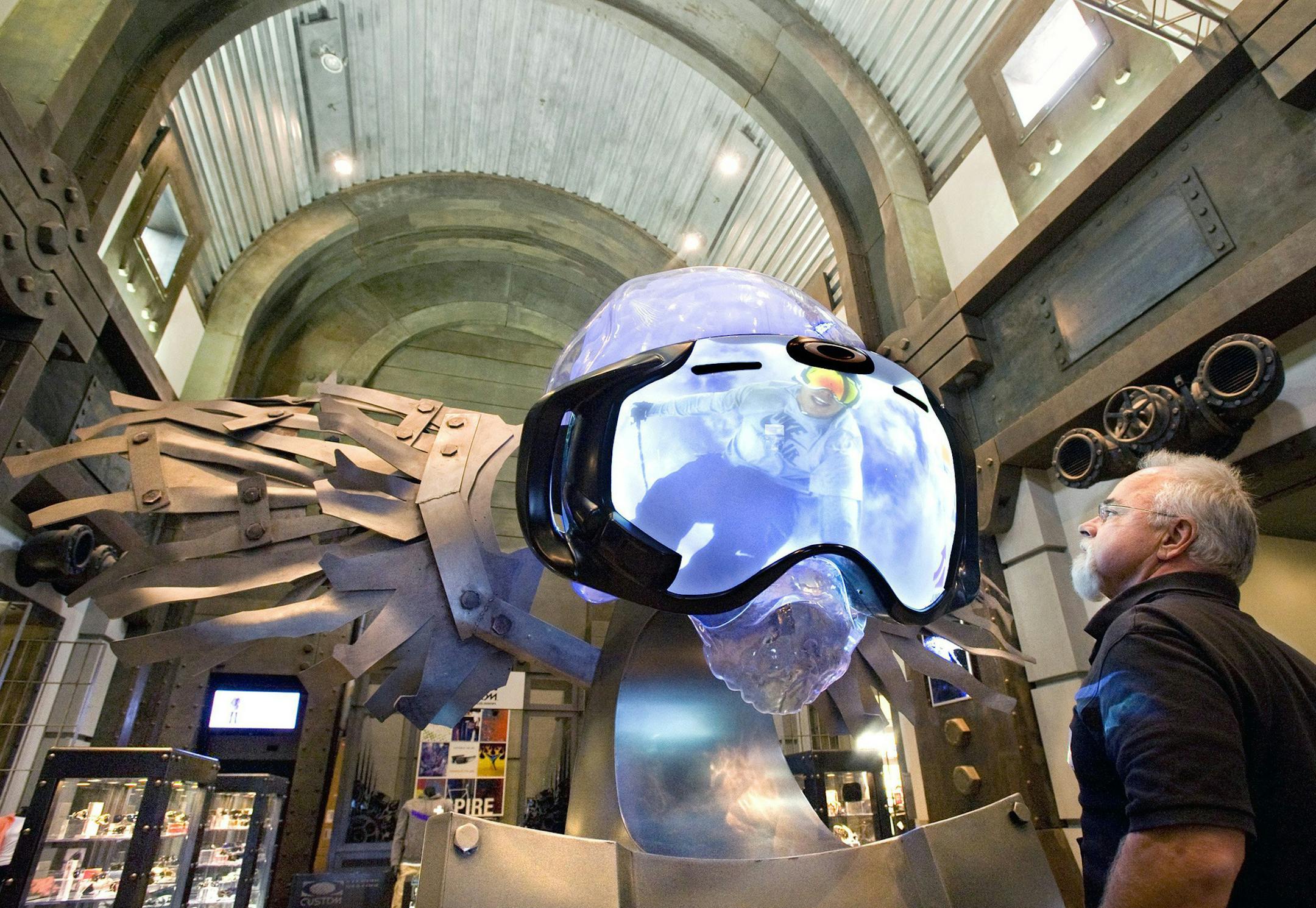
At the Oakley headquarters in Foothill Ranch, Calif., a goggled, transparent skull with a 15-foot wingspan and glowing blue brain looms over the entrance of the retail area. The performance activewear and accessories company erected the interactive display, which stands 9 feet tall, in all Oakley store windows in November to showcase the new Airwave snow goggles.
"It's meant to stop people in their tracks," said R.J. Abbott, Oakley's director of global visual merchandising, who came up with the concept. "We're trying to be 10 steps ahead, and disruptive by design. If it doesn't hit customers on that visceral level, we move on."
Oakley's investment in its window displays is part of an overall
effort to enhance the in-store brand experience, and an example of how retailers are adapting in a world where brick-and-mortar shops must be more than a place to buy products.
"There's a lot of evolution going on in consumer behavior that retail is going to have to embrace," said Bill Martin, founder of analytics firm ShopperTrak, which tracks metrics like in-store foot traffic. "The number of people going to the mall hasn't declined, but store traffic has declined because people are visiting fewer stores."
In 2007, shoppers visited five stores on average during every trip to the mall. Now it's closer to three stores, because an estimated 70 percent of those consumers are researching purchases online, narrowing the opportunity for browsing and impulse buys.
"Retailers are going to have to get a little more creative to draw people in, but traffic numbers will return if they do," Martin said.
To grab attention, retailers are showcasing works by famous artists, investing in music playlists that enhance a brand's ambience, and installing customized flooring, dramatic lighting and even design-oriented fixtures that can display products to their best advantage.



