

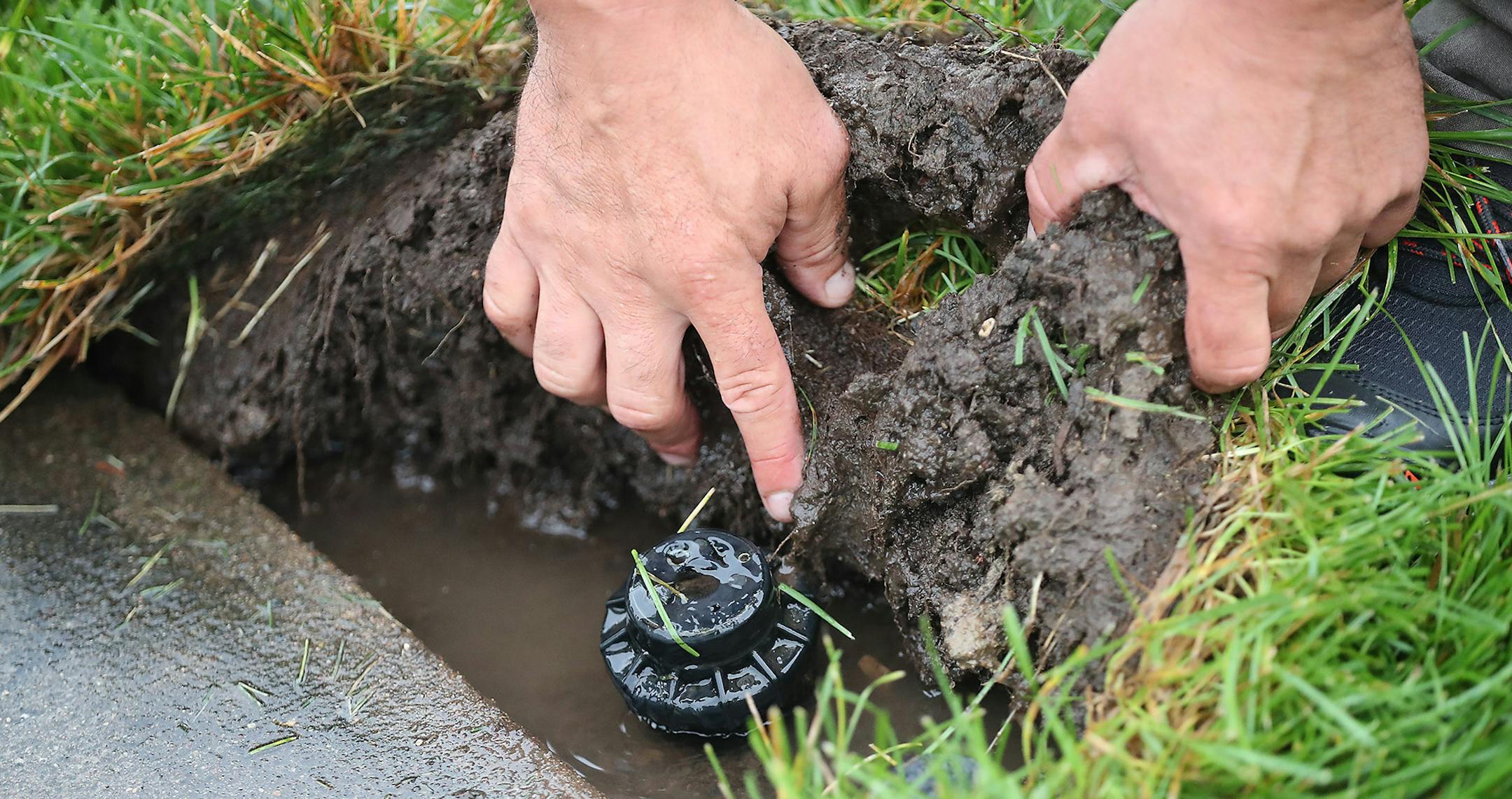
I was deeply concerned by the news on the cover of the Aug. 21 local section. If you are like me and are a proud resident of the land of 10,000 lakes, you, too, should be concerned. A four-person household in the Twin Cities metro area uses 100,000 gallons of water per year. As a result, we threaten our state's most essential and beloved assets, our waterways. We must change the status quo with regard to lawn maintenance. It's a fact: Aquifer levels will plummet in the coming years if we continue overwatering our lawns. If this happens, you can count on our water recreation being considerably affected for the worse.
I value the quality of our lakes, rivers and streams above the quality of my lawn. I challenge readers (especially those who live in neighborhoods where pristine and lush grass is the norm) to take initiative and explore alternatives. Consider a garden with native plants. Consider a different grass species that requires less water. If you simply prefer a manicured lawn, water it much less. According to a University of Minnesota professor and turf-grass expert who was quoted in the Aug. 21 article, "You really need to water very little in Minnesota." So take the lead in your communities. Talk to your friends, families and neighbors about protecting that which makes our state so great.
Gary Lussier Jr., Minneapolis
SOUTHWEST LIGHT RAIL
Opposed? Know that there really are people who would benefit
Can our elected officials please get serious about funding Southwest light rail? Lori Sturdevant's Aug. 21 column ("Not even business support delivers light rail") was unfortunately as aggravating as it was enlightening.
I work at a school downtown, where we have students who are often trying to coordinate very complicated lives combining school, work and family. They need high-quality transit. My parents are over 65 and live very near the proposed line. They find driving both aggravating and daunting, especially in the winter and during rush hour. They need high-quality transit. These are not unique people with unique needs.
So much of the existing bus service we have in that area is underfunded and works only if you can use a rush-hour express. This may work for people who have a strict 9-to-5 schedule, but it is almost insulting to think that accounts for everyone's schedule, all the time. Those working any time outside of express hours (or even regular 9-to-5 employees who need to stay late at work) simply cannot use transit in the suburbs. Southwest light rail will provide a reliable, high-quality alternative to the traffic jams on Hwys. 100 and 169 and Interstate 494 for thousands and thousands of commuters. In addition, there are also real economic benefits to making the city more accessible and attractive to those who would use this service. Transit can improve quality of life for all of us, so can we please get serious and make this happen?
Brian Heller, Minneapolis
INDIAN FAMILIES
An excellent two-part series that leaves a lot to ponder
A two-part series published Aug. 21 and 22 was very well-written, highlighting the plight and difficult work of the courts, social services and foster care in trying to protect the children of American Indian families. The series shared tragic statistics and unbroken cycles of poor behavior, choices, along with addiction issues. It gave few answers, but left a lot of questions to ponder in terms of what is best.
Early on, the article refers to "the question that weighs heavily on [Judge Luis] Bartolomei: By saving the child, is he destroying a culture?" After reading the series, what culture is being destroyed, or what culture should be destroyed?
Richard Naaktgeboren, Maple Lake, Minn.
OLYMPIC GAMES
It's character that counts, not medals, or … taxes?
While the chase for medals appears to be overemphasized at Olympics, other factors may play an even greater role. The Olympic Creed states that "it is not so much winning as taking part" in such Games that is important, and I might add that it is how you participate.


