

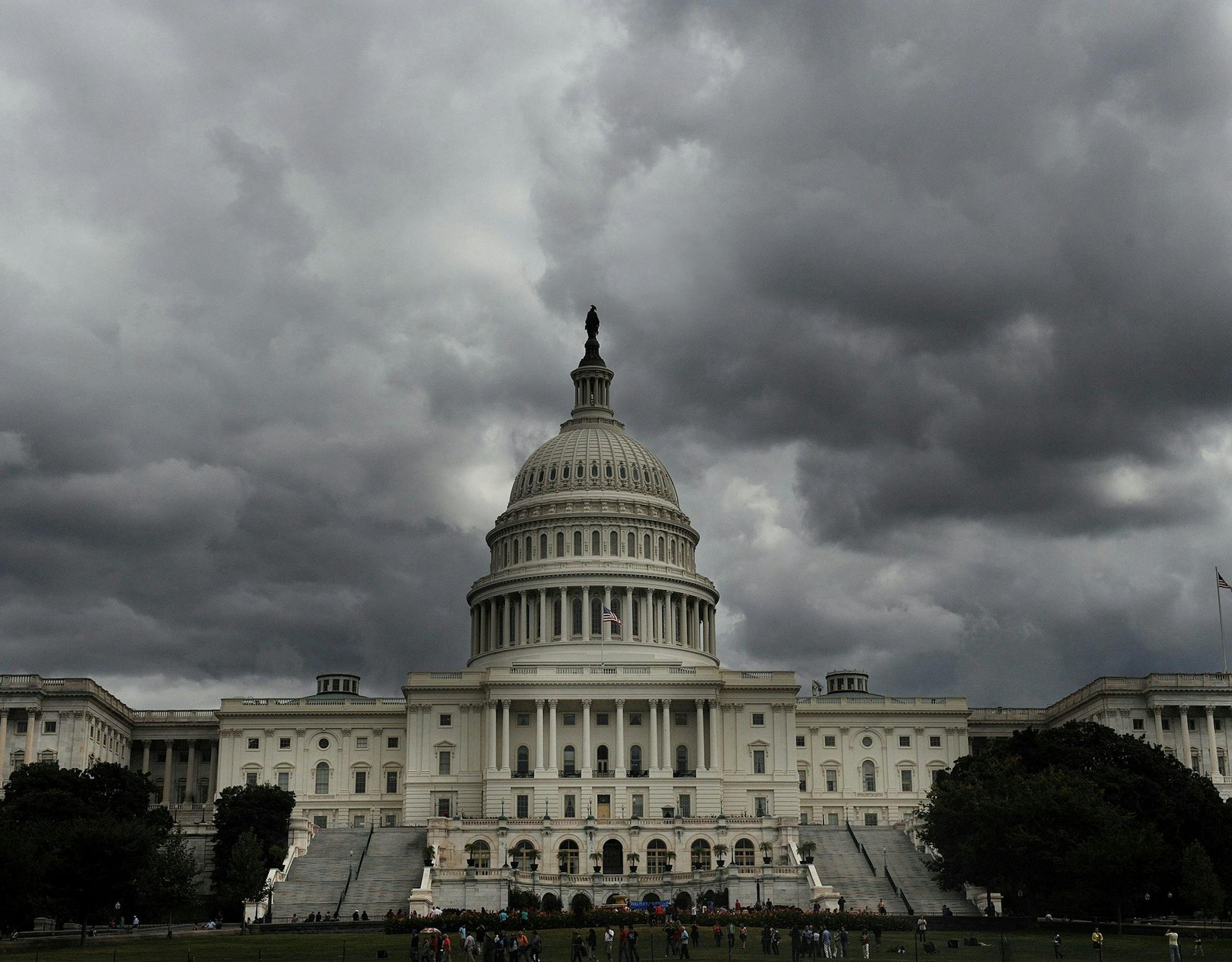
questions & answers about a shutdown
If Republicans in Congress and the Democratic White House do not resolve their differences in time, the federal government will begin a partial shutdown at 12:01 a.m. Tuesday, with all but essential services curtailed or closed entirely.
A few weeks later, another deadline will arrive when the government bumps up against its legally authorized borrowing limit. If Congress does not vote to increase the debt limit, it could set off severe financial problems for the government as it scrambles for the cash it needs to meet its commitments.
Q: So, what exactly is going on?
A: There are two distinct issues. First, the government could be forced to scale back operations beginning Tuesday if Congress and the administration do not agree on extending federal spending authority; about 800,000 employees would be involuntarily furloughed, while others would possibly have to work without pay.
Then, a few weeks later, Congress and President Obama need to agree on terms for raising the federal debt ceiling so the Treasury Department can continue borrowing to meet the government's obligations, including interest payments on debt already issued.
Q: How have we reached this point?
A: Divided government always complicates governance, but increasing political polarization and the erosion of any moderate center in Congress have made it even more difficult. With Democrats controlling the White House and the Senate, the Republicans who control the House — tugged rightward by a vocal core of Tea Party conservatives — have begun using budget deadlines and the need for periodic debt limit increases as leverage to press for concessions. A favorite target, and the one at the center of the current dispute, is the health care overhaul passed by Congress and signed into law by Obama in 2010 over vigorous Tea Party opposition.
Given this poisoned political relationship, Congress has been unable to pass a budget in the normal way. To keep the government operating in March, it passed a temporary spending measure. But that expires at midnight Monday, and House Republicans say they will not vote for new spending unless the president's health care law is delayed and its funding cut.


