

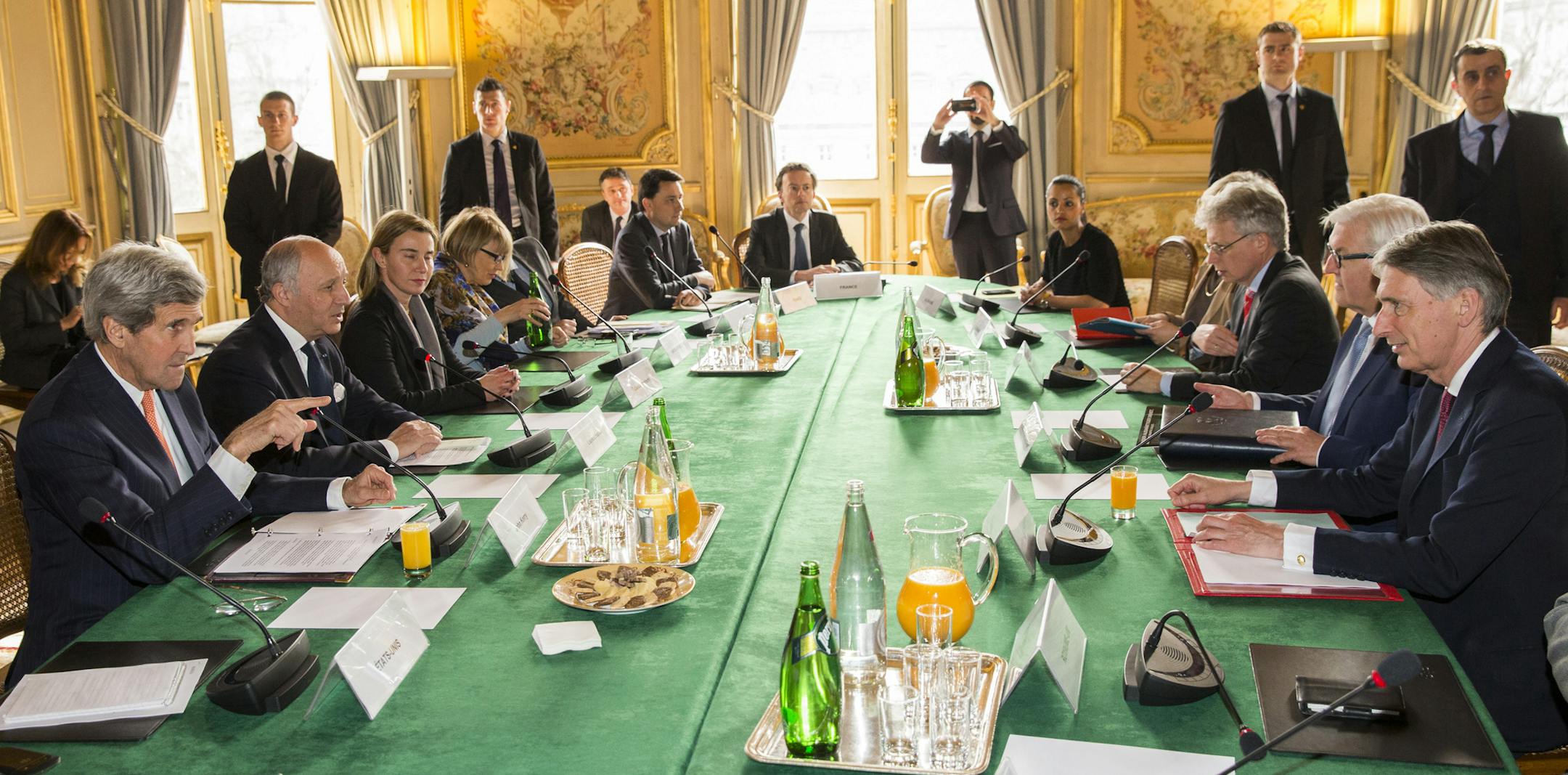
Rarely has so much been said by so many about an agreement that has yet to be agreed to. But that is where we are today as negotiators from the United States, Russia, China, France, Britain, Germany, the European Union and Iran work to hammer out a deal by March 24 regarding Iran's nuclear program.
Opponents have been charging for months that whatever accord might emerge from these talks, it will undermine the security of the United States and its friends and allies — including Israel and the Gulf States. With great certainty, they are yelling "fire" in the national-security theater, hoping that patrons — in particular, members of Congress whose acquiescence or support will be needed to implement any deal — will run for the exits before the movie even starts.
In this environment, Congress and the American people would be wise to stay in their seats, wait to see if the film even rolls — and if it does, watch and listen closely before giving thumbs up or down. Here is a preview of what to look for.
There are at least two important U.S. interests in play in the negotiations with Iran over its nuclear program:
1) To reach an agreement with Iran — if possible — that will effectively preclude Iran from building a nuclear bomb without violating the agreement in ways that would be detectable by the United States and the international community and would provide the necessary time to take effective action against Iran. Such an agreement would support U.S. efforts to forestall the proliferation of nuclear weapons in the Middle East and globally.
2) Recognizing that any nuclear agreement with Iran will need to stand on its own merits, continuing a process of engagement with Iran that — if possible — allows the United States and Iran to develop their relations in ways that reduce real and ongoing tensions. Over time, this could lead to a more "normal" — certainly less hostile — relationship. This process will take years, maybe decades.
Whether or not we can reach a nuclear agreement with Iran along these lines is the key to reviewing this picture. Whether it meets the test of effectively precluding Iran from building a nuclear bomb will depend on a number of variables.
For example, what happens to nuclear material currently held by Iran that could be used to manufacture a nuclear bomb? What is the extent of any remaining nuclear infrastructure for the production of civilian nuclear power in Iran? What provisions are agreed to monitor this nuclear infrastructure and address any concerns that it is being used for a bomb program? Are there provisions that address any other suspicious Iranian activity that could be evidence of a covert weapons program? What does the agreement say (and what do the U.S. government and others say) about responding to any violations of the accord? What is the duration of the agreement, and what are the provisions relating to its extension or expiration? What U.S. and international sanctions will be lifted, and under what schedule?


