

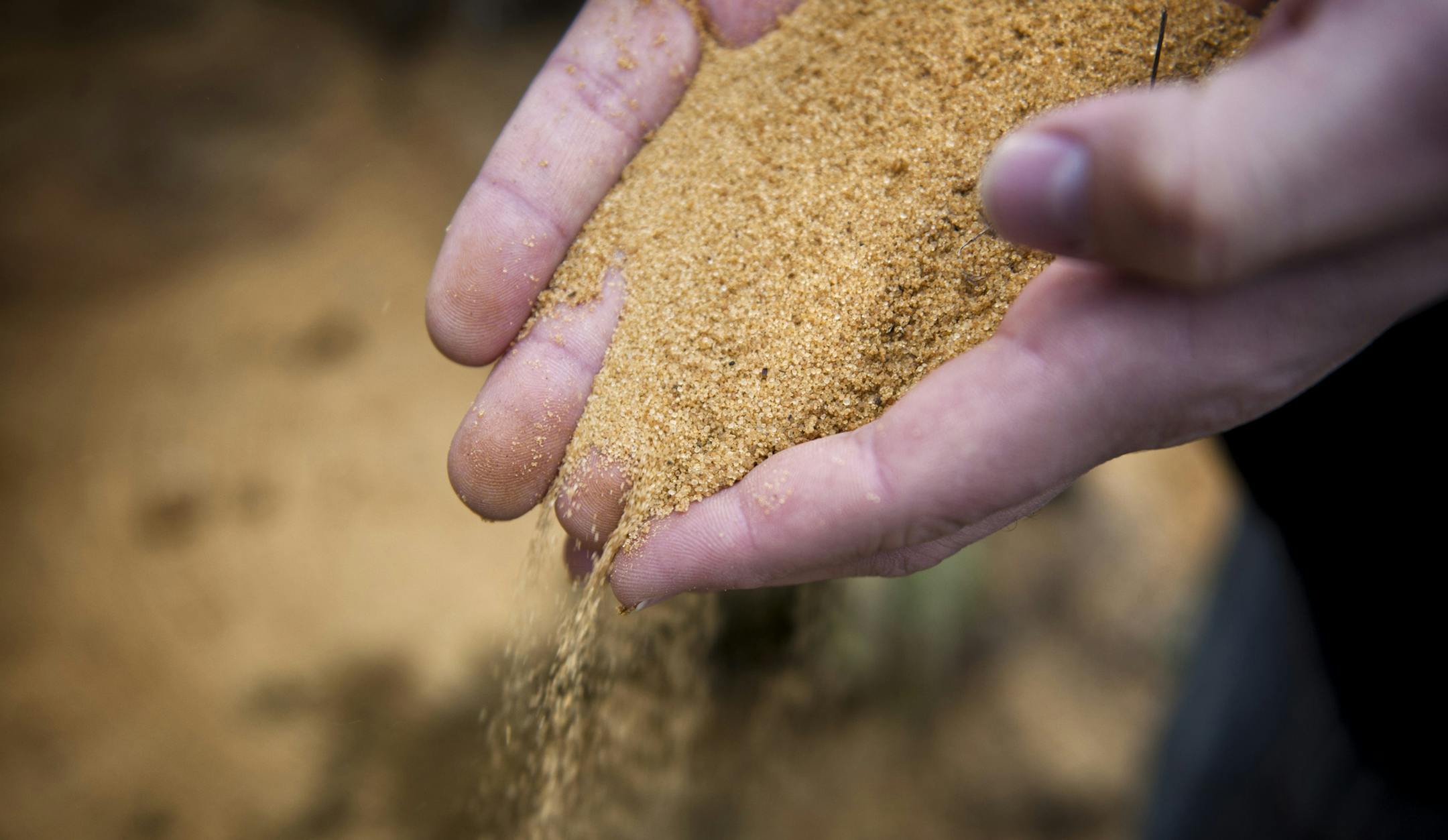
With all the recent controversy over frac-sand mining in Minnesota, it's easy to believe that sand extraction is a new industry in the state.
The reality is that it has occurred in Minnesota for decades, particularly in the south-central part of the state, where companies like Unimin have earned regional respect for good-paying jobs and a solid record of working with local government officials to manage environmental concerns.
But sand's use in developing natural-gas and oil reserves — in a process called hydraulic fracturing, or "fracking" — has sent demand for this natural resource soaring nationally. With the sand-mining industry poised not only for dramatic growth but major expansion into the sand-rich but fragile geology of southeastern Minnesota's bluff country, lawmakers need to move quickly to ensure that mining is done as responsibly in the future as it has been in the past.
Depressed natural-gas prices have created a temporary lull in demand. But the explosive growth of sand mining in Wisconsin — from a handful of operations a few years ago to more than 100 — underscores the urgency to enact stronger safeguards. That new companies without longstanding Minnesota ties could mine here adds to concerns.
Regrettably, state lawmakers have been tone-deaf to the pleas of citizens and local government officials and have largely charted a course of inaction this session. But they have a chance in the waning days of the session to put meaningful, targeted protections in place for a natural resource treasured by the state's anglers: southeastern Minnesota's world-class trout streams.
The proposed trout stream protection legislation has been tirelessly championed by freshman State Sen. Matt Schmit, DFL-Red Wing. The protections also have the support of Gov. Mark Dayton, Minnesota Trout Unlimited and the state Department of Natural Resources. DNR Commissioner Tom Landwehr has taken an unusually strong advocacy position.
Still, it's been an uphill battle at the Capitol to enact safeguards for Schmit's environmentally unique home region — often because of the pro-mining Iron Range members of his own party. But unlike mineral mining in northern Minnesota, which is permitted by the state and often involves federal review, sand mining in Minnesota is permitted by local governments often without specialized staff or the resources to undertake extensive and often technical scrutiny. This is a particular concern in southeastern Minnesota, where local governments have not had time to develop expertise.
Schmit's common-sense legislation, which will likely face a critical Senate floor vote today, proposes a reasonable 5,000-foot-setback for sand mines from trout streams and the springs that feed them. Mining also couldn't occur within 25 feet of the water table.


