

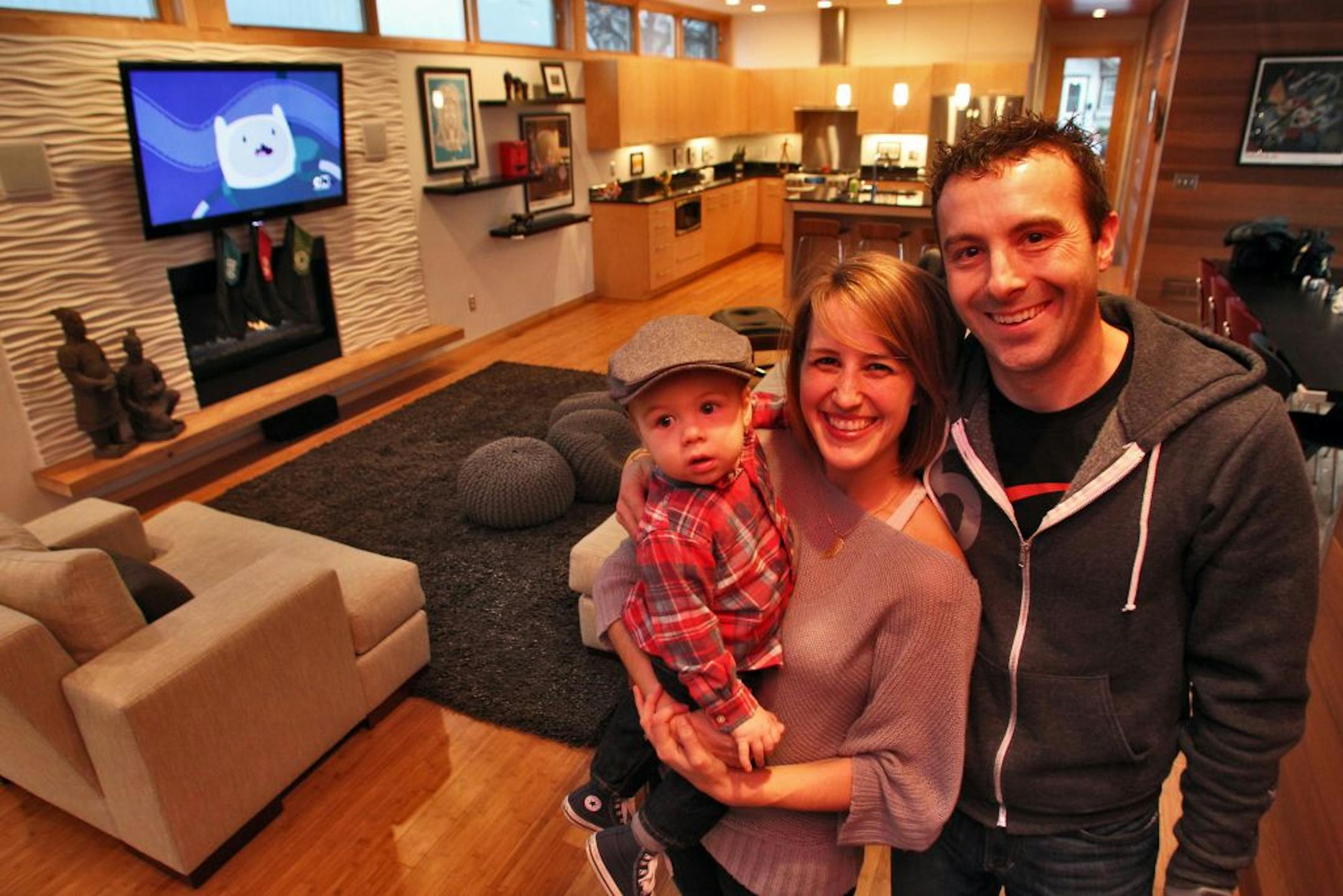
Shane and Erinn Farrell never planned on tearing down their early 1900s bungalow in Minneapolis. For the first six years they lived there, the modest two-bedroom home was perfect for just the two of them. But for three or four? The Farrells decided they needed more room for the next chapter of their lives -- as a family.
"We wanted to stay in our Linden Hills neighborhood," said Erinn. At first they considered adding a second story for a nursery and master bedroom. But architect Eric Odor, of SALA Architects in Minneapolis, discovered that the existing foundation wouldn't support a new second story, the front porch was sagging, and the basement ceiling was awfully low.
"With all the needed improvements, it would cost virtually the same to build a new home," said Odor. "If we just put on a second story, they would still have this 100-year-old house."
After crunching the numbers, the Farrells agreed.
"We decided that it would make more sense financially to start over," said Shane. "Then we could take advantage of the new technologies and build green."
Designing a new house from scratch offered endless options. But the couple were clear about their top priorities: an open floor plan, lots of glass for natural light, three bedrooms upstairs, and maximum energy efficiency. And lastly, Shane requested an unfinished basement to serve as his floor-hockey rink and bike-repair workshop.
The couple also knew what they didn't want: a super-sized house that was too big for their small 42-foot-wide lot and out of scale with other residences on the block.
Odor's solution was to devise a two-story modular home shaped like a narrow rectangular box. It hugs the north property line to give the south side maximum exposure to sunlight. The natural-finish cedar siding and low-hipped roof "look right for the neighborhood," said Odor.


