

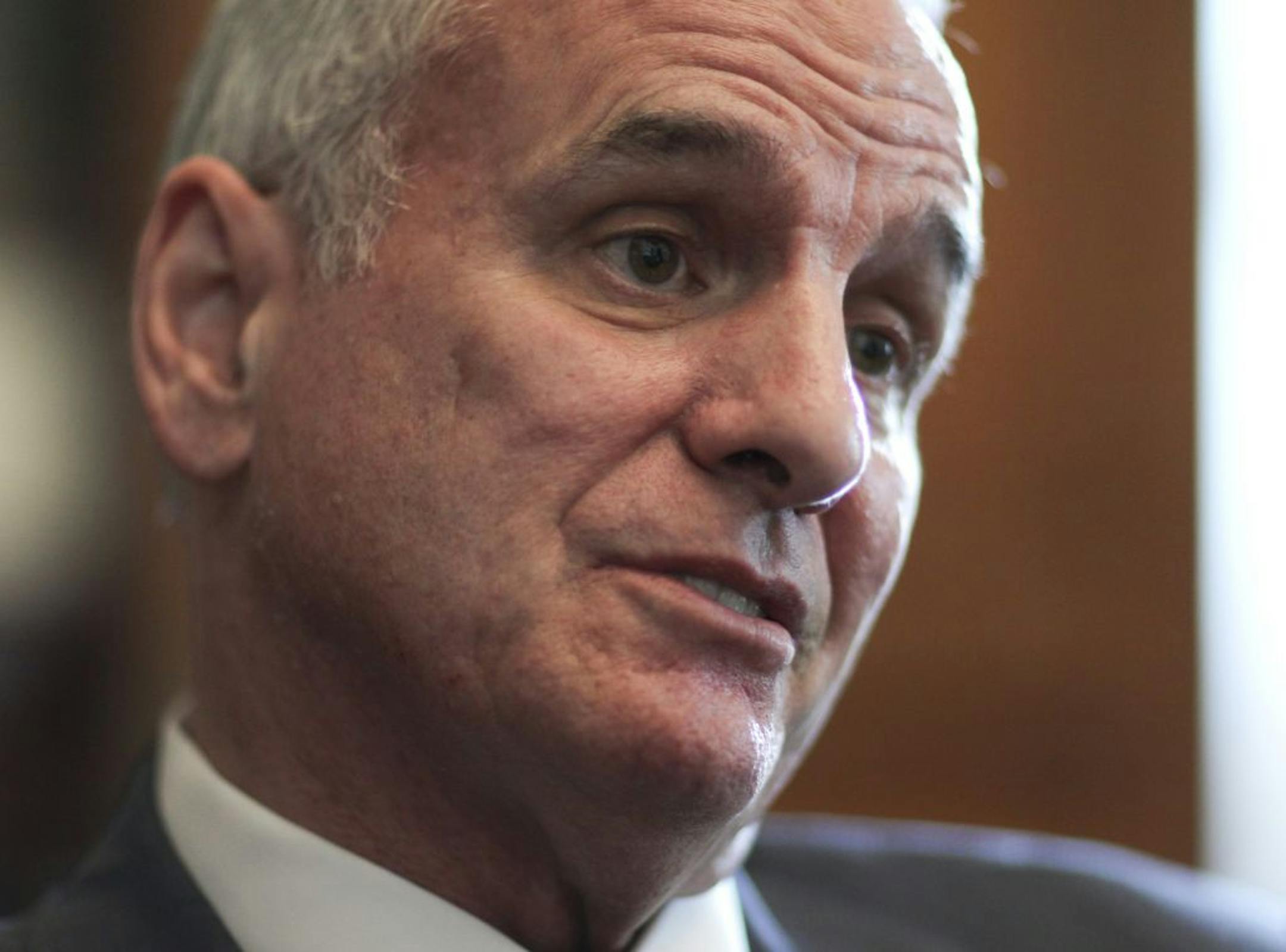
With Minnesota's government on the brink of shutting down, Gov. Mark Dayton emerged from long, tough budget talks late Thursday night to break the unwelcome news to an anxious state.
As Dayton spoke, in a sign of just how deep the rancor at the Capitol now runs, some of the GOP lawmakers who gathered inside the stately reception room jeered his words.
He later called Thursday "one of the worst days of my life."
Of the nation's 50 governors, none faces a tougher dilemma than Dayton, who presides over the only state to have shut down over the inability of its leaders to strike a budget deal.
As Minnesota muddles through the holiday weekend with empty state parks, idled road construction work, and more than 20,000 state workers on indefinite layoff, Dayton must decide whether to stick to his principles against determined opponents, or seek a fresh, if painful, compromise.
The issues dividing the two sides run far deeper than the mechanics of bridging a $5 billion budget deficit. They are, at bottom, competing visions for how Minnesota should work.
Dayton's last offer Thursday would have raised income taxes on the state's 7,700 millionaires, a price the governor considers acceptable for tempering the major budget cuts affecting the state. The $700 million generated by the increase, along with nearly $2 billion in unspecified cuts and other measures, would have been used to close the projected deficit.
But Republicans say they want no part of any tax increases, which they consider deadly for job creation and the recruitment of capital to the state. They see Dayton's renewed insistence on the issue as a key element in the impasse.


