

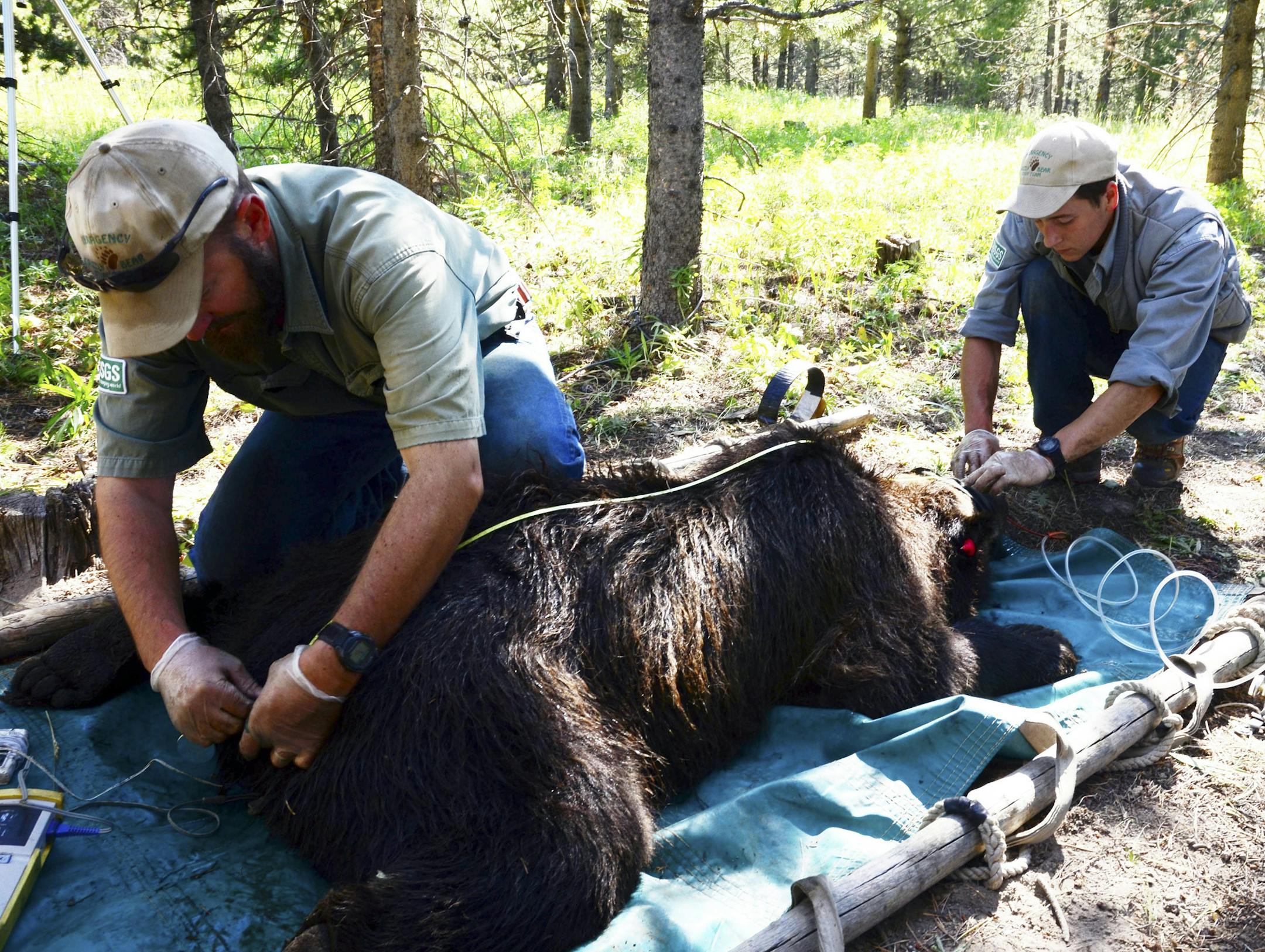
BILLINGS, Mont. – A government-sponsored research team has concluded there are no signs of decline among Yellowstone's grizzly bears as officials consider lifting the animals' federal protections — despite warnings from outside scientists that such a move would be premature.
Members of the Interagency Grizzly Bear Study team say in a new study that data collected on the threatened bruins over the past several decades contradict claims that the animals could be in serious trouble.
Researchers on the team re-examined how bears are counted after wildlife advocates and a prominent University of Colorado professor questioned the government's methods.
The results confirm the validity of past assertions that more than 700 bears live in the Yellowstone region of Montana, Idaho and Wyoming, lead author Frank van Manen said. The peer-reviewed study is slated to appear in an upcoming issue of the scientific journal Conservation Letters.
"The [grizzly bear] population growth has slowed down in the last decade, but is by all means a robust population right now," van Manen said. "Critiques in scientific efforts can be constructive. Because of this critique, we looked very hard at our own data. … It basically confirms what we had seen before."
U.S. Fish and Wildlife Service officials are expected to soon announce whether grizzly bears should lose their threatened species. That would kick off a yearlong rule-making process before a final decision in 2015.
More conflicts with humans
Rising numbers of bear-human conflicts — including periodic maulings of hunters, hikers and others — have lent new urgency to calls to lift their legal protections and allow limited hunting of grizzlies to resume. Hunters and trappers exterminated the animals across most of the Lower 48 states during the last century.
Yellowstone's bears lost federal protections once, in 2007, until a federal judge ordered them back onto the threatened species list two years later. Judge Donald Molloy cited concerns that a key food for some bears, the nuts from white bark pine trees, has grown increasingly scarce as insects kill large stands of the trees.


