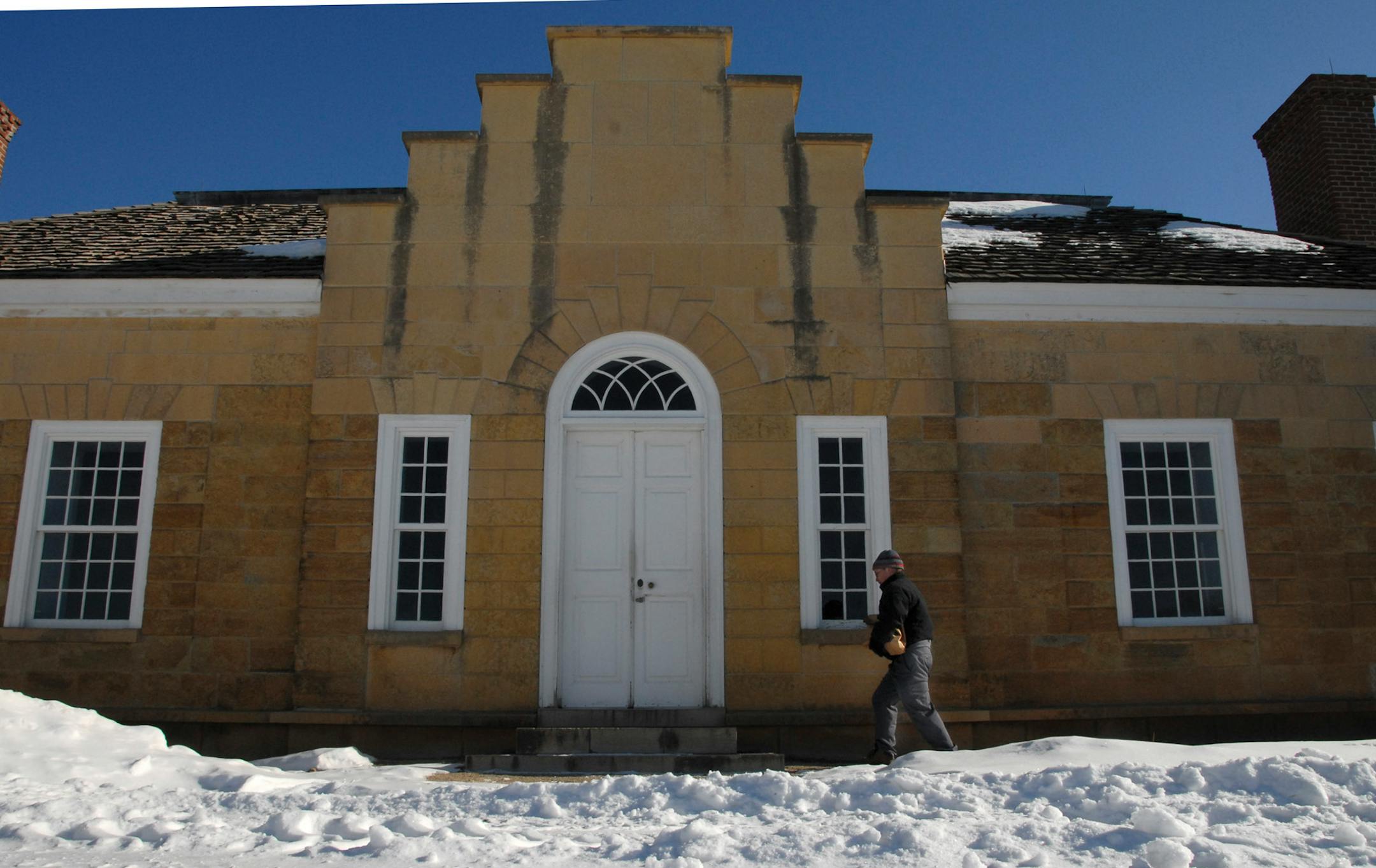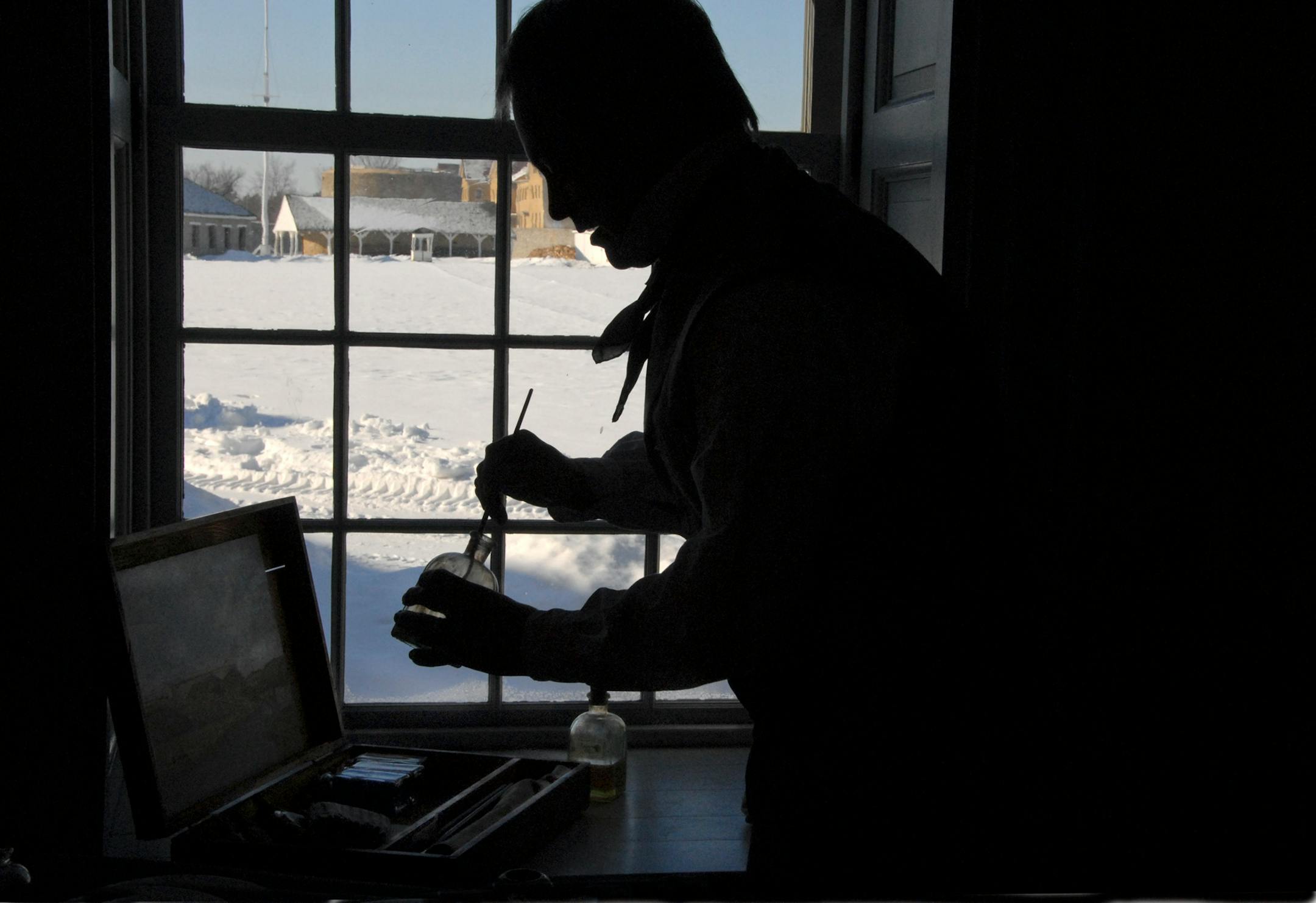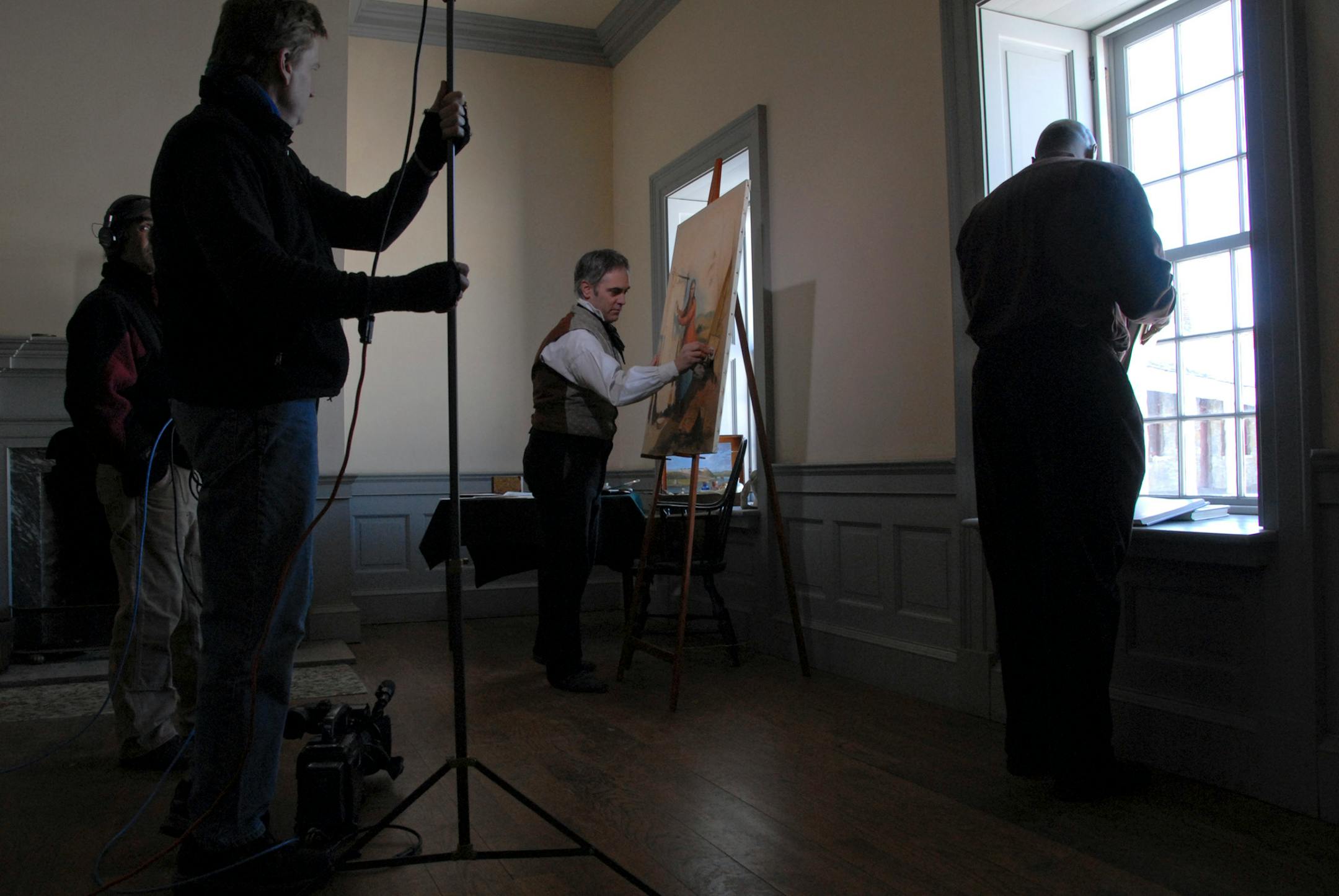
As the wind whistled through the glass panes of the creaking Fort Snelling house, a man dressed in a high-collared white ruffled shirt, fitted vest and short trousers looked over his paintings as he crouched around a dim fire.
The scene could have been mistaken for a winter afternoon more than 100 years ago, except for the light bulbs illuminating the parlor and the electrical cords snaking across the bare wood floors.
Cameras captured David Geister, a local artist and Historic Fort Snelling site guide, who was dressed as Seth Eastman, a commanding officer at the fort in the 1840s. The scene wasn't a historical reenactment but a segment of the PBS television show "History Detectives."
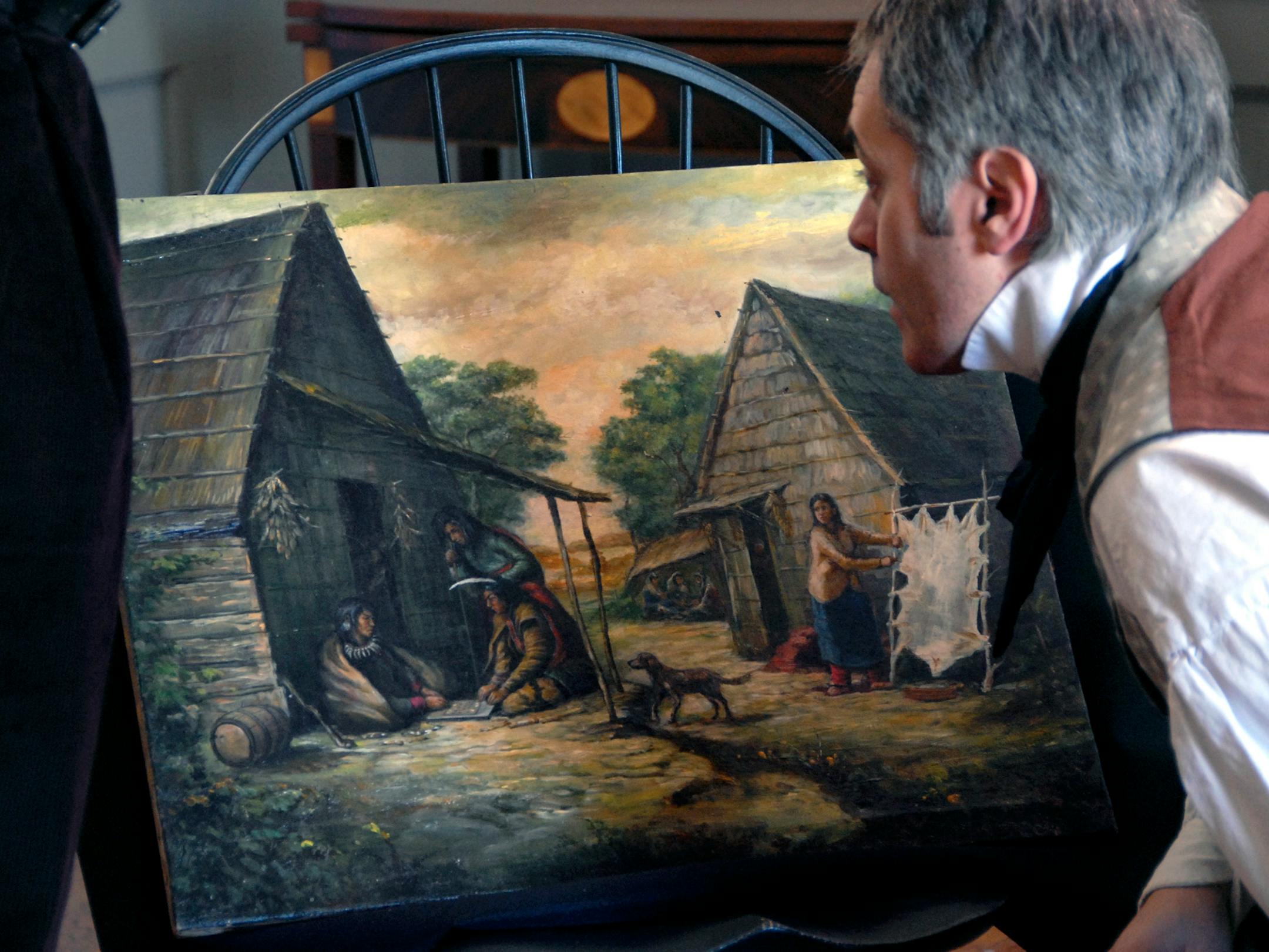
The show was in town to investigate the authenticity of a painting thought to be one by Eastman, who not only served in the Army but also painted hundreds of works depicting the life of the Dakota Indians around him.
"He felt Native American people were vanishing and wanted to record them in their natural environment," said Geister, who emphasizes that Eastman's perception of the future of Indian people was based on his 19th century bias.
For people who think they might own a piece of history -- from a belt buckle of a Civil War hero to a car driven in a Hollywood movie -- "History Detectives" sends one of its four hosts to investigate. These "detectives" are actually experts in the fields of art history, sociology, architecture and appraisal.
For this episode of the show, host Tukufu Zuberi, a sociology professor from the University of Pennsylvania who specializes in race relations, came to Minneapolis to uncover whether the painting is authentic.
He visited with Geister, Minnesota Historical Society fine art curator Brian Szott and painting conservators Joan Gorman and David Marquis, who each examined different aspects of the painting. The painting's owner, an Illinois man, submitted it to the show after he bought it online.