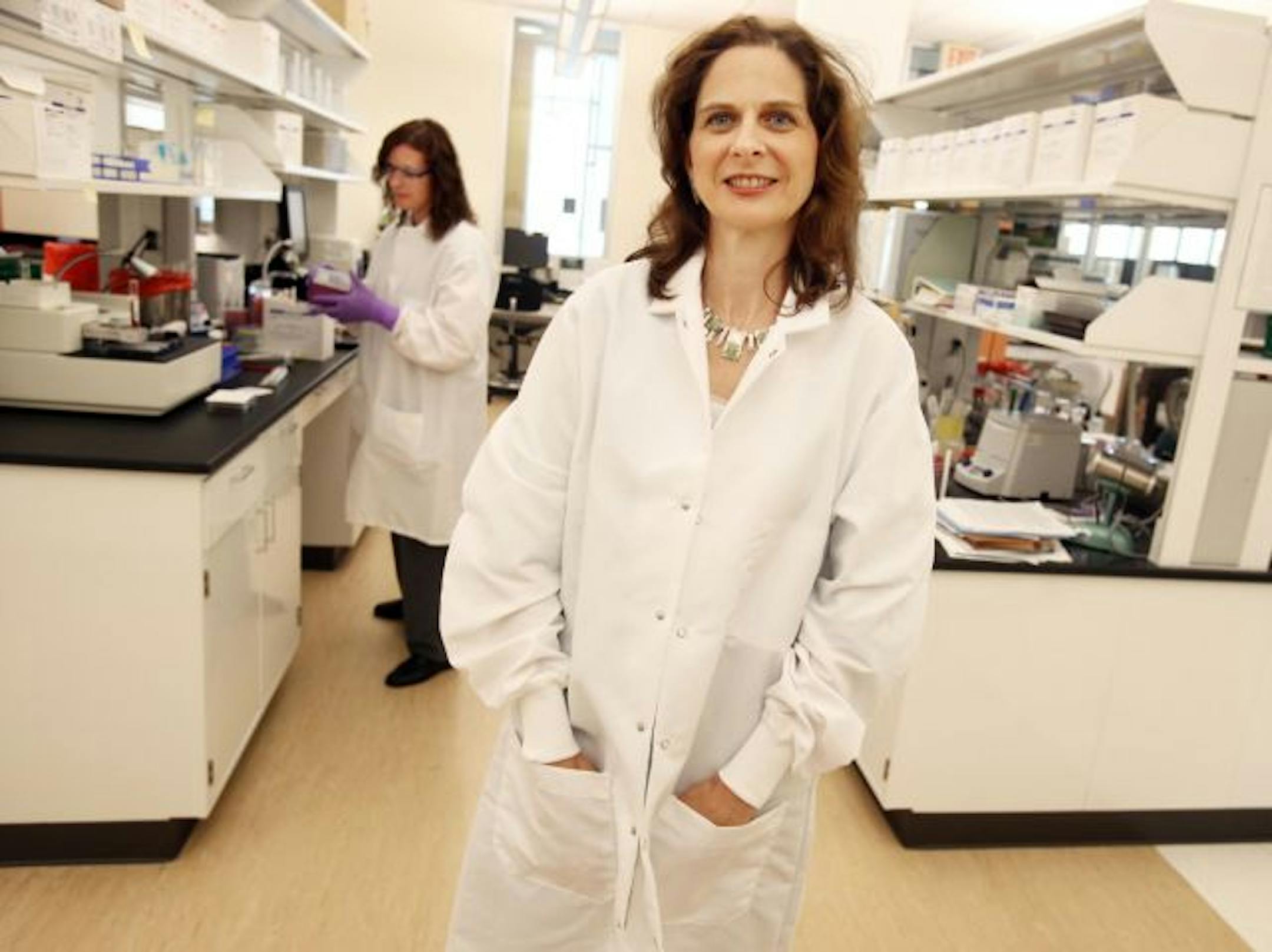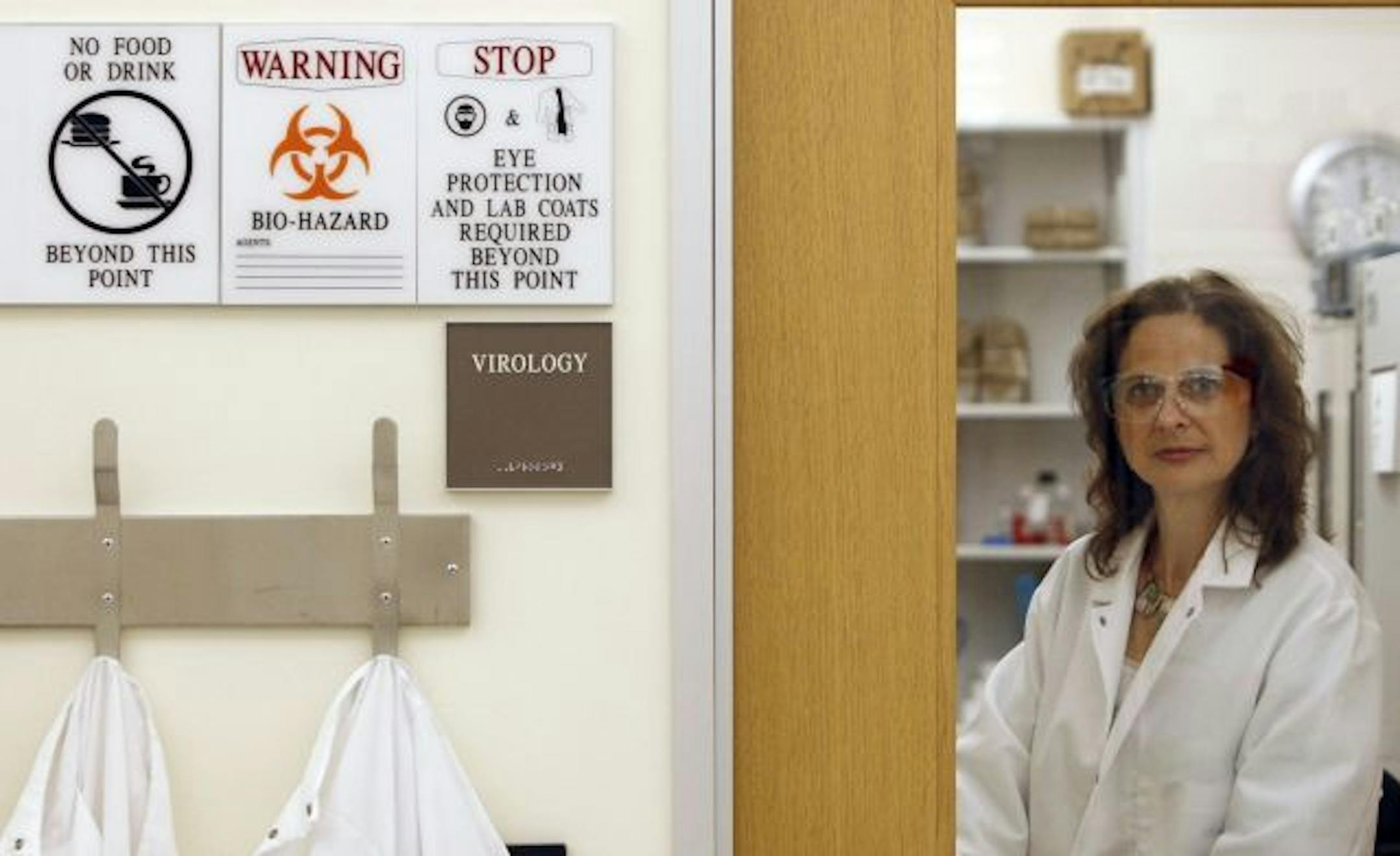
Dr. Ruth Lynfield knows the numbers sound terrifying: 30,000 dead. 170,000 hospitalized. More than a million people infected -- all in Minnesota alone. But she doesn't want people to get the wrong idea. As state epidemiologist, it's her job to lay out all the possibilities for the next wave of swine flu, including the worst-case scenario. Now, with summer winding down and students returning to school, she's out to make sure that Minnesota avoids the worst case and gets safely through the first worldwide flu pandemic in 40 years. It's a challenge the transplanted New Yorker and pediatrician has handled gracefully since the virus surfaced in April. "She knows so much and she's so smart," said Dr. Sanne Magnan, the state health commissioner. "She's very good at grounding us," Magnan said. "We're lucky to have her." At public appearances, Lynfield, 48, has become known for her calm recitation of the facts, laced with a subliminal message rooted in her natural optimism: "It will be challenging, but we'll make it through." For months, Lynfield has been tracking the swine flu outbreak in Minnesota and refining contingency plans. She's helping to lead a small army of about 200 staffers at the Minnesota Department of Health who have been deployed to the flu watch.
In endless meetings, they chew over the details of one possibility after another. What if a plane arrives in Rochester and a passenger is infected with a particularly deadly strain? How would they notify the other passengers?
What about the infected person -- could the state force him to stay home? "If they're quarantined, yes," Lynfield tells colleagues at one planning session. "That's the point of quarantine."
What if the patient doesn't cooperate? Well, she replies, they could post a police car outside his home. "They ended up doing this in one or two cases in Toronto" during the SARS outbreak, Lynfield adds. "But we're optimistic it won't come to that."
The questions don't stop even during her free time. Lynfield can be weeding the garden or attending a child's sporting event, and someone will approach her to talk about the flu. "Sometimes they're looking for reassurance," she said. Sometimes they want to vent.
"There are some people who feel like we in the public health world may have overblown the situation," she said. "And then there are other people who are very concerned, very worried."
Her message to both is pretty much the same. No one knows what's coming, "so the prudent thing to do is plan as best you can."
In a sense, Lynfield has been preparing for this moment for much of her career.