During a recent subzero cold snap, I spent my Saturday evening in an unusual way -- driving through the back alleys of downtown Minneapolis, searching for homeless people to invite to the Salvation Army's Harbor Light shelter.
I rode in the van with Brian Robertson, Harbor Light's head of security, and Sgt. Maj. Robert Strawberry, a chaplain. They told me that Harbor Light houses between 400 and 500 people a night and serves as many as 2,000 free meals a day.
As we prowled through the dark, peering under overpasses and scouting out footprints in the snow, I asked, "How do you know where to go to find these homeless people?" Strawberry's matter-of-fact answer: "Because I used to be there myself."
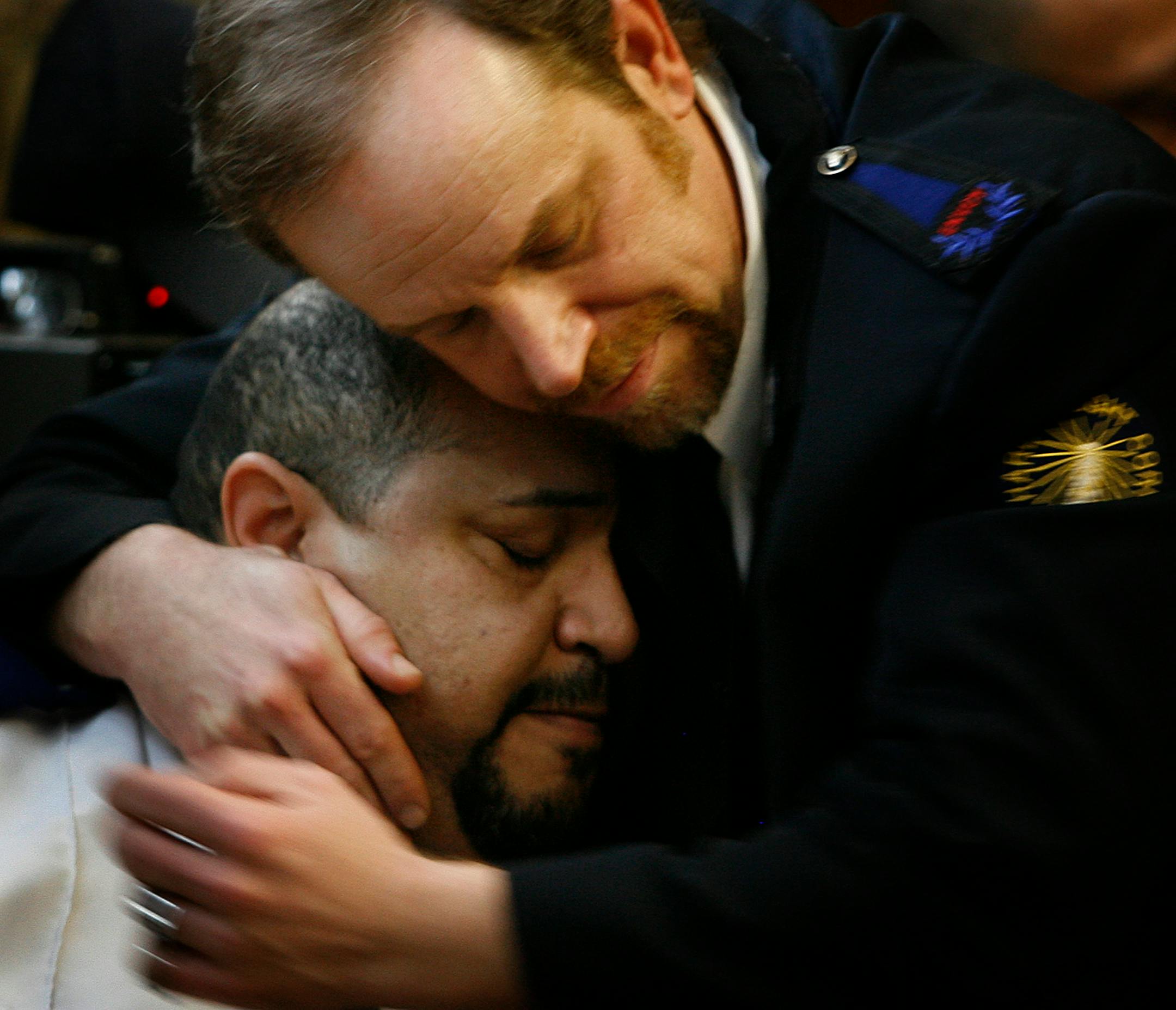
Eighty percent of Harbor Light's staff -- from food service workers to "advocates" who counsel clients and "provide a shoulder to cry on" -- are former drug addicts or alcoholics, according to Envoy Bill Miller, the facility's executive director. "I try to fill the ranks as much as possible with people who've been through the war themselves," he said.
Strawberry, for example, joined the staff in 1994.
"I was an addict and a street-fighter," he said. "I have scars and two bullet wounds." He first showed up at Harbor Light because he heard he could get a free meal there, he says.
Robertson, who arrived in 2004, is also a former drug addict and alcoholic. "Everyone had given up on him," said Miller. "Now he's head of security, maintenance and housekeeping. I trust him with the whole building."
Then there's newcomer Michele Bradley, now employed as a client advocate. A former heroin and crack addict, she arrived in April from Pittsburgh, where she had repeatedly failed in her struggles to recover.