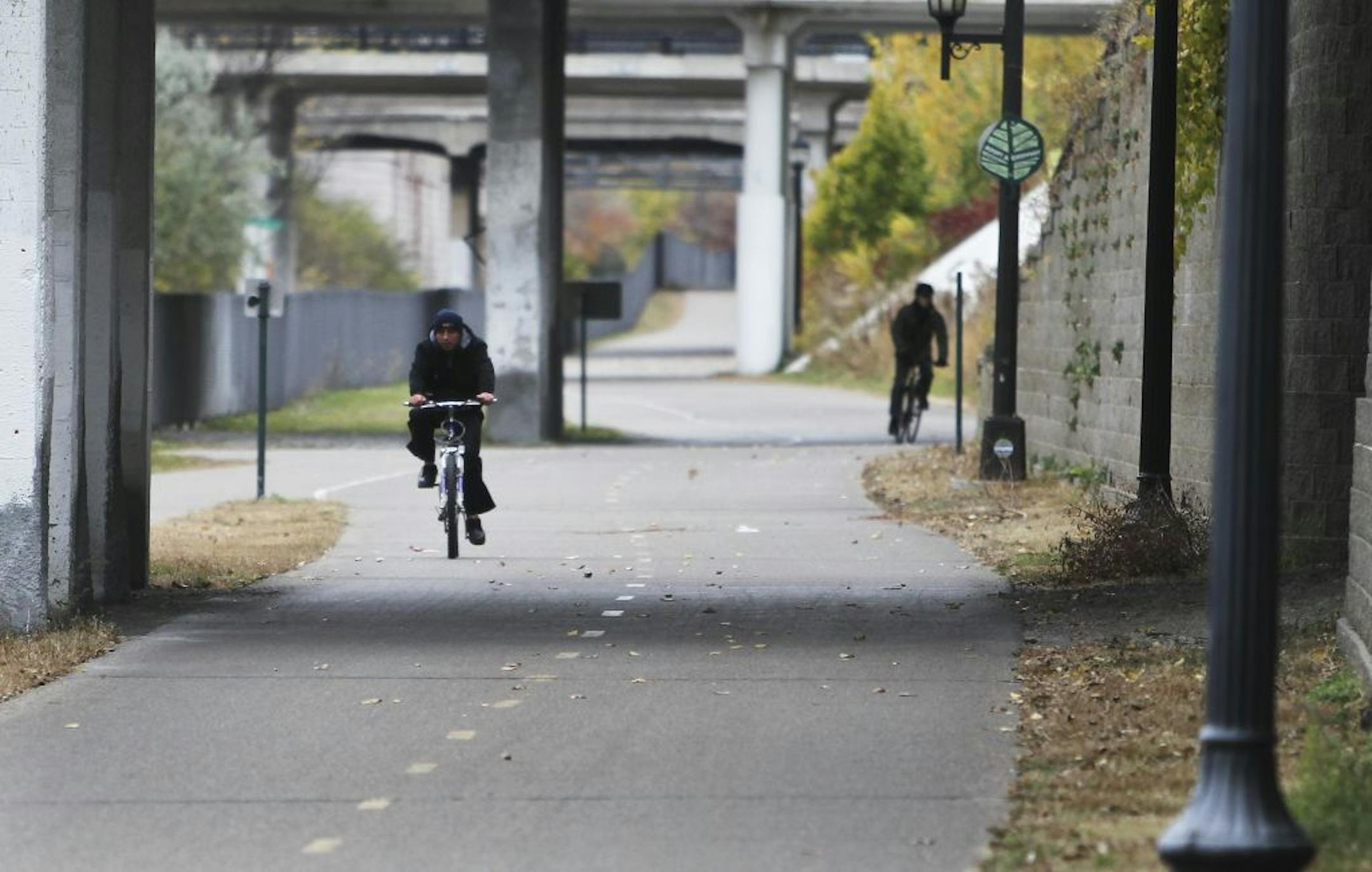
If half of all short trips during the summer months were done on two wheels instead of four, the Twin Cities would prevent nearly 300 deaths each year and save $57 million in medical costs, according to a study on biking and air pollution published Wednesday.
If trips of 5 miles or less were conducted by bicycle during the 124 best weather days of the year, 11 major cities in the Midwest would prevent 1,100 deaths from lung diseases, obesity and heart disease and save $7 billion annually.
Though the health benefits from reducing air pollution and increasing exercise are well known, the study is the first to estimate the combined effect of both on a city-by-city basis.
"If we were to make it as easy to bike as to drive a car, it would pay for itself a thousand times over," said Steve Clark, program manager for Transit for Livable Communities, a Minneapolis nonprofit that promotes alternative transportation.
The new findings come at a time when many cities, including Minneapolis, are trying to promote bicycling as a way to improve public health and reduce traffic congestion. They could be particularly useful for city planners and state legislators as they debate how best to spend shrinking dollars for transportation infrastructure, said the researchers. Just this week, Republicans in the U.S. Senate failed in their third effort in less than two months to eliminate federal money for bike paths, walking trails and other transportation enhancements.
The analysis was conducted by researchers at the University of Wisconsin and presented Wednesday at a major public health conference in Washington, D.C.
Effect of short trips
Jonathan Patz, director of the Global Health Institute at the University of Wisconsin and one of the authors, said the researchers wanted to estimate the change that would result from reducing short car trips. About 40 percent of all U.S. car trips are less than 2 miles -- yet mile for mile they produce far more air pollution than longer trips. Starting a car and driving it while the catalytic converter is still cold generates the greatest amount of emissions.