

The McKnight Foundation is putting a $25 million Midwest focus on its efforts to combat climate change.
Two grants from the philanthropy's new Midwest Climate & Energy program will aim to support strategies that reduce greenhouse gas emissions through the use of renewable energy and increased energy efficiencies in agriculture and transportation.
The two-year grants of $20 million to Energy Foundation and $5 million to RE-AMP, a network of nonprofits, extend existing funding partnerships and the philanthropy's $100 million commitment, announced in 2008, to blunt climate change. The two groups will focus on developing policies and public education to reduce dependence on fossil fuels in Minnesota, the Dakotas, Wisconsin, Illinois, Iowa, Michigan and Ohio.
Noting that Midwesterners contribute 22 percent more greenhouse gases per capita than other Americans because of the region's heavy reliance on coal for electricity, McKnight board chairman Ted Staryk said that also means the Midwest is "uniquely well-positioned to turn the dial the other direction."
President Kate Wolford added, "As the region experiences the impacts of more and more 'once in a century' floods and other weather events, we see a growing demand across local businesses, government, and communities to incorporate climate mitigation and adaptation measures into decisionmaking."
The funding could help enhance economic opportunities in renewable energies and new, clean technologies, said Eric Heitz, president of the San Francisco-based Energy Foundation, which has received McKnight grants since 1993.
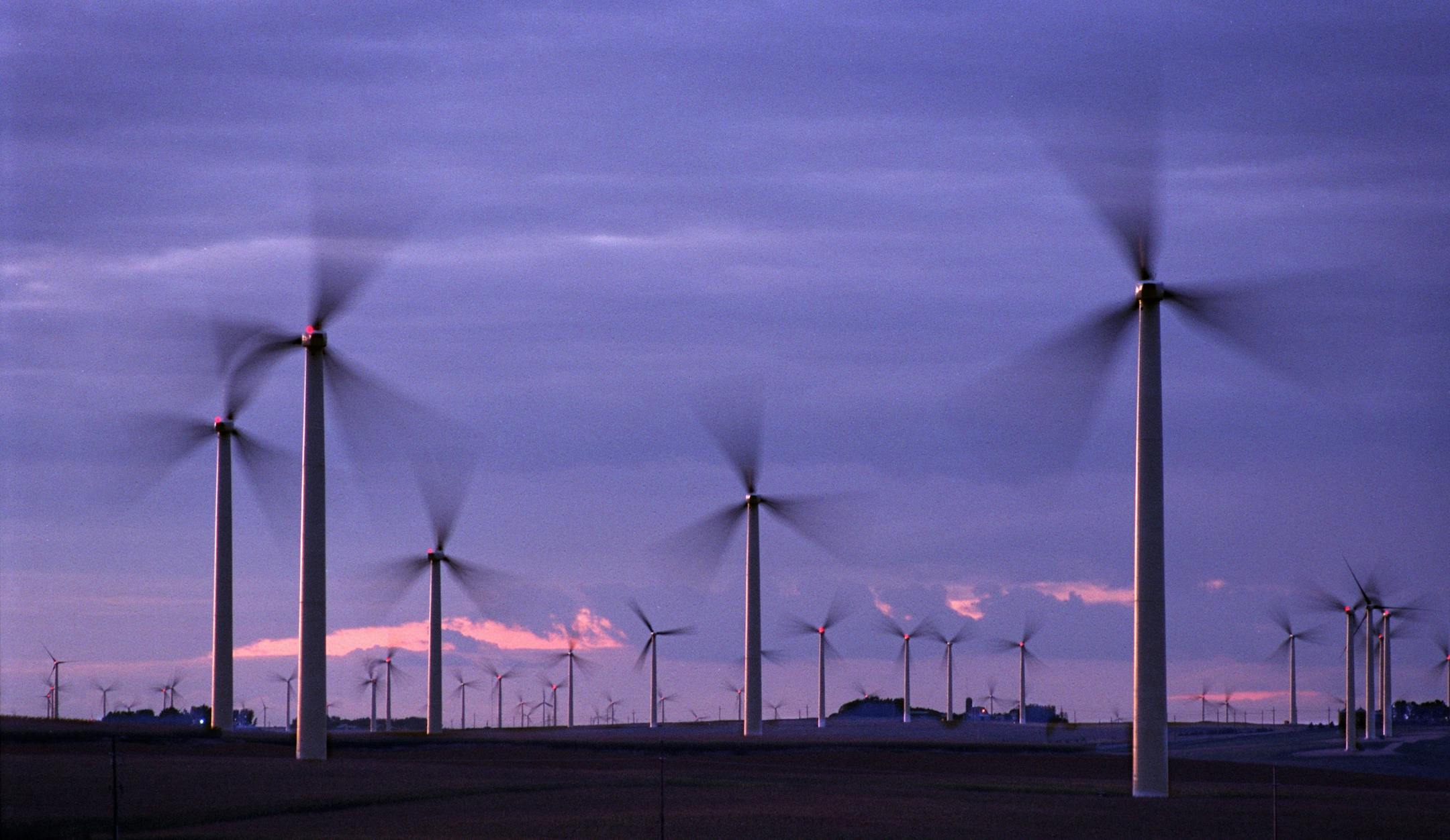
"Minnesota has good wind resources, but unless you create policies for getting them on the road to market, you won't be able to bring them to people," Heitz added. Filling such gaps is "enabling innovation and competition," he said.
Michael Noble, executive director of the Twin Cities-based Fresh Energy, a clean-energy economy advocacy group, who is also chairman of RE-AMP's clean energy working group, said the Midwest is "way, way down in the hole," relying on aging coal-burning power plants. But policies such as Minnesota's renewable energy standard, which sets graduating goals over time for the amount of energy generated by renewables, can actually help the region take the lead into clean energies. McKnight's grants would support development of such policies, he said.


