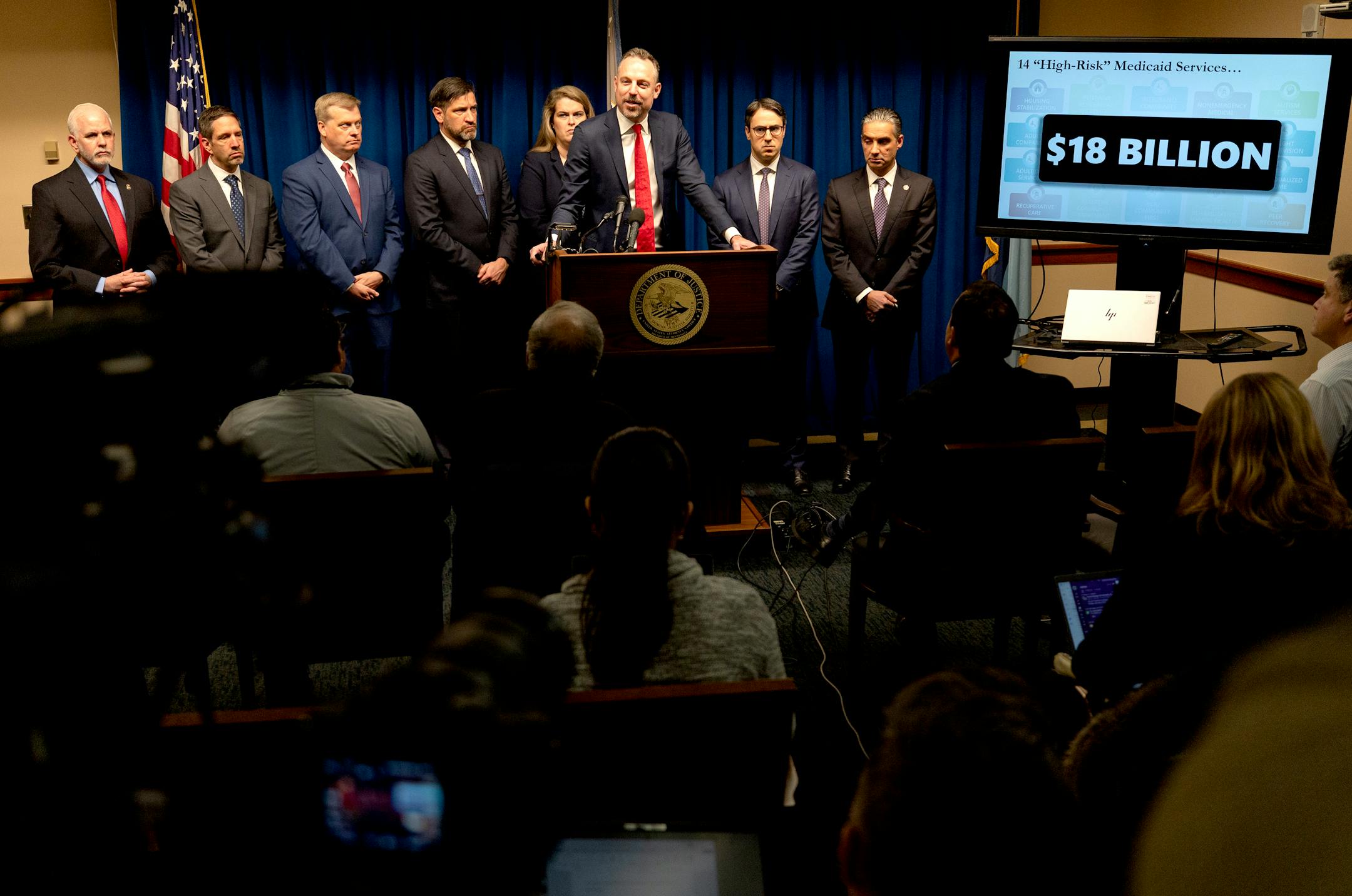
The Trump administration dispatched thousands of federal agents to Minnesota under the stated goal of beefing up the response to the state’s fraud crisis following viral claims of wrongdoing by Somali immigrants.
Two months later, Trump administration officials have said little about what those newly arrived federal agents are doing to root out and prosecute fraud in Minnesota’s social service programs. Deportations and violent clashes with protesters, including the killing of two Minnesotans who were U.S. citizens, have been the most notable features of Operation Metro Surge.
Ongoing fraud investigations, meanwhile, experienced a massive setback this month when six of the state’s top federal prosecutors resigned in protest of the Justice Department’s investigation into 37-year-old Renee Good’s killing. Prominent state leaders, including Gov. Tim Walz, quickly recognized their departures as a major loss for fraud-fighting efforts.
Vic Hartman, a former FBI special agent and forensic accountant in Atlanta, said the DOJ’s white collar investigation divisions have been decimated under Trump. Skilled professionals are leaving in droves, and federal crime-fighting agencies are under-resourced.
“If the government wants to deport their way out of this fraud problem, they may be on a path and [the Department of Homeland Security] can do that,” Hartman said. But if the end goal is prosecuting the offenders, “they’re doing all the wrong things.”
The Department of Homeland Security (DHS) and the U.S. Attorney’s Office in Minnesota did not respond to requests for comment about the direction of the fraud investigation. The FBI declined to comment.
The Minnesota Department of Human Services said in a statement that the agency has conducted more than 3,000 investigations since 2020 and referred more than 500 cases to law enforcement.
“We have seen no correlation between Operation Metro Surge and the fight against fraud in Minnesota,” the department said. “The work the Minnesota Department of Human Services has done to identify fraudulent providers and implement strong program integrity measures is being used to sow doubt in public social programs and as an excuse to defund services.”