
Minnesota medical transportation program faces new scrutiny

Providers and prosecutors have seen issues in the Medicaid-funded nonemergency medical transportation program for years. It’s the subject of a new video by conservative influencer Nick Shirley.

January 15, 2026 at 1:56AM
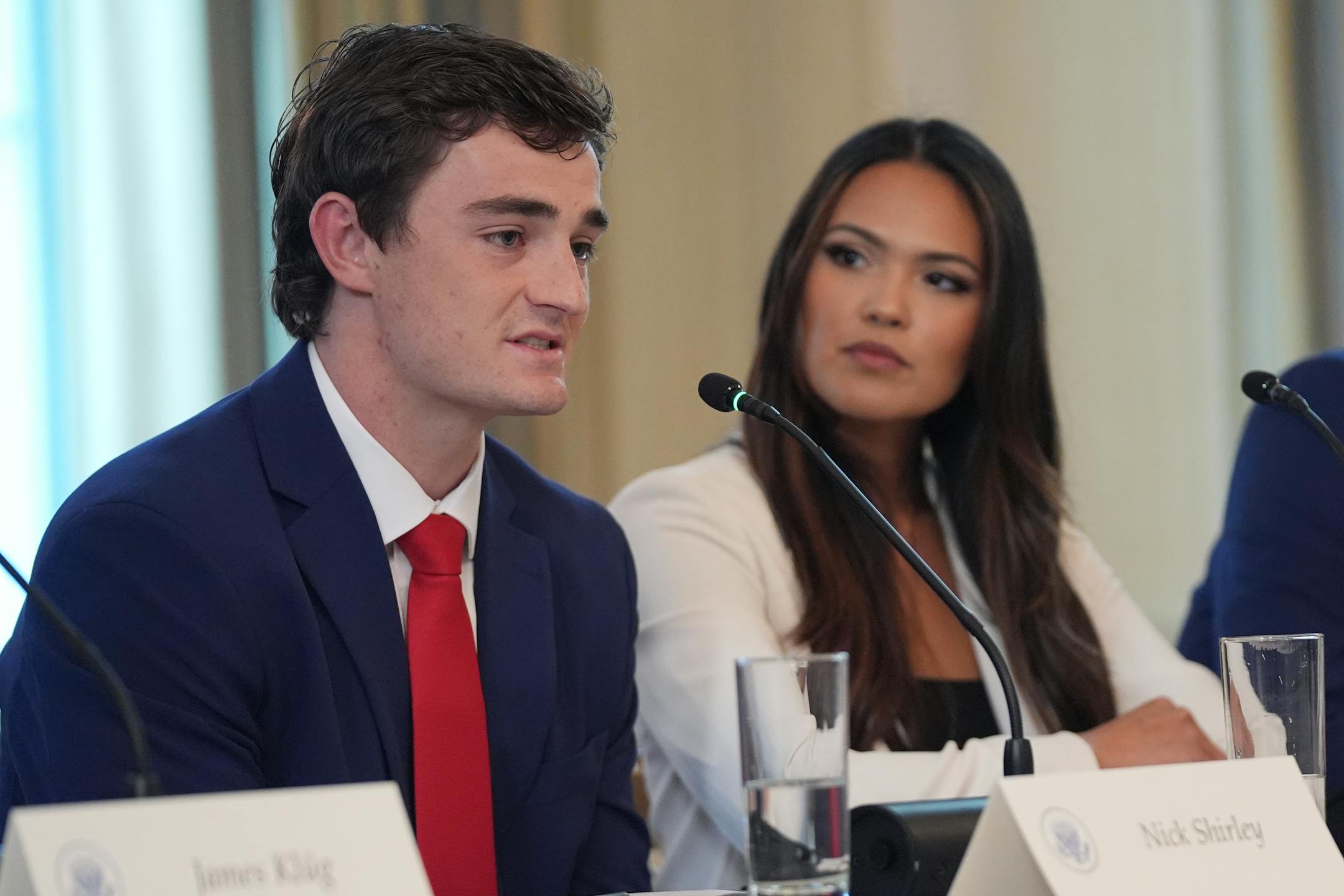
Nick Shirley speaks during a roundtable meeting with President Donald Trump on antifa in the State Dining Room at the White House, Wednesday, Oct. 8, 2025, in Washington, as Savanah Hernandez listens. (AP Photo/Evan Vucci)
Nick Shirley speaks during a roundtable meeting with President Donald Trump on Oct. 8. The conservative influencer's latest video focuses on potential fraud in nonemergency medical transportation programs. (Evan Vucci/The Associated Press)

A transportation service that pays for people’s rides to medical appointments is among the Medicaid-funded programs facing new scrutiny for its vulnerability to fraud, with some in the industry saying they have been raising red flags for years.

The program, known as nonemergency medical transportation, provides tens of thousands of rides per year across the state and has, over the years, prompted scrutiny from legislative auditors and was a focus of a massive Medicaid fraud investigation.

Now it’s the topic of a new video released Jan. 14 from conservative influencer Nick Shirley, whose previous video alleging widespread fraud at Somali-owned Minnesota child care centers went viral. That video prompted the Trump administration to freeze child care funds to the state and launch a Department of Homeland Security investigation into the centers.

People working in nonemergency medical transportation “have been ringing the fraud bell for quite some time,” said Scott Isaacson, president of the Minnesota R-80 Transportation Coalition, which represents many providers. He shared a list with the Minnesota Star Tribune of the 10 most prevalent forms of fraud in the program that he and others in the field are aware of.

Under federal law, states must provide Medicaid recipients transportation to appointments if needed. The transportation providers contract with the government and managed care organizations to do that work, taking people around the state to everything from dentist visits to dialysis appointments to addiction treatment.

The program, along with many other Medicaid-funded services, has seen expenditures climb in recent years. Minnesota Department of Human Services’ data shows nonemergency medical transportation providers billed around $80 million in 2018. By 2024, that climbed to more than $115 million before dipping last year to roughly $88 million.

The transportation program is one of 14 that Gov. Tim Walz’s administration identified last year as at high risk for fraud. Rep. Kristin Robbins, who leads the Fraud Prevention and State Agency Oversight Policy Committee and is a Republican candidate for governor, said she plans to focus on nonemergency medical transportation in a future committee meeting.

Prosecutors said billions of dollars in taxpayer money may have been abused in the 14 programs.

Nonemergency medical transportation providers were a major focus in an extensive, yearslong investigation by Medicaid fraud prosecutors in the Minnesota Attorney General’s Office, called PITSTOP 66. More than 30 people have been charged in that investigation, which looked at a range of fraudulent activities tied to Faribault residents being transported to Twin Cities medical specialists.

But concerns about a lack of oversight in the medical transportation program date back even further. Just under 15 years ago, a report by Minnesota’s Office of the Legislative Auditor highlighted various issues with how the state was running nonemergency medical transportation. It included a warning that the Department of Human Services “provides little statewide oversight of the program.”

As part of the Walz administration’s crackdown on fraud in recent months, the state has added a third-party billing review process for nonemergency medical transportation and other risky programs and halted the enrollment of new providers for those services.

Nick Shirley video

The transportation providers Shirley highlights in his video are not listed as having received reimbursements from the state in Medicaid claims data provided by the Department of Human Services. Information on providers who billed for a very small number of services was not included in the data.

In Shirley’s video, he appears alongside David Hoch, the same man who spirited him around Somali-run day cares. Hoch said in the video that the transportation services are the “heart” of the social services fraud scandal that has thrust Minnesota into the national spotlight, and he continued to blame the Somali community for fraud.

“All of this fraud revolves around these transportation companies,” Hoch said in the video, claiming the Medicaid-funded drivers ferry people to other programs that have faced fraud allegations, including autism treatment centers.

Shirley and Hoch visited providers that offer transportation, health services and day care in Minneapolis and several Twin Cities suburbs and came to the conclusion that the companies are responsible for over $11 million in fraud, largely using observations to assert the providers are operating illegitimately.

Snow-covered vans lead Shirley to claim the drivers aren’t ferrying people around. He later suggests a lack of footprints outside a day care proves it isn’t serving children. Shirley said the absence of vans at multiple transportation businesses is further evidence the providers are fraud-ridden.

Department of Human Services Inspector General James Clark said in a statement that the state is investigating and taking action to stop fraud every day, and investigations must based on facts.

“The video contained speculation, but no evidence that the state was billed for services that were not provided. Minnesota DHS is following up on the businesses and allegations in the video,” he said. “If we find evidence of fraud, we will suspend payments and refer people and businesses to law enforcement.”

Fraud concerns

The lack of access to transportation for medical appointments remains a major issue, particularly in greater Minnesota. Nonemergency medical providers have long said regulations and low payment rates have made it difficult to stay in business, particularly in rural communities.

Isaacson, who is president of Lifts Transportation, said that while providers following the rules can’t get rich off the program, he does see many ways people could take advantage of the system. For example, he’s heard from several drivers who took clients to methadone clinics that other companies approached their passengers and offered kickbacks if the client rode with them.

Other forms of fraud he suggested occur include: billing for trips not rendered or for medically unnecessary transportation, “ghost riders,” duplicate billing and collusion with clinics or interpreters.

One of the biggest issues with the program, he said, is decentralized oversight, with the Departments of Transportation and Human Services and managed care organizations all playing a role.

“When you’ve got so many different oversight authorities, it’s easy for someone to navigate the cracks of that,” he said.

The state contracts with managed care organizations, such as HealthPartners, Medica or UCare, to handle health care services for many people enrolled in Medicaid and other programs. Various nonemergency medical transportation fraud cases that investigators have looked into over the years arose through UCare, the Minneapolis-based nonprofit health insurer that is currently winding down operations.

In the PITSTOP 66 cases, investigators in the Minnesota Attorney General’s Office found drivers were overbilling, and drivers, interpreters and providers were billing for services not provided.

UCare allowed people to be transported up to 60 miles for specialty care without preauthorization. According to prosecutors, interpreters recruited people around Faribault and arranged appointments with providers — such as an acupuncturist, a dentist or a mental health counselor — who were nearly 60 miles away in the metro who did not speak the same language as the clients. Meanwhile, there were providers closer to the clients’ homes, some of whom did speak their language.

Medical transportation programs in other states, including Massachusetts, New York and Florida, have also been targeted by fraudsters.

Last year, New York Attorney General Letitia James announced a “major takedown” of 25 transportation companies that had been defrauding Medicaid. And in Florida, investigators charged people in a transportation scheme they said defrauded the Florida Medicaid program of over $5 million, with a nonemergency medical transportation service “billing Medicaid for thousands of trips never provided.”

about the writers

about the writers

Jessie Van Berkel

Reporter

Jessie Van Berkel is the Star Tribune’s social services reporter. She writes about Minnesota’s most vulnerable populations and the systems and policies that affect them. Topics she covers include disability services, mental health, addiction, poverty, elder care and child protection.

See Moreicon

Eva Herscowitz

Reporter

Eva Herscowitz covers Dakota and Scott counties for the Star Tribune.

See Moreicon

Eleanor Hildebrandt

Reporter

Eleanor Hildebrandt is a reporter for the Minnesota Star Tribune.

See Moreicon

More from News & Politics

See More
card image
Jeff Wheeler/The Minnesota Star Tribune

Gov. Tim Walz asked federal authorities to "end this occupation" of federal immigration agents in Minnesota. A federal judge has declined to immediately rule on the ICE surge in Minnesota.

Nick Shirley speaks during a roundtable meeting with President Donald Trump on antifa in the State Dining Room at the White House, Wednesday, Oct. 8, 2025, in Washington, as Savanah Hernandez listens. (AP Photo/Evan Vucci)