

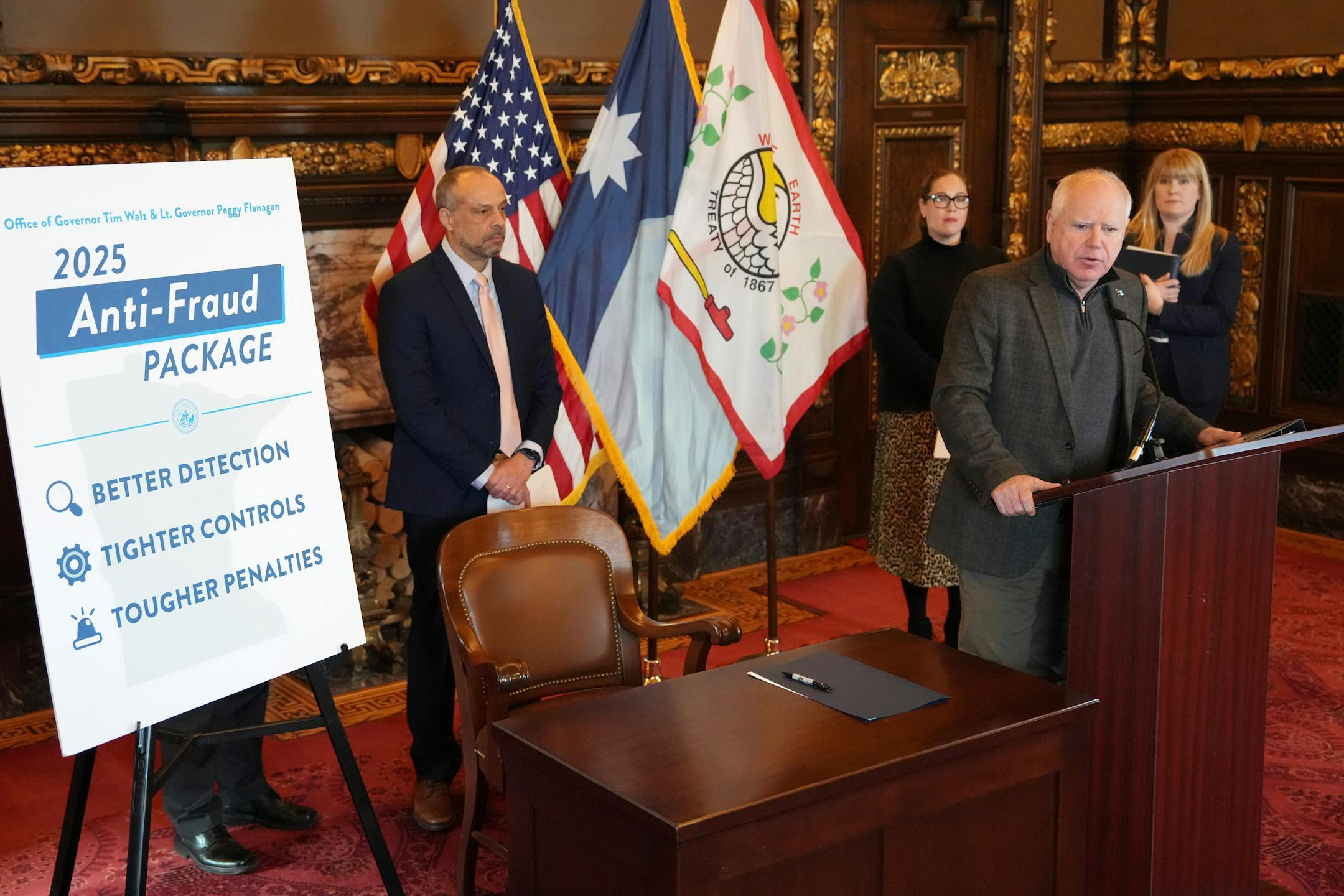
As part of ongoing efforts to prevent and combat the fraud that has roiled social services programs meant to help Minnesotans in need, the state Department of Human Services announced Thursday, Jan. 8, that it will freeze enrollment of new providers in 13 Medicaid services considered high risk for fraud.
Services include integrated community supports, intensive residential treatment services and adult day services. It comes after the state paused payments to providers in 14 Medicaid programs in October and discontinued Housing Stabilization Services, which used Medicaid dollars to help people find and keep housing.
Officials have not yet decided when the moratorium will begin, but it will last at least six months, they said. The department is working with the U.S. Centers for Medicare & Medicaid Services (CMS) to implement the freeze.
“This action is one more step we are taking to disrupt fraudulent billing,” Temporary Human Services Commissioner Shireen Gandhi said in a statement. “We must safeguard Medicaid resources, always mindful that access to these programs is a lifeline for so many Minnesotans.”
Officials previously announced two-year licensing freezes on home and community-based services and adult day programs, and have suspended payments to some providers over fraud concerns.
Republicans have frequently criticized Gov. Tim Walz’s administration for not doing enough to stop the fraud sooner, and a viral video in December alleging fraud among Minnesota day care centers has fueled broader national scrutiny by politicians about fraud in Minnesota.
Since May 2025, the Department of Human Services said it has taken several steps to combat fraud, including disenrolling about 800 inactive providers in high-risk programs and bringing on a third-party vendor to audit fee-for-service billing to 14 high-risk services. Walz also appointed a former FBI agent and Bureau of Criminal Apprehension superintendent as the state’s first director of program integrity.
Providers of social services programs under scrutiny have voiced concerns that payment freezes go too far and hurt legitimate providers and the clients who need those services.


