
Minnesota pauses licenses for new adult day care centers amid fraud concerns

State officials plan to stop new providers from enrolling in other “high-risk” programs as they increase focus on oversight.

The Minnesota Star Tribune
December 16, 2025 at 10:38PM
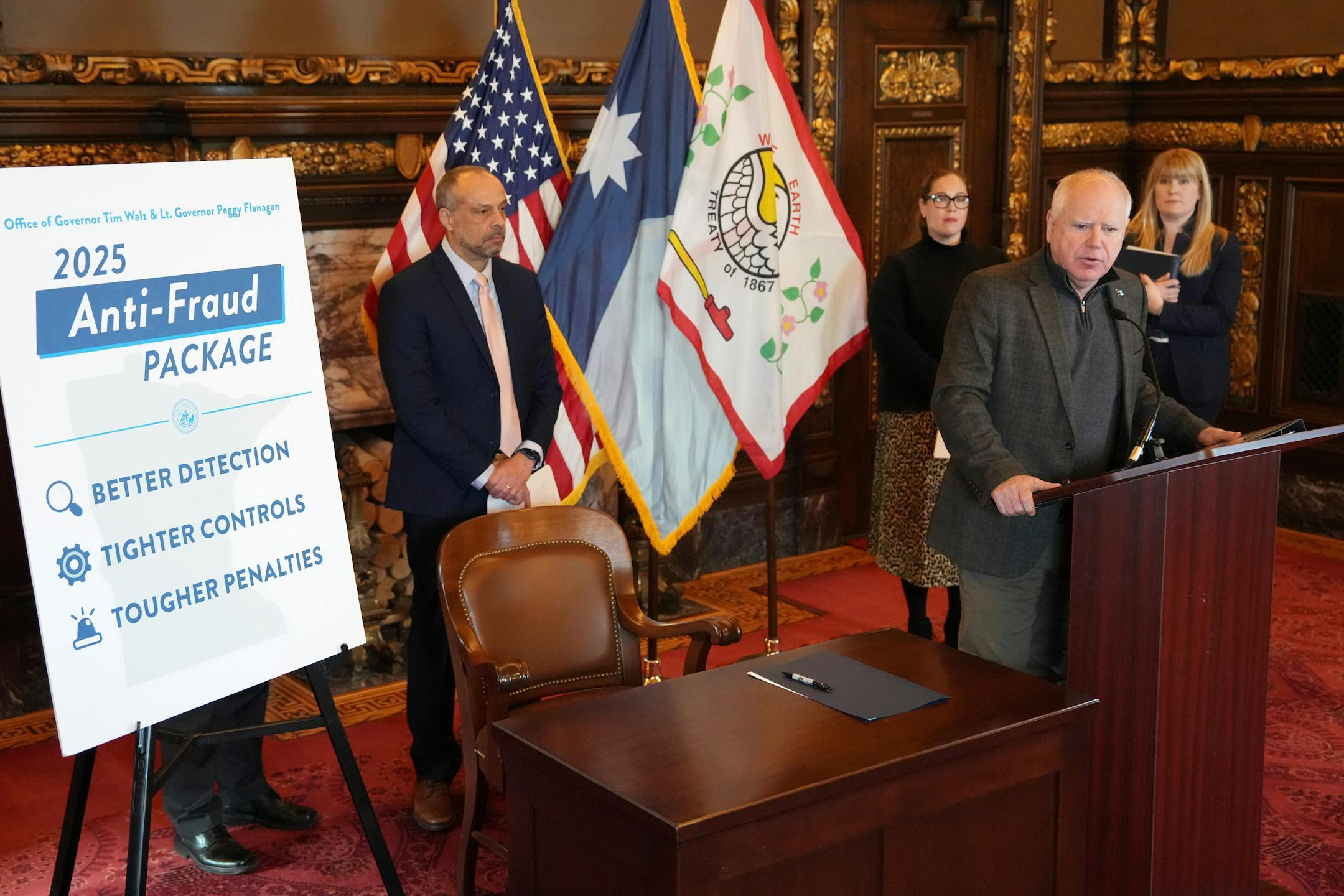
Gov. Tim Walz speaks in the Governor's Reception Room at the State Capitol on Jan. 3 after signing an anti-fraud executive order. (Anthony Souffle/The Minnesota Star Tribune)

Minnesota is pausing new licenses for adult day care providers as state leaders try to combat fraud in social service programs.

The capacity of the day centers far exceeds the number of people with disabilities and older adults who use the services in Minnesota, Department of Human Services officials said on Tuesday, noting they are investigating reports of day center providers using kickbacks to drum up business.

The announcement was the first in series of state updates on fraud-fighting efforts. Gov. Tim Walz said last week his administration should be doing more to keep people informed on such efforts.

“We are shifting resources to stop accepting and reviewing new applications for businesses and focusing our resources on oversight of existing businesses,” DHS Inspector General James Clark said. “It’s one of many actions we’re taking to tighten oversight and prevent and detect fraud.”

More temporary moratoriums on new providers will be coming in 14 state programs that have been identified as “high-risk” for fraud, Clark said. Last week federal officials told the state to pause enrollment for all high-risk services, he said.

Over the past five years the licensed capacity for adult day cares has climbed 43%, while there has only been a 7% increase in participants, said temporary DHS Commissioner Shireen Gandhi. She said there’s almost 3,000 more available day center spots than there are people in need of the services.

The two-year pause on new day center licenses starts Feb. 1. Gandhi said the department will work with partners to figure out if they need to make exceptions.

Adult day services reduce isolation, promote connection and save the state money, said officials with LeadingAge Minnesota, which represents organizations serving older adults.


They called the licensing halt a “critical blow to a vital service for Minnesota seniors,” adding that “citing fraud prevention and federal enrollment directives as cover for this pause is disingenuous. Oversight should strengthen services, not block access to them.”

Kickback issues — where people pay clients to come to their business — are a sign of an oversaturation of providers, Clark said.

The kickback concerns are not new to the agency. Last March, DHS Deputy Inspector General Tom Johnson told lawmakers they had been getting reports of kickbacks in the program. He said they had been hearing about adult day center providers “basically paying someone to come to you to receive services.”

In the best-case scenario they were actually providing services to the clients, he said, but even that situation would be a felony kickback under federal law. However, it was not illegal under state law at the time and Johnson said they didn’t have authority to take administrative action or refer such cases to law enforcement.

Lawmakers added new anti-kickback protections that started in August.

However, if someone was paying people to come to their business and then not doing the work, DHS could investigate that fraud, Johnson said.

State to provide fraud updates

The two-year halt on new adult day care licenses follows a similar pause on Home and Community-Based Services providers, who help people with disabilities and those older than 65 live in their communities. Providers of those services criticized the pause, saying it was an overcorrection that took them by surprise and could result in people not getting the support they need.

The Walz administration has increased scrutiny of provider payments in 14 “high-risk” Medicaid programs, including Early Intensive Developmental and Behavioral Intervention services for autism, Integrated Community Supports and Nonemergency Medical Transportation. The administration contracted with health care and technology company Optum to review Medicaid claim data and find irregularities in the programs.

And last week the governor announced he was hiring Tim O’Malley, the former superintendent of the Minnesota Bureau of Criminal Apprehension and FBI agent, as a program integrity director.

Trump administration seeks data

Hundreds of millions of dollars have been stolen from state-run programs in recent years, starting with the swindling of $250 million in federal funds meant to feed children during the pandemic — known as the Feeding Our Future scheme — to more recent cases in Minnesota’s autism and housing services programs.

Republicans — from President Donald Trump to GOP gubernatorial candidates — have been condemning Walz for failing to properly oversee state programs.

Last week the Trump administration requested data from state and local officials about numerous programs that get federal funding, including programs that provide refugee assistance, foster care aid, child care subsidies and energy assistance.

“Recent reports indicating extensive and systemic fraud within Minnesota social services programs that rely on federal funding have raised serious concerns,” officials with the Administration for Children and Families said in letters seeking the data.

They asked for information on entities like service providers and subcontractors that received funds. Federal officials also sought data on program recipients, including their addresses and Social Security numbers or alien registration numbers, and documentation that the state verified that the recipients are citizens or “qualified aliens” who are eligible for the help.

State officials are reviewing the letters and determining next steps, a spokeswoman for Walz said.

“This is clearly a coordinated political attack to try to silence one of the President’s most effective critics,” she said in a statement. “The Governor takes fraud seriously and wishes the Trump Administration would too. Instead they’re launching bad faith attacks via ChatGPT letter.”

about the writer

about the writer

Jessie Van Berkel

Reporter

Jessie Van Berkel is the Star Tribune’s social services reporter. She writes about Minnesota’s most vulnerable populations and the systems and policies that affect them. Topics she covers include disability services, mental health, addiction, poverty, elder care and child protection.

See Moreicon

More from News & Politics

See More
card image
Glen Stubbe

Behind the scenes, Mayor Jacob Frey and the council have been negotiating for weeks over several sticking points.

card image
card image