
Who is Joe Thompson, the federal prosecutor who says Minnesota ‘left the door wide open’ to fraud?

Thompson, an Osseo native, looms large over state government programs, prosecuting hundreds of millions of dollars in fraud cases like Feeding Our Future.

The Minnesota Star Tribune
July 29, 2025 at 11:00AM
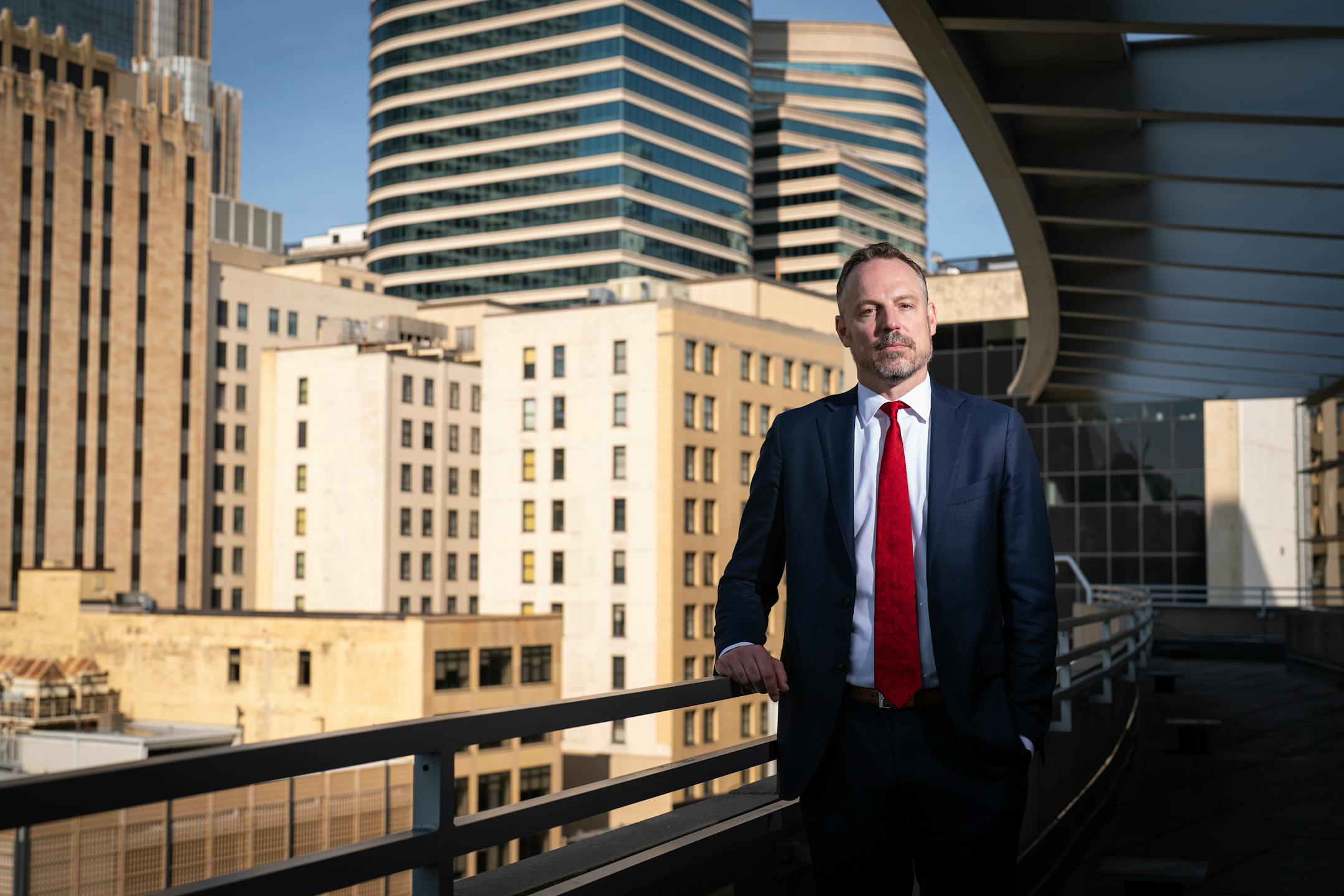
Joe Thompson, the interim U.S. attorney for Minnesota, says the fraud investigations he’s led reveal a state program system “that’s been begging to be exploited.” (Leila Navidi/The Minnesota Star Tribune)

Acting U.S. Attorney Joe Thompson is a 6-foot-5 Minnesota native who has loomed large over state government for the past several years, finding and prosecuting fraud in numerous state programs.

He has led the prosecution of Feeding Our Future fraud, which former U.S. Attorney General Merrick Garland called the nation’s largest pandemic relief fraud scheme to result in charges. And he’s led fraud investigations in a state autism program, addiction treatment, and most recently, a “massive scheme” in a state housing stabilization program.

Thompson recently estimated the amount of state money lost to fraud in these cases at over $1 billion.

Who is this thorn in state government’s side? We sat down with Thompson to find out.
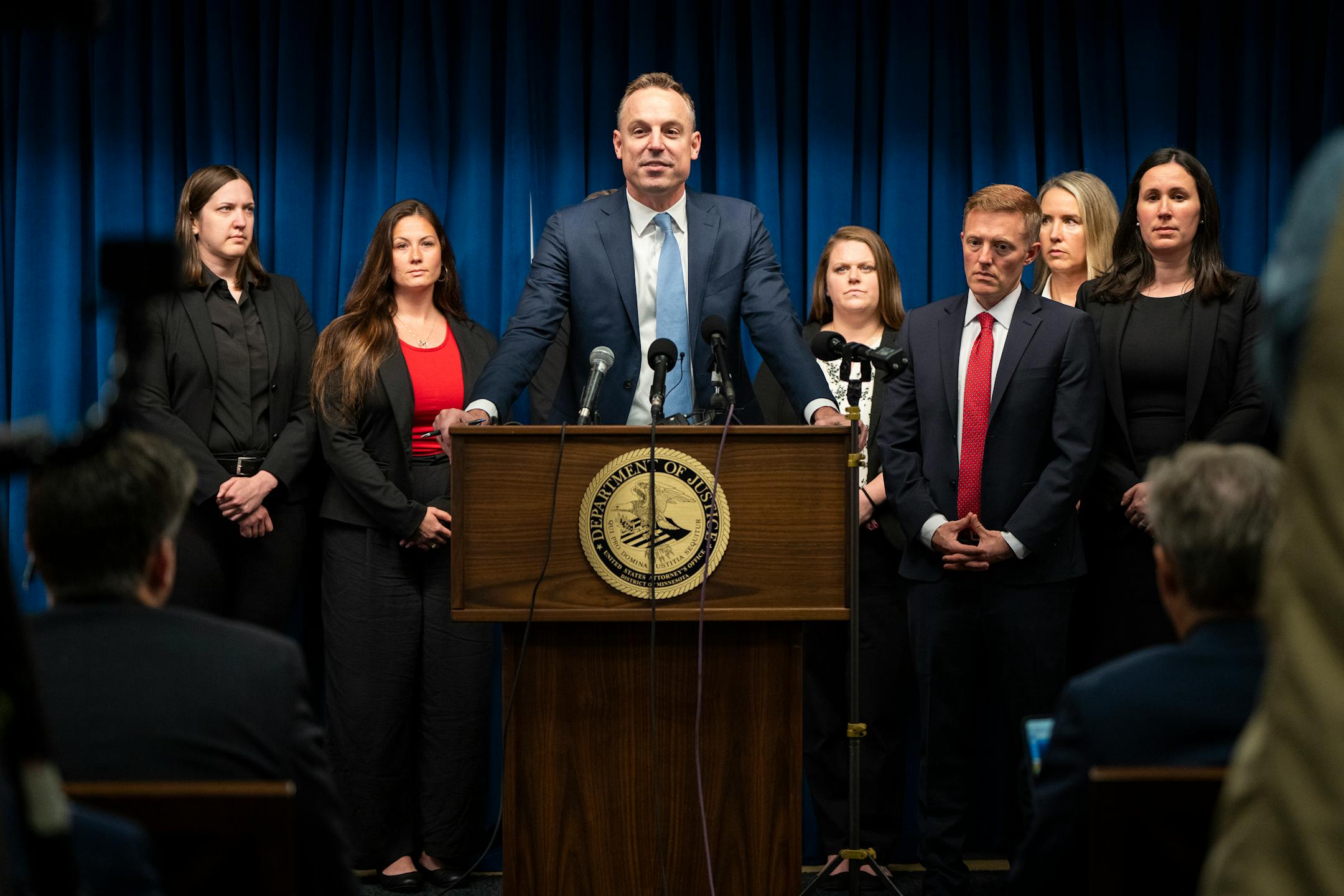
Acting U.S. Attorney Joe Thompson speaks, surrounded by the prosecution’s trial team, during a press conference after the verdict was read in the first Feeding Our Future case at the federal courthouse in Minneapolis on June 7. (Leila Navidi/The Minnesota Star Tribune)

Tell us a little bit about who you are.

I’m from Minnesota. Born and raised here. I went to Osseo High School, and then I went to Gustavus Adolphus College. After college, I moved to California, went to law school at Stanford and then I lived away for a long time.

I moved to Chicago after that, and I clerked for a federal judge in Chicago, the [U.S. District Court] Northern District of Illinois. And then I spent a year in Palau — the Supreme Court of the Republic of Palau — which is a small island nation in Micronesia. It is a country of 20,000 people. “Survivor” was filmed there a couple times. It was like living in the pages of National Geographic magazine. I was the tallest person in the Republic of Palau.

After that, I worked at a law firm Chicago for a couple years, and then I joined the U.S. Attorney’s Office in Chicago. I actually started the day Barack Obama was inaugurated as president — a memorable day in Chicago, and in my life.
I did a lot of gang prosecutions ... a lot of gang, drug cases and drug cartels ... and then I did a lot of fraud cases when I was down there, and then I moved home in 2014 to join the office here.

What were you doing when you first found out about this Feeding Our Future stuff?

It was in the summer of 2021, and a forensic accountant at the FBI, Pauline Roase ... came to me about this new case, and said, “Joe you gotta look at this. ... the amount of money flowing through this company [Feeding Our Future] is just enormous.” And so then we got to work.

What happened?

It’s fair to say, a lot of our state government programs, while perhaps well-intentioned, aren’t implemented in a way with enough focus on program integrity, and to catch fraud. ... the most egregious of all [is] the housing stabilization. It’s not the biggest dollar amount yet. It’s just like written to be defrauded.

I’ll say this: It’s clear our state needs to take fraud more seriously, and we can’t just assume that people who participate in these programs — even if they’re ostensibly a nonprofit — are doing so honestly. And that’s especially true when people are getting millions or even tens of millions of dollars a year, and when newly created companies are doing so, that’s obvious.

What motivates you and your team?

It’s like the dream lawyer job. My job is incredible. I always compare it to putting together the world’s most difficult puzzle, where you don’t have all the pieces, and you have someone trying to mess up your pieces as you try to put the puzzle together. And at the end of the day, you stand up in front of the public, an audience, and you have an adversary, and there’ll be a winner and a loser, which is a pretty incredible way to live.

But most of it is just prep.

Yeah, but the investigation is a lot of fun. We have a team full of brilliant people working really hard, working on interesting stuff that’s really important. The fact that it’s in the news, and mom gets to see you in the paper, that’s fun too.

Is your mom still around here?

Oh yeah. Both my parents still live in Minnesota.

Joe Thompson, the interim U.S. attorney for Minnesota, recently estimated the amount of state money lost to fraud at over $1 billion. He attributes it to a "widespread failure across nearly every level of leadership in Minnesota." (Leila Navidi/The Minnesota Star Tribune)

What do they make of all this?

The first time my mom came to watch me in court was the day that the jury bribery [in a Feeding our Future case] became public. At the end of the day, she was like “Wow, that was really exciting.” I’m like, “Mom, it’s never like that. You picked a good day to come.”

You’ve talked before about how the state is very generous with benefits and that Scandinavian model.

I grew up in Minnesota, and it’s known for good parks, good schools, traditionally believed to have relatively clean government and generous social services, and when you have massive levels of fraud, waste and abuse, that jeopardizes all of those things and creates cynicism in government.

Who’s responsible for all of this?

As a prosecutor, I’m expected to say the defendants are responsible for their crimes — and they are. But if we pretend that’s the whole story, we’re lying to ourselves. This fraud crisis didn’t come out of nowhere. It’s the result of widespread failure across nearly every level of leadership in Minnesota: Politicians who turned a blind eye. Agencies that failed to act. Prosecutors and law enforcement who didn’t push hard enough. Reporters who ignored the story. Community leaders who stayed silent. And a public that wanted to believe it couldn’t happen here.

This isn’t just a few criminals exploiting the system, this is a system that’s been begging to be exploited. We left the door wide open, and now our state has been ransacked. If we keep ignoring the truth, we’re going to lose something far more important than money. We’re going to lose the Minnesota we know and love.

Is the feds charging everyone a solution to all this fraud?

Obviously the solution to preventing fraud and waste in government programs can’t solely rely on federal criminal prosecution. That’s the most drastic step you can take, and it requires the highest level of proof and the most amount of work. So if we’re going to stop waste, fraud and abuse in these programs, it’s going to have to be more than just the U.S. attorney’s office prosecuting people.

Do you have the resources to go after everybody that may have committed fraud [in Feeding Our Future]?

Almost certainly not. We don’t have the resources to charge everyone that commits fraud in the district of Minnesota. We have a really strong team that will work tirelessly to do what needs to get done. Obviously, we’re limited by the number of hours in a day.

(Thompson’s answers were edited for brevity and clarity.)

about the writer

about the writer

Deena Winter

Reporter

Deena Winter is Minneapolis City Hall reporter for the Star Tribune.

See Moreicon

More from Politics

See More
card image
Mark Schiefelbein/The Associated Press

A Navy admiral commanding the U.S. military strikes on an alleged drug boat in the Caribbean told lawmakers Thursday that there was no ''kill them all'' order from Defense Secretary Pete Hegseth, but a stark video of the attack left grave questions as Congress scrutinizes the campaign that killed two survivors.

card image