After 70 days of ICE surge actions, Minnesotans grapple with the impact

The weight of the federal government has borne down on Minnesota in innumerable ways.

February 15, 2026 at 12:00PM
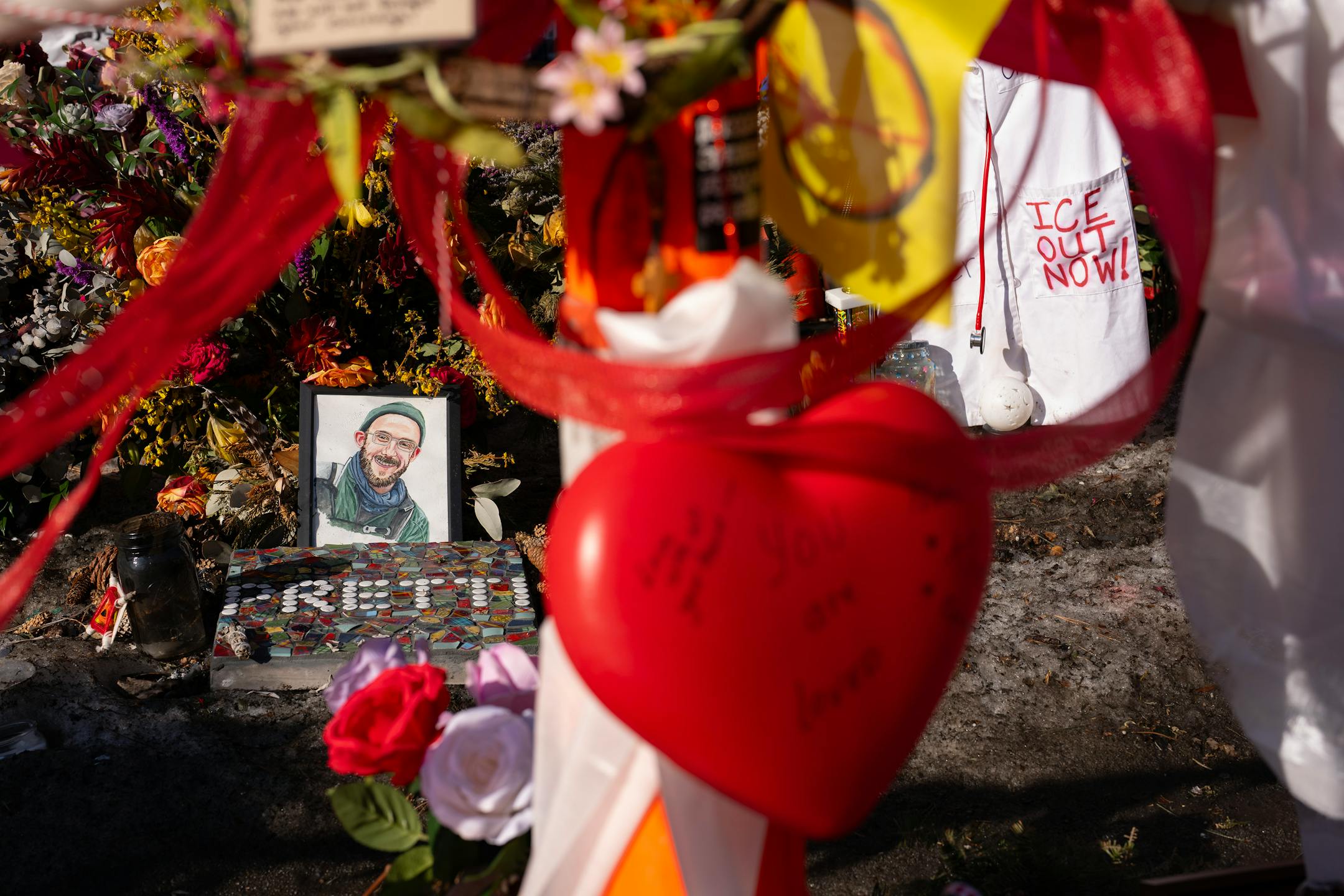
Hundreds of flowers and pieces of art are on display at the memorial site for Alex Pretti in Minneapolis on Saturday, Feb. 14. (Alex Kormann/The Minnesota Star Tribune)

Seventy days elapsed between the Trump administration announcing Operation Metro Surge in December and border czar Tom Homan saying Feb. 12 that the flood of federal agents into Minnesota will soon end.

During those 10 weeks, the full weight of the federal government bore down on a state, particularly on the Twin Cities.

Searing images from what the administration called the largest immigration enforcement operation in U.S. history became forever imprinted on a state’s psyche:

Masked agents killing two U.S. citizens in the street as bystanders captured video. Tens of thousands of Minnesotans rising up in protest. Immigration and Customs Enforcement agents pulling drivers out of smashed car windows. A 5-year-old boy in a bunny-eared stocking cap being detained. Protesters blowing whistles in federal agents’ faces, swarming their hotels and confronting them, sometimes violently.

With the operation’s promised end coming, a dazed Twin Cities and Minnesota now step back and confront the big questions:

What, exactly, has the federal government wrought in Minnesota?

How did these 70 days change us, in ways we already see and in ways we may not yet understand?

And what does it all mean for the state and the country?

“We’ve been through natural disasters, we’ve been through COVID, but this is something I don’t think any state has ever experienced,” Gov. Tim Walz said after the federal government announced the surge’s imminent end.

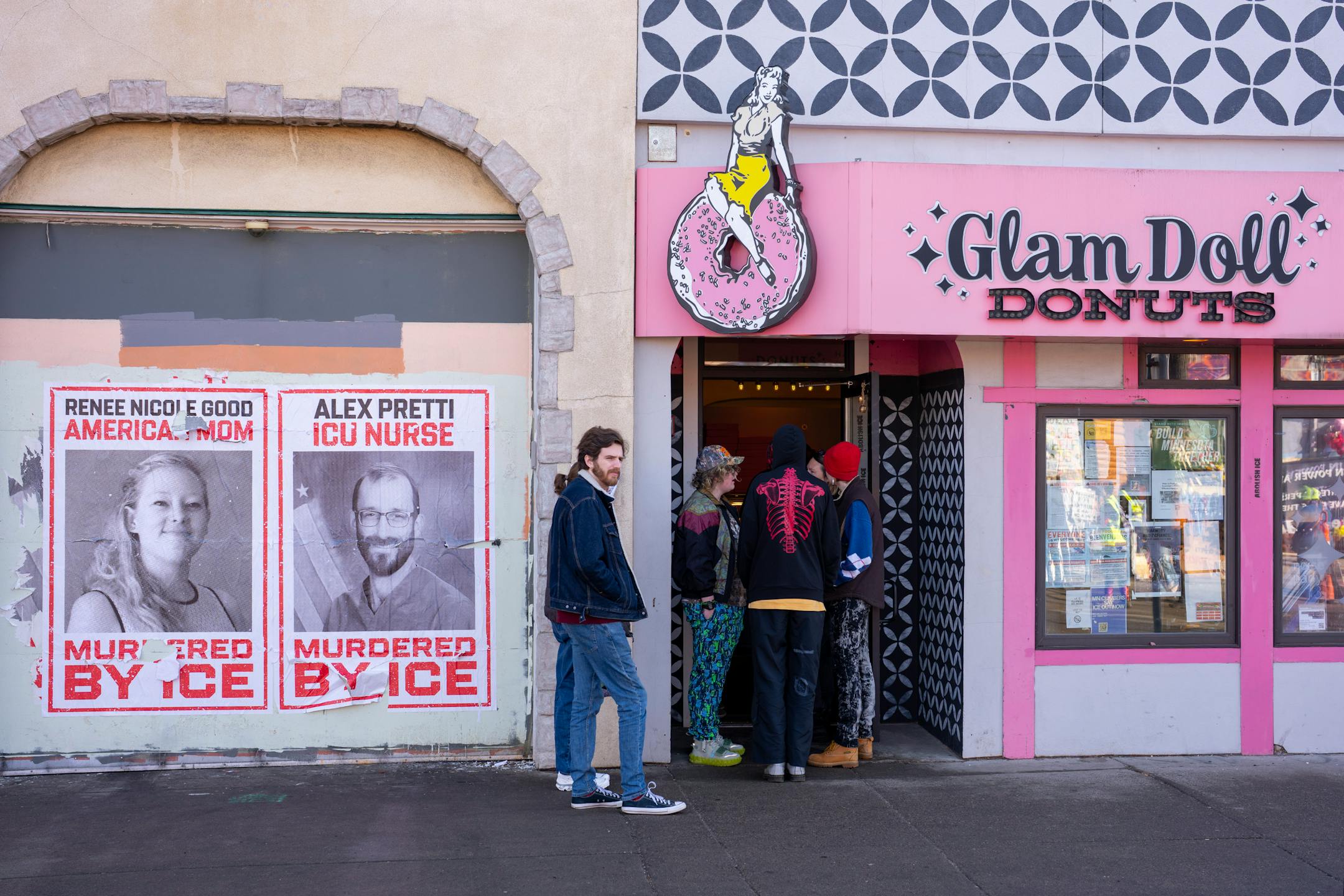
Sofia Menaquale, 4, enjoys a doughnuts with her mother, Tausha, near photos of Renee Good and Alex Pretti inside Glam Doll Donuts in Minneapolis. On Jan. 24, federal agents shot and killed Pretti outside the shop. (Alex Kormann/The Minnesota Star Tribune)

Some of the impacts are quantifiable. Two 37-year-old Minnesotans, Renee Good and Alex Pretti, are dead. Thousands have been detained. Detainees have described federal detention conditions as inhumane. The economic toll will cost the state billions, according to recent estimates, and recovery may take years.

Other effects are more nebulous. The gut feeling at seeing SUVs with tinted windows. The heads on a swivel at hearing whistles. The alliances formed in massive relief efforts, like the moms of Signal mobilizing alongside immigrant communities.

Most of all, the eroding faith in government — from the left, who point to President Donald Trump’s comments about “reckoning and retribution” as evidence this was always about more than immigration, and from the right, who point to the lack of cooperation on federal immigration law as evidence that Democratic politicians brought it on the state.

The federal pressures on the North Star State will long outlast the flood of federal agents:

Withholding promised federal dollars. The initial refusal to partner with the state in investigating the Good and Pretti killings. The demands for sensitive state data, from voter information to Medicaid records to nutrition assistance lists. The multiple career prosecutors leaving the U.S. Attorney’s office in Minnesota in reaction to a heavy-handed federal government.

And the federal subpoenas that arrived for Walz, Minneapolis Mayor Jacob Frey and three other Democratic elected officials as part of a Department of Justice investigation for impeding federal immigration enforcement.

In Minneapolis City Hall, days before Homan’s announcement, Frey spoke of his shock at the federal investigation. “They’re not going to actually do this, right?” Frey recalls thinking. And then, on Jan. 20, they did.

Frey refreshed his coffee — he has a 6-month-old baby at home, so sleep was at a premium even before Operation Metro Surge — and talked about how the federal investigation felt like further proof this was never about immigration enforcement. It was about creating a political narrative, he said, that progressive cities are chaotic, lawless places.

His biggest fear, he said, lies around how seemingly small things — changes in democratic norms, targeting of certain populations — can lead to much bigger things.

“These terrifying lines are being breached,” Frey said. “There are these mutual promises, both baked into law and baked into the American psyche, that are foundational to our democracy that you just expect to be met: How we treat one another. How we care for our neighbors. How we interact between jurisdictions. The limitations on what you’re willing to do in the furtherance of a political narrative.

“We’ve seen this kind of thing in other countries,” he continued. “We can’t allow it to happen here.”

Taking to streets

Fatin Omerabi has patrolled her south Minneapolis community with neighbors. She has gathered donations for immigrants. The 35-year-old, who immigrated to the U.S. from Sudan at age 2, joined tens of thousands shouting “ICE OUT!” in a downtown Minneapolis protest.

She and her parents, all U.S. citizens, have long believed democracy, fairness and equal protection are the U.S. experience. “This moment is making it clear they’re not,” she said.

Polls show cratering trust in ICE in the state and nationally. Two-thirds of Minnesotans viewed ICE negatively and believed federal agents’ tactics had gone too far, according to a recent NBC News Decision Desk/KARE 11/Minnesota Star Tribune Poll powered by SurveyMonkey. Nearly 60% blamed the Trump administration for unrest.

Immigration had been considered a Trump strength. But independent and suburban voters’ negative views on Operation Metro Surge could hurt Republicans hoping to hold onto Congress, as well as a Minnesota GOP that hasn’t won the governorship in two decades.

Immigrants may sense the ground shifting before others, Omerabi said. The past couple of months have felt like a slow-moving earthquake. Omerabi, who works in marketing, sees this moment as a warning to all Americans.

“What happens when the full force of the federal government is used to intimidate and harm rather than to protect us?” she wondered. “The real goal is just to normalize this intimidation. If Minnesota falls, that’s permission to go after every other state, so people stop resisting.”

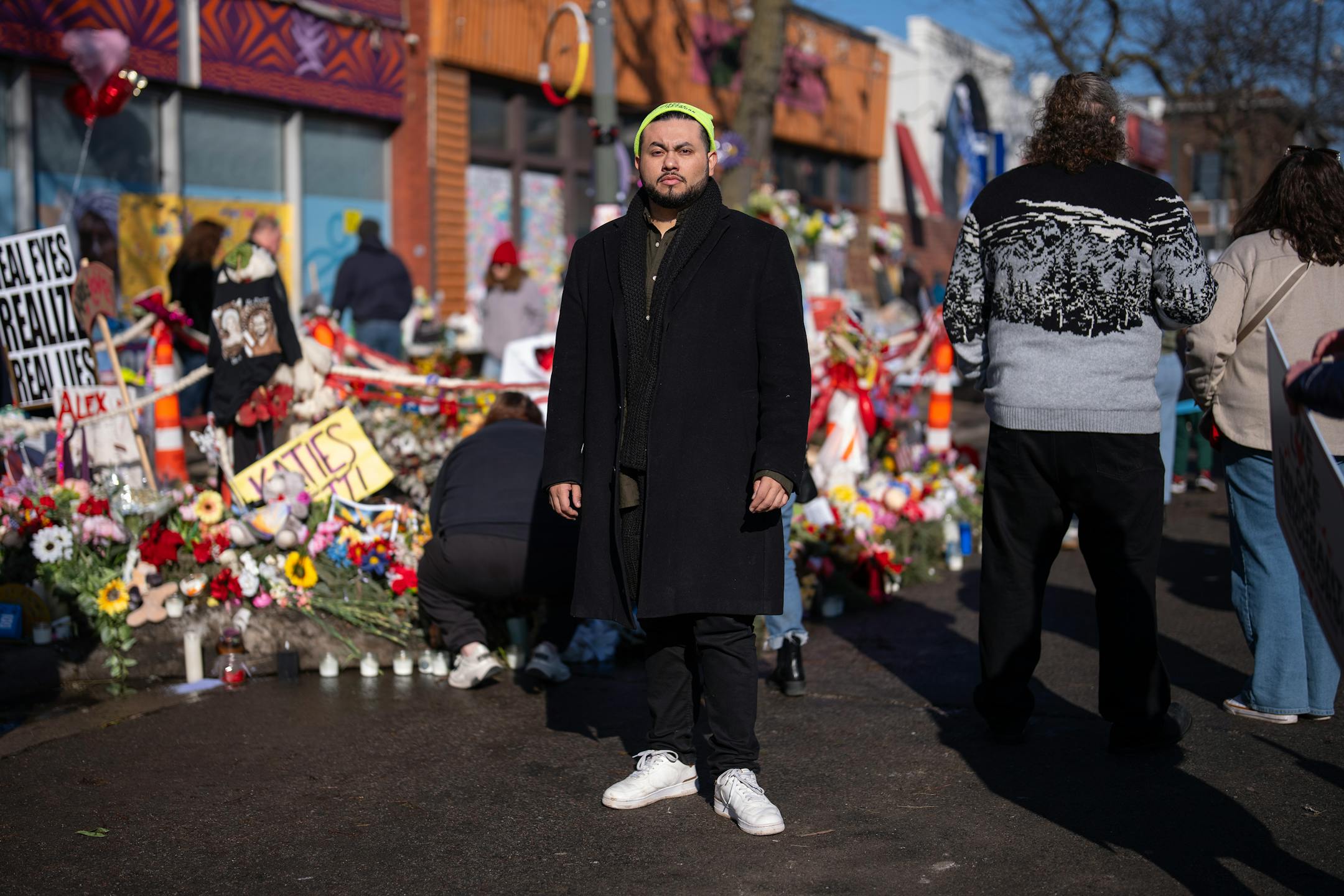
Edwin Torres DeSantiago at the memorial site for Alex Pretti in Minneapolis. (Alex Kormann/The Minnesota Star Tribune)

On Valentine’s Day, a cloud seemed to have lifted. The weather felt like spring, one of the first warm days since before Thanksgiving.

The partly flooded parking lot at St. Paul’s Hmong Village shopping center was full, as was the food court. Nearby HmongTown Marketplace was bustling as well.

Business owners here mourn the recent months: “It’s been very, very, very bad,” said Mai Khang at one HmongTown booth.

A co-worker, Wang Chee Yang, estimated traffic had been down 85% until this weekend: “No people wanted to come out here.”

Tom and Melissa Huymh took their son to Glam Doll Donuts in Minneapolis on Valentine’s Day to celebrate his eighth birthday. Dozens lined up outside, and mourners congregated across the street at the Pretti memorial.

People wait in line to get inside Glam Doll Donuts in Minneapolis on Feb. 14. The shop is located across the street from where Alex Pretti was killed by ICE agents Jan. 24. (Alex Kormann/The Minnesota Star Tribune)

“I distrust this administration a lot because everything they say has been a lie,” Tom Huymh said. “There’s going to be distrust there for a while.”

They also felt local pride.

“We’re standing up for things, and it just makes me so proud,” Melissa Huynh said.

Battle lines drawn

As soon as graphic videos of Good’s killing on Jan. 7 spread, battle lines were drawn between state and local governments and the federal government. Frey famously demanded ICE leave Minneapolis. Minnesota Attorney General Keith Ellison sued the federal government to stop the immigration enforcement operation. Responding to the local outcry, Trump put active-duty troops on standby to head to Minnesota.

Many in Minnesota, especially Democrats, called the surge a federal occupation. With 3,000 agents mostly clustered in a metro area of 3 million, the federal presence felt more intense than in a 2025 operation in Chicago, where hundreds of agents concentrated on a metro area of 9 million.

Both sides of the political aisle see foundational American principles at stake: for the left, due process and the limits of federal power; for the right, the rule of law, specifically the primacy of federal law over state and local law.

Annette Meeks, CEO of the conservative Freedom Foundation of Minnesota, chastised local lawlessness: “If local officials hadn’t adopted the utopian concept of being a sanctuary city that doesn’t follow the immigration laws of our country, all of this could have been worked out amongst grownups.”

But Operation Metro Surge has created fissures among Republicans, too, even if the Minnesota poll results still show strong Republican support for ICE.

The reaction to the shooting of Pretti, a VA nurse legally carrying a gun, brought political nuance. The left spoke up for states’ rights and Second Amendment rights, while the Republican administration angered gun-rights advocates, such as when FBI Director Kash Patel said Americans can’t take a firearm to a protest.

David Hann, former chair of the Minnesota GOP who is running for Minnesota’s open U.S. Senate seat, said he thought the administration’s actions in Minnesota should have been no surprise for an administration elected on a policy of closing the border. What’s different in Minnesota is that Democrats have made cooperation between local and federal law enforcement tenuous, he said.

The federal government, Hann said, has a mandate to enforce its laws. Protests in many instances turned into obstruction and chaos, all at the encouragement of Democratic leaders, he argued. (Democratic leaders repeatedly told protesters to stay peaceful.)

“They’ve just encouraged people to act lawlessly,” Hann said. “Why is Minneapolis different than Nashville or any other city? The difference is Democratic governance and the position they’ve taken, which is designed to provoke confrontation.”

That framing is not an article of faith among all Minnesota Republicans.

Days after Pretti’s killing, Chris Madel — an attorney who has advised Jonathan Ross, the federal agent who shot Good — dropped out of the GOP gubernatorial race.

The past couple of months in Minnesota “embody federal overreach,” Madel said, with the federal government threatening immigration enforcement to extract what it actually wants.

Madel cited Trump promising a “DAY OF RECKONING & RETRIBUTION” as why he both dropped out of the race and stopped calling himself a Republican. Madel supports immigration enforcement, he said, but things like blatant racial profiling are a bridge too far.

Scott Jensen, the GOP’s 2022 gubernatorial candidate now running for state auditor, echoed Madel’s words. Most Americans are near the political center and frustrated with the extremes, he said.

Trump won promising to secure the border and deport immigrants who committed violent crimes.

“But I don’t think anybody bargained for having these people targeted and plucked out of their neighborhoods,” he said. “An awful lot of people are saying, ‘Hey, we’re better than this.’ And most people, including a ton of Republicans, would agree with me.”

Strength in community

An Ecuadorian band was followed by Native American dancers at a community celebration and vigil at the scene of Pretti’s killing Feb. 14.

A sprawling memorial of bouquets and signs on Nicollet Avenue had only grown.

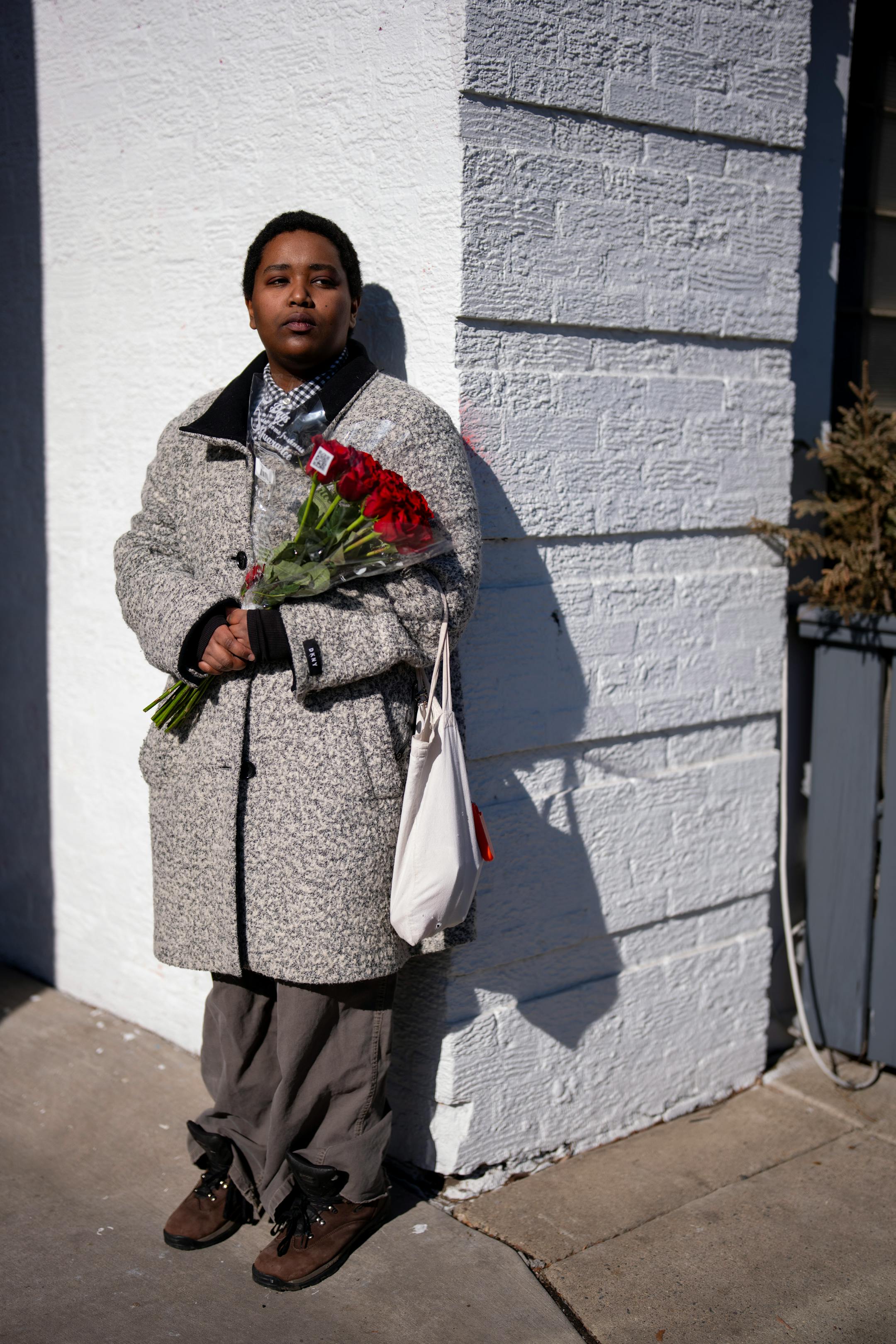
Malak Omer near the memorial site for Alex Pretti in Minneapolis. Omer, a student at Minneapolis College of Art and Design, felt isolated in Minnesota after moving from New York. Now, she said, the community feels closer than ever. (Alex Kormann/The Minnesota Star Tribune)

Malak Omer stood nearby, holding flowers. Tears welled. Omer lives in an apartment on this block. She watched agents hit protesters with chemical irritants after Pretti was killed. Omer, a student at Minneapolis College of Art and Design, felt isolated in Minnesota after moving from New York. Now, she said, the community feels closer than ever.

“We have this shared pain, and having this shared pain doesn’t have to isolate us,” Omer said. “It became a necessity to talk to the people around you.”

At Karmel Mall, the Somali shopping center near W. Lake Street, ICE vehicles were no longer circling the block. Business collapsed during the ICE surge, but there was hope it would soon pick up.

Feisal Abdullahi, who has an electronics shop there, believes Minnesota will recover both economically and psychologically. But people won’t forget, Abdullahi said. He expects this to impact the midterms and the next presidential election.

The 70 days between the two federal government announcements — that Operation Metro Surge was beginning, and that it was ending — will scar the Twin Cities’ and Minnesota’s psyche for years.

Anxiety lingers. Trust has disappeared. Activists are suspicious of whether this even really marks the end.

“What ICE has done in Minneapolis, it is still [in] our memory,” Abdullahi said. “It will never leave.”

about the writers

about the writers

Reid Forgrave

State/Regional Reporter

Reid Forgrave covers Minnesota and the Upper Midwest for the Star Tribune, particularly focused on long-form storytelling, controversial social and cultural issues, and the shifting politics around the Upper Midwest. He started at the paper in 2019.

See Moreicon

Kyeland Jackson

General Assignment Reporter

Kyeland Jackson is a general assignment reporter for the Star Tribune.

See Moreicon

Erin Adler

Reporter

Erin Adler is a news reporter covering higher education in Minnesota. She previously covered south metro suburban news, K-12 education and Carver County for the Minnesota Star Tribune.

See Moreicon

Neal Justin

Critic / Reporter

Neal Justin is the pop-culture critic, covering how Minnesotans spend their entertainment time. He also reviews stand-up comedy. Justin previously served as TV and music critic for the paper. He is the co-founder of JCamp, a non-profit program for high-school journalists, and works on many fronts to further diversity in newsrooms.

See Moreicon

More from News & Politics

See More
card image
David Joles/The Minnesota Star Tribune

Undaunted by ice, the semi-aquatic furballs munch their way through winter eating roots and plants.

card image
card image