
Another wave of departures in Minnesota’s U.S. Attorney’s Office

14 attorneys have left this year, which prosecutors are calling unprecedented.

February 3, 2026 at 4:28AM
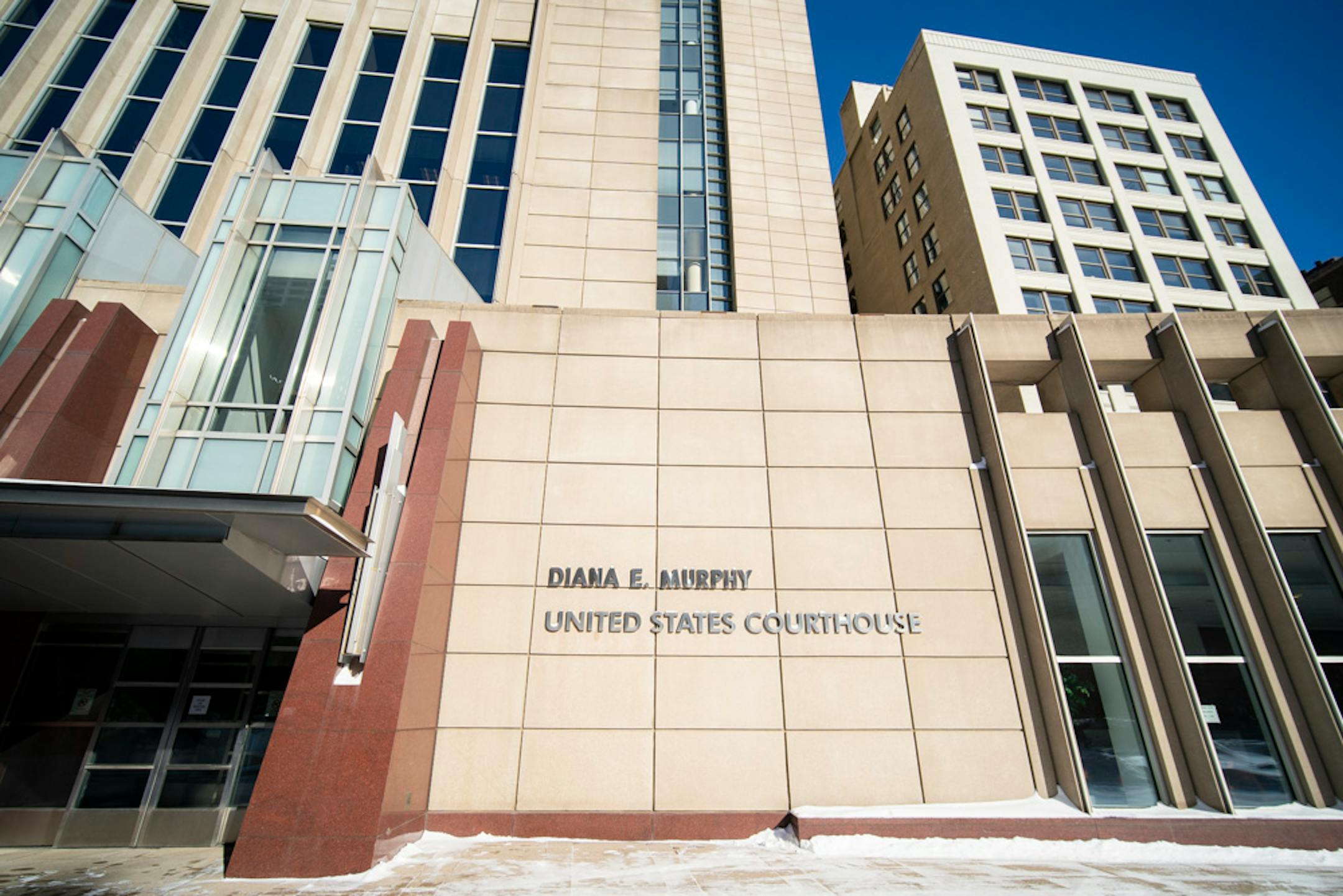
The U.S. Federal Courthouse, photographed Jan. 24, 2022 in Minneapolis. (Renée Jones Schneider/The Minnesota Star Tribune)

Another eight lawyers have left or announced their intentions to leave the Minnesota U.S. Attorney’s Office, according to multiple people with knowledge of the situation.

The departures add turmoil to an office already reeling from last month’s mass resignation of six veteran prosecutors because of recent directives from the U.S. Department of Justice.

That included the department’s refusal to initiate a civil rights investigation into the killing of Renee Good by Immigration and Customs Enforcement (ICE) agent Jonathan Ross. They have been asked to defend immigration enforcement actions that are growing unpopular with the public.

Former government lawyers said the U.S. Attorney’s Office in Minnesota has never lost 14 attorneys in the span of a single month before. Since 2022, more than 40 assistant U.S. attorneys have quit or retired, bringing total staffing in the criminal division to fewer than 20 attorneys, according to an analysis of the office’s staffing totals by the Minnesota Star Tribune.

In prior years, people familiar with the office’s operations said, there were often at least 50 attorneys working on criminal cases.

Minnesota’s departures also come as attorneys are leaving the U.S. Department of Justice since President Donald Trump started his second term.

The Minnesota Star Tribune interviewed six former staffers in Minnesota’s U.S. Attorney’s Office for this story, including three who left this year. They asked not to be named for fear of retribution from their former employer and concerns that going public could jeopardize future work opportunities.

Tom Heffelfinger, who served as U.S. attorney for Minnesota under two Republican presidents, said the office has never before dealt with this kind of turnover.

“More often than not, the people who come in don’t quit, they stay,” Heffelfinger said. “A lot of those AUSAs [assistant U.S. attorneys] see these as career jobs. This is what they want to do. If they can get the job, they stay there.”

Among the recent departures is Ana Voss, the civil division chief, who has been the point person handling hundreds of wrongful detention petitions that have flooded the office since ICE agents began their immigration crackdown in December.

Voss recently wrote in a legal brief that she was unable to “effectively triage and review” every judicial order. Voss could not be reached for comment.

Minnesota U.S. Attorney Daniel Rosen has refused to comment on the departures, but sources said he encouraged staffers in a recent meeting “to keep an open mind” and “not be afraid to do unpopular things.”

People familiar with the office’s operations say Rosen is assembling a new management team that will be led by former Assistant U.S. Attorney Joseph Teirab, a Republican who unsuccessfully challenged Democratic incumbent Angie Craig for Congress in 2024.

When contacted by phone, Teirab did not deny his return to the office but didn’t comment further. Rosen’s office did not return requests to discuss the new hires.

Former prosecutors said the turnover will likely reduce the number of complex cases that can be prosecuted at one time. They say the office instead will likely prosecute easier cases that can be done by less-experienced lawyers and will be reluctant to do more intensive work.

“Some of the things that are in federal court, that are driving the criminal docket at the U.S. Attorney’s Office, are not complex,” said B. Todd Jones, who served stints as U.S. Attorney for Minnesota under two Democratic presidents. “And that’s sad, because the more complex cases that they normally would be doing aren’t being done.”

‘Selective prosecution’

The tipping point for some staffers came last week, during a well-attended meeting of the criminal division. In front of nearly two dozen attorneys and support staff, Rosen was asked a series of pointed questions about recent directives from the U.S. Department of Justice that troubled many attorneys, sources said.

Rosen was pressed on the work they were being asked to do, as well as the work that wasn’t getting done.

One attorney, sources said, asked Rosen why federal officials were freezing state and local investigators out of the homicide investigations of Good and Alex Pretti, who was shot to death by two federal agents on Jan. 24 during an immigration enforcement action.

The attorney pointed out that federal officials insisted on partnering with state investigators looking into the murder of George Floyd in 2020, which led to federal convictions for three officers for civil rights violations.

Staff members also raised concerns about dozens of pending cases involving the alleged assault of federal officers, arguing government attorneys should also consider whether officer conduct might have led to their attacks.

“If the administration wanted us to focus on these kinds of interactions, fine, but let’s do it in an even-handed way,” said one attorney who resigned after the meeting. “This was the ultimate example of selective prosecution.”

When attorneys objected to the directives, Rosen said he was advocating for them to his bosses, sources said. At one point, a staffer said Rosen also told the distraught group that they were not asking them “to do anything illegal.”

In addition to the departure of eight assistant U.S. attorneys, the former government lawyers said several key staff members recently departed, including a victim witness coordinator and an evidence technician. An FBI supervisor who oversaw fraud cases, Tracee Mergen, also resigned in January over the DOJ’s handling of the Good case.

Meanwhile, investigations into alleged fraudulent activity in Minnesota’s social services programs have stalled, with no charges filed since indictments were issued in December.

‘They’re in disarray’

Nationally, within the Department of Justice, the Minnesota office has had a reputation for “punching above its weight,” said Anders Folk, former federal prosecutor and senior deputy to the U.S. Attorney General. But now, he said it could take five years for the office to recover.

The vacancies have forced the U.S. Department of Justice to transfer attorneys from other states, including 10 from Washington, D.C. and five from neighboring states, according to people with knowledge of the office’s operations. Rosen also brought in five attorneys with the Judge Advocate General’s Corps, the legal branch of the United States Armed Forces.

Folk said bringing in judge advocates — or military lawyers — shows there is a “serious problem” in the office.

Doug Kelley, who worked as an assistant U.S. attorney in the 1980s and also ran for governor as a Republican, said the office is “woefully understaffed” and overwhelmed by wrongful detainment cases.

Since the ICE surge began Dec. 1 through Jan. 26, 490 immigrants have filed cases challenging their detentions, according to a Star Tribune review. By comparison, 375 such cases were filed in the state in the eight years prior to that.

“They’re in disarray,” Kelley said. “I think it’s just demoralizing to the folks who are there.”

Former prosecutors said they were stunned to see a former Justice Department staffer promote vacancies on social media.

“If you are a lawyer, are interested in being an AUSA, and support President Trump and anti-crime agenda, [direct message] me,” posted Chad Mizelle, who served as chief of staff to the attorney general in 2025.

The post was amplified by Homeland Security Adviser Stephen Miller. Former prosecutors said that kind of overt politicization of the job is new and troubling.

“It is unprecedented and unseemly to say ‘If you want to be a great patriot and support Trump, come to be an assistant U.S. attorney,” Kelley said, decrying of the “weaponization of the Department of Justice.”

“That’s very sad,“ he said.

about the writers

about the writers

Jeffrey Meitrodt

Reporter

Jeffrey Meitrodt is an investigative reporter for the Star Tribune who specializes in stories involving the collision of business and government regulation. 

See Moreicon

Sarah Nelson

Reporter

Sarah Nelson is a reporter for the Minnesota Star Tribune.

See Moreicon

Deena Winter

Reporter

Deena Winter is Minneapolis City Hall reporter for the Star Tribune.

See Moreicon

More from News & Politics

See More
card image
Tom Brenner/The Associated Press

The heads of ICE and Border Protection testify before a House committee in Washington.

card image