‘No humanity’: Detainees describe conditions inside Whipple Federal Building

January 31, 2026
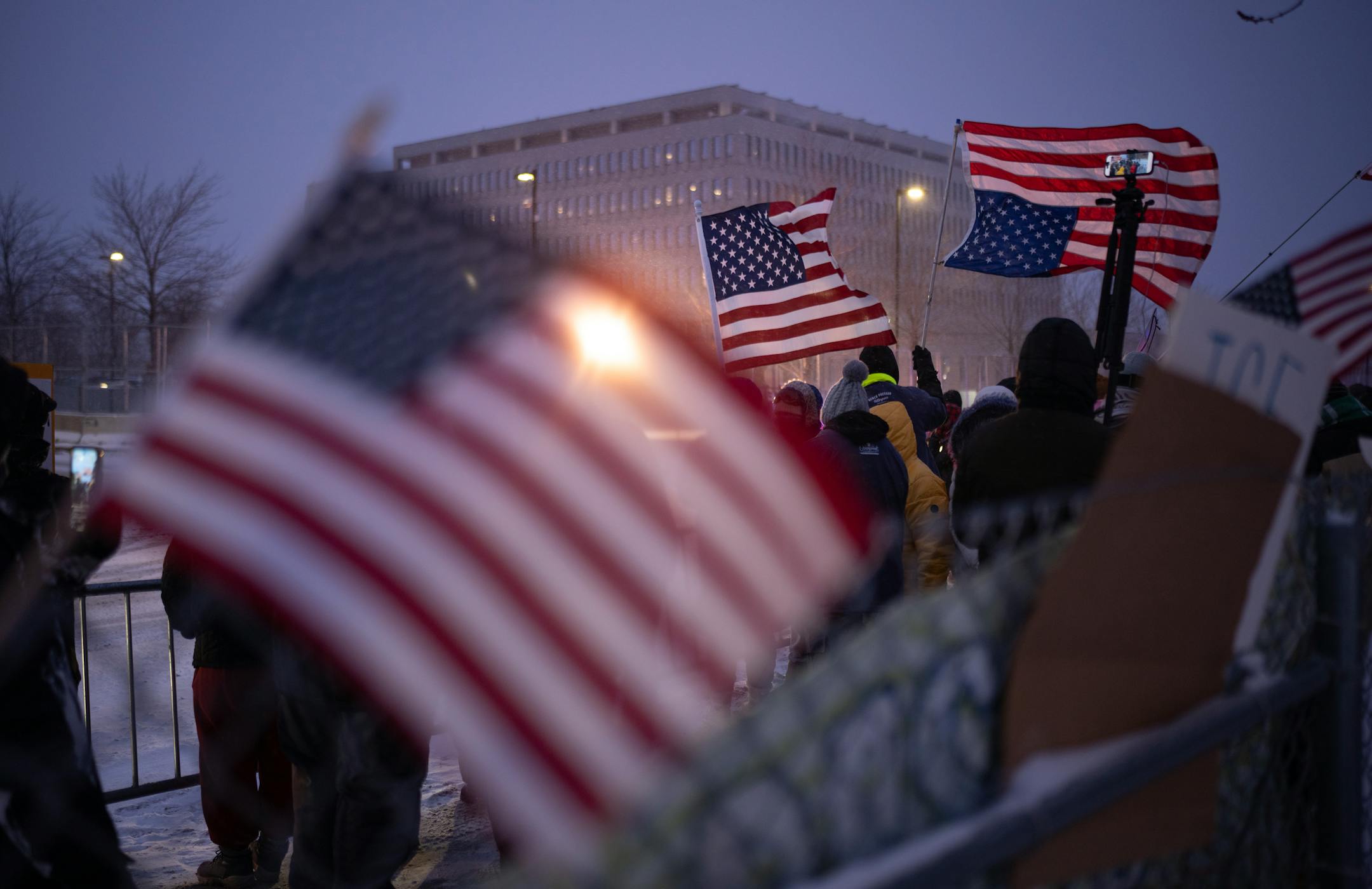
Anti-ICE demonstrators across the street from the Whipple Federal Building at Fort Snelling in Minneapolis on Sunday, Jan. 18. (Jeff Wheeler/The Minnesota Star Tribune)

Immigration sweep brings overcrowded rooms and overflowing toilets. Lawyers say they can’t visit their clients. The Department of Homeland Security says “all detainees receive full due process.”

The young Muslim woman was shackled at the ankles. For 24 hours, she was locked inside a bathroom with three men at the Bishop Henry Whipple Federal Building, she said. They were given no bedding or pillows. Meals consisted of one sandwich a day.

The sink faucet did not work, but the single toilet did. When the men pulled down their pants to use it, the woman hid her face.

Federal immigration agents say they’ve arrested more than 3,000 immigrants since launching Operation Metro Surge in December. Many of them have spent some time at Whipple, a nondescript seven-story building near Minneapolis-St. Paul International Airport that has become the hub of the Trump administration’s immigration sweep and the protests in opposition.

The woman, a legal refugee who asked not to be named, fearing retribution, was one of 30 people who agreed to speak to the Minnesota Star Tribune about conditions at Whipple. They included immigrants who are in the United States legally and illegally, protesters and citizens who were detained there, as well as attorneys and immigration advocates. The Star Tribune also reviewed nearly 200 court records outlining wrongful detainment complaints and lawsuits filed in federal district court.

The interviews and court documents paint a picture of a place that was never intended for long-term detention and quickly became overwhelmed after the surge in Minnesota began.

Holding facilities were so crowded that immigrants in one cell had to take turns lying down because there was no space, according to a refugee detained there for one night in January. Basic human needs like food and medical care were sometimes denied.

“There was no humanity,” the woman who was locked in a bathroom said through a translator.

U.S. citizens detained while protesting U.S. Immigration and Customs Enforcement were kept in separate holding cells from immigrants, who were packed into tighter quarters.
Released detainees said they were sent out into the cold — sometimes at night — to find their own way home. Some were simply dropped at a nearby light-rail station.

The conditions described inside Whipple appear to violate the principles underlying ICE’s own detention standards updated by the Trump administration last year, which state that they “ensure that detainees are treated humanely; protected from harm; provided appropriate medical and mental health care; and receive the rights and protections to which they are entitled.”

Whipple’s holding facilities were designed to detain people for less than 12 hours, according to a class action lawsuit filed Jan. 27. The building, home to immigration court and some local offices for federal immigration agencies, lacks the infrastructure to detain people for longer periods, such as private phones where privileged calls may be conducted, the suit alleges.

“Whipple is not meant to be a detention facility,” said Julia Decker, policy director of the Immigrant Law Center of Minnesota. “It’s meant to be where people are brought for processing and for hearings. It’s no surprise conditions are deteriorating very quickly.”

Detainees and their attorneys have also alleged routine denials of due process. Many say they have been sent to federal facilities out of state, typically in Texas, without speaking to attorneys first. One attorney was told by federal agents at Whipple that if lawyers were allowed to visit clients, it would be chaos, according to recent testimony by a Minnesota American Civil Liberties Union (ACLU) official at a Minnesota Senate subcommittee hearing.

The Trump administration has not yet responded to the lawsuit about conditions inside Whipple, but a spokesperson for the U.S. Department of Homeland Security provided written answers to questions from the Star Tribune. The department disputes allegations about the conditions at Whipple and said detainees are provided with proper meals, water and medical treatment.

“Ensuring the safety, security, and well-being of individuals in our custody is a top priority at ICE,” the spokesperson wrote in a statement. “ICE has higher detention standards than most U.S. prisons that hold actual U.S. citizens.

The DHS spokesperson also maintained that detainees have access to lawyers.

“Illegal aliens in the Whipple Federal Building have access to phones they can use to contact their families and lawyers,” the spokesperson said. “Additionally, ICE gives all illegal aliens arrested a court-approved list of free or low-cost attorneys. All detainees receive full due process.”

The boxy federal building, now constantly surrounded by protesters, law enforcement and concrete barricades, sits on a site that once served as a detention camp for Native Americans during the U.S.-Dakota War. Now, the class action lawsuit alleges, Whipple has become “the epicenter of the systematic deprivation of fundamental constitutional and legal rights at the hands of the federal government.”

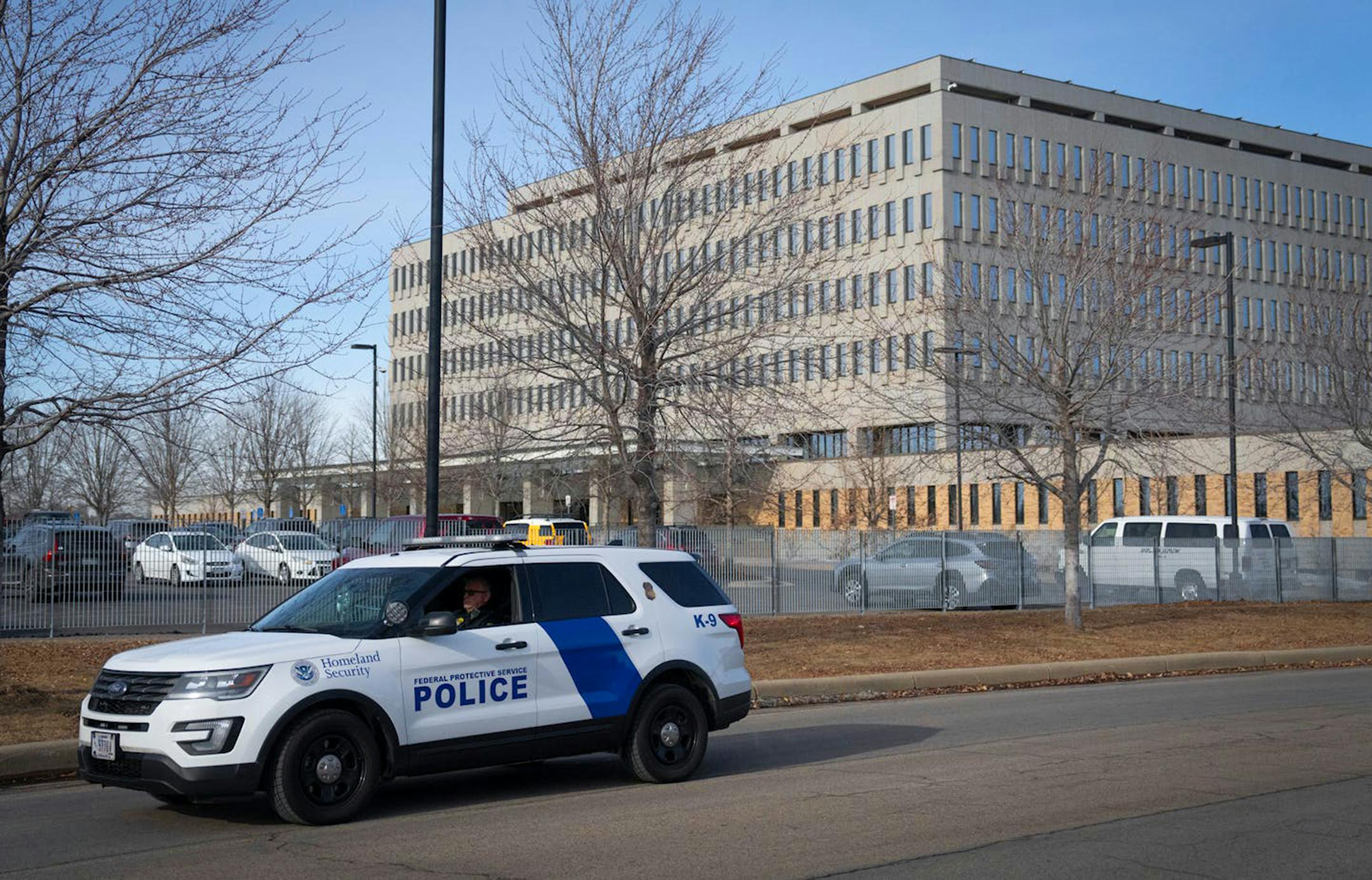
A homeland security officer drives past the Bishop Henry Whipple Federal Building at Fort Snelling. (Renee Jones Schneider)

Packed ‘shoulder to shoulder’

After the young Muslim woman spent nearly 24 hours locked in the bathroom with the three men, agents moved her to a different locked bathroom in the building’s basement, she said.

When she had her period, agents told her to use toilet paper. When she felt dizzy and vomited twice, agents did not grant her request for medical care. When they gave her a sandwich, she didn’t eat it, fearing it contained pork.

After her release, the Star Tribune visited the young Muslim woman at the sparsely decorated apartment where she lives with her mother. She recounted how federal agents tailed her after she dropped her mother off at work in mid-January. Afraid to drive home, she parked in a busy area, she said. Two agents knocked on her window, asked for identification and detained her.

While the Star Tribune was unable to independently verify some details of her detainment, much of her account about conditions at Whipple is consistent with descriptions from other interviews and court filings. Many detainees requested anonymity, fearing retribution.

She said she had followed all the rules and didn’t understand how this happened in the country she once saw as her “dream come true.” The Star Tribune reviewed her immigration documents, which showed she entered the United States legally as a refugee several years ago. She had applied for a green card in 2024 but was still waiting for it. (The Trump administration has implemented strict pauses on green card processing.)

Conditions inside Whipple were in question even before President Donald Trump ordered a surge of immigration enforcement in Minnesota. An Ecuadorian man detained there in September told the Star Tribune he was shackled inside a small room he described as a “cooler” with a dozen other men for hours. ICE agents pressured the men to sign forms agreeing to voluntarily be removed from the U.S., he said.

Whipple’s conditions have become more cramped and neglectful since the surge began, according to several immigration attorneys who have done work in the building for years.

Living quarters are crowded, with cells packed “shoulder to shoulder,” said Dennis Hernandez Ramirez, a legal permanent resident from Mexico who was detained for 8 hours in early January. Joseph Kantor, an attorney who represents Whipple detainees, said holding cells meant for two people have housed a dozen or more.

Linus Chan, faculty director of the University of Minnesota’s Detainee Rights Clinic, asserted in a recent legislative hearing that the poor conditions at Whipple are purposeful. “They have used and weaponized detention” to encourage self-deportation, he said.

The lead plaintiff in an ACLU lawsuit said she was knocked into a snowbank by ICE in December while observing ICE arrests from a sidewalk in her neighborhood. The woman, Susan Tincher, a longtime resident of Minneapolis’ Near North neighborhood, was detained at Whipple, where she said federal agents cut off her wedding ring and parts of her clothes. She believes her treatment was retaliation for protesting ICE activity.

She was released without charges.

One detainee described to the Star Tribune seeing a Somali grandmother be denied access to her diabetes medication. A 24-year-old Somali American woman, a U.S. citizen born in Hennepin County who asked her name not be used, described agents ignoring requests for medical help from a fellow detainee with a broken finger.

A 20-year-old refugee from Venezuela, only named as “J.J.B.” in a court filing, described how a holding cell he estimated had a 20-person capacity quickly filled with 100 people. Some detainees slept standing up and in handcuffs. Excrement overflowed from the toilet, he alleges in the court filing, and trash was strewn about the ground. The man said he saw four or five other smaller detention rooms, each one appearing to hold 40 to 50 people. He witnessed a person with epilepsy beg for his medication, his insistent knocks going unanswered.

“Some people there were just wearing undershirts,” the man said in the court filing. “ICE had gone to their doors and detained them when they opened the door.”

The DHS spokesperson did not answer questions about the crowded conditions within Whipple but said detainees have access to medical care, including medical, dental and mental health services as soon as they enter ICE custody.

“This is the best healthcare [that] many aliens have received in their entire lives,” the spokesperson wrote.

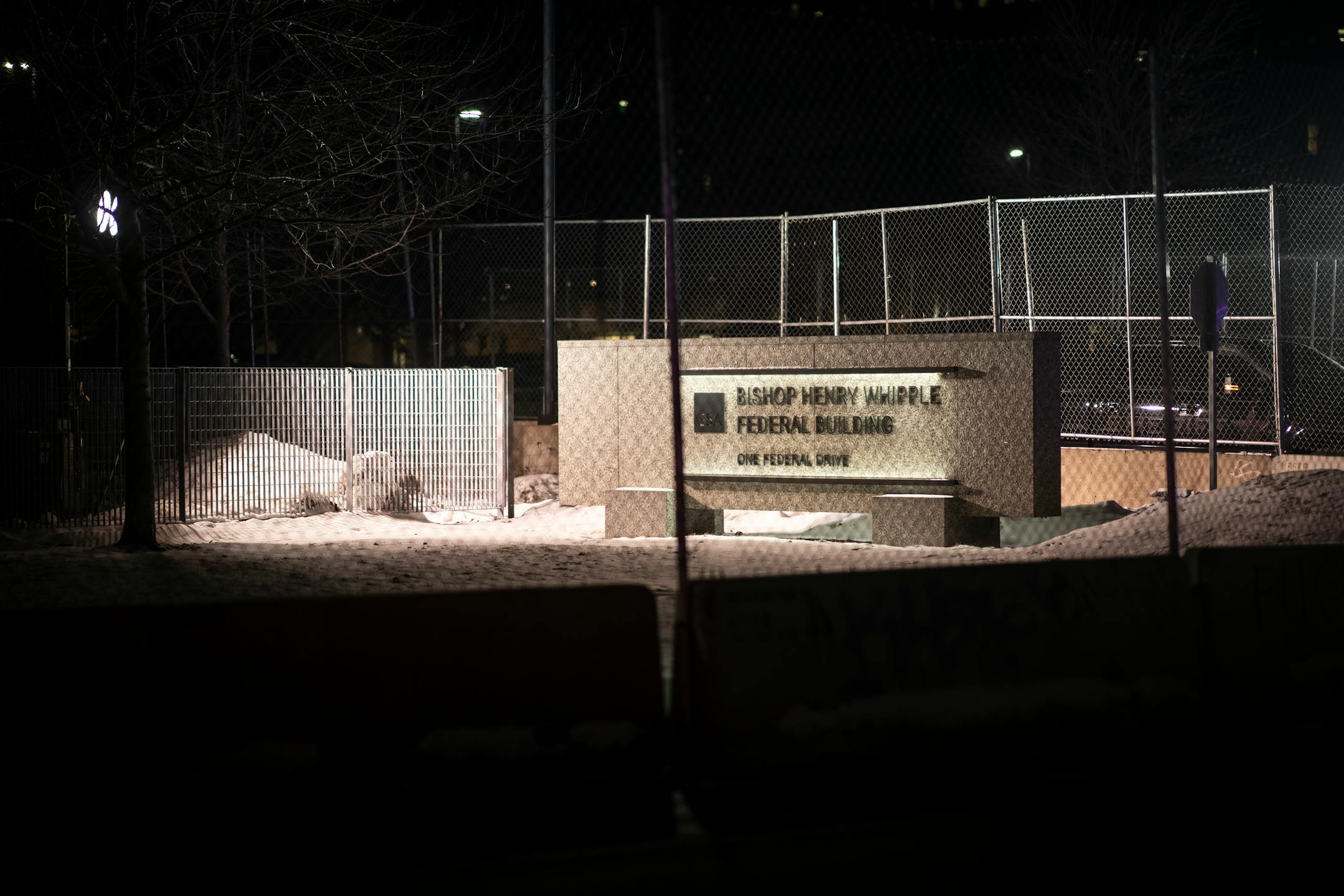
Fences surround the Bishop Henry Whipple Federal Building at Ft. Snelling on Jan. 19. (Renée Jones Schneider/The Minnesota Star Tribune)

‘Virtually impossible’ to access clients

As the sun set Jan. 19, attorney Kira Kelley shouldered through dozens of tightly packed protesters screaming obscenities outside Whipple. Kelley carried court orders signed the day before, requiring the release of a client who was detained inside the federal building. Kelley spent hours that afternoon calling various phone numbers for ICE, asking how to collect the client and why the DHS’ lawyers weren’t responding.

Hearing no definitive instruction, Kelley negotiated through the Whipple building’s security gate to the front desk. When the security guard said the client, Mayra Chasi-Chiluisa, wasn’t listed for release, Kelley held out the court order.

Eventually, an ICE agent went down to talk with the attorney. As a Star Tribune reporter watched, the agent verified Chasi-Chiluisa was being held on site and said they could release her as soon as the government’s lawyers processed their stack of court orders.

The agent told Kelley that Whipple was so full that some detainees were being sent to Texas within hours. He said many were forced to be immediately flown back to Minnesota after a judge ordered their return or release.

“I can take her out of your hair and free up some space,” Kelley suggested. The agent promised to try to expedite it.

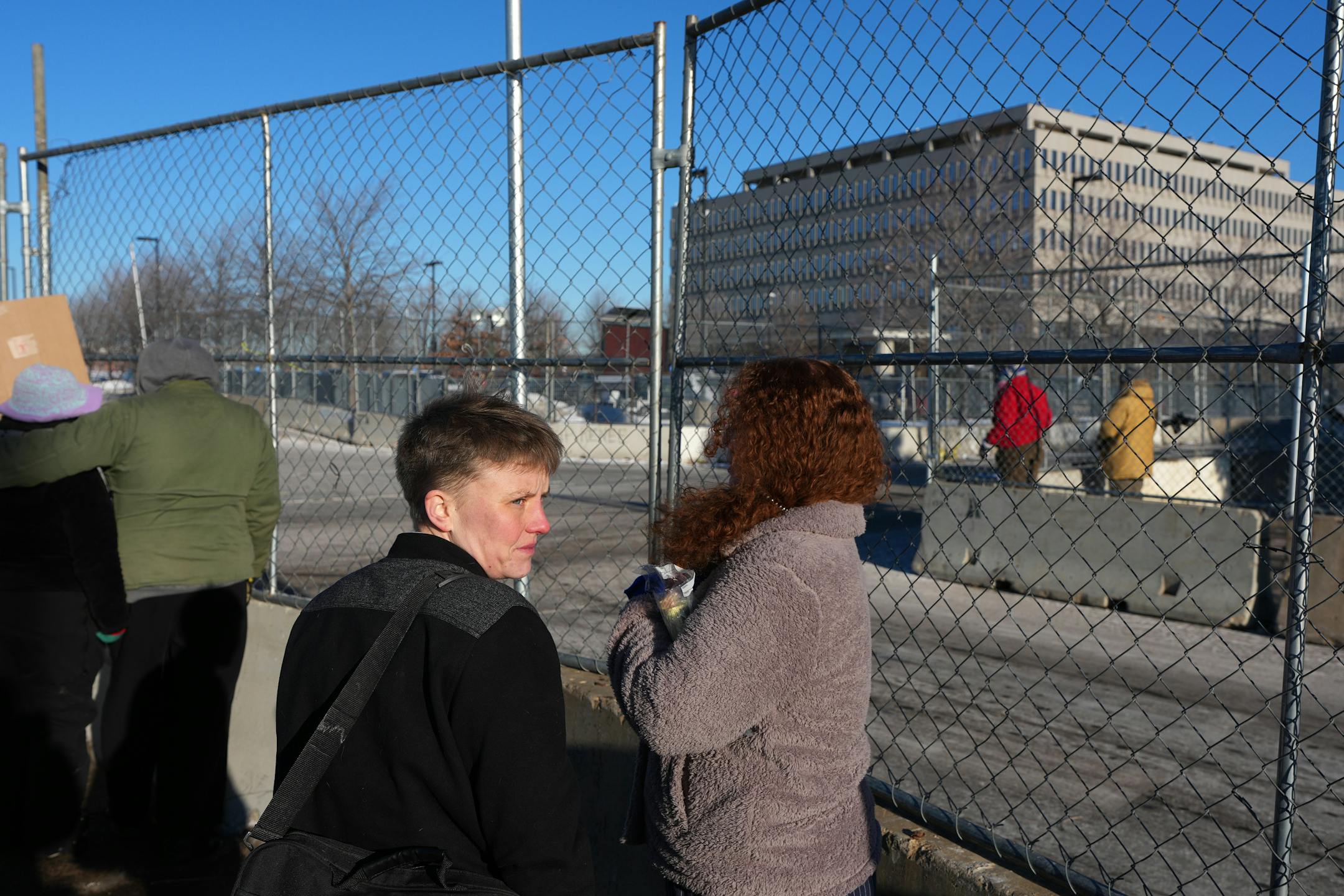
Attorney Kira Kelley, who helps clients who have been ordered released by a federal judge but who are still in custody, talks with a friend outside the Whipple Federal Building on Jan. 28, where immigration court is held. (Anthony Souffle/The Minnesota Star Tribune)

Within the hour, ICE agents escorted Chasi-Chiluisa into the parking lot, where Kelley was waiting. Recognizing her attorney, the Venezuelan woman flung her arms around Kelley’s neck and sank to her knees, sobbing and praying.

The following day, Chasi-Chiluisa said in an interview that she had been taken from her routine check-in with immigration officials in Bloomington on Jan. 15. An immigration officer grabbed the phone out of her hand before she could contact her lawyer, she said.

At Whipple, she was shackled and placed in a holding room with 20 to 30 others, she said. They had no food, blankets or mattresses, and they had to use the toilet in front of everyone.

She ended up spending one night at Whipple, then three nights in Texas — where she was finally able to call Kelley — before being flown back to Whipple at a judge’s demand.

Attorney access issues are mentioned repeatedly in court petitions.

Government lawyers admitted in a court filing that the government had “an unprecedented influx” of wrongful detainment cases that they were “not able to effectively triage.” Because of that caseload, they did not follow a judicial order to release a detainee because they hadn’t seen the email.

“I did not timely read these orders,” an attorney with the U.S. Attorney’s Office in Minnesota admitted in a court filing. “I understand that is inexcusable.”

Since Operation Metro Surge began, ICE has made it “virtually impossible” for lawyers to access clients detained at Whipple, according to Gloria Contreras Edin, an attorney who has represented immigrants for almost 20 years.

“It is not the same place it was last year,” she said in a court filing.

An African refugee from greater Minnesota told the Star Tribune he was detained for one night in Whipple before being flown to Houston without being able to inform his attorney. There, he was interviewed about his green card application and released onto the street after six days without his ID, he said. A Minnesota nonprofit drove down to pick him up.

“Once they get to Texas,” said Sara Nelson, program manager at the Center for Victims of Torture, which represents several clients who were detained for a short time at Whipple before being sent out of state, “it’s like they’re in a black hole.”

The DHS spokesperson said it makes custody determinations based on bed space and immigration proceedings. They dispute allegations that they “weaponize” transfers.

“Despite a historic number of injunctions, the DHS is working rapidly and overtime to remove these aliens from [detention] centers to their final destination—home," the spokesperson wrote in a statement.

Separate cells for citizens

U.S. citizens, many detained while protesting, said they were kept separate from and treated differently than immigrants.

Will Vermie said he landed in Whipple on Jan. 13 after observing the detainment of two young men across his south Minneapolis street.

Agents started pushing observers, telling them to get off the sidewalk, he said. An agent grabbed Vermie’s arms, and the two lost their balance and fell to a heap. Four agents handcuffed Vermie and tossed him in an SUV.

For 8 hours at Whipple, the 39-year-old U.S. Army veteran said he stayed in a small cell for citizens. Seven more U.S. citizens were brought in. Some were bleeding, and told him they had been roughed up in detainment. They were given water but no food, he said, except when a guard brought fruit snacks to one man with low blood sugar.

Lawyers were given access only after providing the full name of a detainee, he said. So Vermie memorized the names of four detainees. When he was released without charges at 6 p.m., he gave those names to an attorney outside.

Vermie served in Iraq during the troop surge two decades ago. One leg remains partially paralyzed from an insurgent attack. He sees a parallel between his service there and the conditions for detainees in Minnesota.

“The public opinion turned against us. We came in as liberators, and we turned into the boogeyman that stole people in the night,” he said. “Now ICE is doing this in cities across America.”

Vermie was charged on January 29th with assaulting an ICE officer in the interaction that preceded his detainment.

“We do not tolerate assaults on federal officers and those who commit that crime will be held accountable,” U.S. Attorney Daniel Rosen said in a statement announcing the charges against Vermie and 15 other defendants.

Wes Powers, a U.S. Navy veteran detained for eight hours after blocking a Whipple entrance on Jan. 8, said ICE agents took mug shots on what appeared to be personal cell phones. They wrote detainees’ information on scraps of paper and didn’t seem to verify whether detainees were in fact U.S. citizens or undocumented immigrants.

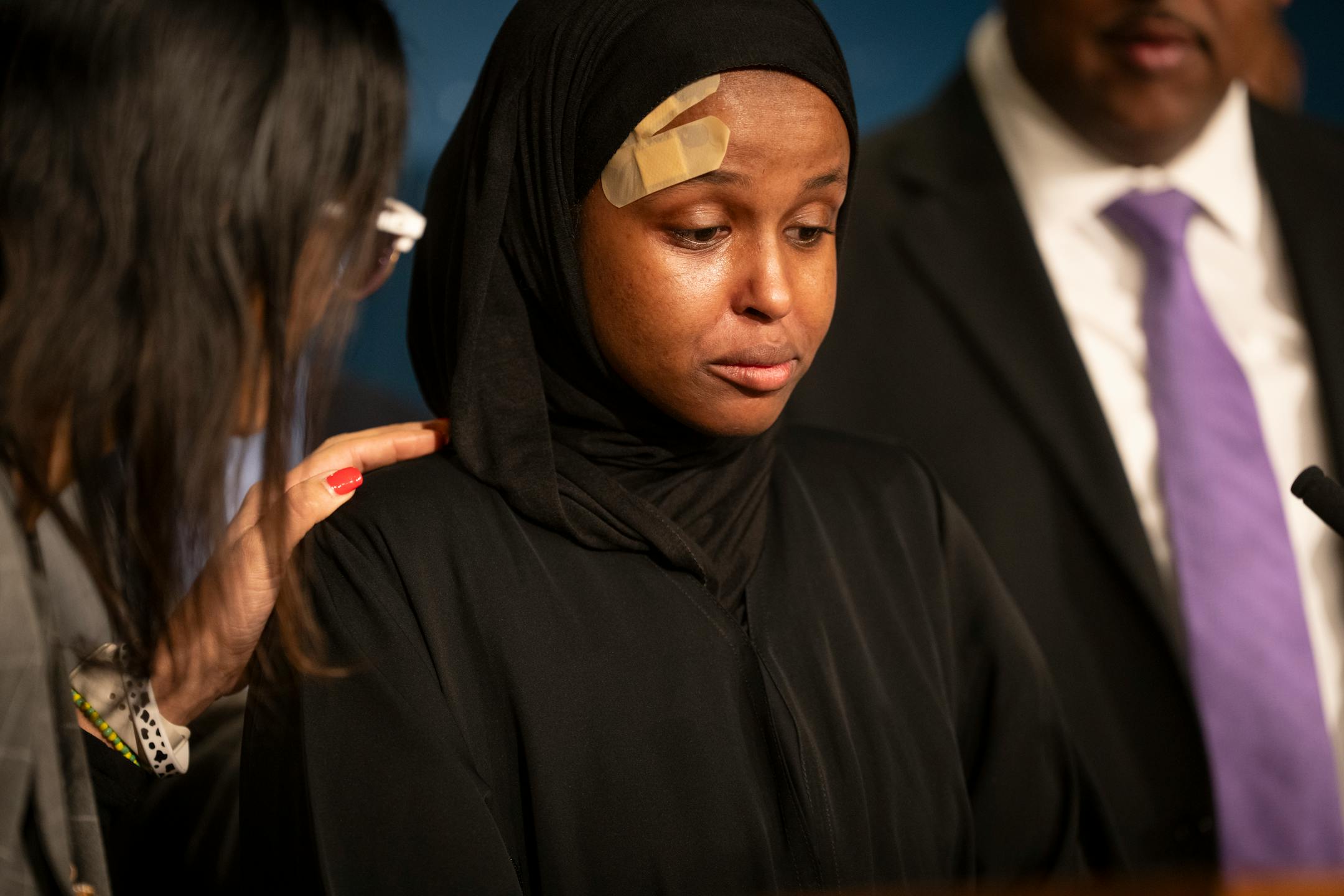
Nasra Ahmed, a U.S. citizen born in the U.S., was detained by I.C.E. for two days before being released without explanation. She becomes emotional talking about her experience being detained during a press conference at the Minnesota State Capitol in St. Paul on Jan. 21. (Renée Jones Schneider/The Minnesota Star Tribune)

Agents inadvertently let him keep his cell phone, said Powers, who snapped a photo of his ankle chains from inside the facility. They seemed to just take him at his word that he was a U.S. citizen because he provided no documentation to prove it, he said.

“Their operations are, just for lack of a better term, garbage,” Powers said.

Patty O’Keefe, detained in south Minneapolis on Jan. 11 while following ICE agents in her car, saw non-citizen cells when she went on trips to the bathroom. She said they were more crowded than her cell. She said she and fellow cellmates had to “beg” for water or bathroom visits. After the cell buzzer stopped working, detainees pounded on the door and pleaded with passing guards when they needed something, she said.

“They wanted it to be an uncomfortable experience,” she said. “They want to deter you from getting back out there and continuing to resist their efforts.”

Into the cold

The young Muslim woman detained in a locked Whipple bathroom with three men said she never thought this could happen to her. She saw America as a land of opportunity after a childhood in a refugee camp.

She hopes to become a nurse or a flight attendant. Her criminal record, she said, consists of one speeding ticket.

With Whipple’s holding facilities filled, the woman said, agents eventually moved her to another locked bathroom by herself. There was an air vent at the door’s bottom. When she saw federal agents’ footsteps, she banged for help.

On her third night of detention, agents took in two new detainees: an African immigrant and her 7-month-old baby girl. She said the immigrant told her they had been detained as the mother took her baby to a doctor to be treated for influenza.

“When the woman arrived, she was screaming and crying and yelling, ‘My baby is already sick!’ ” she recalled. “ ‘I don’t want my baby to die!’ ”

The next morning, she said, the woman and baby were moved from the bathroom.

It wasn’t until her fourth day of detention when the young woman was allowed to use a phone at the facility. When she heard her mother’s voice, she burst into tears.

On the fifth day, agents drove her and two other recently released detainees to a light-rail station near Whipple. They took off her handcuffs and told her to call an Uber, even though she didn’t have a phone. She borrowed one from another detainee.

As they released her into the cold, she recalls their simple words: “You are good to go.”

Star Tribune reporters Sofia Barnett, Sarah Nelson, Allison Kite, Jeff Meitrodt, Liz Flores, Kyeland Jackson and Alexandra DeYoe contributed to this story.

about the writers

about the writers

Reid Forgrave

State/Regional Reporter

Reid Forgrave covers Minnesota and the Upper Midwest for the Star Tribune, particularly focused on long-form storytelling, controversial social and cultural issues, and the shifting politics around the Upper Midwest. He started at the paper in 2019.

See Moreicon

Susan Du

Reporter

Susan Du covers the city of Minneapolis for the Star Tribune.

See Moreicon

Christopher Magan

Reporter

Christopher Magan covers Hennepin County.

See Moreicon

More from News & Politics

See More
card image
Jeff Wheeler/The Minnesota Star Tribune

Immigration sweep brings overcrowded rooms and overflowing toilets. Lawyers say they can’t visit their clients. The Department of Homeland Security says “all detainees receive full due process.”

card image
card image