What’s the history of the Fort Snelling Unorganized Territory and the Whipple Building?

Fort has been “at the heart” of Minnesota history “for good or for ill,” historian says.

The Minnesota Star Tribune
January 30, 2026 at 12:00PM
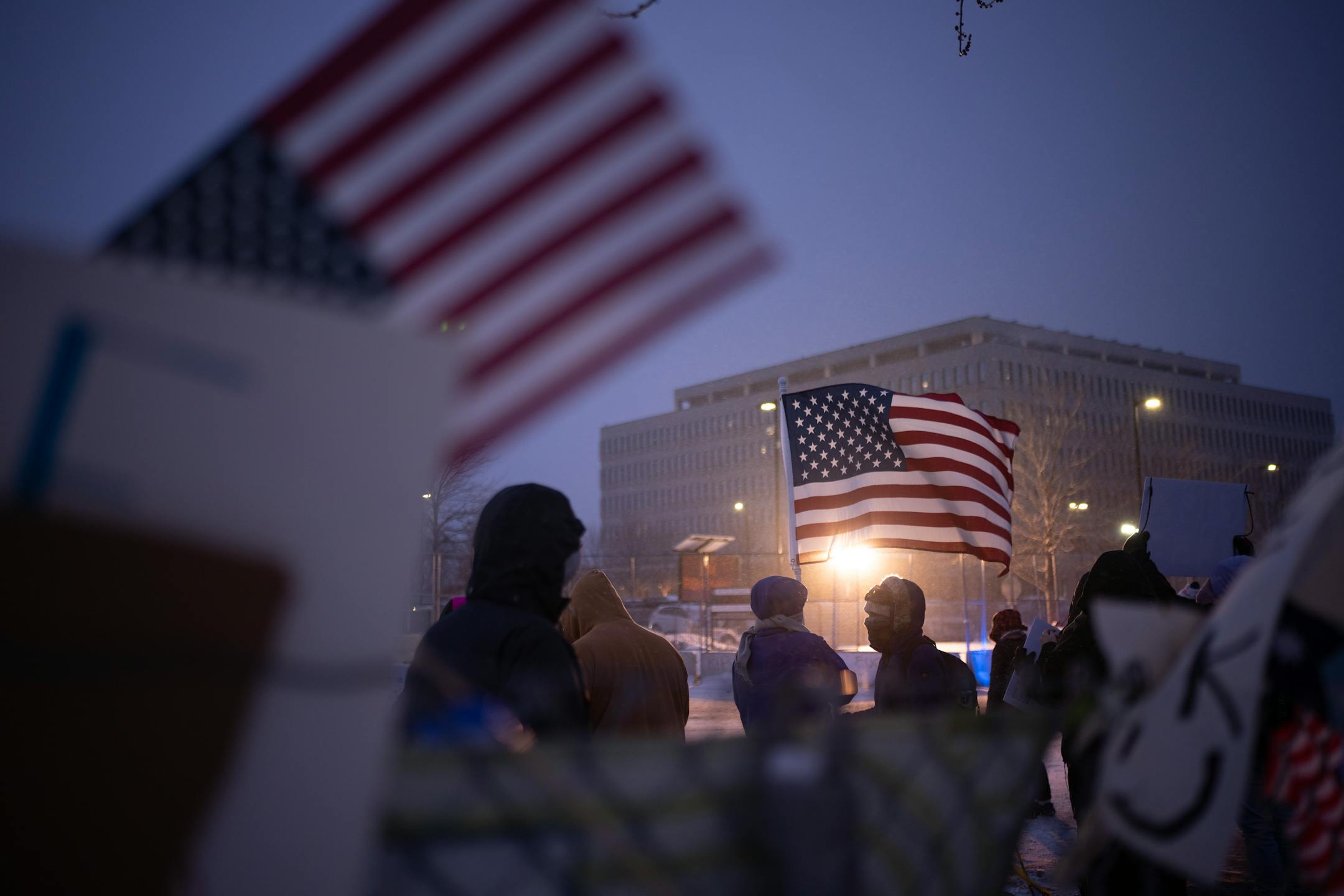
American flags were plentiful among the demonstrators across the street from the Whipple Federal Building at Fort Snelling in Minneapolis on Sunday, Jan. 18, 2026. (Jeff Wheeler/The Minnesota Star Tribune)

Listen and subscribe to our Curious Minnesota podcast: Apple Podcasts | Spotify

The Bishop Henry Whipple Federal Building, the squat, Brutalist federal government headquarters for U.S. Immigration Court and the ongoing Immigration and Customs Enforcement campaign, has been the recent site of clashes between parka-wearing protesters and masked federal agents.

The Whipple Building isn’t part of Historic Fort Snelling, but it sits on a small, unincorporated swath of land known as the Fort Snelling Unorganized Territory. The history of that land, including the first arrival of the U.S. government to this area, is not an easy one.

“For good and for ill,” said Bill Convery, director of research at the Minnesota Historical Society, “Fort Snelling lies at the heart of a lot of Minnesota history.”

Among the harrowing stories unfolding in Minneapolis and the surrounding region in 2026, one incident brought chills to Convery, he said. That’s because to him, it brings the history of Fort Snelling together with the federal building not far away.

It came when the president of the Oglala Sioux Tribe in South Dakota accused ICE of detaining tribal members — claims the Department of Homeland Security denied. The incident seemed to be a “brutal echo,” of the winter of 1862, when hundreds of imprisoned Dakota died in a camp at the fort, Convery said.

Today Fort Snelling, which was partially rebuilt under the care of the MHS, contains exhibits attempting to bring together the land’s many histories. Convery believes that in another generation, the events of winter 2026 will be added to the varied chapters of Minnesota history woven through the federal lands atop a bluff.

Operation Metro Surge “is a chapter of this history now,” said Convery. “And not a small one.”
With many wondering about the site and its past, it seemed like the right time for Curious Minnesota, the Strib’s audience-powered reporting project, to answer some of the questions we’ve received from readers about Fort Snelling’s history, including its role during the U.S.-Dakota War.

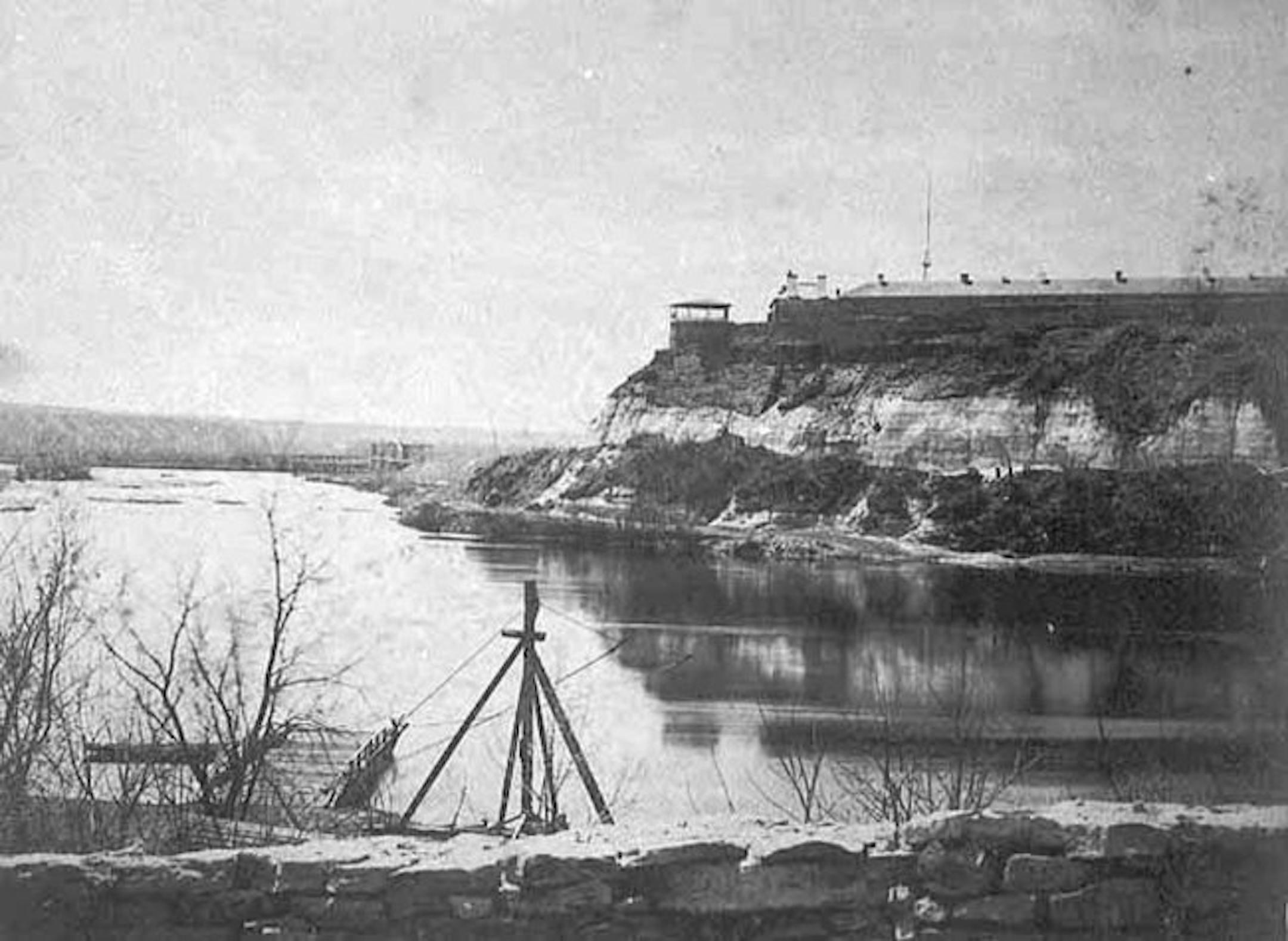
Fort Snelling viewed from ferry landing on the St. Paul side of the Mississippi River in the 1860s. Provided by Minnesota Historical Society.
Fort Snelling viewed from ferry landing on the St. Paul side of the Mississippi River in the 1860s. (Provided by the Minnesota Historical Society)

How did Fort Snelling come to be?

The fort sits at the confluence of two mighty rivers — the Mississippi down from the North Woods and the Minnesota up from the western prairies. It’s sacred for the Dakota, who called this spot “B’dote,” which means “mouth” or “where two waters come together.”

Neil McKay, an instructor in the Dakota language program at the University of Minnesota and enrolled member of the Spirit Lake Tribe, said B’dote is the Dakota’s creation place, according to oral tradition. “That’s where we emerged from the water,” he said.

In 1805, explorer Zebulon Pike illegally negotiated with the Dakota for this land, Convery said. Pike estimated the land was worth about $200,000. Only two of the Dakota participating in talks signed the agreement, he said. Still, the agreement was sent to Washington, D.C. Ultimately, the Senate paid only $2,000 in goods for 100,000 acres.

In 1820, a fort was erected on the bluff, but the overall federal camp was sizable, according to records. Called a “military reservation,” acres stretched from the confluence up to St. Anthony’s Falls (near today’s downtown Minneapolis) to the banks of Bde Maka Ska and Lake Harriet.

The U.S. wanted to keep a military eye on both the bustling fur trade and nearby Indigenous nations, according to historians.

“At the time the Mississippi River was the western boundary of the United States,” said Nick Estes, an associate professor in American Indian Studies at the U.

At an ICE Out Rally at Target Center in downtown Minneapolis on Jan. 23, Estes called out to the crowd that the fort was also built “as a projection of U.S. power in this region to genocide Indigenous people and Dakota people.”

Home for Scotts, whose legal case spurred the Civil War

The stone tower never saw direct military action, but it was connected to a turning point in American history. Over the decades of frontier life, some military officers garrisoned at Fort Snelling brought along family members and, in some instances, enslaved Black people.

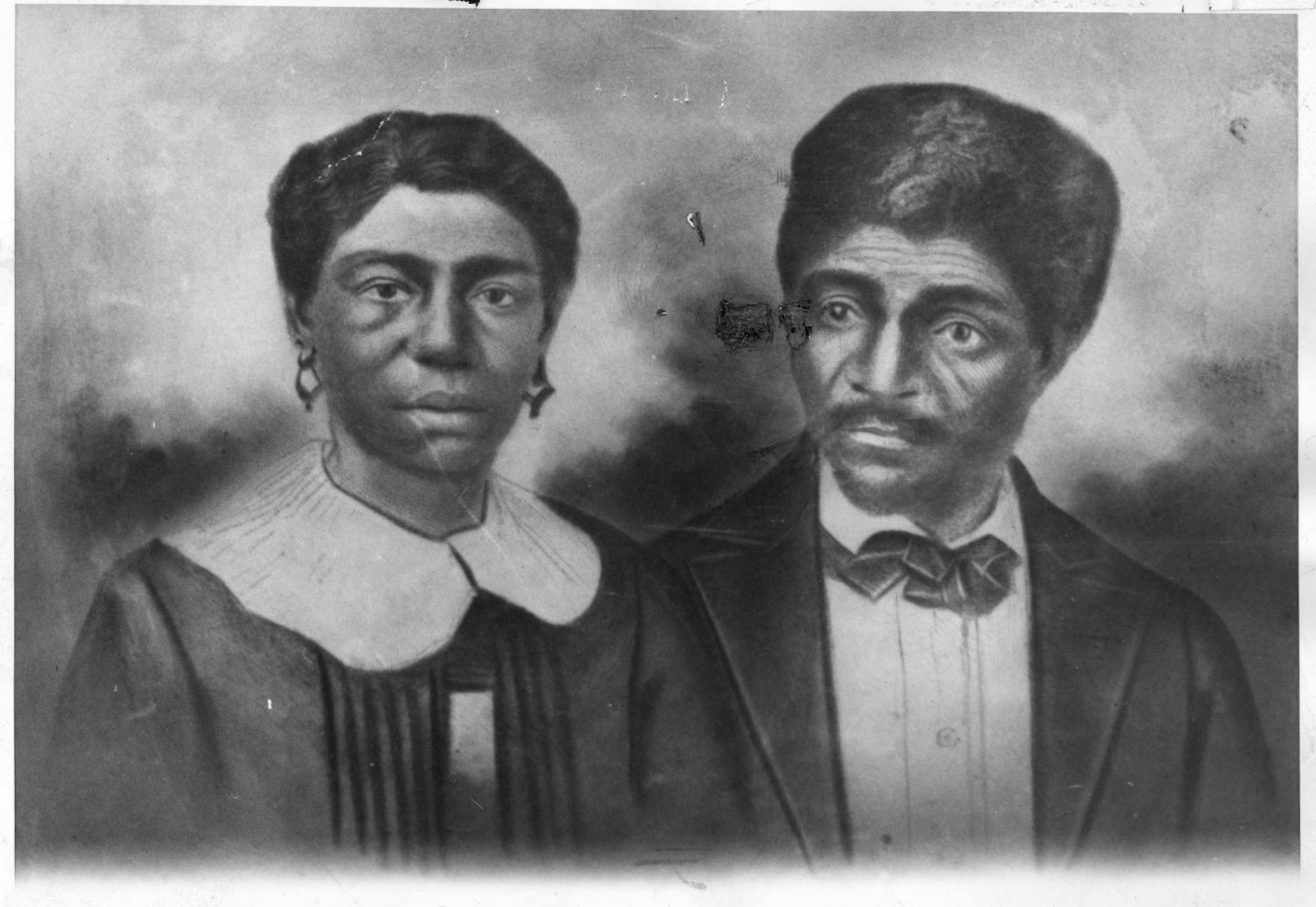
In the 1830s, Harriet Robinson, originally of Virginia, arrived at the fort with her enslaver, Maj. Lawrence Taliaferro, an Indian agent. During her time there, she married Dred Scott, a Black man who was enslaved.

Scott’s enslaver, a doctor, left Fort Snelling and later died. Harriet and Dred eventually moved to Missouri and petitioned a court for their freedom, according to Convery.

A portrait of Harriet and Dred Scott. (The Minnesota Star Tribune)

The case went all the way to the U.S. Supreme Court, where Chief Justice Roger Taney wrote, in an opinion largely viewed by legal scholars as among the most flawed issued by the court, African Americans “had no rights which the white man was bound to respect.”

The 1857 ruling was explosive. Four years later, guns fired at Fort Sumter, and the Civil War had begun.

What happened at Fort Snelling during the U.S.-Dakota War?

Much of the country turned its attention east, with then-Gov. Alexander Ramsey volunteering soldiers to the Union cause. But soon, violence erupted in western Minnesota in 1862 between, initially, Dakota peoples starved by diminishing rations and settlers, many from Germany and Scandinavia. The U.S. military arrived, and the conflict would become known as the U.S.-Dakota War.

Much documented by historians, the war was a short, bloody fight that would shape the young state’s history. Following cessation of the war by year’s end, President Abraham Lincoln approved hanging 38 Native men in Mankato. It was the largest mass hanging in U.S. history.

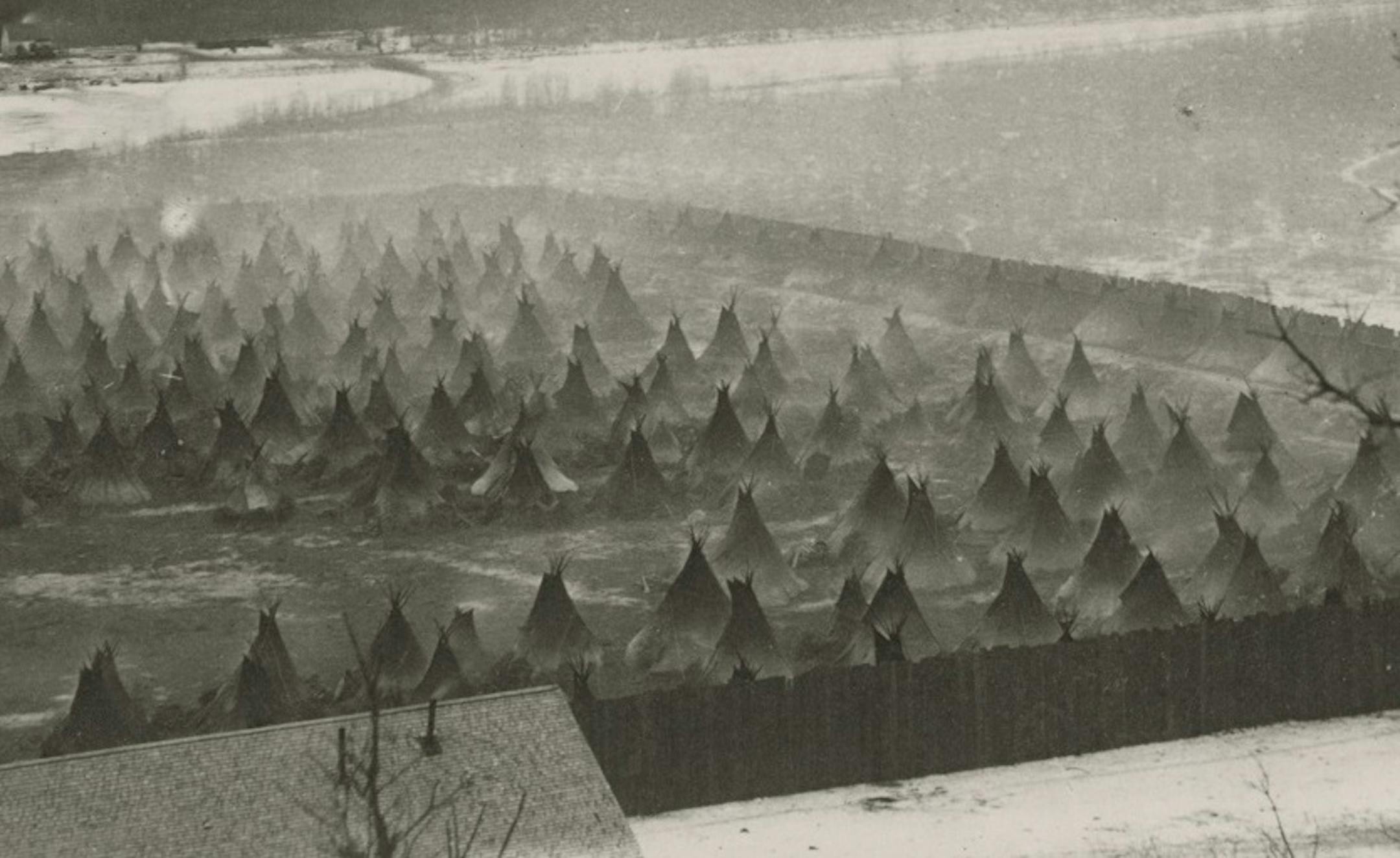
Over the winter, troops forcibly marched Dakota men, women and children to the woods and shoreland near Fort Snelling (today a state park). According to Convery, of the approximately 1,600 Dakota people imprisoned there, hundreds would die from illness and malnutrition and cold.

A new exhibit opening Tuesday at the Minnesota History Center examines mass incarceration in America including the confinement of American Indians throughout history.
After the U.S.-Dakota War of 1862, women, children and elders were forced to move to Fort Snelling in what MNHS officially calls a concentration camp. Source:Minnesota Historical Society ORG XMIT: Documentation
After the U.S.-Dakota War of 1862, women, children and elders were forced to move to Fort Snelling. (Provided by the Minnesota Historical Society)

Survivors were shipped southward on the Mississippi River, then up the Missouri River to Dakota Territory into what became known as the Crow Creek Indian Reservation north of modern-day Chamberlain, S.D.

Estes, an enrolled member of Lower Brule Sioux Tribe in South Dakota, said his uncle once told him they shared family with people from Crow Creek but “we never really talked about it.”

“We knew we had ancestry here, but that whole part of our ancestry was just completely erased,” Estes said.

Near Fort Snelling, a new federal presence

According to public records, Fort Snelling remained a federal military outpost through the 19th century and up until the middle of the 20th century, becoming an enlistment site for Americans shipping out to fight fascism in Europe during both world wars.

By 1946, Fort Snelling was decommissioned. The once 100,000-acre-wide tract of its land had been reduced to a sliver. On it sat the Minneapolis-St. Paul Airport, as well as the Veterans Administration.

In 1965, the federal government built a new building that would be named, by an act of Congress introduced by Sen. Walter Mondale, after Bishop Henry Whipple.

The Rev. Craig Loya, today’s bishop of the Diocese of Minnesota in the Episcopal Church, said that Whipple, the first episcopal church leader in Minnesota, was a giant during the latter half of the 19th century. Whipple intervened personally with Lincoln to reduce the number of Dakota men to be executed, which originally had exceeded 300.

The modern history at the Whipple Building had been, until recently, fairly quotidian. The U.S. Fish and Wildlife Service operates there. So do other branches of the federal government. Metro Transit put a light-rail stop nearby. The national military cemetery, a golf course and some sports fields are scattered closely.

During the first Trump administration, a group of local church and immigrant rights activists unsuccessfully pressured Congress to remove Whipple’s name from the building.

Loya noted Whipple wasn’t a perfect man.

But “he was an advocate for people who were being targeted by the federal government because of their race,” Loya said. “And I think it is a scandal what is happening right now in the federal building that bears his name.”

If you’d like to submit a Curious Minnesota question, fill out the form below:

Read more Curious Minnesota stories:

about the writer

about the writer

Christopher Vondracek

Washington Correspondent

Christopher Vondracek covers Washington D.C. for the Minnesota Star Tribune.

See Moreicon

More from Curious Minnesota

See More
card image
card image