How do Minnesota’s snowplows know where to go when it snows?

Like mail carriers, they follow routes. But state, county and local plow drivers are responsible for different roadways.

The Minnesota Star Tribune
January 9, 2026 at 12:00PM
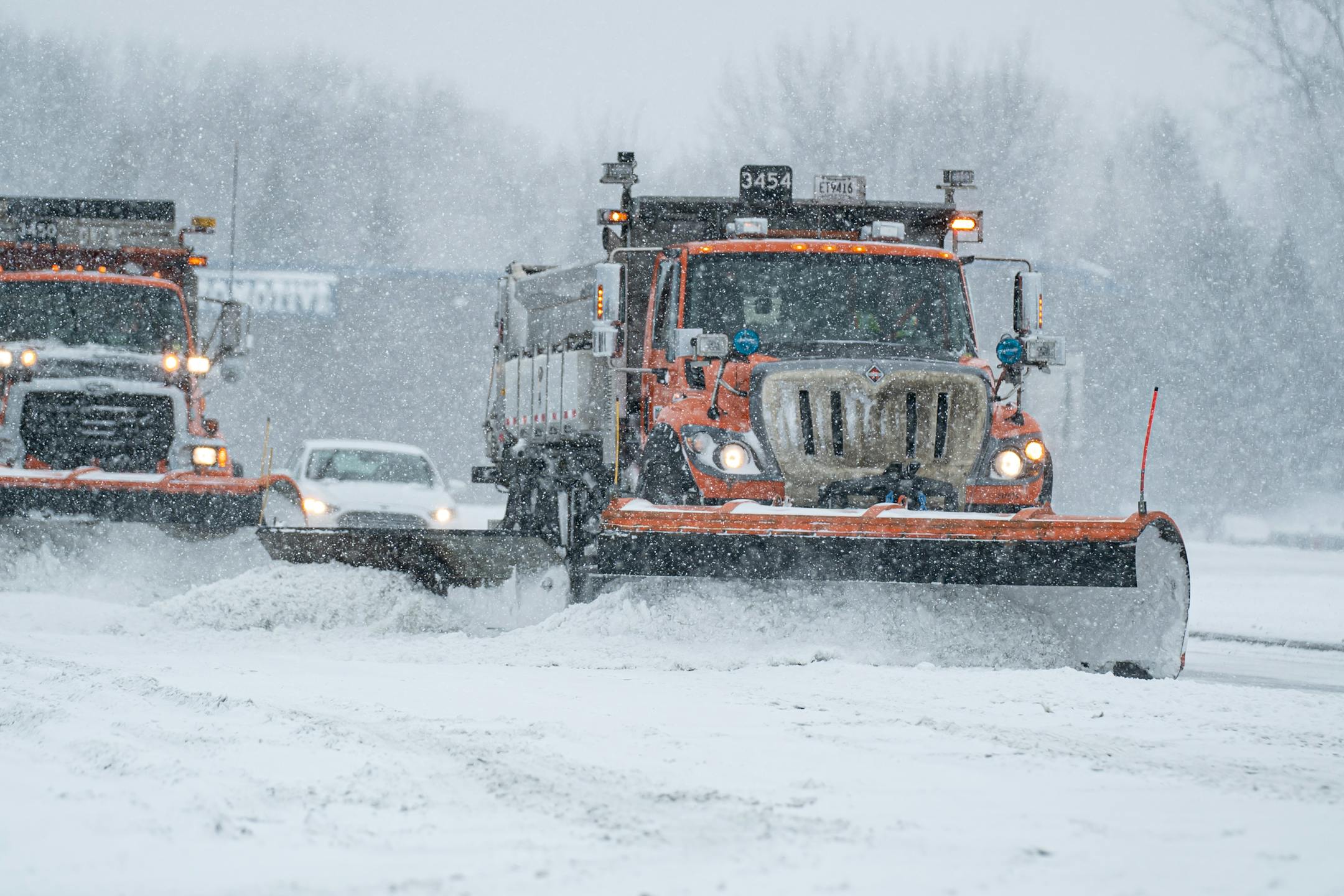
A trio of snowplows clears ramps along Interstate 35 in 2022. (Glen Stubbe/The Minnesota Star Tribune)

Listen and subscribe to our Curious Minnesota podcast: Apple Podcasts | Spotify

When the snow starts to pile up, many Minnesotans turn to the state’s 511 app or online map to check out plows’ progress along our highways and interstates.

Christopher Bales, who lives in St. Paul, is a big Minnesota 511 user in the wintertime. He watches the plow icons move along the map and checks out road conditions by clicking to see plow-cam views. Recently, it sparked his curiosity.

“It is always striking how many snowplows are out and about at any given moment and it seems like sometimes they are very spread out and sometimes you see a pack of them together staggered like geese on the highway,” he said. “That made me wonder about the behind-the-scenes dispatch of the plows.”

Bales wrote to Curious Minnesota, the Strib’s audience-powered reporting project, to ask: “How do all our snowplows know where to go when it snows? They must have their own routes like the mail but I’d like to know more about the logistics.”

The Minnesota Department of Transportation (MnDOT) controls approximately 800 of the more than a thousand snowplows at work across the state. MnDOT’s plows, the ones Bales watches through Minnesota 511, only clear highways and interstates. County and local crews take care of everything else.

“We maintain about 30,000 lane miles, which is about 12,000 actual miles in the state. That’s less than 10 percent of all roadways in the state of Minnesota,” said MnDOT spokesperson Anne Meyer. “We’re not the only ones out there taking care of snow and ice.”

In general though, Minnesota’s snowplow drivers — like mail carriers — do follow set routes.
Truck stations across the state

To dispatch their plows, MnDOT divides the state into eight different districts and maintains 148 truck stations, Meyer said. They employ more than 1,700 full- and part-time snowplow operators who work 12-hour shifts, she said.

“Each truck station will cover certain highways and/or interstates, whichever is kind of in their region. They’ll have specific snowplows for those routes,” Meyer explained. The truck station crews decide when and how many plows to send out.

Each MnDOT plow has equipment called a maintenance decision support system, which collects information like road and air temperature. That way, drivers can adjust the rock salt and brine they add to roadways as they go, she said.

They often combine salt and brine to make a “pastier consistency,” she said, because that helps keep the rock salt in place.

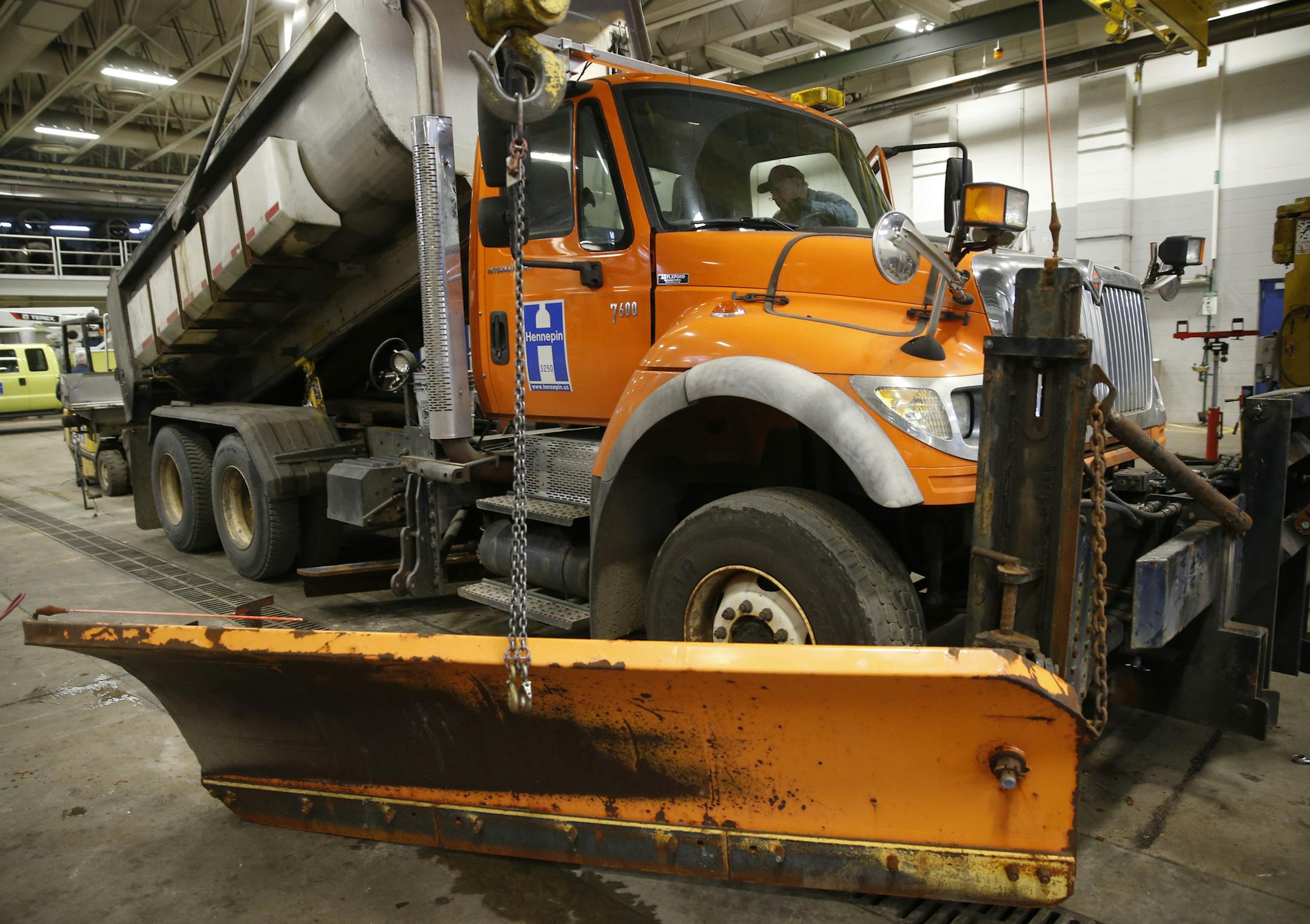
The Hennepin County trucks that become snowplows are used in summer road construction, making the preparation process a balancing act. Crew used to start the changeover in September, but after the 1991 Halloween blizzard, the start time was moved up to mid-August.
The Hennepin County trucks that become snowplows are used in summer road construction, making the preparation process a balancing act. Crews used to start the changeover in September, but after the 1991 Halloween blizzard, the start time was moved up to mid-August. (Richard Tsong-Taatarii/The Minnesota Star Tribune)

A 2 a.m. start time

Counties and cities across the state send out their own fleets of snowplows.

Hennepin County, Minnesota’s largest in terms of population, has 53 plows that dispatchers send out from five different shops spread across the county in Medina, Bloomington, Minnetonka, Orono and Osseo, said Andy Kraemer, a county senior department administrator.

The county’s “on-call foreman” decides how many trucks to send out, he said.

“We used to manually call everybody in the middle of the night, and now, we do have a callout system,” Kraemer said. “So we can go on the computer and press the button, and it calls everybody at once.”

In total, the county’s plows travel 64 different routes. Drivers will typically start at 2 a.m. “if the snow allows us to,” Kraemer said, because it often takes about four to five hours for a plow to make its route.

“That way, we can get out of the way of morning rush hour,” he said.

If you’d like to submit a Curious Minnesota question, fill out the form below:

Read more Curious Minnesota stories:

about the writer

about the writer

Erica Pearson

Reporter

Erica Pearson is a reporter and editor at the Star Tribune.

See Moreicon

More from Curious Minnesota

See More
card image
Glen Stubbe/The Minnesota Star Tribune

Like mail carriers, they follow routes. But state, county and local plow drivers are responsible for different roadways.

card image