Why is Minnehaha Falls so much narrower than it used to be?

It’s not just an illusion – the beloved Minneapolis waterfall really used to be wider.

The Minnesota Star Tribune
January 23, 2026 at 12:00PM
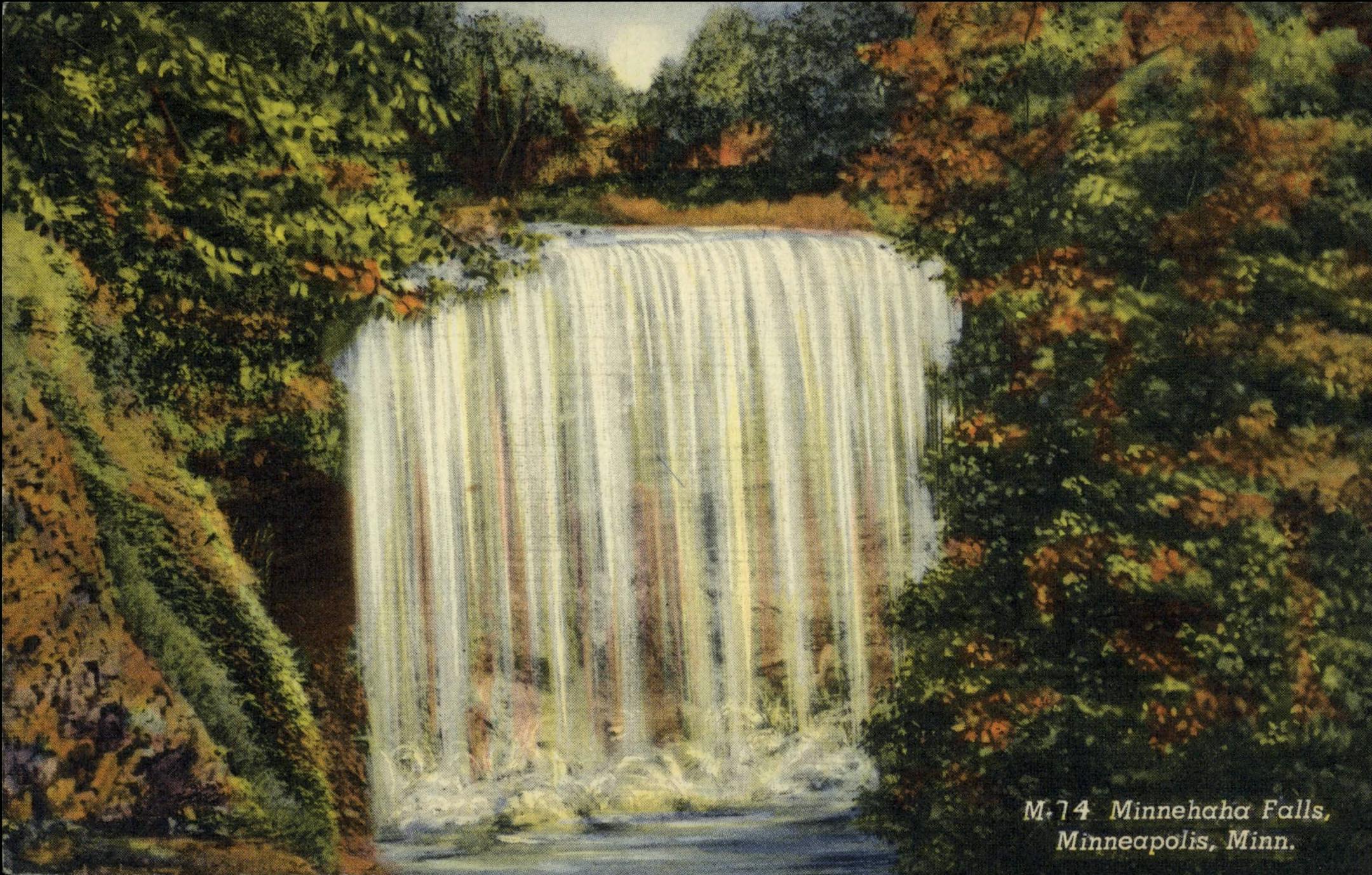
An old postcard shows the falls' wider span. (Hennepin County Library)

Listen and subscribe to our Curious Minnesota podcast: Apple Podcasts | Spotify

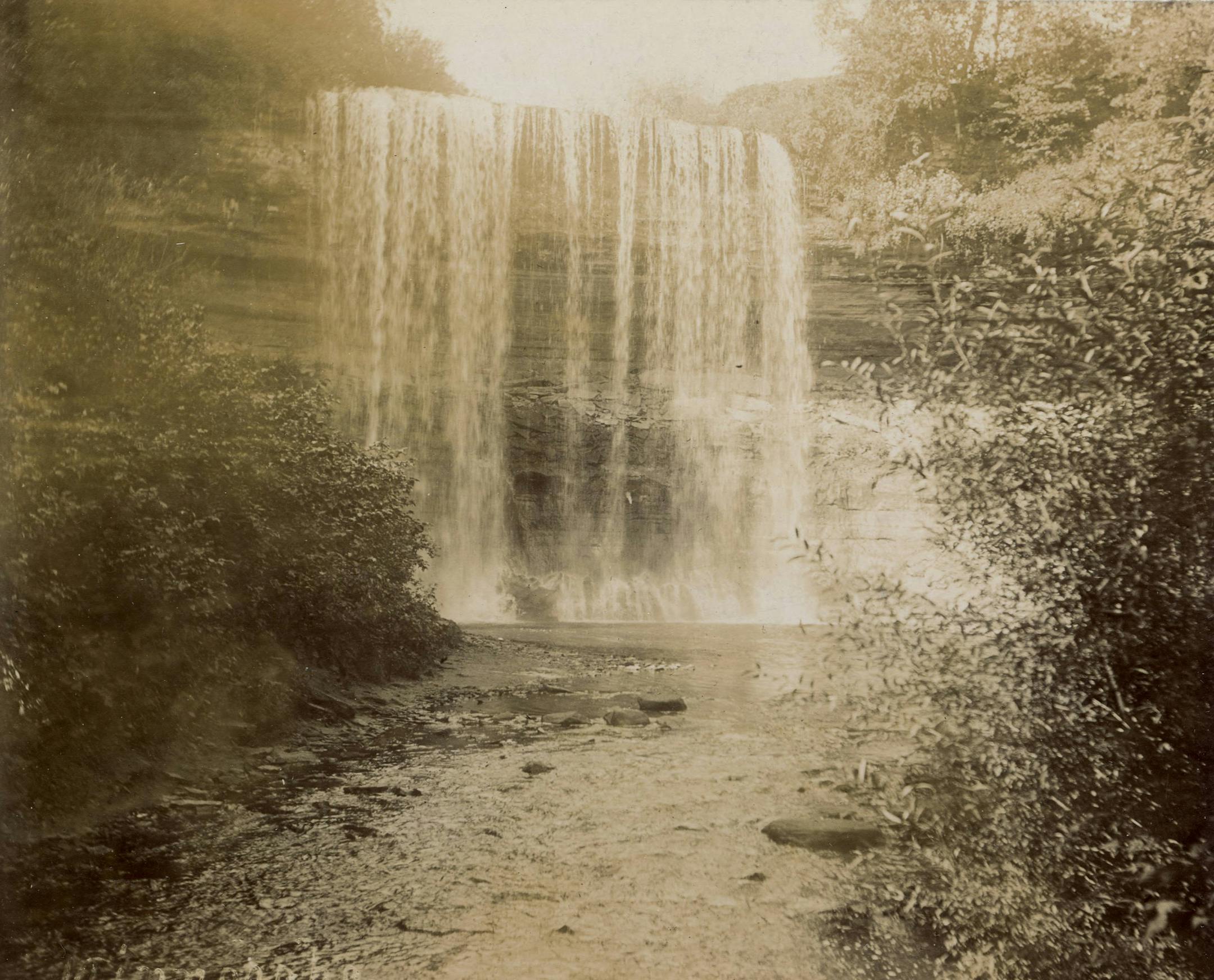
The older the postcard, the wider the falls.

That’s what a reader who collects vintage Twin Cities postcards noticed as he looked through some featuring Minneapolis’ long-beloved attraction, Minnehaha Falls.

The difference was striking: In images from more than a century ago, the waterfall appears to be much, much wider than it is today.
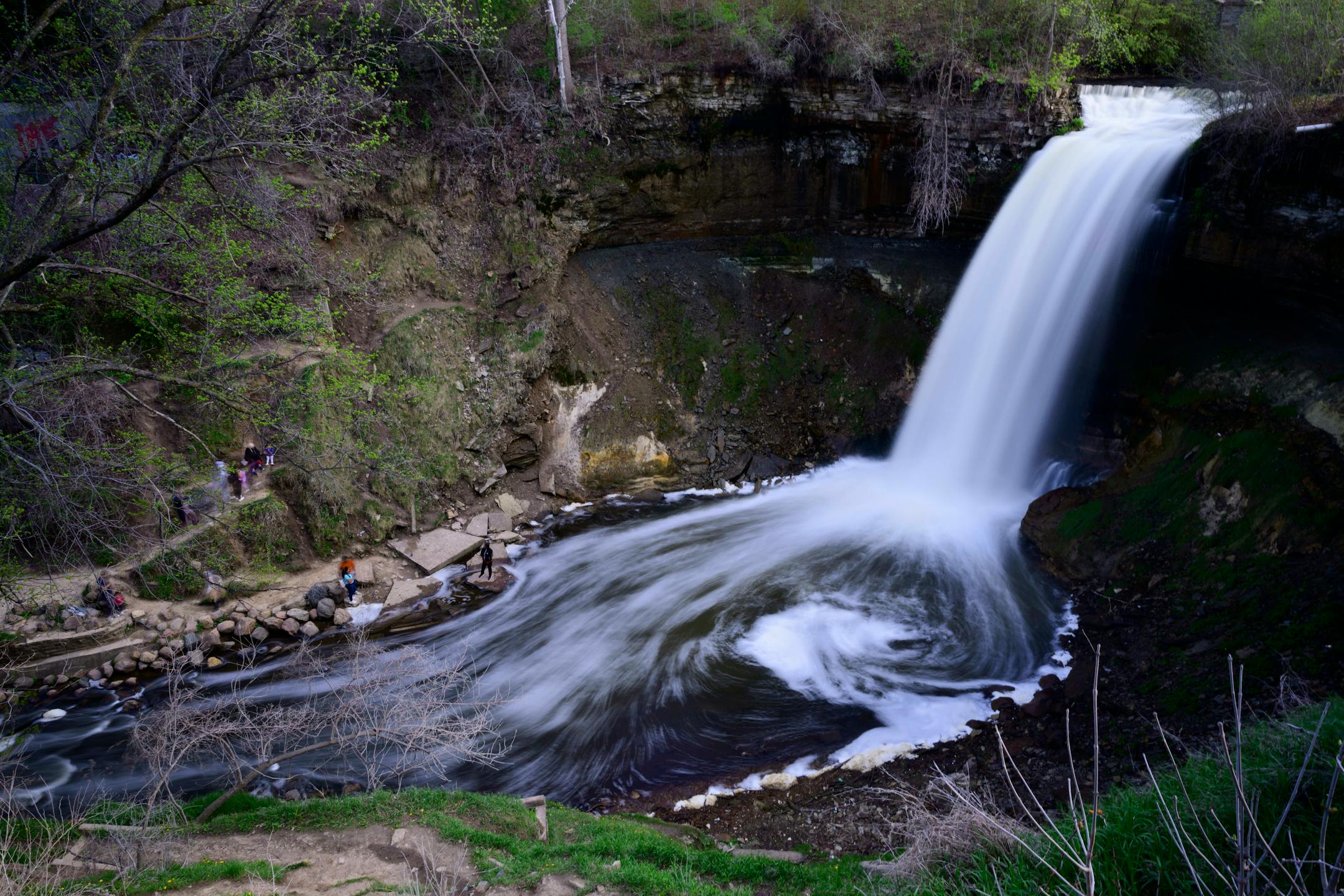
Minnehaha Falls shown in May 2024. (Aaron Lavinsky/The Minnesota Star Tribune)

He wrote to Curious Minnesota, the Strib’s audience-powered reporting project, to ask: “What led to the narrowing of the falls?”

The difference is not an illusion. Minnehaha Falls are “absolutely” narrower today, said historian Dave Smith, the author of “City of Parks: The Story of Minneapolis Parks.”
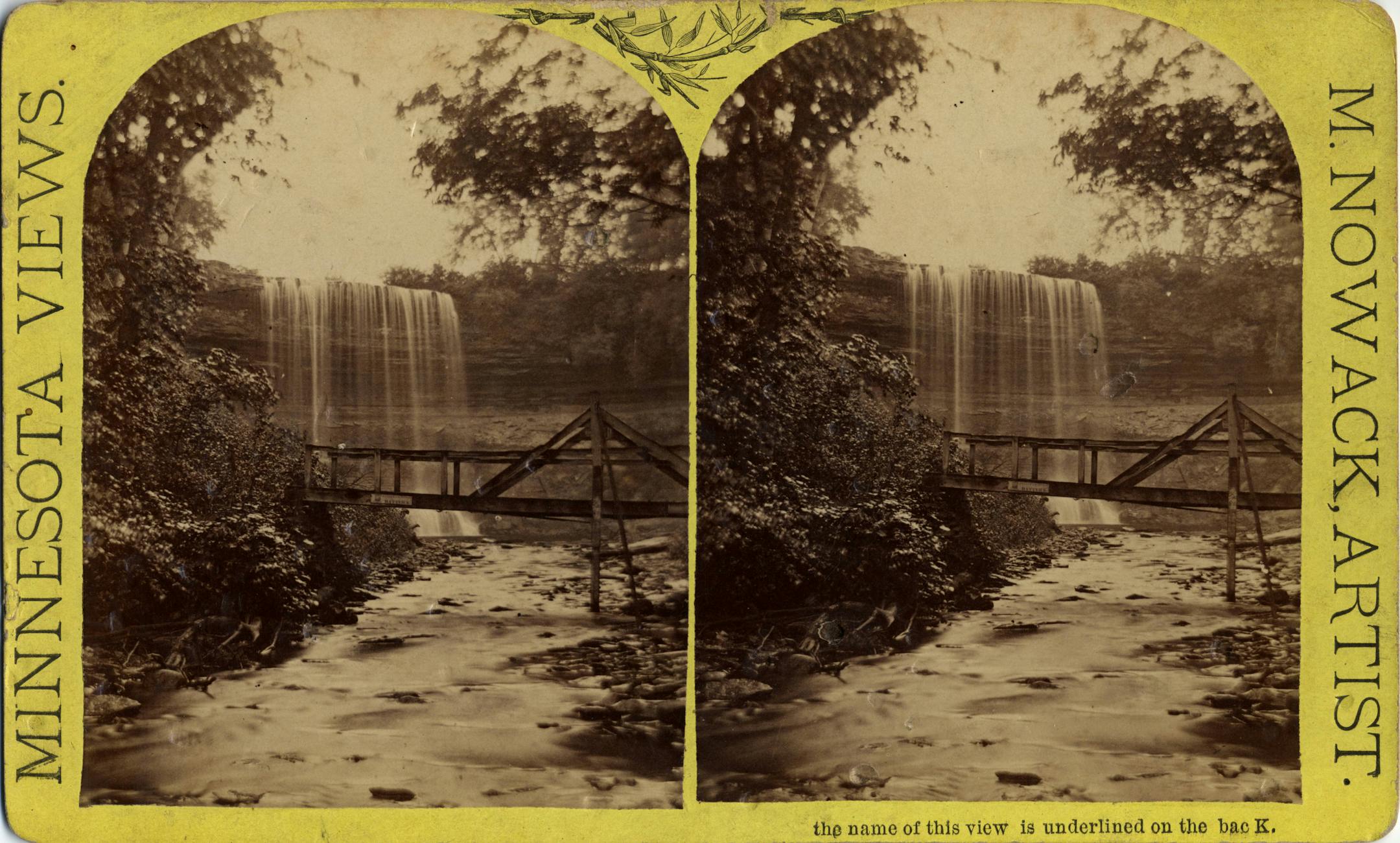
This stereograph of Minnehaha Falls from the 1880s or 1890s shows how water once spilled over a wide lip. (Michael Nowack/Hennepin County Library)

“I have a lot of stereographs from the 1800s, and there were times when it looks like the flow of water must have been 30, 40 feet wide,” Smith said.
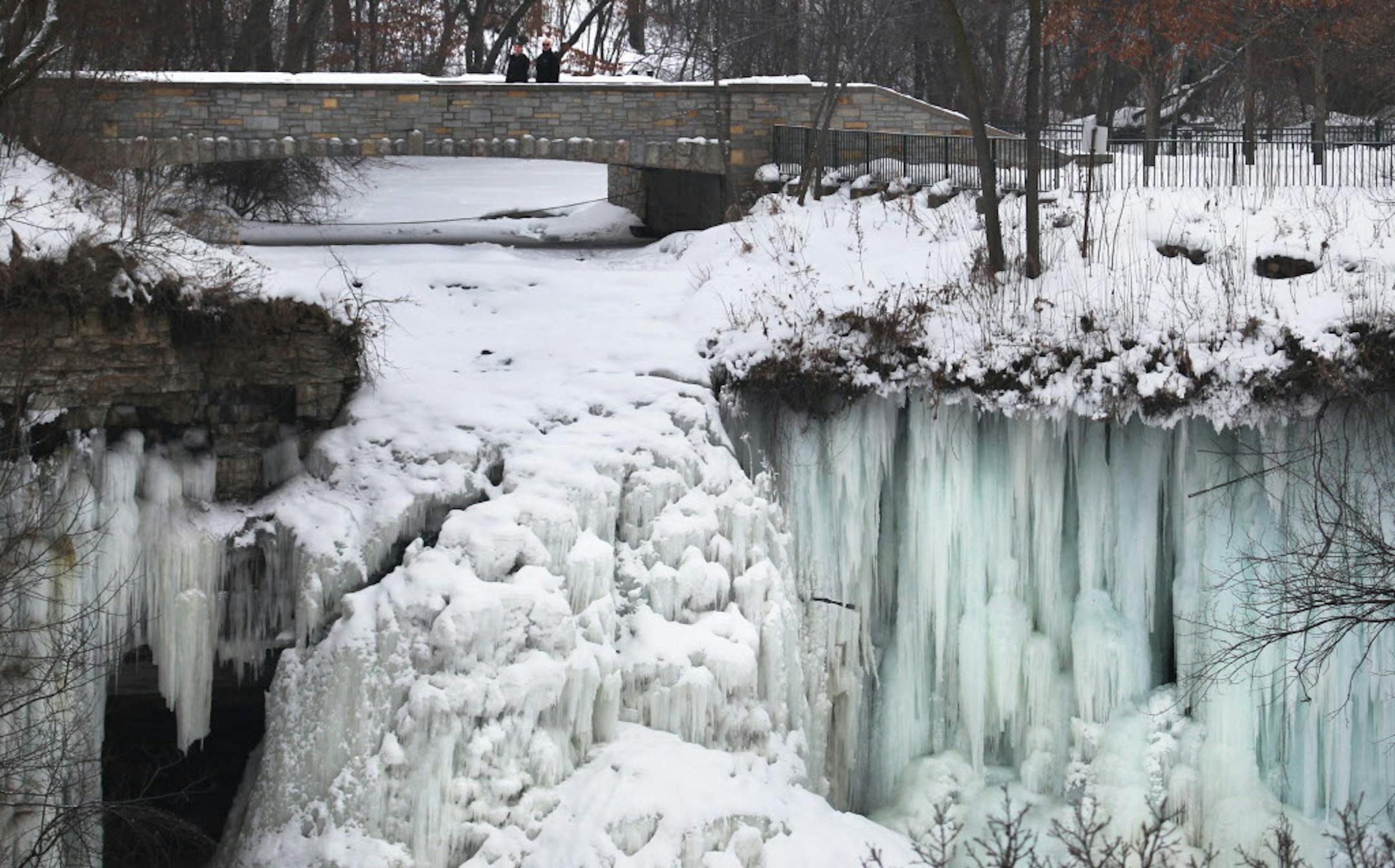
A view of the 1939-era bridge above ice-encrusted Minnehaha Falls in 2011. (David Joles/The Minnesota Star Tribune)

Two major factors are likely behind the shift, according to Smith. A concrete bridge built in 1939 spanning the creek narrowed and focused the creek’s path. (Earlier bridges had a wider span and didn’t corral the flow of water in the same way.)
At the same time, as the creek’s water has continued to erode the lip of the falls, it has cut a narrowing notch into the limestone. This keeps the falls flowing in a relatively slim ribbon even during rainy weather.

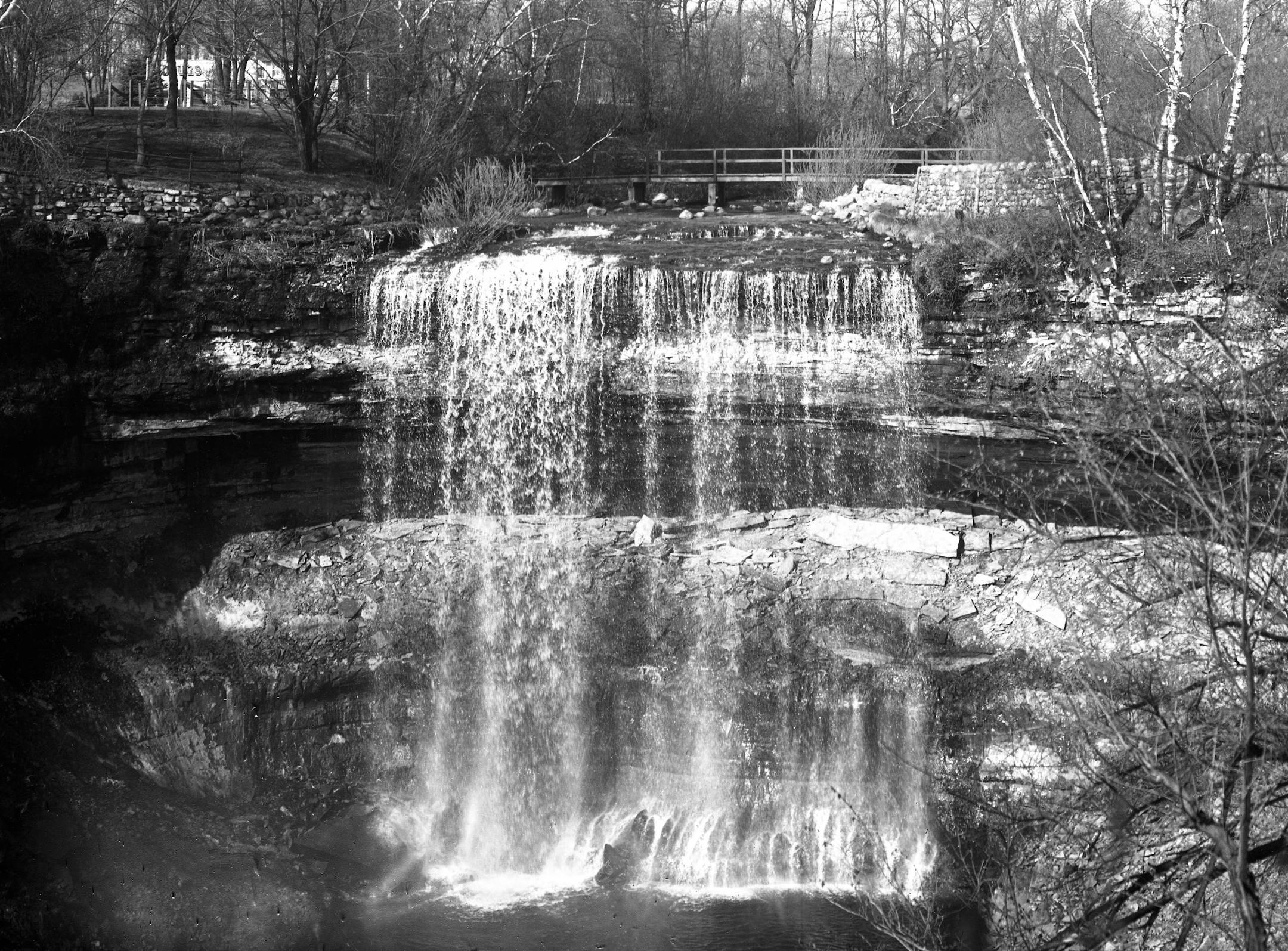
This view from 1910 shows a wider falls and how the creek once flowed under the bridge that was there before 1939. (Hennepin County Library)

Erosion worries started long ago

Though the years, park leaders have fretted about the flow of water over Minnehaha Falls and the ways that that erosion would change the waterfall’s appearance.

“The erosion of the lip of the falls has been a concern for more than 100 years,” said Smith.

In 1906, Charles Loring, who served as the Minneapolis Park Board’s first president, proposed using concrete to shore up the falls. “Time to act if Minnehaha Falls are to be saved,” the Minneapolis Journal blared across its front page that September.

An early photo shows the waterfall's wide reach. (Hennepin County Library)

“The danger of a possible collapse of the limestone ledge of Minnehaha Falls has been recognized for some time. … There is no question but that the Falls have receded from the Mississippi during the centuries,” Loring told the newspaper. “I believe it would be a wise precaution to give the limestone ledge some sort of artificial and more permanent support than it now has, and that such a support could be placed there without in any way marring the beauty or the artistic perfection of the choicest show place in the park system.”

But while the city’s other famous waterfall, St. Anthony Falls, was stabilized with concrete by the Army Corps of Engineers around 1875, the park board did not take up Loring’s suggestion in the end, Smith said.

The creek’s waters continue to carve into the ledge, and the falls have receded through the years. The changes have not been as dramatic as leaders 120 years ago once worried they would be, but the falls’ geology does mean that at some, point erosion will speed up, Smith said.

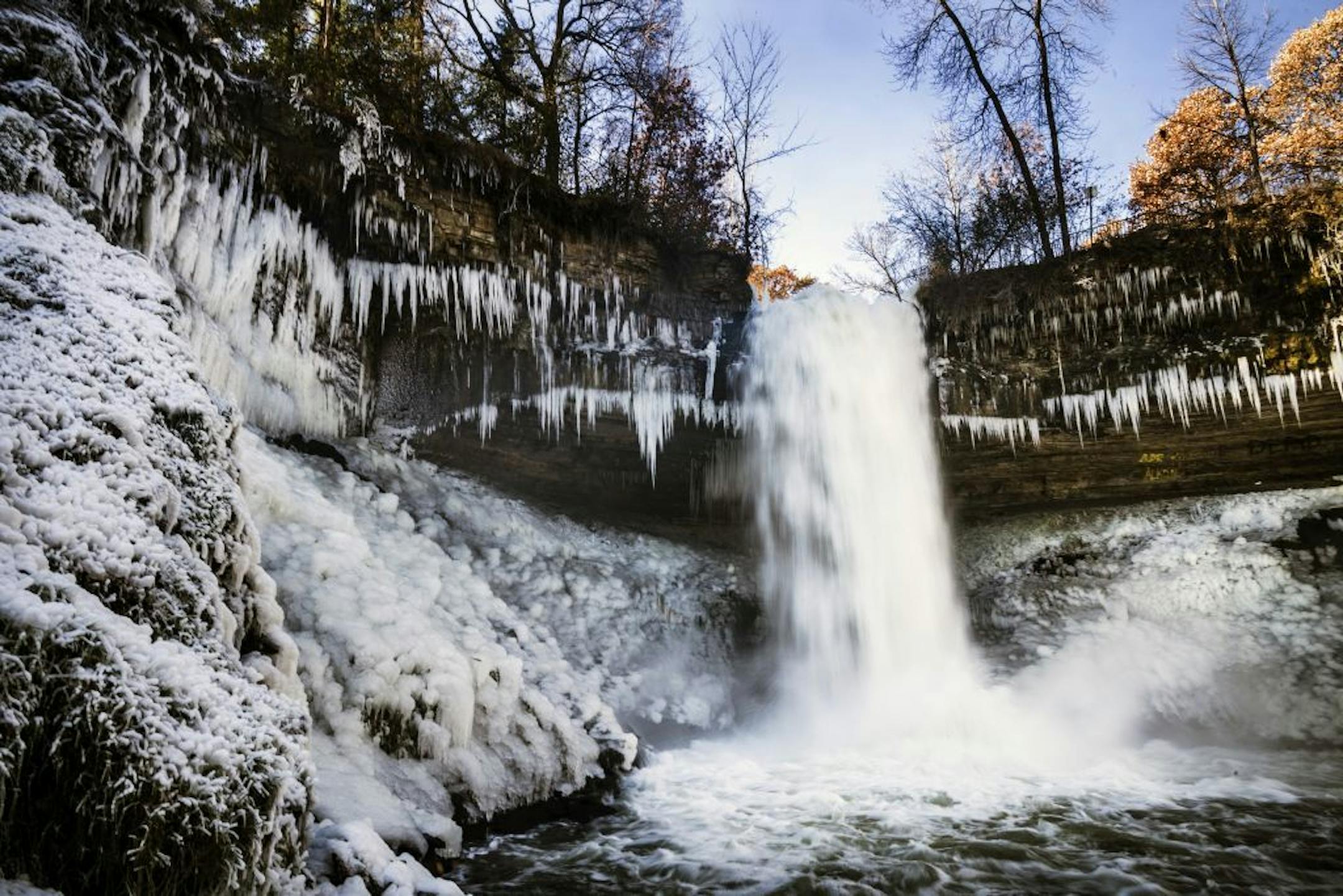
Minnehaha Falls' icy spray began to coat its sides with ice and snow because of the low temperatures Monday, Nov. 11, 2019.
Minnehaha Falls was beginning to ice over on a November day in 2019. (Richard Tsong-Taatarii/The Minnesota Star Tribune)

“The top layer there is limestone, and below that is sandstone,” he said. “And so once that limestone goes, the lip of the falls is going to retreat pretty far, because the sandstone below the limestone will erode much, much faster.”

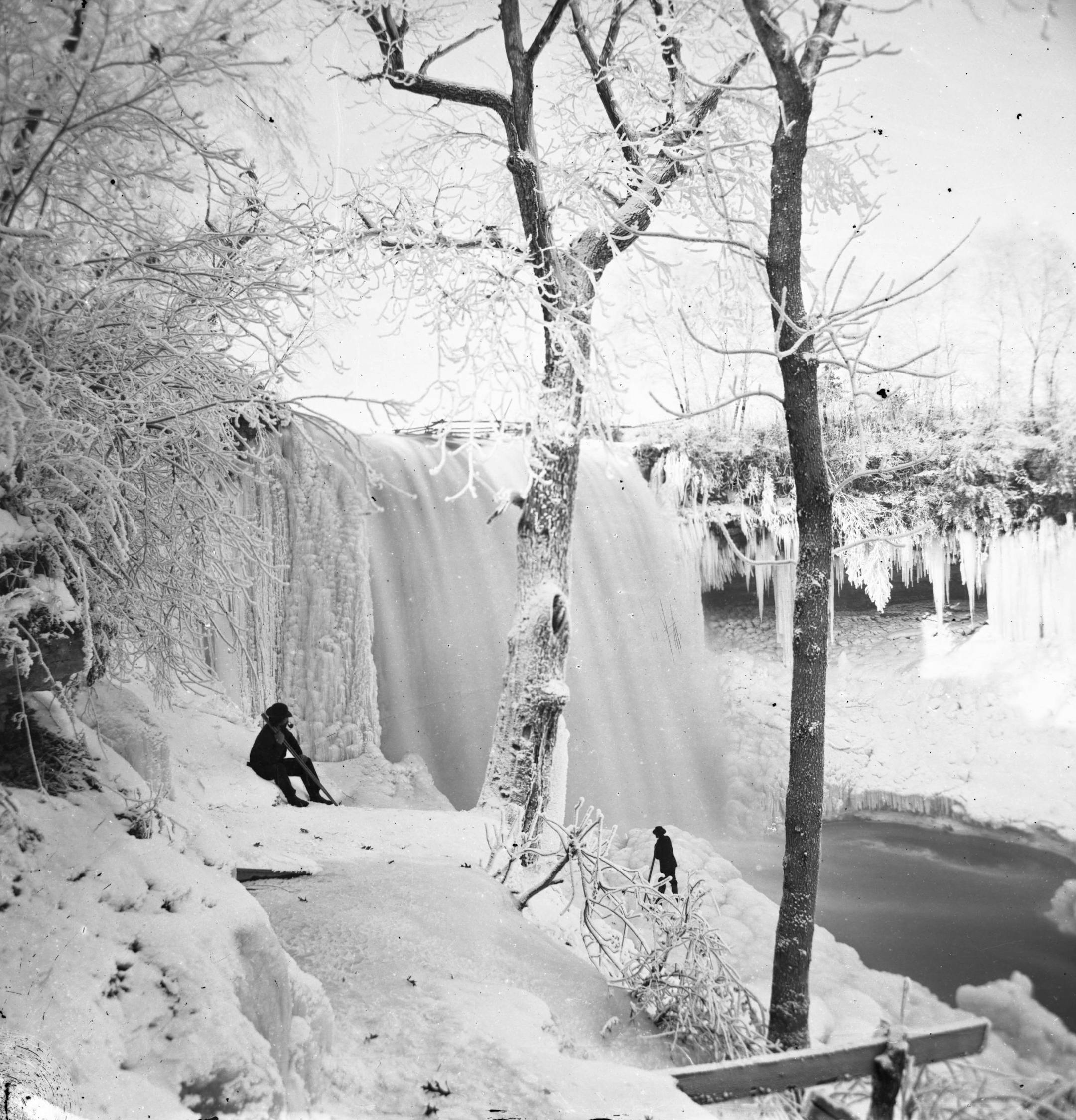
In the 1900s, a photographer captured this stunning scene of the still-flowing falls in winter. (Edward Bromley/Hennepin County Library)

In winter, icicles often do span the wider lip, giving a glimpse of the grand curtain that once flowed there. The icicles are created by groundwater flowing through the limestone layer.

As January’s extreme cold snap began, the entire gorge was draped in ice.

If you’d like to submit a Curious Minnesota question, fill out the form below:

Read more Curious Minnesota stories:

about the writer

about the writer

Erica Pearson

Reporter

Erica Pearson is a reporter and editor at the Star Tribune.

See Moreicon

More from Curious Minnesota

See More
card image
Hennepin County Library

It’s not just an illusion – the beloved Minneapolis waterfall really used to be wider.

card image
card image