What’s the story behind the abandoned Cold War station in Finland, Minn.?

Now a ghost town, the remote spot on Lookout Mountain was once part of a secret defense network.

The Minnesota Star Tribune
February 6, 2026 at 12:00PM
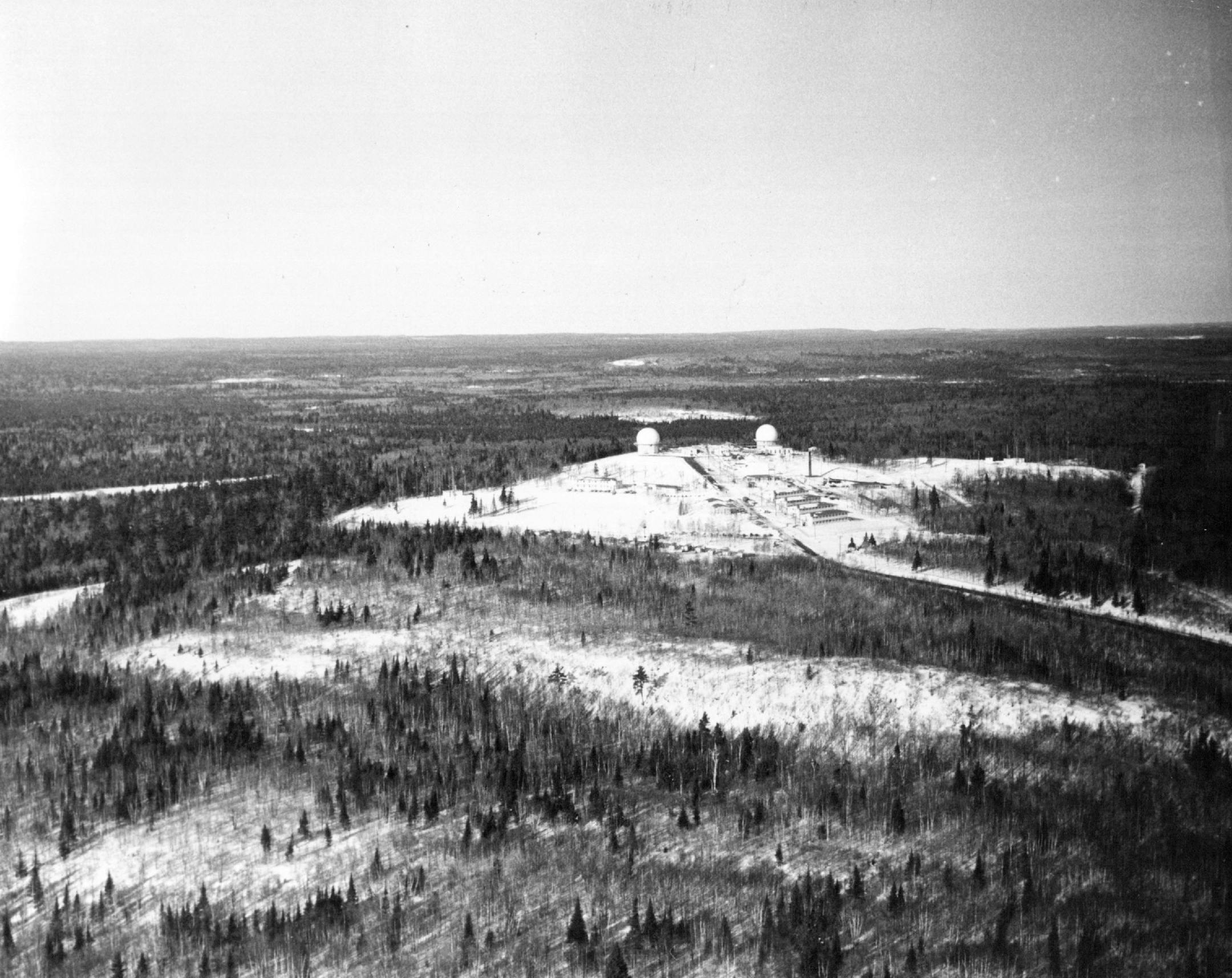
The radar station near Finland, Minn., in 1958. The Minneapolis Tribune wrote at the time that there was "nothing much due north of it except a lot of Canadian wilderness — and Russia." (John Croft/The Minnesota Star Tribune)

Listen and subscribe to our Curious Minnesota podcast: Apple Podcasts | Spotify

On an abandoned Air Force station a few miles from Finland, Minn., tansy grows wild in the cracks of an old road and sprouts chest-high in front of open garage doors.

The dozens of empty, decrepit houses here have broken windows, walls covered in graffiti and midcentury stoves tugged from walls.

It looks like a ghost town. But during the Cold War, this was a key spot in the United States’ defense against the Soviet Union.

Noah Carlson of Milaca, Minn., has been curious about the old station ever since he came across a sign for Air Base Road while hiking the Superior Hiking Trail in the area.

Carlson later looked up the road and learned that it leads to the 100-plus acre station site on Lookout Mountain. In recent years, urban explorers have shared videos and photos of the old site online, showing rows of midcentury houses seemingly abandoned mid-thought.

“It’s kind of like something out of ‘Stranger Things,’” he said, referencing the popular Netflix series set in the 1980s.

Carlson turned to Curious Minnesota, the Strib’s audience-powered reporting project, to learn more about what this remote spot off Air Base Road was like in the days the station was operating.
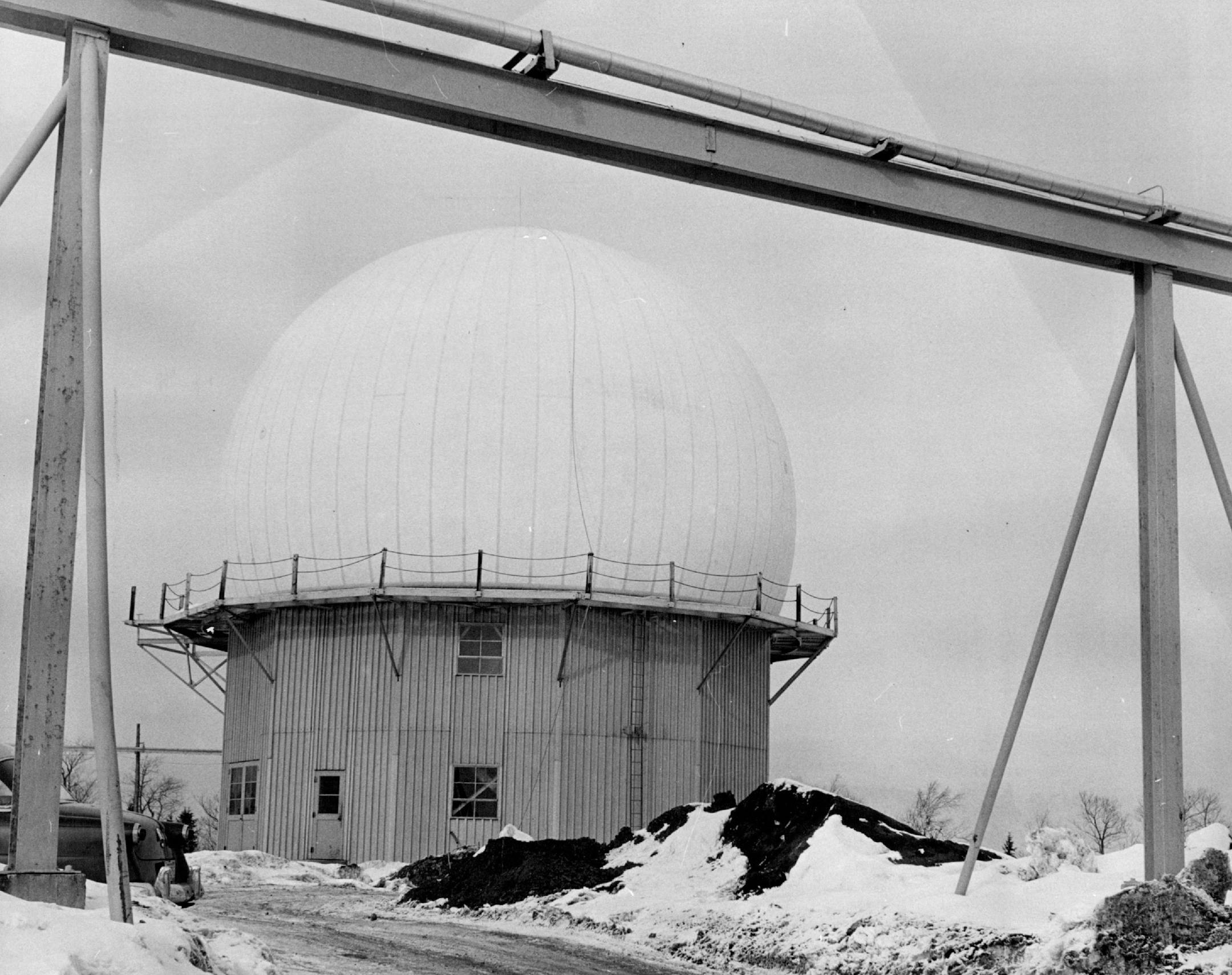
Shown in 1957, an air-filled plastic bubble protected a rotating antenna from bad weather. (The Minnesota Star Tribune)

A ‘lonely place’ to watch the sky

In the early days of the Cold War, with heightened tensions between the United States and the Soviet Union, the threat of nuclear war was a push of the button away.

The U.S. government believed that enemy planes, if they came, would likely cross over the Arctic and Canada before breaching the northern border of the United States.

The remote spot near tiny Finland, an hour from Duluth, sat between the USSR and key targets of industrial America.

“The attack lines were all literally coming over the top” of the globe, said Jay Hagen, program director at Veterans Memorial Hall in Duluth.

The Finland Air Force Station, manned by the 756th Air Control and Warning Squadron, quietly opened in 1951. Nicknamed “Galahad,” sharing a name with a knight of King Arthur’s Round Table, it was one of a series of North American radar stations with about a 200-mile radius of watch area.

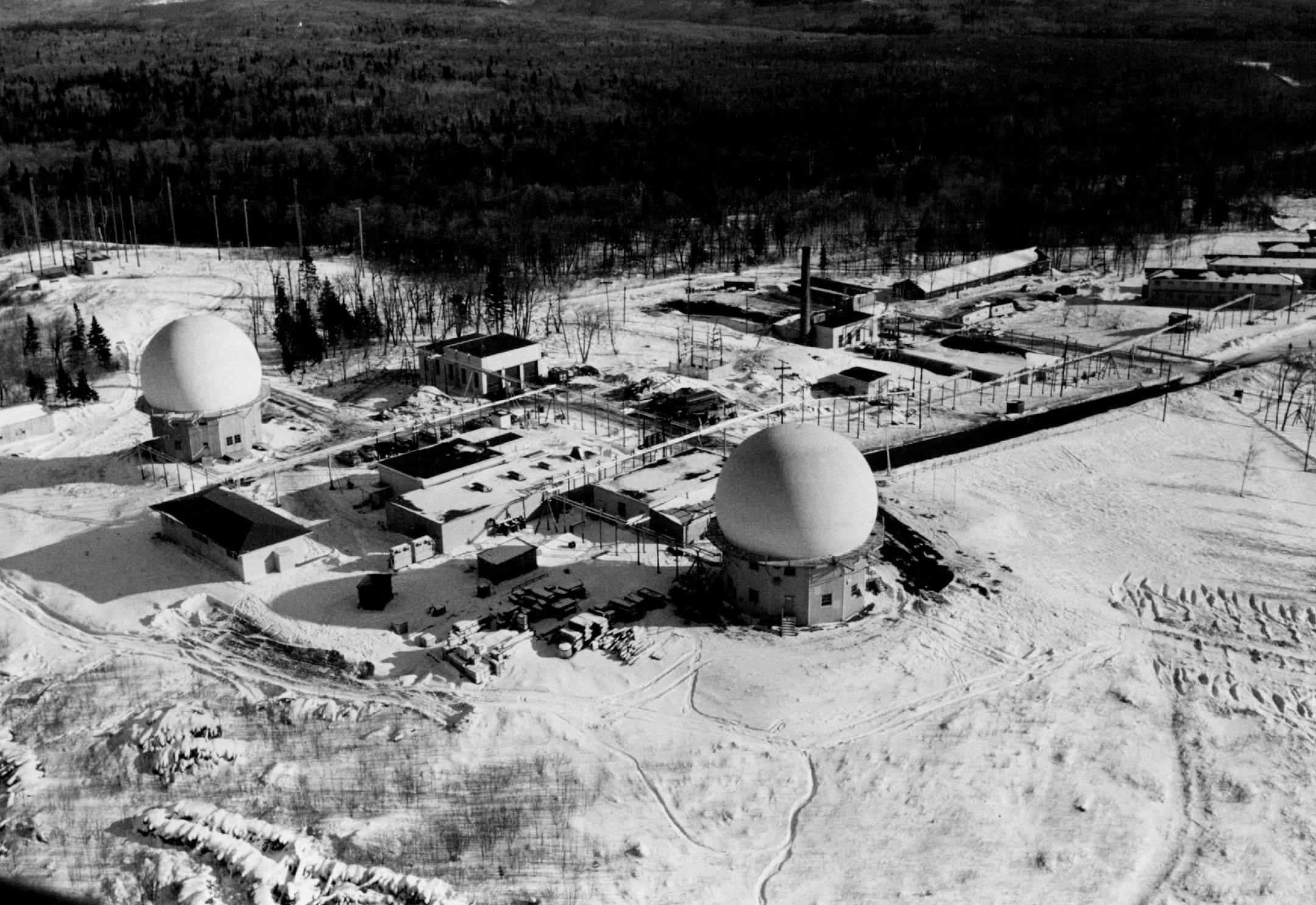
Aerial photographs from the time show two inflated dome buildings, where the radar equipment was kept, on opposite sides of the station’s “nerve center.”

In 1958, an aerial view of the remote station near Finland, Minn. (The Minnesota Star Tribune)

“There is nothing much due north of it except a lot of Canadian wilderness — and Russia," Minneapolis Tribune reporter Don Morrison wrote in the 1950s.

The slogan here, he wrote, was “Detect, Identify, Intercept, Destroy.”

In October 1951, Duluth News Tribune journalist Walter Eldot visited the base and found a site where morale was good and men worked with “clock-like precision,” he wrote. In the barracks, personal touches had been added to living spaces. There was automatic laundry, gleaming asphalt tile floors and a mess hall that was more like a dining room, according to Eldot.

There was one thing that the men didn’t love, though: the location. The station was out in “the wild blue yonder” with nothing around, Eldot wrote. Options for recreation were limited, and it took time and money to get to the region’s closest cities. The station did eventually get a curling rink.

When the Tribune’s Morrison visited seven years later, he found similar complaints.

“In the summer, endless green forests surround the station,” he wrote. “In the winter, snow and cold besiege it. At any time, it is a lonely place to live.”

Part of a secret Cold War network

The Finland Air Force Station was part of a network of northeastern Minnesota sites that were designed to protect the United States.

Near what is now the Duluth International Airport, the Semi-Automatic Ground Environment (SAGE) building was constructed. This square, concrete structure housed massive computers that would receive radar information from Finland Air Station and, in turn, send it out.

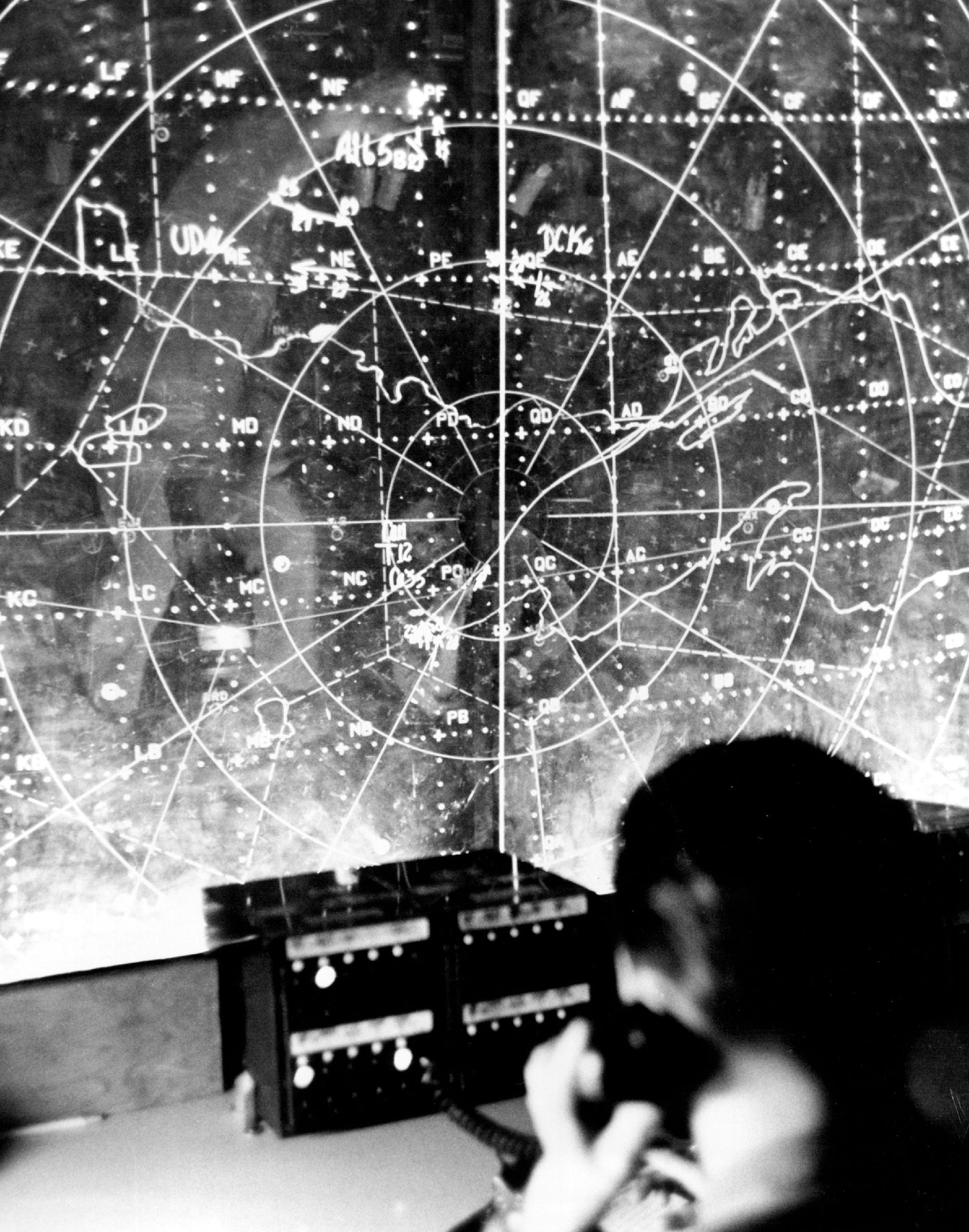
This 1958 photo shows inside the control room of the station. A plotting screen showed the location and movement of every aircraft that entered a 450-mile zone covered by the station. (The Minnesota Star Tribune)

When radar at the Finland station detected a plane in nearby airspace, it would note its altitude, speed and course. That plane’s route would be weighed against both private and military flight plans. If the plane wasn’t following a recorded flight plan, it would be considered a possible “bogey,” or enemy.

A fighter plane from Duluth’s Air National Guard Base, equipped with a rocket with a nuclear warhead called a “genie,” could be ready for takeoff within minutes. The pilot would identify the bogey as friend — perhaps a puddle jumper without a flight plan, Morrison wrote — or a Russian bomber.

The Air Force also operated the BOMARC missile site, located in a secluded spot outside of Duluth on the French River, in 1961. It had 28 silos lined in rows, each holding one of the 16,000-pound missiles.

In the PBS North documentary “Cold War Secrets of Northern Minnesota,” vintage images show a roof opening and the missiles rising up, their tips to the sky — ready to send off just 30 seconds after a launch button at the SAGE building was triggered.

None of this was common knowledge to civilians.

“I don’t think people realize how central Minnesota’s role was to the Cold War in the 1960s,” said Mike Scholtz, the documentary’s filmmaker.

And then, it was obsolete

All of this was just a blip in this region’s history. Within years, the technology at each site would become obsolete.

In 1972, the Duluth News Tribune reported that the French River site was closing and later ran a photograph of a flatbed truck with the word “explosives” in lieu of a license plate that was set to carry missiles out of state.

The weapons went to a storage depot in Virginia, where the Air Force said they might be used for target practice, the paper reported.

The SAGE building ended its operations in the early 1980s and is now home to the University of Minnesota Duluth’s Natural Resources Research Institute.

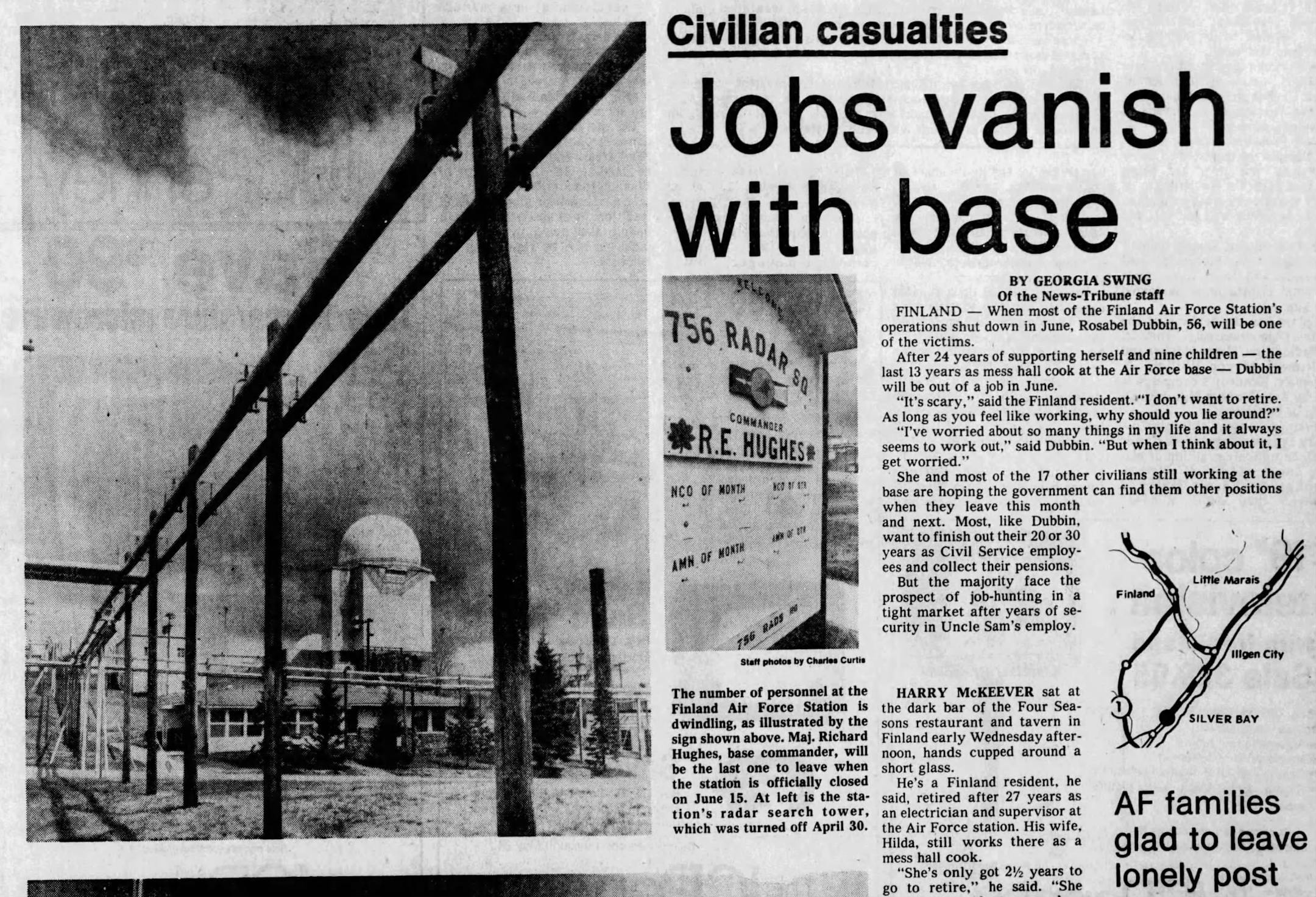
The Duluth News Tribune covered the base's end in 1980, writing that Air Forcefamilies were "glad to leave."

The Finland Air Force Station’s final month came in May 1980. Offices were emptied and packing boxes filled. The radar search tower was turned off, then the people left in shifts. The base’s commander planned to be the last one out. “I’ll turn out the lights,” Maj. Richard Hughes told the Duluth News Tribune.

By late June 1982, a classified ad in the Duluth News Tribune listed the station (including its radar equipment) for sale. It was “ideal for institutional uses or research,” the ad claimed.

By 1995, the old station site had become Lookout Mountain Village, a housing complex. But that year, the Minnesota Pollution Control Agency asked residents to stop using the water. It “smelled like fuel oil,” the Duluth News Tribune reported at the time.

Today, the place is listed as a Superfund site. According to the Minnesota Pollution Control Agency, the Army Corps of Engineers conducts long-term monitoring there.

The site is for sale, and has been for years. It’s billed as having a view of Lake Superior. More than half of the 43 houses on-site could be refurbished, according to the listing, which also describes it as having “beautiful park settings, a baseball field, private septic treatment plant, and newer 1,200-foot well.” It’s one of the highest spots in Minnesota.

It’s listed at a nonnegotiable price of about $800,000, according to Lynne Crandall, a real estate agent at St. Cloud-based Premier Real Estate. She’s gotten a lot of calls about it over the years, she said, with ideas for the land ranging from a resort to a casino to a windmill farm.

“I describe it as 100 acres of unlimited potential,” Crandall said.

If you’d like to submit a Curious Minnesota question, fill out the form below:

Read more Curious Minnesota stories:

about the writer

about the writer

Christa Lawler

Duluth Reporter

Christa Lawler covers Duluth and surrounding areas for the Star Tribune. Sign up to receive the North Report newsletter at www.startribune.com/northreport.

See Moreicon

More from Curious Minnesota

See More
card image
John Croft/The Minnesota Star Tribune

Now a ghost town, the remote spot on Lookout Mountain was once part of a secret defense network.

card image