With agents on their streets, Twin Cities suburbs scramble with little information from ICE

Mayors from suburbs of various political stripes say they are struggling to keep up with immigration enforcement in their communities.

The Minnesota Star Tribune
January 31, 2026 at 12:00PM
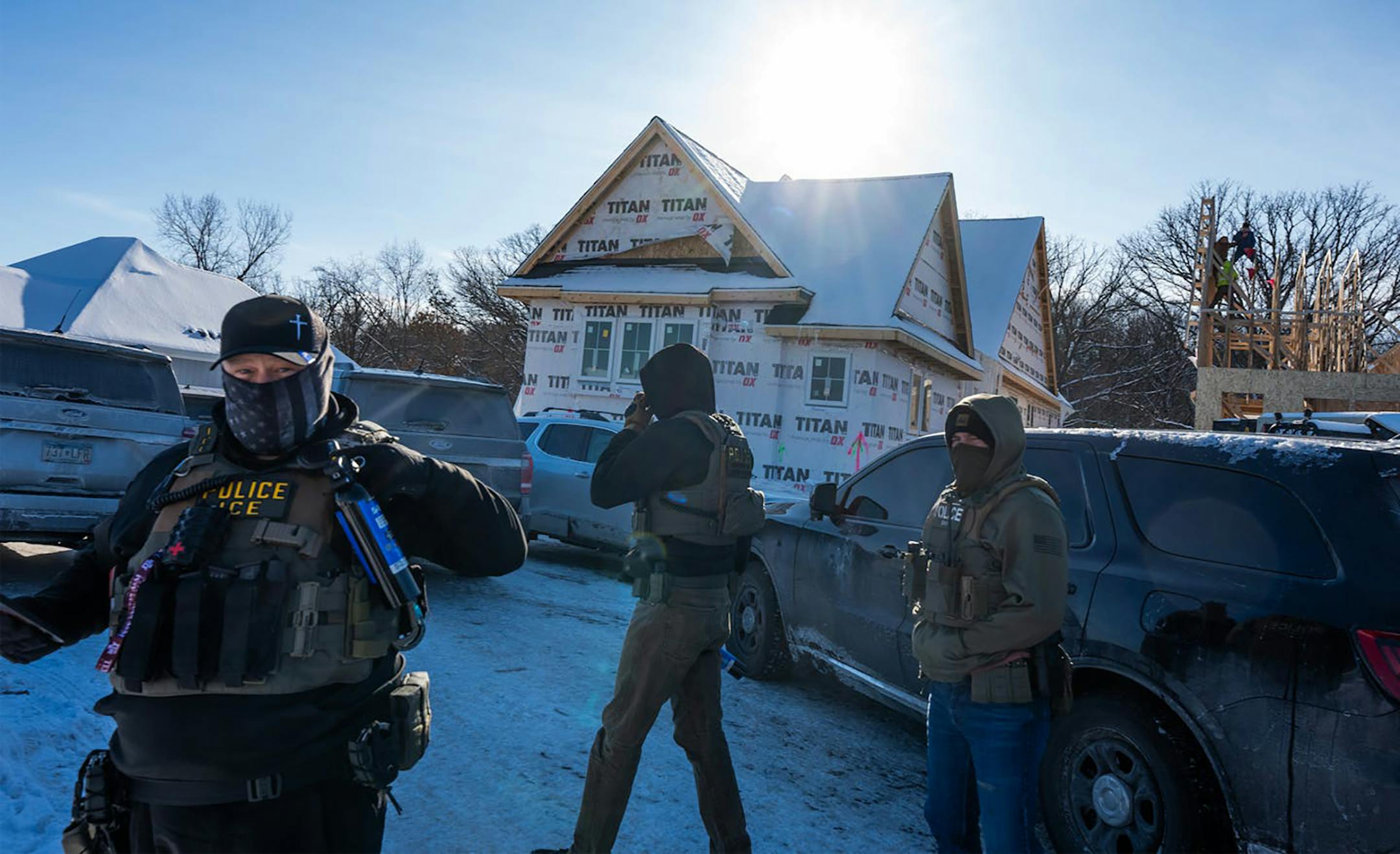
ICE agents target a construction site in Chanhassen in December as part of Operation Metro Surge. (Richard Tsong-Taatarii/The Minnesota Star Tribune)

Champlin Mayor Ryan Sabas, a Republican and supporter of President Donald Trump, is trying to keep track of immigration enforcement operations in his northwest Twin Cities suburb.

So when he heard federal agents were in the parking lot of a Champlin restaurant, he spoke with the general manager to figure out what happened. Otherwise it’s nearly impossible to know what’s going on.

“It’s hard to tell at this point,” said Sabas, who opposes tactics used during Operation Metro Surge and has called on the Trump administration to course-correct toward fairness and “basic human dignity.”

In the suburbs, the spotlight hasn’t been as intense as it has in Minneapolis, where federal agents killed Renee Good and Alex Pretti and the president has feuded with the mayor on social media.

But suburban officials say they’re seeing the same effects of ICE activity: disruptions at schools, residents missing rent payments if they have lost work, businesses shuttering, diminished trust in law enforcement and an overarching fear in their communities.

Mayors representing suburbs of various political stripes are frustrated by the lack of communication about immigration operations. Like Minneapolis and St. Paul, they’re grappling with public-safety risks and trying to address residents’ concerns within the limits of their own authority — but they’re doing it with less national attention, fewer resources and, sometimes, more divided local politics.

“Mayors and City Council members are left to explain federal actions we do not control, to calm fears we did not create, and to mend relationships strained by forces beyond our municipal boundaries,” Edina Mayor James Hovland said in prepared remarks for a panel at the U.S. Conference of Mayors in Washington, D.C., on Jan. 29.

Trump’s border czar, Tom Homan, said Jan. 29 that he would draw down the number of federal agents across Minnesota, as long as there is cooperation from state, local and law enforcement leaders.
So far, some mayors across the suburbs said they had noticed little difference in ICE activity and continued to spot agents in their cities this week.

“It seems like they’ve slowed down. But they don’t tell us about their operations so it’s very difficult to say,” said Matt Rabe, spokesman with the Brooklyn Park Police Department, in an email.

The Trump administration has not detailed specific plans for withdrawing agents. In an email, Department of Homeland Security spokeswoman Tricia McLaughlin did not answer questions about how they are targeting enforcement or communicating with officials in the suburbs.

McLaughlin instead repeated accusations that local officials are failing to cooperate with immigration enforcement and called on “sanctuary politicians to commit to honoring all ICE detainers.” Several suburban sheriffs say they are cooperating with federal immigration agencies to the extent of the law.

More than a dozen mayors, representing many blue-leaning inner-ring suburbs, have banded together to try to better coordinate the response to immigration enforcement in their communities.

The mayor of more politically purple Champlin, where 53% voted for Democrat Kamala Harris for president in 2024, had not joined the other mayors’ coalition, but said he is coordinating with his neighbors on the issue.

Sabas said the ICE crackdown is a polarizing issue “dividing many people” in the suburbs.

His and some other local Republicans’ opposition to the scope and nature of the ICE operations is especially notable as suburban voters are poised to be a pivotal bloc in November’s midterm elections in Minnesota.

Suburbs ask for more

Brooklyn Park Mayor Hollies Winston, who represents one of the most diverse Twin Cities suburbs, said the coalition of mayors is seeking a consulting firm to help structure its work group. He said they aim to push ICE to “operate within constitutional bounds” and for stronger communication between federal and local officials.

Police chiefs across the suburbs also are working together, pushing for meetings with federal and state officials to raise concerns about ICE tactics and public safety risks.

Maple Grove Police Chief Eric Werner said at a recent City Council meeting that chiefs across the state met with federal immigration officials to voice their concerns. He said the chiefs told the federal agencies they want better communication, and the agency representatives “committed to improvements.”

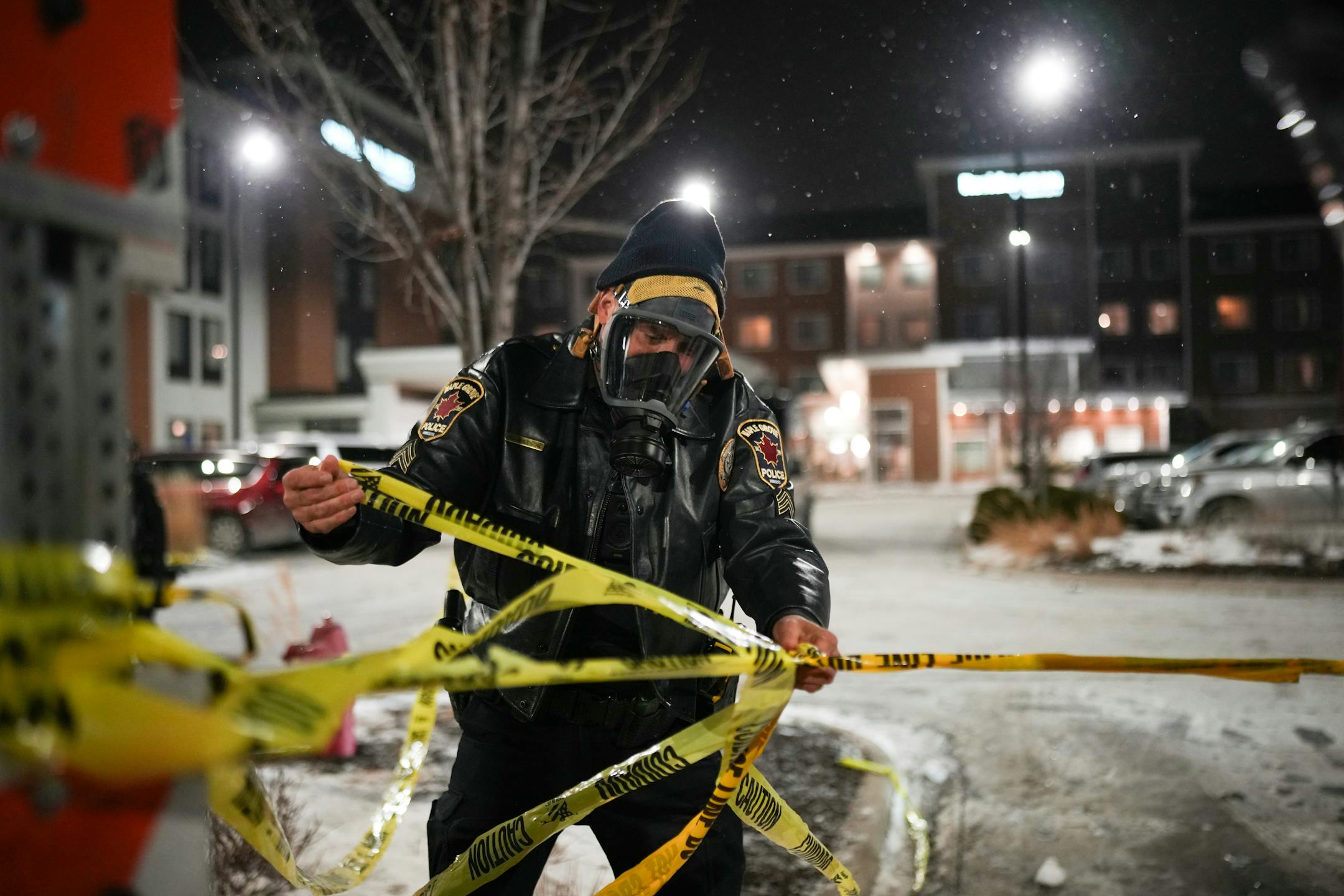
A Maple Grove police officer takes down caution tape after a protest outside the Spring Hill Suites in Maple Grove, where U.S. Border Patrol Cmdr. Greg Bovino was reportedly staying on Monday, Jan. 26. (Jeff Wheeler/The Minnesota Star Tribune)

Brooklyn Park Police Chief Mark Bruley, who has said off-duty officers have been targeted by ICE due to the color of their skin, said he hopes that Homan stepping in signals “a potential to try to get some relief and corrections on some of the terrible behaviors we’ve been seeing in our communities.”

Roseville Mayor Dan Roe said ICE enforcement activity shifts around the suburbs — but it’s hard to tell if that’s just changes in geographic emphasis or the results of any federal policy or strategy change.

Like other inner-ring cities, Roseville put up signs prohibiting federal immigration agents’ use of city parking lots to stage enforcement. Within days, agents used the lots anyway. City employees are making a record, potentially for administrative citations and fines — and to pass along to the Minnesota Attorney General’s Office.

Caught in the middle

Sabas, the Champlin mayor, said he’s frustrated by a lack of leadership — arguing that federal, state and Minneapolis officials are heightening rhetoric and “raising the temperature,” which has a ripple effect across the suburbs.

“Collectively, suburban mayors are getting tired of being represented by the city of Minneapolis,” Sabas said. “The suburbs are millions of people. Minneapolis is 400,000.”

Other suburban leaders have echoed the feeling that they are caught in the middle, with limited resources and authority to intervene in federal actions. Apple Valley Police Chief Nick Francis, in a Facebook post, likened the situation to a bitter divorce.

“Our federal and state leaders need to stop fighting long enough to remember who they serve and what their responsibility is,” he wrote. “I can’t predict when that shift will happen, but I know it’s the outcome my community is hoping for.”

On Jan. 28, Lakeville Mayor Luke Hellier said he’s hopeful Homan’s presence signals a change in strategy.

“I’m hopeful that the feds are committed to working with the sheriffs, and the sheriffs, vice versa, and that we can focus more on violent criminals or people that need to be apprehended,” he said.

Eagan Mayor Mike Maguire said he senses the shift in rhetoric from the federal government, but is urging residents to remain vigilant, keep voicing concerns caring for neighbors until it’s clear tactics change.

“We want to get to a place where, if there’s going to be ongoing enforcement actions, that they be done in a way that is lawful, that protects people’s rights, protects their dignity and doesn’t create further harms to public safety,” he said.

about the writers

about the writers

Sarah Ritter

Reporter

Sarah Ritter covers the north metro for the Minnesota Star Tribune.

See Moreicon

Greta Kaul

Reporter

Greta Kaul is the Star Tribune’s built environment reporter.

See Moreicon

More from Twin Cities Suburbs

See More
card image
Richard Tsong-Taatarii/The Minnesota Star Tribune

Mayors from suburbs of various political stripes say they are struggling to keep up with immigration enforcement in their communities.

card image
card image