Editor's Pick

Editor's Pick

Worry over ICE builds in Twin Cities suburbs as confrontations go viral

City Council meetings are drawing crowds of residents airing their views on ICE operations. City leaders say they’re limited in what they can do.

The Minnesota Star Tribune
January 17, 2026 at 12:00PM
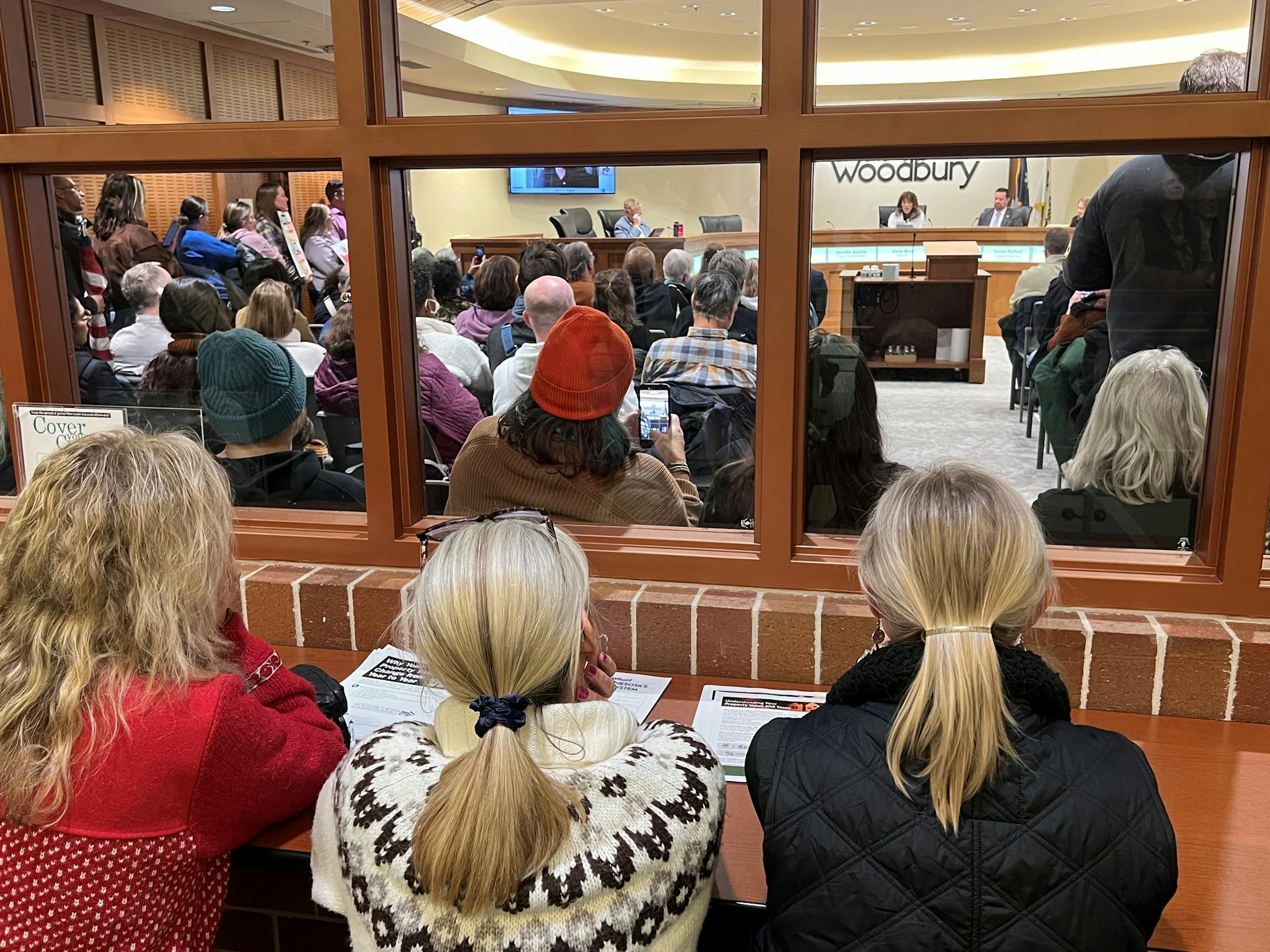
Residents peer inside the overflowing Woodbury City Council chambers as hundreds attended to voice concerns about ICE operations. (Sarah Ritter/The Minnesota Star Tribune)

Tensions over the surge of Immigration and Customs Enforcement operations are rising in the Twin Cities suburbs, where residents are packing City Council meetings to air their frustrations and ask local leaders for help.

Public comment sessions at city meetings are stretching for hours as business owners, residents and elected officials air their frustrations and report what they are seeing — in person and online, with several ICE confrontations in the suburbs having gone viral.

Two Richfield Target employees were detained by the U.S. Border Patrol on Jan. 8 in the store’s entryway, an interaction caught on a widely shared video. A Woodbury real estate agent’s story of being detained for nearly 10 hours after recording an ICE action reached thousands when he shared it online. And ICE detained a U.S. citizen, 20-year-old Jose Roberto Ramirez, at the Robbinsdale Hy-Vee, in an encounter livestreamed on Facebook.

“I encourage you to do what you can,” Ryan Ecklund, the Woodbury real estate agent, told the City Council on Jan. 14, where he described being slammed to the ground by ICE agents. “Our children are scared to go to school.”

Residents flocking to City Council meetings have been overwhelmingly against the ICE operations in their communities. But many of the suburbs are much more politically diverse than the more liberal Minneapolis and St. Paul. Suburban voters are poised to be a pivotal bloc in Minnesota in November’s midterm elections.

Taken as a whole, the suburban voters in the seven-county metro favored Democrats in most recent elections, though the metro area fades from blue to purple to red moving out from the center cities. In the last three presidential elections, President Donald Trump carried Scott, Carver and Anoka counties, but not Hennepin, Ramsey, Washington or Dakota.

As reported ICE activity has extended to more red cities on the edges of the metro, such as Elk River and Jordan, suburban residents in community conversations and social media threads have been starkly divided over their views on ICE. While some residents are sharing sightings and organizing protests, others are posting comments like “God bless ICE” and asking their neighbors to let ICE get “their job done.”

Local officials are trying to navigate the turbulence and address residents’ concerns, while acknowledging the serious limitations they face in intervening in federal operations.
Robbinsdale Mayor Brad Sutton said he has tried to look for ways to de-escalate the situation.

“People are scared. They’re upset,” he said. “Our job is to keep residents safe.”

Several cities, including Brooklyn Park, Stillwater, Anoka, Edina and Minnetonka, have released statements reaffirming that their police departments do not enforce federal immigration laws. Some cities, including Robbinsdale, have discussed adopting separation ordinances similar to that in Minneapolis, to spell out policies such as prohibiting ICE from using public property.

In Richfield, the City Council is considering turning off Flock cameras, which track license plates, and passing an eviction moratorium. Other cities are facing more specific battles, including over the possibility of an ICE detention center and tension over police department policies.

Department of Homeland Security officials, who have called the federal immigration operation the largest in U.S. history, did not answer the Star Tribune’s questions about activity in the Twin Cities suburbs.

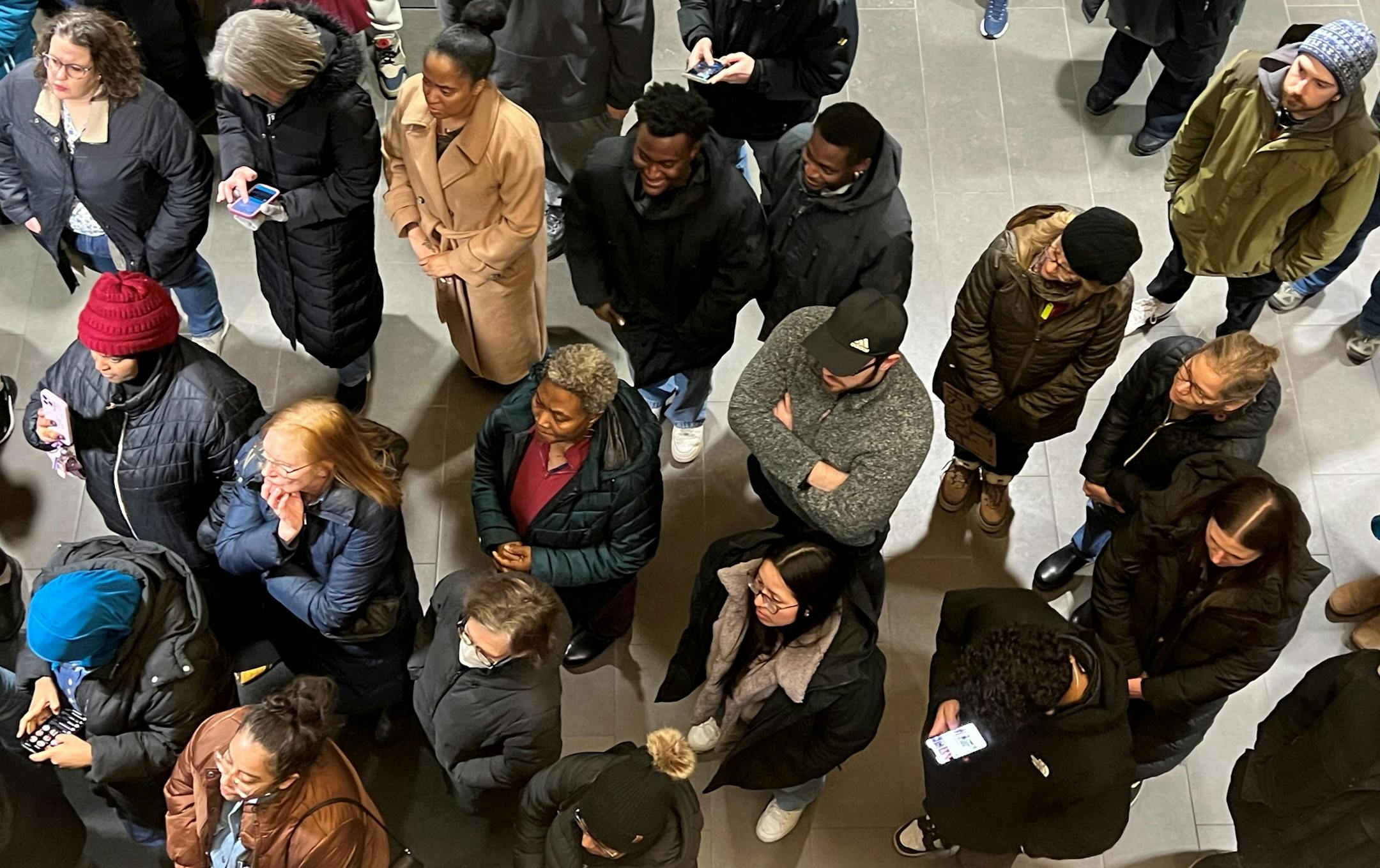
Residents filled every lobby and hallway in Woodbury City Hall on Jan. 14. Many urged the City Council to block a rumored ICE detention facility. (Sarah Ritter/The Minnesota Star Tribune)

Fight over detention center

People filled Woodbury’s City Council chambers, and every conference room and hallway at City Hall on Jan. 14, mostly to oppose a rumored ICE detention center.

“I have a lot of colleagues who feel unsafe, who are American citizens or employees with visas,” said Kasey Resch, a health care professional and Woodbury resident. “But they feel they can’t come to the hospital to provide care for our community.”

Anxiety has mounted since the Washington Post reported that Woodbury is one of 16 cities that ICE has considered to create detention facilities that would hold up to 1,500 people. Since then, local officials have been working to confirm any plans.

On Jan. 14, Mayor Anne Burt said that representatives of a warehouse on Hudson Road, rumored to be a potential site, told the city it will not be an ICE facility. City staff said Woodbury does not have other warehouses of that size, and zoning codes would not allow a detention center.

She said city staff has worked to “put an end to the possibility of this facility in our community.”

It was a welcome update for the crowd at City Hall, in a city where 59% voted for Kamala Harris for president in 2024. But tensions remained high as some worried such a plan could still materialize.

Only one person spoke in favor of having a nearby detention center, arguing against people being sent to states far from their families.

The mayor and the majority of council members said they understand residents’ fears and encouraged them to keep using their voices.

Council Member Kim Wilson, who attended virtually, said she often feels like a lone voice on the council. She started saying that “ICE has a job they need to do,” including upholding federal laws. Several residents booed and left the meeting.

Wilson also argued as people protest outside local businesses like hotels, such as in Minneapolis and some suburbs, that “those businesses are going to suffer under your protests and boycotting.”

Fridley police policy

Fridley Public Schools Superintendent Brenda Lewis is pushing the police department to amend its policy on immigration enforcement, arguing it puts the district in a “vulnerable spot.”

Lewis said Fridley, where three-quarters of students are children of color, has seen attendance plummet during the ICE operations. School districts across the region describe heightened fears as residents report seeing ICE agents near schools and bus stops.

Like in other cities, Fridley police say they only enforce local and state laws and are focused on crowd control and maintaining peace. But their policy, dating back to 2017, also says:

“The Fridley Police Department will assist local, state and federal law enforcement partners, when requested, with executing search warrants, arrest warrants, or other lawful orders as required by law.”

In a statement, Police Chief Ryan George said the department has not entered into an agreement with ICE. He said the city is not authorized to do so and will not assist in enforcing immigration law.

He said the police department at times assists federal law enforcement agencies “with human trafficking and auto theft crimes when the crime crosses state or international borders. Therefore, the Fridley Police Department is unable to amend the statement to say it will never assist federal law enforcement partners.”

But Lewis argued the policy language creates ambiguity about the department’s involvement in immigration enforcement actions on school property, especially following a new DHS directive stating that immigration authorities can enter schools.

Cities weigh options

In Roseville, Mayor Dan Roe estimated 150 residents filled the council’s Jan. 12 meeting, where a public comment session stretched for nearly four hours.

Almost all urged Roseville, where 71% of voters favored Harris in 2024, to adopt restrictions on ICE’s use of city property, data and staff.

The council directed staff to draft an ordinance, which Roe said will consider what the city has jurisdiction over and the resources to carry out.

Roe said mayors are frustrated trying to understand the scope of ICE’s operations because the agency doesn’t communicate with cities.

Sutton, the Robbinsdale mayor, said hearing residents’ fears is “heart-wrenching.” He wants to ensure whatever steps the city takes, such as adopting a separation ordinance, will be effective.

“I don’t want to be performative,” Sutton said.

City officials say they are balancing a desire to address the community’s concerns while also trying to lower the temperature and avoid drawing even more federal attention.

In West St. Paul, a diverse city with many Latino residents, residents asked the City Council to enforce traffic violations against ICE and reinforce the police department’s separation from the agency.

Mayor Dave Napier told residents that city staff are in constant contact to discuss keeping residents safe.

“If I go out on street corners and start screaming at the camera, I guarantee you they’re going to double down and [it’s] going to be a lot tougher out here,” Napier said.

Mara Klecker and Eleanor Hildebrandt of the Minnesota Star Tribune contributed to this story.

about the writers

about the writers

Sarah Ritter

Reporter

Sarah Ritter covers the north metro for the Minnesota Star Tribune.

See Moreicon

Greta Kaul

Reporter

Greta Kaul is the Star Tribune’s built environment reporter.

See Moreicon

More from Twin Cities Suburbs

See More
card image
Sarah Ritter/The Minnesota Star Tribune

City Council meetings are drawing crowds of residents airing their views on ICE operations. City leaders say they’re limited in what they can do.

card image
card image