
More Twin Cities police departments add license plate readers to roadways

Law enforcement agencies are using the devices to track cars involved in crimes, which is raising surveillance concerns.

The Minnesota Star Tribune
November 28, 2025 at 12:00PM
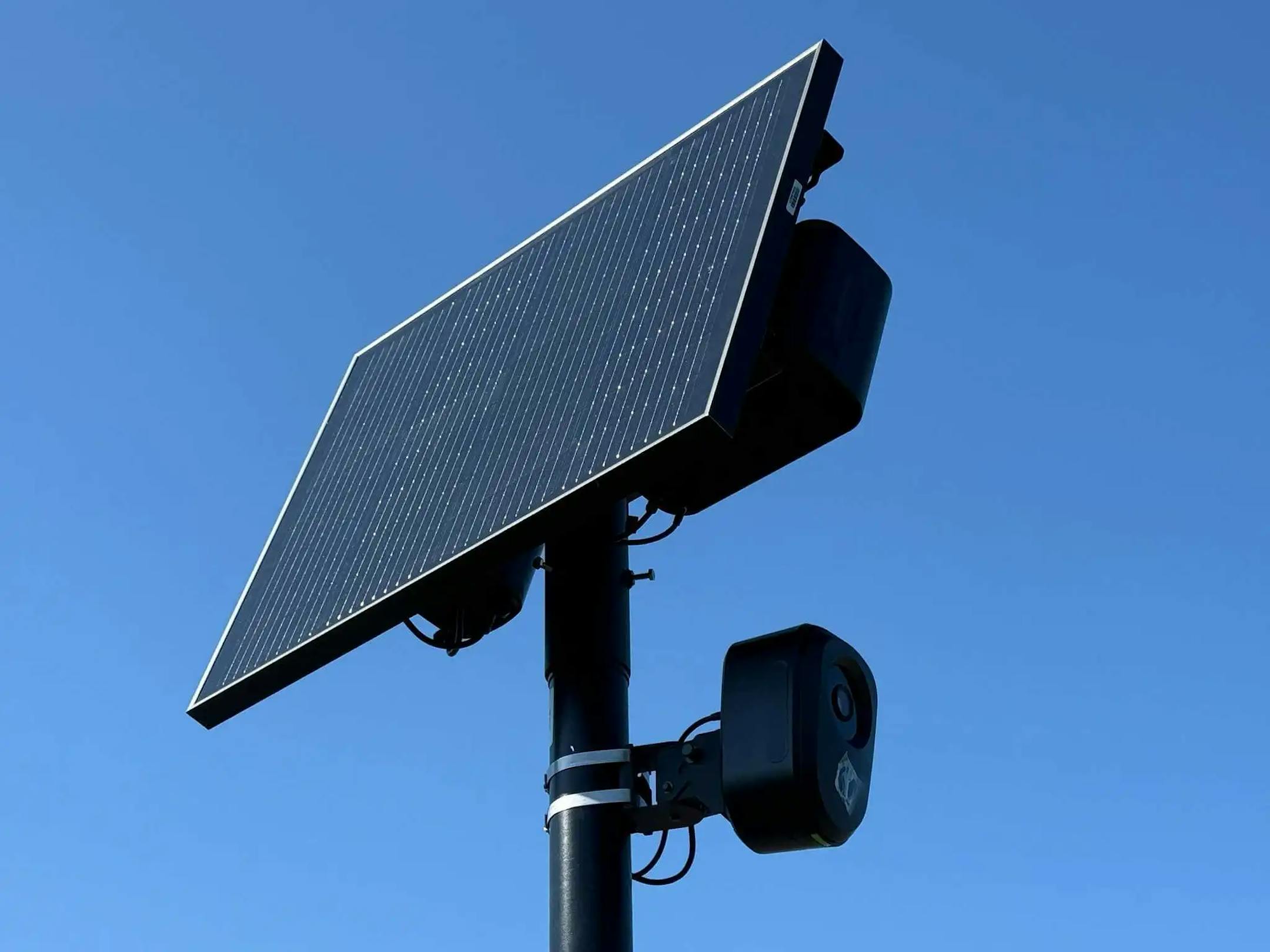
One of Prior Lake's license plate cameras is seen at the intersection of Marschall Road and County Road 82.

Law enforcement officials across the Twin Cities are using a growing network of license plate readers mounted along roadways to search for vehicles connected to crimes.

Dozens of Twin Cities suburbs have added the devices, typically rented from a company called Flock Safety, in recent months.

The network of more than 300 cameras across Minneapolis, St. Paul and the suburbs allows for constant monitoring across the region. That’s raised some concerns among privacy advocates, but police say the license plate readers allow for more seamless work across departments, which have long relied on similar technology in individual patrol vehicles.

Prior Lake, one of the most recent suburbs to introduce the cameras, added six in the last two months. The police department is paying $3,000 per camera per year in its two-year contract with Flock Safety.

Commander Phil Englin said the police have already made four arrests after cameras notified officers of suspects in their area.

“The proof is in the pudding, where in that short amount of time, we’ve recovered [a] stolen vehicle that was from Indiana that was being driven by a shooting suspect,” he said. Two of the other arrests stemming from information seen on Prior Lake’s cameras were made by other cities’ agencies.

The cameras are run through Minnesota’s Bureau of Criminal Apprehension, and Englin said officers need a case number to look for specific vehicles or plates. Officers cannot track cars without a warrant, he said.

Munira Mohamed, a policy associate at the American Civil Liberties Union in Minnesota, said the state has more regulations on the cameras than many others. Those include mandatory deletion of images after 60 days and stricter policies on who can access images. The camera locations are all posted online.

Still, she said, concerns about law enforcement creating a “surveillance infrastructure” are valid.

“You can have the expectation that you are being surveilled and being tracked as more and more of these cameras are erected,” she said.

William McGeveran, dean of the University of Minnesota Law School and a privacy law expert, said these cameras are becoming more common across the U.S. due to dropping costs and more marketing.

“It just follows the general trend of law enforcement adopting new technology: first, slowly in a few places, and then, once it seems like it’s useful, fast.”

Modernizing old tactics

West St. Paul installed four cameras in August and has already seen results, too, with six arrests. Patrol Lieutenant Tim Sewald said the city plans to add five more soon.

He said the automatic alert that officers receive is a modernization of old techniques.

“Years ago, if you were looking for a certain vehicle, you would have a pad of paper and a pen, and you would write it down in your squad car,” he said. “Now, it’s automatic.”

Sewald said many residents haven’t noticed the cameras, but he knows there might be privacy concerns.

West St. Paul retains the images, he said, for 30 days before deleting them. If a car has not been involved in a crime, it will not be looked up, he said. These cameras are not used for traffic enforcement or speeding.

“We’re not using it to track people,” he said. “It’s just a way to easily respond to any kind of hits that come into our city. The main goal is to keep our residents safe, and I really do believe that it helps us do that.”

McGeveran said the privacy law surrounding access to these images is “strong” because police cannot look up the images without reason, but growing surveillance of public spaces is a concern.

“They can start to really impinge on our ability to move around and have what people call privacy in public,” McGeveran said.

Patrick Faber, the deputy director of the police division in Fridley’s public safety department, said the cameras have worked to deter crimes in his community.

Beginning in 2022, the city installed eight cameras on public property. It recently has worked with business owners to install Flock cameras on their properties in partnership with the police.

“It’s allowing us to solve crimes faster, and in a way, deterring opportunities of crime,” he said. “It’s helping our community to be less victimized by property crimes.”

about the writer

about the writer

Eleanor Hildebrandt

Reporter

Eleanor Hildebrandt is a reporter for the Minnesota Star Tribune.

See Moreicon

More from Twin Cities Suburbs

See More
card image
Alex Kormann

Most grocery, liquor and other stores will be closed, parking meters are free, and buses will run on limited schedules, if at all.