White House border czar Tom Homan said Thursday that a plan is in the works to reduce the number of federal agents in the area, after conversations with numerous political and law enforcement leaders in Minnesota.
That drawdown, Homan added, will require the cooperation of Minnesota law enforcement and political leaders with ICE and Customs and Border Protection.
“As we see that cooperation happen,” Homan said at a news conference at the Whipple Federal Building, “the redeployment will happen.”
State leaders, including Attorney General Keith Ellison and Gov. Tim Walz, said the arrival of Homan has improved dialogue and coordination with the Trump administration, but they pushed back at the notion that state officials have been impeding Operation Metro Surge or that the actions of the state have created the tension that has roiled Minnesota.
President Donald Trump sent Homan to Minnesota earlier this week to manage immigration enforcement on the ground after a second fatal shooting involving federal law enforcement in Minneapolis. The killing of Alex Pretti by federal agents on Jan. 24, two weeks after the killing of Renee Good by an ICE officer, ignited new criticism over the federal government’s heavy-handed approach. Homan’s arrival coincided with the departure of Border Patrol Cmdr. Greg Bovino.
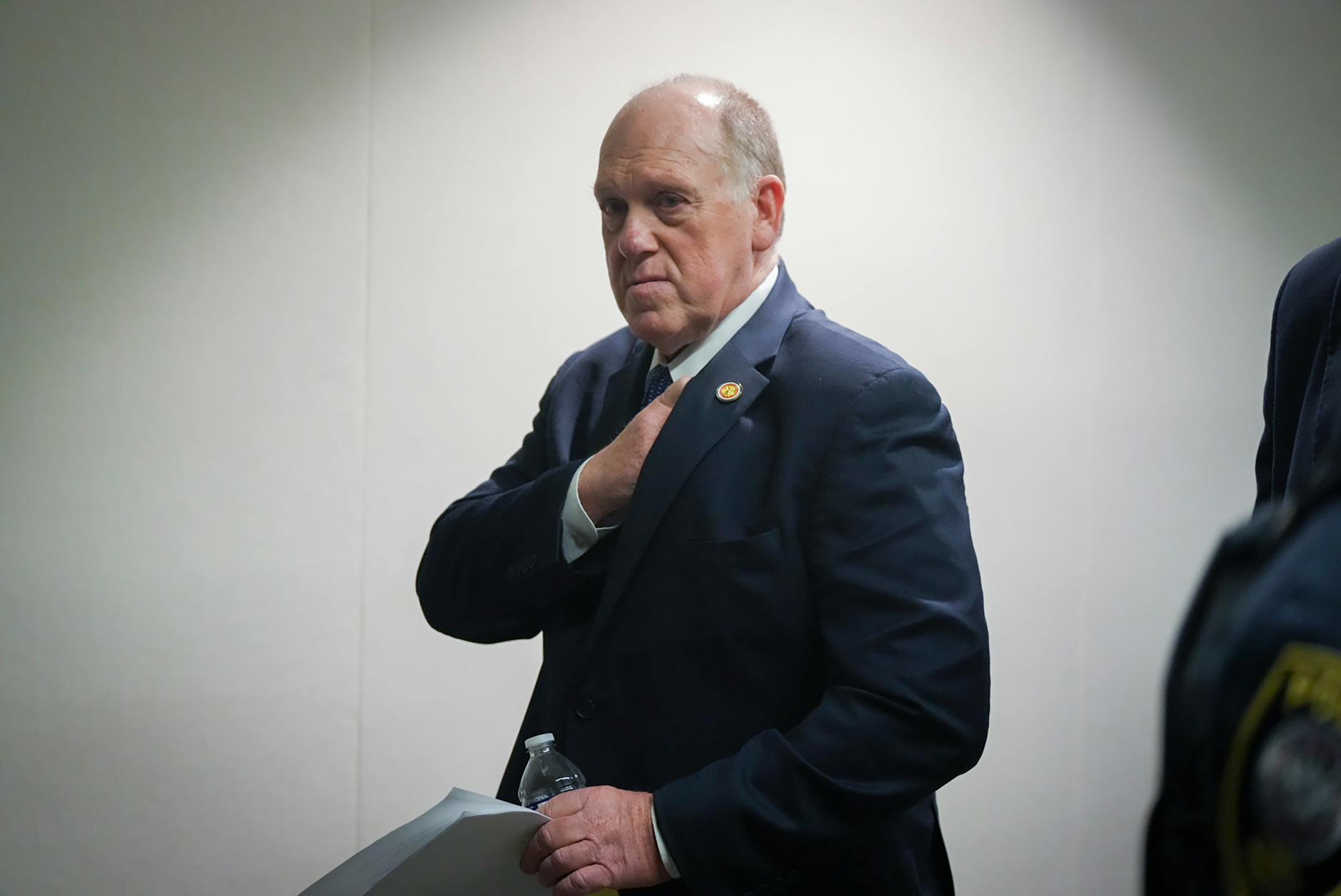
Homan struck a diplomatic posture in his first address to the press since arriving here. He wore a dark suit and spoke of the need for effective communication between state and federal leaders to carry out immigration enforcement. It offered a stark contrast to the green uniform and pointed criticisms of local officials that Bovino deployed while leading the immigration efforts in Minnesota.
While Homan’s request of Minnesota was the same as others in the Trump administration — if you want Operation Metro Surge to recede, cooperate with Operation Metro Surge — his tenor was different. He didn’t criticize federal agents for their tactics during the operation, which have been widely denounced in political and law enforcement circles in Minnesota, but said the federal government had a role to play in improving public safety.
“I don’t want to hear that everything we’ve been doing here has been perfect,” Homan said. “Nothing is ever perfect. Anything can be improved on, and what we have been working on is making this operation safer and more official. The mission is going to improve because of the changes we’re making.”