Republicans in Minnesota were bullish about their election chances. Then ICE arrived.

Just a few weeks ago, the GOP was riding a wave of momentum with fraud dominating the state’s political dialogue. Now the party is on its heels.

January 27, 2026 at 6:59PM
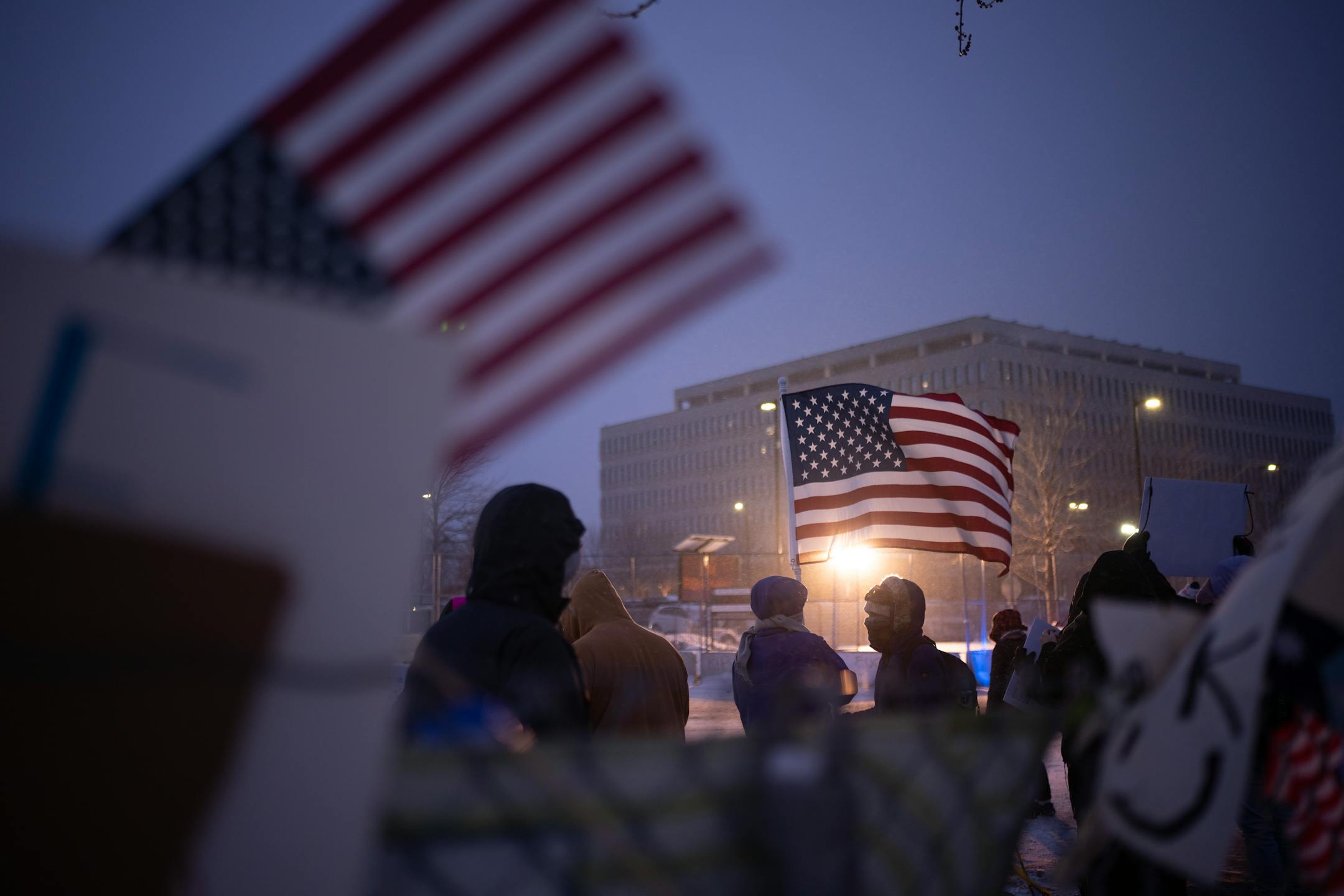
Demonstrators brandish American flags across the street from the Whipple Federal Building at Fort Snelling on Jan. 18. (Jeff Wheeler/The Minnesota Star Tribune)

Minnesota Republicans saw a path back to statewide victory just a few weeks ago, as snowballing allegations of fraud in the state’s welfare programs put Democrats on the defensive and prompted a two-term governor to abandon his re-election bid.

That momentum quickly evaporated as the Trump administration deployed thousands of Immigration and Customs Enforcement (ICE) agents to Minnesota. ICE officers began clashing with protesters in the streets. Videos of violent arrests went viral, as did stories of U.S. citizens who were detained. Tensions boiled over after ICE agents shot and killed two Minnesotans, Renee Good and Alex Pretti, in a span of less than three weeks.

Republicans are now dealing with the fallout, having to explain if they support the aggressive immigration enforcement tactics that have shaken their state instead of hammering Democrats on fraud. One prominent GOP candidate for governor ended his campaign abruptly on Jan. 26, saying he could not support national Republicans’ “stated retribution on the citizens of our state.”

“National Republicans have made it nearly impossible for a Republican to win a statewide election in Minnesota,” attorney Chris Madel said as he exited the race.
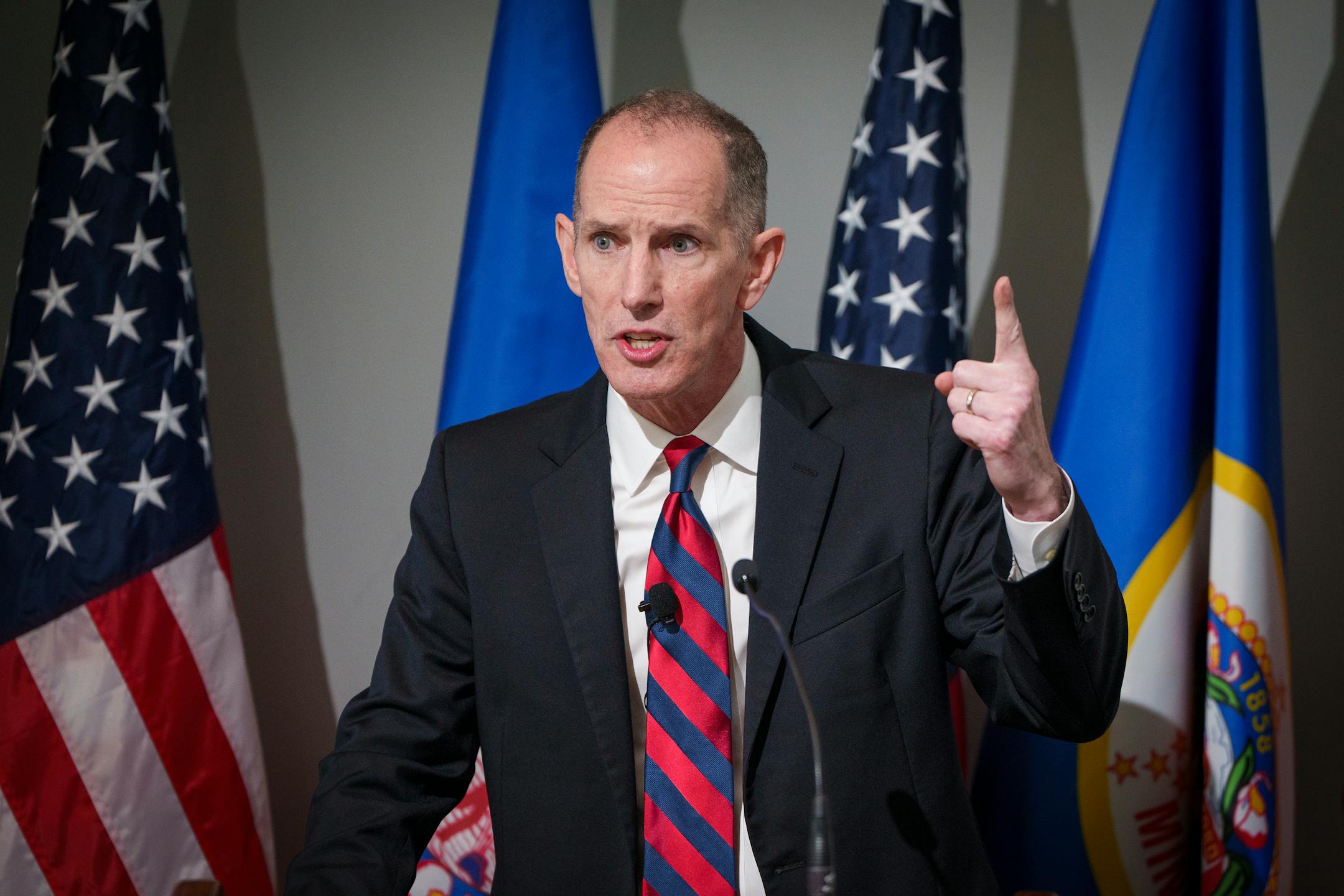
Republican candidate for governor Chris Madel abruptly ended his campaign on Jan. 26, saying he could not support national Republicans’ “stated retribution on the citizens of our state.” (Leila Navidi/The Associated Press)

Republicans in Minnesota now face new obstacles as they try to win a statewide election for the first time since 2006 and retain at least partial control of the Legislature. National polling shows the gains the party made with young voters and people of color in 2024 have started to unravel amid the immigration crackdown and concerns about how President Donald Trump has handled it and other key issues.

“The narrative has completely shifted,” said Preya Samsundar, a GOP operative in Minnesota who previously worked for the Republican National Committee. “Where two months ago we were talking about billions of dollars of fraud in this state being a bad thing for taxpayers … we are now in a position of having to discuss whether or not individual American citizens were murdered by government agents.”

“The narrative out there right now is that this administration is doing bad things, that Republicans are doing bad things to people in this state,” Samsundar added.

Complicating matters for Minnesota Republicans is the anticipated entrance of Democratic U.S. Sen. Amy Klobuchar into the governor’s race. The GOP had seen DFL Gov. Tim Walz as uniquely vulnerable before he left the race, treating him as a political punching bag. But Klobuchar is the DFL’s most popular statewide politician, winning each of her elections by wide margins.

GOP candidates for governor likely will also struggle to tie Klobuchar, a federal lawmaker, to the sprawling fraud in state social services programs.

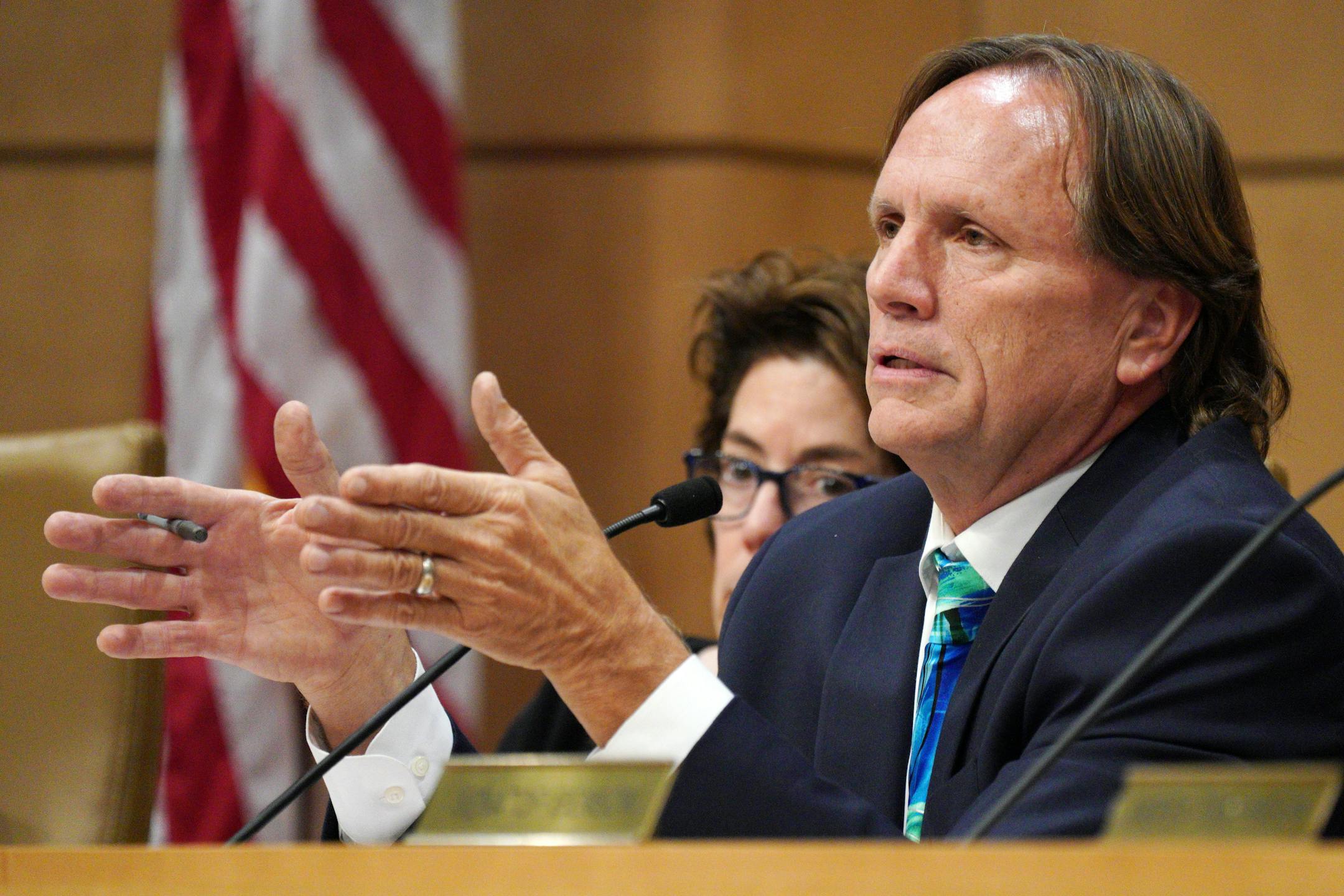
The party has some runway left before Election Day to shift the spotlight back onto Democrats. “Ten months away is a lifetime in politics,” said GOP state Sen. Jim Abeler, who argued “the jury is still out” on his party’s chances in the fall.

Abeler, a Republican from Anoka, has criticized some aspects of the ICE operation in Minnesota and represents what’s likely to be a political swing district in the November election.

He said his district is divided. He senses “rage, frankly, on both sides,” and said people aren’t understanding each other’s perspective. He called on Walz and Trump to put aside their differences and talk, which happened later that day.

“Ten months away is a lifetime in politics,” said Sen. Jim Abeler, R-Anoka, who argued “the jury is still out” on his party’s chances in the fall. (Anthony Souffle/The Minnesota Star Tribune)

Still, Abeler said Operation Metro Surge — the name the Trump administration has given to its deployment of ICE agents to Minnesota — is “just off the rails,” and in some cases detaining citizens without due process.

Samsundar said her own mother, who is conservative and voted for Trump in the past, has become fearful of leaving home without her passport. She also said her mother recently told her she’d never vote in an election again.

As someone who worked for Trump and championed GOP policies and candidates, Samsundar said it is “heartbreaking” for her to see her mother fear being pulled over “merely because she’s got a different skin color.”

She said the Trump administration needs to change its approach — and fast — for Republicans to move on and shift the focus.

The GOP still has a potent political issue to run on with the fraud that has unfolded under DFL leadership.

Federal prosecutors have documented hundreds of millions of dollars’ worth of fraud in state autism services, housing and meals programs, among others. The total scope of the theft could reach into the billions when all is uncovered, according to federal prosecutors.

“The fraud issue will come back because it has a long tail on it,” said Alex Plechash, chair of the Republican Party of Minnesota. “People are going to be prosecuted … more stuff is going to be rooted out.”

The current narrative around ICE is “not a good thing” for Republicans, Plechash said, and he’s spoken to quite a few people in his orbit who believe “ICE has gone too far.” He said he would support investigations into cases where federal agents went too far, such as detaining U.S. citizens.

Still, Plechash said he believes the immigration standoff will soon be resolved and other issues like fraud will come back into view.

Sen. Jeff Hayden, an assistant majority leader who was active in passing police accountability legislation, conceded Wednesday morning to self-described democratic socialist Omar Fateh.
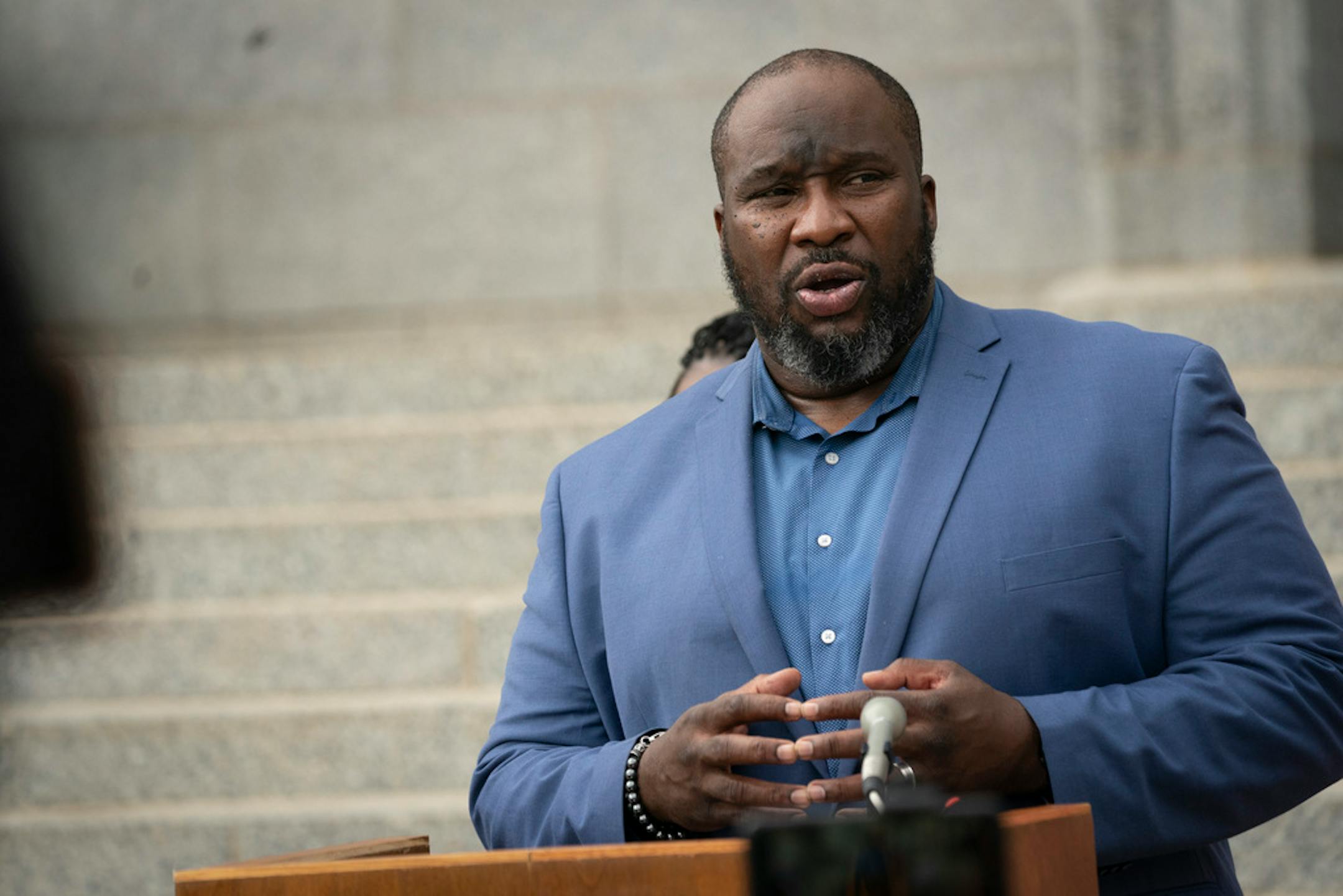
“I think Democrats, even today, are so horrified at what’s going on that I don’t even know if they have a political strategy yet,” said former DFL Sen. Jeff Hayden. “I think the political strategy for Democrats today is just, ‘watch it all play out.’” (Renée Jones Schneider/The Minnesota Star Tribune)

Jeff Hayden, a former DFL state senator, said fraud isn’t going away and Democrats in Minnesota need better regulatory oversight to solve it.

But in the past month, Hayden said, Minnesotans watched a trusted fraud prosecutor in Joe Thompson resign from the U.S. Attorney’s Office in Minnesota over the shooting of Renee Good and how the Trump administration responded to it.

Hayden said he thinks the political consequences of the immigration enforcement operation will ripple through the state. People are seeing overzealous enforcement in the suburbs, rural agricultural communities and smaller cities like St. Cloud and Morris, he said.

“These guys have been all over the state,” Hayden said. “So I think it’s wishful thinking to make this a south Minneapolis or a Minneapolis-centric issue.”

Hayden, who once represented south Minneapolis in the state Senate, said he knows he’s close to the situation. But he said he talks to enough people on both sides of the aisle to know that “the GOP is worried” about the fallout.

“I think Democrats, even today, are so horrified at what’s going on that I don’t even know if they have a political strategy yet,” Hayden said. “I think the political strategy for Democrats today is just, ‘watch it all play out.’”

about the writers

about the writers

Ryan Faircloth

Politics and government reporter

Ryan Faircloth covers Minnesota politics and government for the Star Tribune.

See Moreicon

Walker Orenstein

Reporter

Walker Orenstein covers energy, natural resources and sustainability for the Star Tribune. Before that, he was a reporter at MinnPost and at news outlets in Washington state.

See Moreicon

More from News & Politics

See More
card image
Rich Pedroncelli/The Associated Press

The state’s overall population growth slowed last year, however, due to fewer international immigrants.