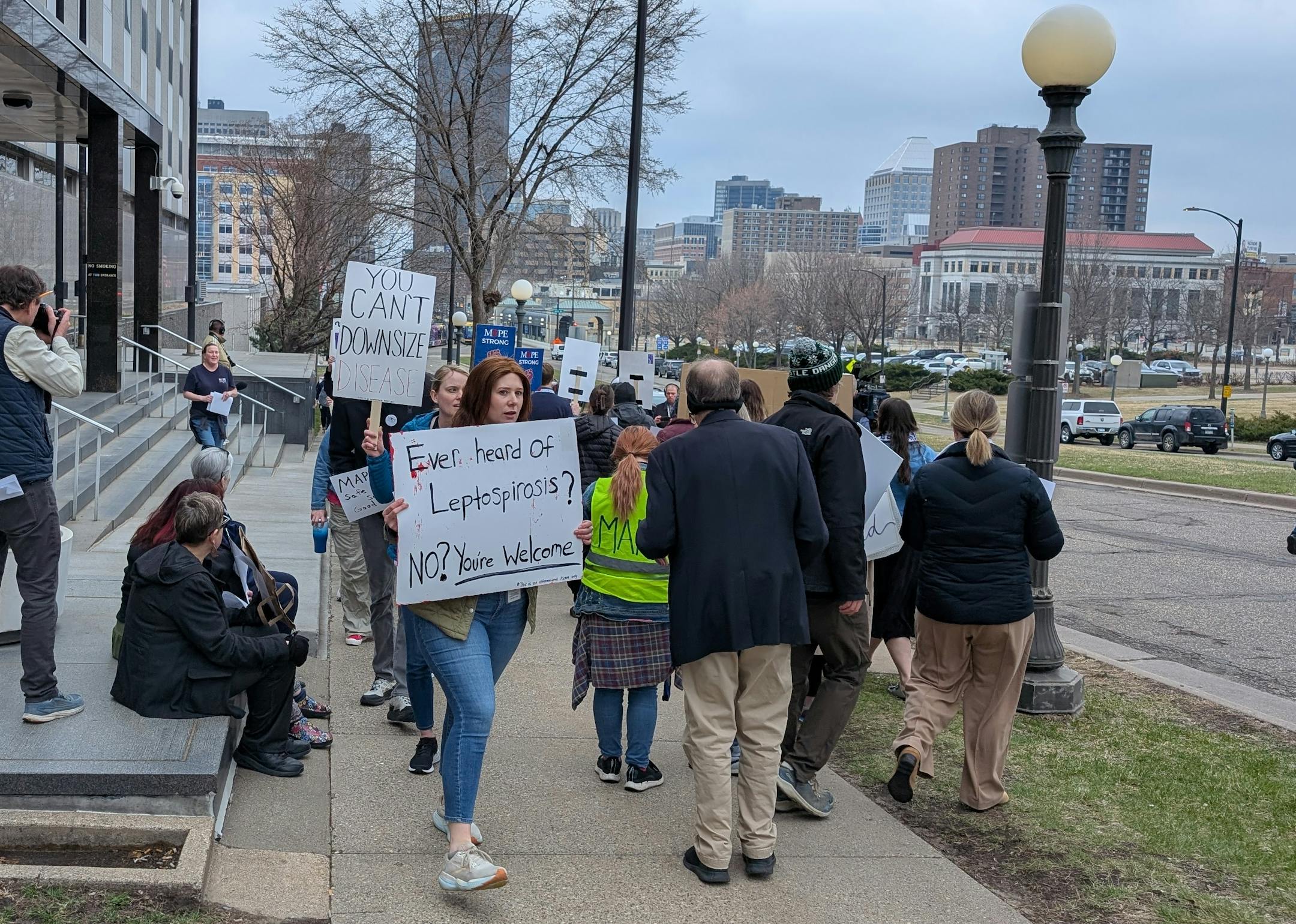
Minnesota won a court order Thursday, Feb. 12, blocking $38 million in cuts to federal public health grants after accusing the Trump administration of political “retribution” that undermines its own priorities to protect the nation against emerging infectious diseases.
The Minnesota Department of Health confirmed Thursday that Minnesota is one of only four Democrat-led states to be targeted for cuts to its public health grant funding. By late afternoon, a judge granted a temporary restraining order blocking the cuts for Minnesota as well as California, Colorado and Illinois. The four states sued to block the cuts, which could have reached as much as $600 million collectively.
Minnesota Attorney General Keith Ellison said he was “pleased” with the judge’s order that at least temporarily suspended punitive cuts targeted at states led by political opponents: “It should go without saying, but the president is supposed to represent and serve all Americans.”
A statement from a spokesman at U.S. Health and Human Services said the cuts were made because Minnesota’s use of the funding does not “reflect agency priorities.”
State leaders called the cuts a “campaign of retribution against Minnesota” that doesn’t make sense because they have been using the grants in ways that match the federal priority list. An affidavit from a senior state health leader noted that federal officials have never alerted the state to any “unsatisfactory” uses of the money.
Dr. Brooke Cunningham, state health commissioner, said efforts to cut federal health care funding “hurt our state and make it harder for us to do our work to protect, maintain and improve the health of Minnesotans.”
Minnesota first received the federal grants in 2022, and is scheduled to receive them through 2027, to modernize and improve its public health system. Ellison said the funding supports 57 state workers who conduct disease tracking, emergency planning, and public health outreach across rural Minnesota. It also supports nurses and workers across 200 community and tribal public health agencies.
The state also is at risk of losing funding for dashboards that track adverse childhood experiences (ACEs), traffic accidents and traumatic brain injuries as well as for research of the causes of excessive alcohol usage across Minnesota.