
Minnesota hosts the nation’s largest Somali population. What brought them here?

Many fled war, immigrating to the North Star State for opportunities and hospitality.

The Minnesota Star Tribune
December 3, 2025 at 10:35PM
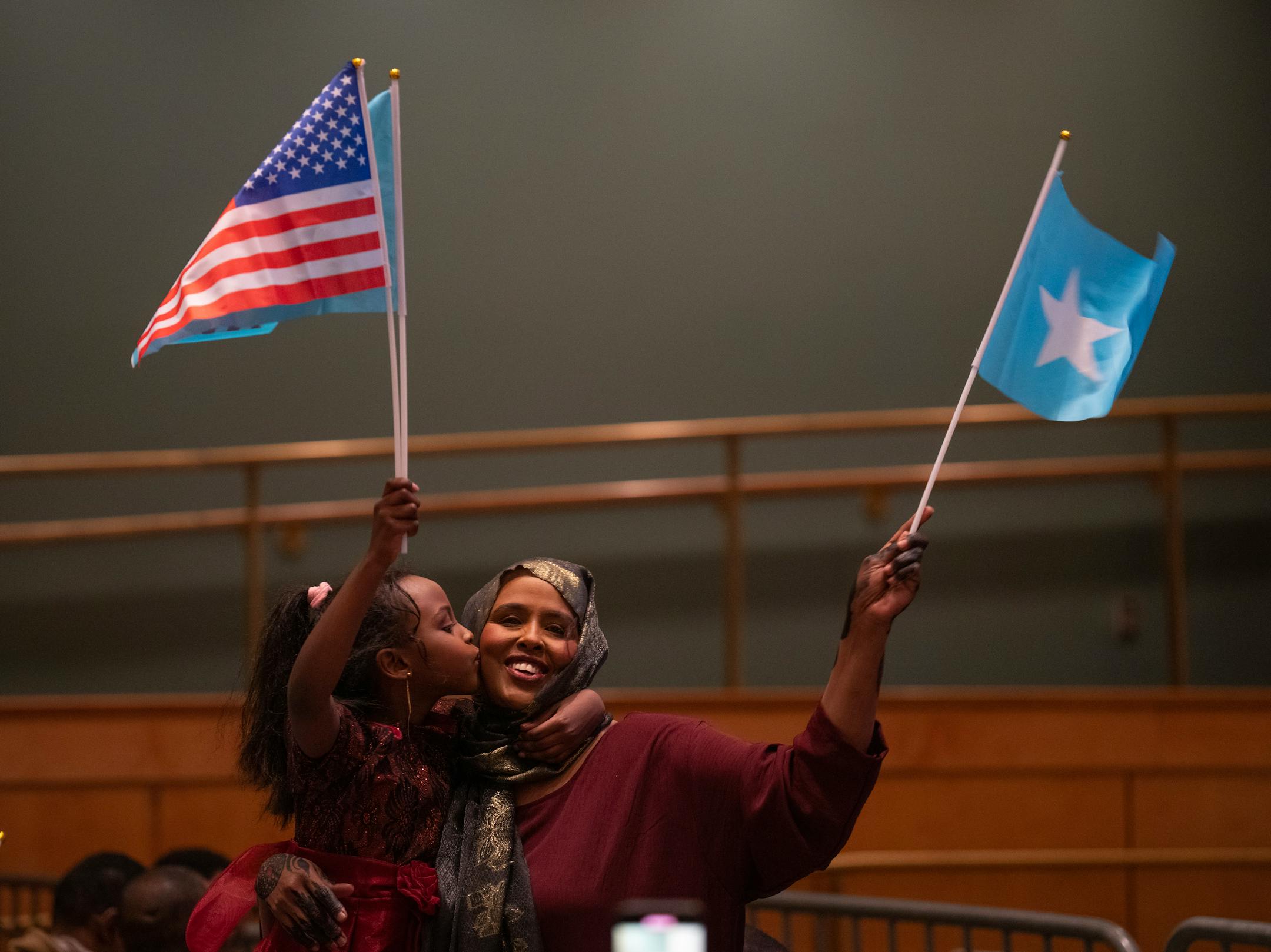
Mano Ali holds her daughter, Iqra, 8, as they wave the U.S. and Somali flags together while waiting for Somali President Hassan Sheikh Mohamud to arrive at the Minneapolis Convention Center in 2022. (Jeff Wheeler/The Minnesota Star Tribune)

Minnesota hosts the nation’s largest Somali population, the result of decades of refugee resettlements and growing American-born families.

Beginning in 1993, hundreds and then thousands of Somali immigrants each year fled war and instability in the East African country to resettle in Minnesota.

Today about 108,000 Somali people live in the North Star State, and nearly half the population was born outside of the U.S.

But why Minnesota?

“People settle where they find family, support networks, jobs and a sense of belonging,” said Bosteya Jama, executive director for the Confederation of Somali Community in Minnesota, which formed in 1994. “There are larger immigrant and refugee communities in the state, and our presence here is part of the same pattern seen across all communities.”

Many Somali immigrants chose Minnesota for social connections, a strong network of refugee resettlement agencies and for the state’s welcoming reputation. Economic opportunities have kept them here.

Nearly all Somalis in Minnesota are citizens or legal residents; a few hundred reside in the state with Temporary Protected Status, which was first granted to Somali refugees in 1991.

Beginning with a threat to end Temporary Protected Status last month, President Donald Trump has repeatedly denigrated Minnesota’s Somali community and recently sent federal immigration agents to the state to target Somali immigrants.

“We don’t want them in our country,” Trump said, prompting state politicians, law enforcement and city leaders to voice their support in a press conference this week.

“Parents are worried about sending their kids to school, elders feel unsafe going to appointments and young people feel anxious about simply being outside,” Jama said. “The emotional toll is real.”

Fleeing war for opportunity

The first Somalis came to the U.S. in the 1920s and were sailors who settled in New York City. Others came to America for college in the middle of the 20th Century.

Somalia became a democratic nation in 1960, but a military coup nine years later destabilized the region. Tensions escalated into a civil war that engulfed the country for decades and displaced 1.5 million residents, according to the Minnesota Historical Society.

A new governing body backed by the United Nations gained control of Somalia in 2010, but the country is still marred by violence and corruption. Al-Shabab, which the U.S. considers a terrorist organization, controls swaths of the southern part of the country.

Many refugees migrated directly from Africa to Minnesota, forming a community of “primary refugees” who drew more family and friends to the state. Minnesota began accepting Somali primary refugees in 1993, spurring hundreds and eventually thousands of refugees to resettle here from Somalia and other U.S. states.

Ahmed Yusuf came to America in 1997, escaping civil war to document the population’s growth in his book "Somalis in Minnesota."

Yusuf said that many moved to Marshall and other western Minnesota towns for jobs that “no one was taking” in meat processing plants and hospitality. Word spread as new arrivals found a foothold in Minnesota, attracting more Somali people seeking opportunities.

“[Social services] was an addition, but what kept them here is the opportunities,” Yusuf said. “There was political asylum ... and then they realized that there were business opportunities here as well.”

Somali people now make up the second-largest immigrant population in the state, and at least 70% of the group’s working-age adults hold jobs.

Yusuf said since he first moved to Minnesota, many families have found success to become senators, city leaders and civil rights advocates.

As community leaders tell residents to close their doors and keep documentation nearby, Yusuf said many second-generation Somali Americans have found new opportunities to keep them in the U.S.

“They are lawyers, they are doctors, they are actually millionaires,” Yusuf said. “They are in the city, they are in the state, they are in corporate America, they own their own businesses. You find Somalis in every sector of society.”

about the writer

about the writer

Kyeland Jackson

General Assignment Reporter

Kyeland Jackson is a general assignment reporter for the Star Tribune.

See Moreicon

More from News & Politics

See More
card image
Elizabeth Flores/The Minnesota Star Tribune

While federal agents patrol the Twin Cities, a St. Paul Mexican grocer is filling a gap for families too frightened to shop.

card image
card image