

LAS VEGAS – For decades, Volvo has been known as the "safe" car. It's been the vehicle of choice for parents and their precious, Gerber-eating cargo — or anyone who took to the open road with the trepidatious belief that most drivers would just as soon plow their cars into others' side panels as arrive at their destinations unscathed.
Now, emboldened by an $11 billion investment from its Chinese parent company, Geely Automobile, Volvo is no longer playing it safe. It's betting big on a portfolio of new "Drive-E" engines devised with the idea that a smaller, more intelligent design will relegate V-8s to the scrap heap.
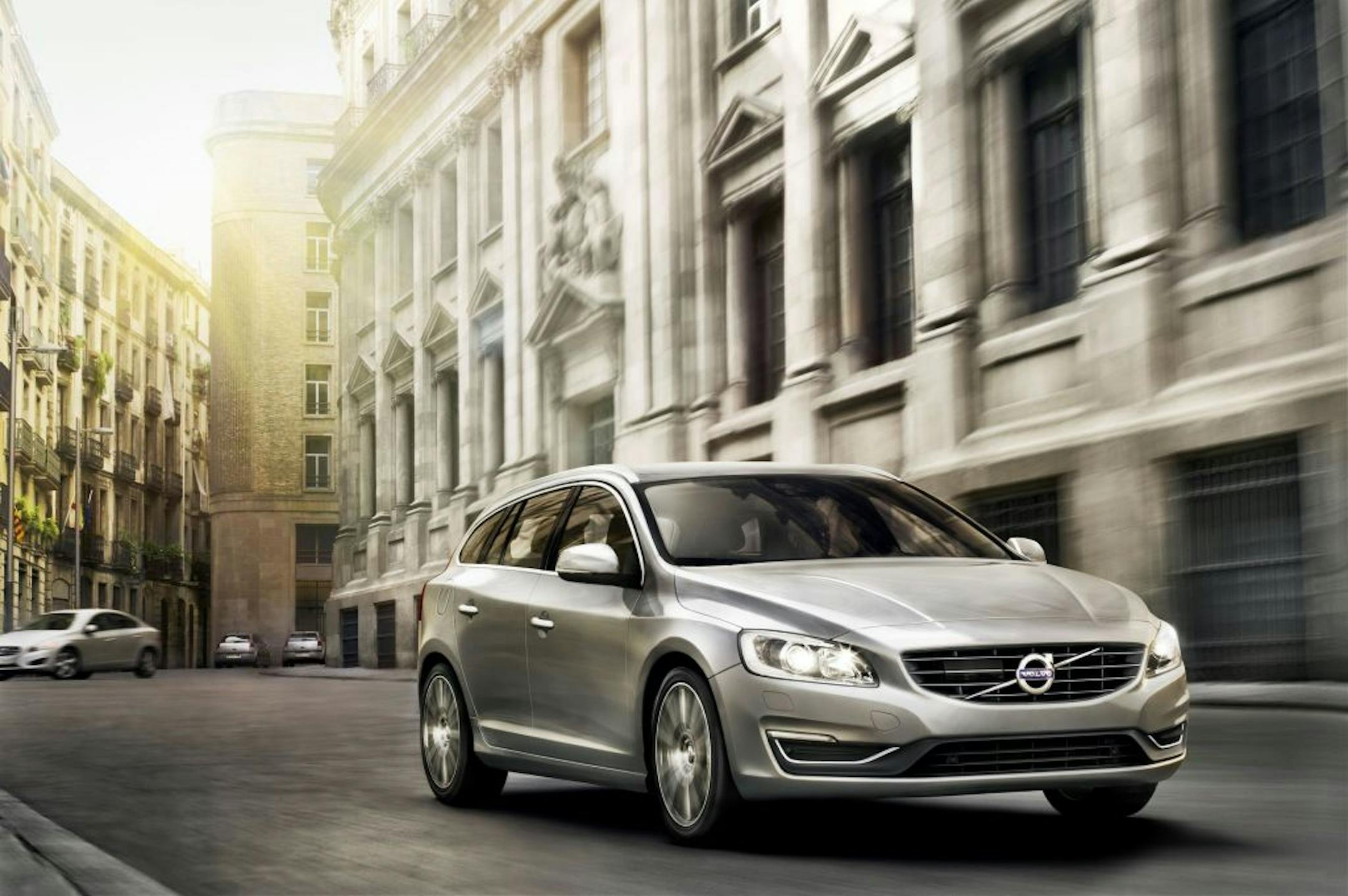
Twinning performance with fuel efficiency, the first two Drive-E powertrains rolled out recently on three 2015 models: the S60 sedan, the XC60 SUV and its new V60 sports wagon.
Calling it the most extensive development of existing cars in the company's 87-year history, Volvo brass are convinced it isn't size that matters, but the amount of air that flows through an engine. Despite a name that's likely to be misconstrued as incorporating some level of electrification, the "E" in Drive-E stands for efficiency. That is to say, 2-liter, four-cylinder engines. The 240-horsepower T5 is turbocharged. The 302-horsepower T6 is turbo-supercharged; it uses a supercharger at low RPMs and a mechanically linked turbocharger that takes over when the engine spools up. Both engines make more power than today's six-cylinders, while weighing 110 pounds less and using 10 percent to 30 percent less fuel.
Combined in the T6 Drive-E engine, what used to be mutually exclusive systems have elevated Volvo's routinely abysmal fuel economy to 35 mpg highway. As of last year, the company's most fuel-efficient model was its S60 sedan, which achieved a maximum of 30 mpg, according to the EPA.
A diesel variant will soon be available in Europe; there are no plans to bring it to the U.S. at present. A plug-in hybrid will debut in the updated XC90 full-size SUV later this year. All the Drive-E engines have the capability to be augmented with electrification in the future, according to Volvo.
What makes the new Volvos simultaneously peppy and fuel-efficient is one and the same. It's a combination of the turbo and turbo-supercharged engines and an all-new, fuel-saving, eight-speed automatic transmission that's available with hands-on paddle shifters.
Driving all three Volvos recently, I was impressed by the cars' sprightliness. All three models can be operated in different drive modes, including the most fuel efficient "Eco" mode. Equipped with stop/start technology, the turbocharged T5 engine in my V60 test car, in Eco, stopped the engine even as the car coasted to a stop from a speed of 4 mph. Otherwise, the start/stop feature works as it does on models from other manufacturers. The engine cuts out when the car is fully stopped and roars back to life as the brake pedal is released.


