Target announces change at the top as stock slides on declining sales

August 20, 2025
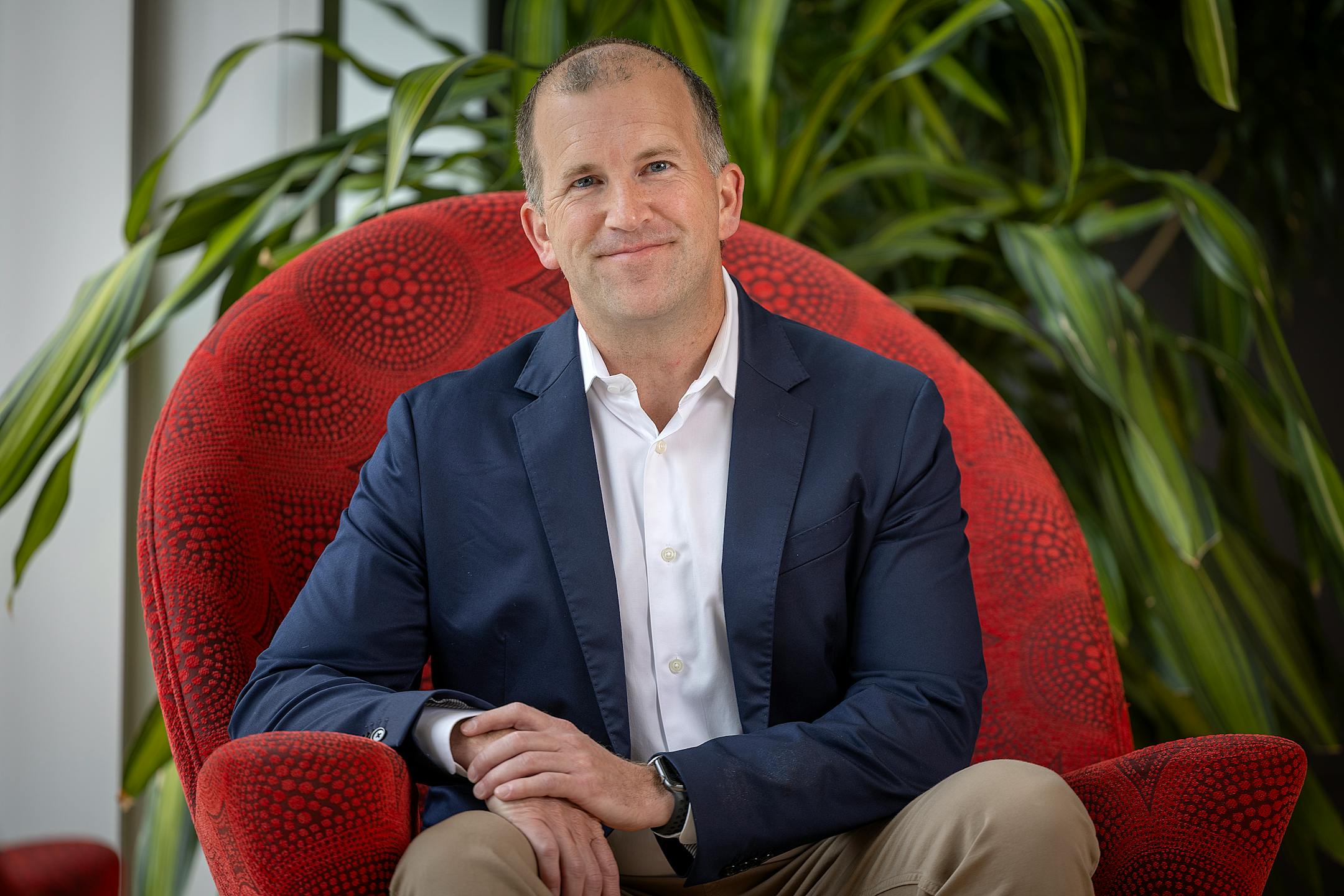
Target on Wednesday said Michael Fiddelke, its chief operating officer, will become its next CEO. (Elizabeth Flores/The Minnesota Star Tribune)

Target faces headwinds, including sliding sales and a declining stock price. Incoming CEO Fiddelke said he aims to invest in technology and create more consistency for shoppers.

The Minnesota Star Tribune

Longtime Target Corp. CEO Brian Cornell will step down in February after more than a decade guiding the Minneapolis-based retailer through major changes.

Michael Fiddelke, 49, Target’s current chief operating officer, will take over the CEO role as Cornell transitions to executive chair.

“Michael knows how our business can perform, and what our team can deliver, and he’ll bring that confidence along with an aggressive mindset for change into the CEO role,” Cornell said in a media call.

Read our full coverage below:

11:20 a.m. - Minneapolis Mayor Jacob Frey said his staff is in the process of scheduling a meeting with Fiddelke.

The mayor added that he’s “very excited” to work with the new CEO as Target prepares to bring a large swath of corporate employees back downtown three days a week starting next month.

“I’m excited that Target recognizes the importance of having people work in person not just for our city and downtown’s success, but also for theirs,” Frey said in an interview Wednesday.

— Katie Galioto

11:14 a.m. - Mike Logan, the president and CEO of the Minneapolis Regional Chamber, worked on the Target corporate staff for more than 13 years. Logan left Target in 2011 but knows Fiddelke well. He had this to say about Target’s new CEO:

“I’ve known Michael Fiddelke for over two decades and can say with great confidence that he is inquisitive, thoughtful and cerebral, but most importantly he’s personable and cares about empowering his team,” Logan wrote in an email.

“His long and diversified tenure with the company, combined with his sense of urgency to drive change accompanied by meaningful results, make him a great a choice to lead Target into the future. I’m excited to see where he takes them over the coming years.”

— Patrick Kennedy

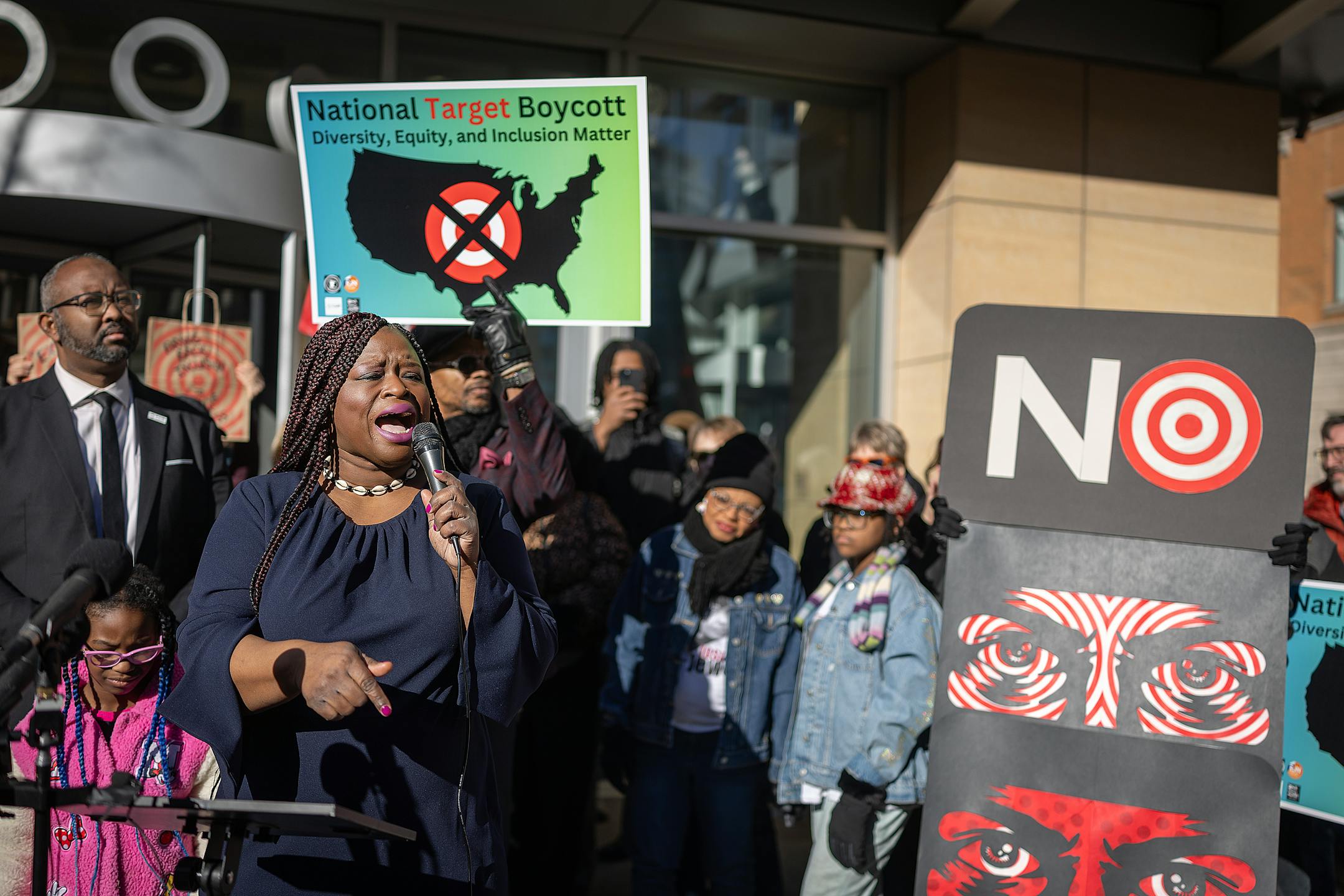
10:52 a.m. - Target faced a national backlash after stepping back from diversity, equity and inclusion (DEI) goals it strengthened after George Floyd’s murder by a Minneapolis police officer. Like many corporations, Target leaned into DEI in 2020 but changed course this year as President Donald Trump’s administration condemned and promised to end diversity efforts in the public and private sectors.

Target’s retreat prompted a boycott, and Twin Cities Pride ousted the retailer, a longtime sponsor, from its annual festival and parade. There was even criticism from the company’s First Family: In letters to the editor published in February in the Los Angeles Times and Financial Times, Anne and Lucy Dayton, daughters of Target co-founder Bruce Dayton, wrote they were “shocked and dismayed” by the rollback of DEI programs.

Civil rights attorney and activist Nekima Levy Armstrong said Wednesday she believes Cornell’s exit “is largely due to the economic fallout from the boycott that we launched from right here in Minneapolis” on Feb. 1. Her hope, she said, is Fiddelke will change course and reach out to community members who called for the boycott and also reverse the company’s decision on DEI.

“The more upheaval and pain and trauma being caused by the Trump administration, the more it’s reminding people of why we all stopped shopping at Target, because they are, on some level, at least partially responsible for what’s happening,” Levy Armstrong said, noting Target also donated $1 million to Trump’s inauguration fund. “Those values don’t align with the values of their largest customer bases, and for some reason, they failed to get the memo.”

— Emma Nelson

Nekima Levy Armstrong speaks outside Target headquarters during a news conference in response to Target’s stance on DEI in Jan. 30, 2025. (Elizabeth Flores/The Minnesota Star Tribune)

10:34 a.m. - Target’s stock was down more than 8% an hour into trading Wednesday. The business performed better than expected, said Rupesh Parikh, managing director at Oppenheimer. He added that the drop can likely be attributed to frustration from analysts who were hoping for an external candidate. There might be some additional disappointment about Target not raising the lower end of its guidance, he added.

“[Fiddelke] knows the company really well from a continuity perspective. I think that’s a big advantage versus someone coming in externally,” Parikh said. “If I look at Target strategy, I think they’ve had the right strategy.” He highlighted the retailer’s investments in drive-up, Circle 360 and alternative revenue streams.

— Carson Hartzog

9:55 a.m. - Last year, Michael Fiddelke made $3 million as the chief financial officer and executive vice president of Target. That pay included a $900,000 salary and $1.2 million from previously issued restricted stock that vested during the year. According to a filing with the Securities and Exchange Commission Wednesday, Fiddelke’s new pay package as CEO hasn’t been approved by Target’s board of directors yet.

It’s expected that the pay package will be approved in the next few days and disclosed in an additional SEC filing.

— Patrick Kennedy

9:39 a.m. - Things look pretty challenging for new CEO Michael Fiddelke, a Target lifer who came up through finance and other roles in its downtown headquarters. But things were more challenging 11 years ago, when Brian Cornell became the first outsider to lead Target. Its business model of building stores in growing population centers, which yielded rising sales and profits for about 25 years, seemed played out. After a long period of adding 20 or 30 stores a year, Target’s U.S. store count fell by three in 2014 and grew by two in 2015.

Meanwhile, an expansion into Canada went so badly that Target was internally forecasting it would lose money there for at least five years. Canada had already pushed Target’s overall profit downward for two years.

Yet Target under Cornell went from an existential crisis to its peak stock price — before falling into the challenges it faces today, including ongoing criticism from Black shoppers as well as investors.

— Evan Ramstad

8:33 a.m. - Target’s stock was down more than 10% when trading opened Wednesday, which put it on pace for its biggest daily percentage decrease since Nov. 20, 2024, when it fell 22%.

The drop echoed concerns from investors about Fiddelke’s ability to steer the company in a new direction. Others recommend taking “advantage of the weakness,” according to an industry note from Rupesh Parikh, managing director at Oppenheimer.

“We have spent time with Mr. Fiddelke over the years and believe his experience at Target in multiple roles since joining in 2003 and fit within the company’s unique culture is the right choice,” Parikh wrote.

— Carson Hartzog

8:20 a.m. - One sign that Target’s financial outlook is a bit more upbeat now than it was three months ago: Target executives told investment analysts this morning that the company may resume its stock repurchases this fall.

Executives paused repurchases during the May-July period because they weren’t certain how tariffs would affect the company’s cash flow and profits. Target last halted share repurchases in 2022 when the company wrestled with too much inventory and an unexpected slowdown in sales growth. That pause lasted until summer 2024.

Jim Lee, Target’s chief financial officer, said Target executives first spend the company’s excess cash on new technology and equipment, then on dividends to investors. After that, they consider whether to repurchase shares.

Target repurchased $251 million in shares in the first quarter this year and $506 million in the fourth quarter of last year.

“Given the uncertainties we were facing, most notably from tariffs, we did not repurchase any shares in the second quarter,” Lee said. “However, given the performance in Q2 and the agility our team has demonstrated in navigating the tariff environment, we should have the capacity to repurchase shares in the back half of the year. However, we’ll approach this activity cautiously.”

— Evan Ramstad

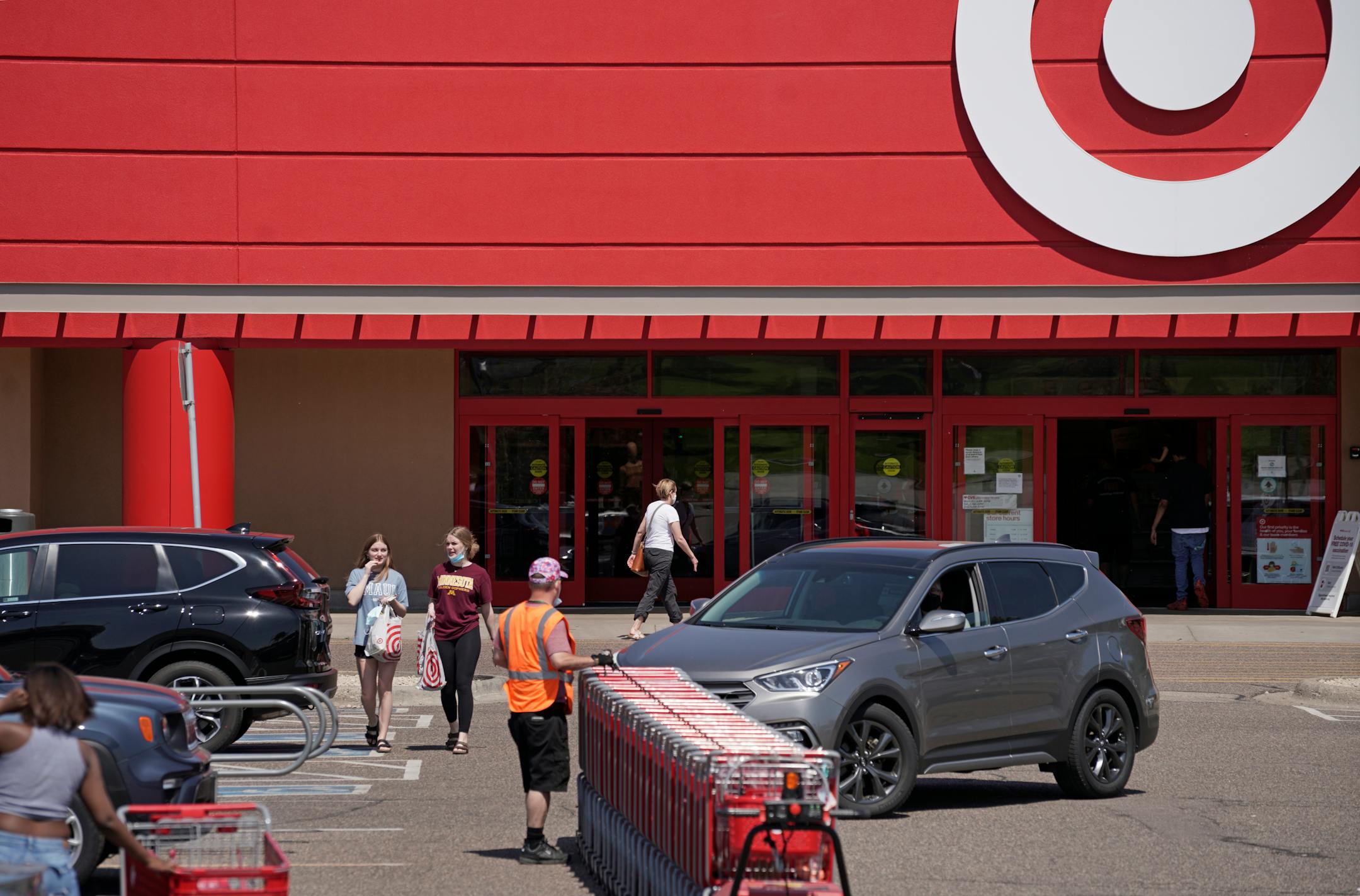
Shoppers at a Target store in Eagan in May 2021. (BRIAN PETERSON)

8:01 a.m. - Analysts requested more clarity on tariff-related pricing in the second quarter. Rick Gomez, chief commercial officer, reiterated previous points about maintaining pricing on key areas such as Bullseye’s Playground, moving country of production and working with the global sourcing team to develop new strategies. Gomez also defined value as not just pricing but newness and appeal to consumers.

— Carson Hartzog

7:40 a.m. - Michael Fiddelke is just the fourth chief executive of Target since the company became the dominant operation in the former Dayton’s retail empire in the 1990s.

Dayton’s, the legendary 20th century Minneapolis department store, started Target with a store in Roseville in 1962. Robert Ulrich, who became CEO of the Target division inside Dayton Hudson in 1987, took the business from 216 stores to nearly 1,700 in a tenure that lasted to 2008. He became CEO of the entire Dayton Hudson firm in 1994, renamed it Target Corp. in 2000 and sold the department store operation in 2004.

Gregg Steinhafel, who joined Target as a paint buyer in 1979, succeeded Ulrich in 2008. He left the company in spring 2014.

Brian Cornell, a veteran retail executive who led Michaels and the Sam’s Club unit of Walmart, succeeded Steinhafel later that summer. He will leave the CEO role to Fiddelke in February 2026 and remain chairman of Target’s board of directors.

— Evan Ramstad

7:31 a.m. - Fiddelke provided an update on the company’s decision in June to call its entire commercial unit back to the office three days a week. Target hasn’t made any changes to its overall corporate policy, but Fiddelke said the Enterprise Acceleration Office has been taking a “hard look at where, when and how we work.”

“While we still believe in the flexibility of a hybrid workplace, we’ve set the expectation that our teams should be working in person more often so they can collaborate more effectively across team lines and solve problems more quickly,” Fiddelke said.

— Carson Hartzog

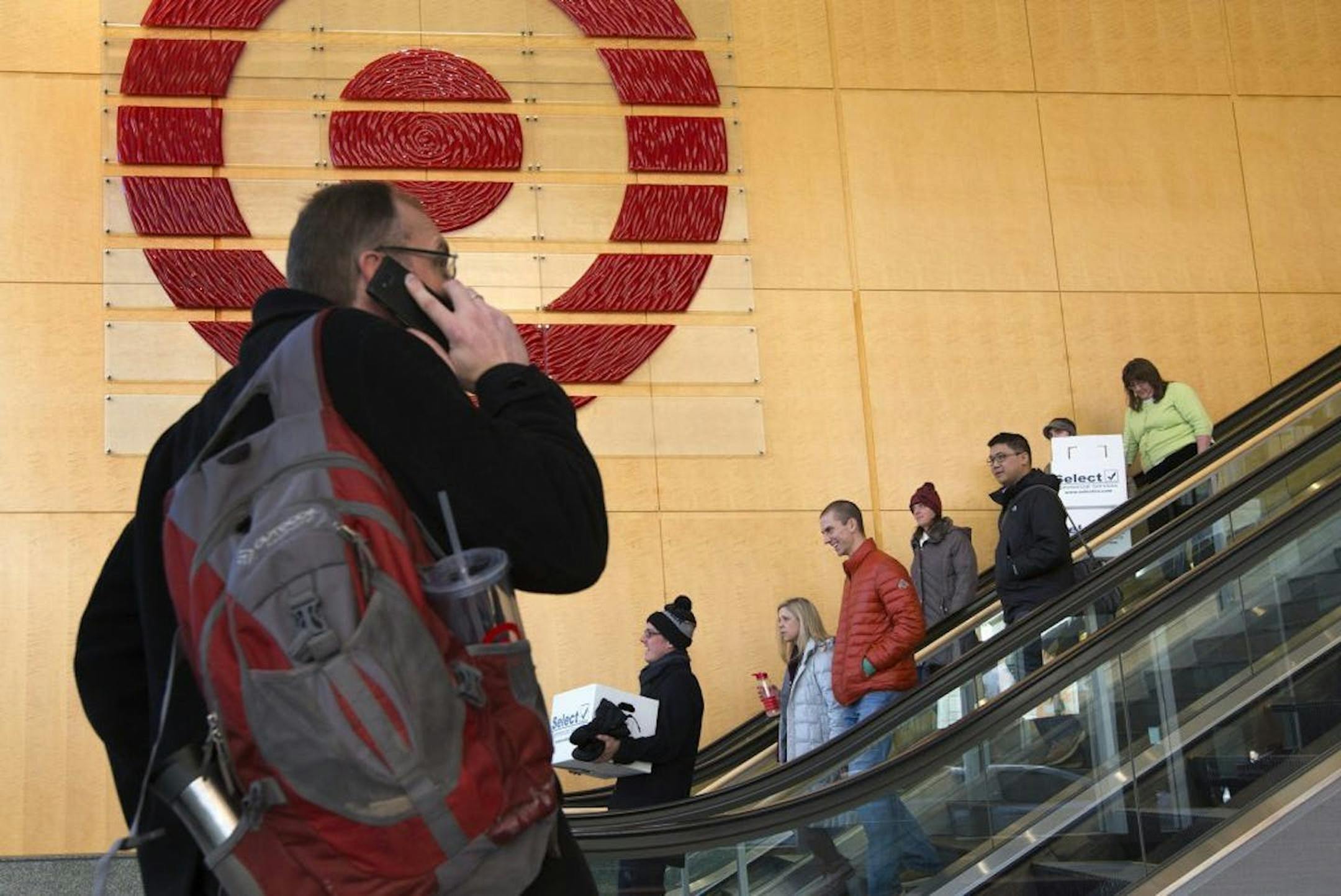
Target employees on the commercial department have been called back to the Minneapolis headquarters three days a week, beginning the first week of September. (Brian Peterson/The Minnesota Star Tribune)

7:22 a.m. - Analysts are responding to Fiddelke’s appointment with mixed reactions.

In a June survey of medium and large investors by Mizuho Securities, 96% of respondents said they wanted an outsider to shake up the company’s culture, according to the Wall Street Journal.

“While we think Fiddelke is talented and has a somewhat different take on things compared to current CEO Brian Cornell, this is an internal appointment that does not necessarily remedy the problems that have plagued Target for years,” wrote Neil Saunders, managing director of GlobalData Retail, in an analyst note.

Analysts have also raised concerns about Fiddelke’s ability to “change the strategy he helped create,” according to an investor note from Joe Feldman, senior managing director at Telsey Advisory Group.

Cornell’s position as executive chair has also been regarded as a “reward for failure,” Saunders wrote, questioning whether Cornell will use his influence to sway future strategy.

“In our view, the boardroom needed a clear out but, instead, has received a light dusting which has failed to address the debris that litters the floor,” Saunders wrote.

— Carson Hartzog

7:13 a.m. - In a 2024 post by Target alongside his COO promotion, Fiddelke said his leadership philosophy is a combination of curiosity and listening.

“I try to draw out the voice that I think a conversation needs, even if it’s not there,” he said. “We talk so much about the power of an inclusive culture, but that power only happens if you hear those diverse perspectives and create an environment of trust where it can help shape the decision making.”

— Carson Hartzog

Shoppers peruse the grocery section at Target's Edina store on March 24, 2025. (Richard Tsong-Taatarii/The Minnesota Star Tribune)

7:05 a.m. - Fiddelke inherits a company facing headwinds.

The leadership transition comes as Target works to regain momentum after several quarters of inconsistent performance. The company has emphasized its focus on value offerings and improving its supply chain efficiency to better compete with rivals like Walmart and Amazon.

“Regaining the market’s credibility will be critical, but it’s achievable. History offers numerous examples of turnarounds under a new leader,” wrote Michael Lasser, UBS analyst, in a research note. “In our view, Target has the foundation and scale to stage a recovery, making the stock a longer-term opportunity.”

— Carson Hartzog

6:54 a.m. - In a June interview, Brian Cornell said it took a team effort to institute the changes he led. “It’s been a ‘we’ environment, and I think that’s really important,” Cornell said when asked about his contribution to Target’s growth. “We talk about a culture of care, growth and winning together. It’s about the team working to evolve the business.”

— Carson Hartzog

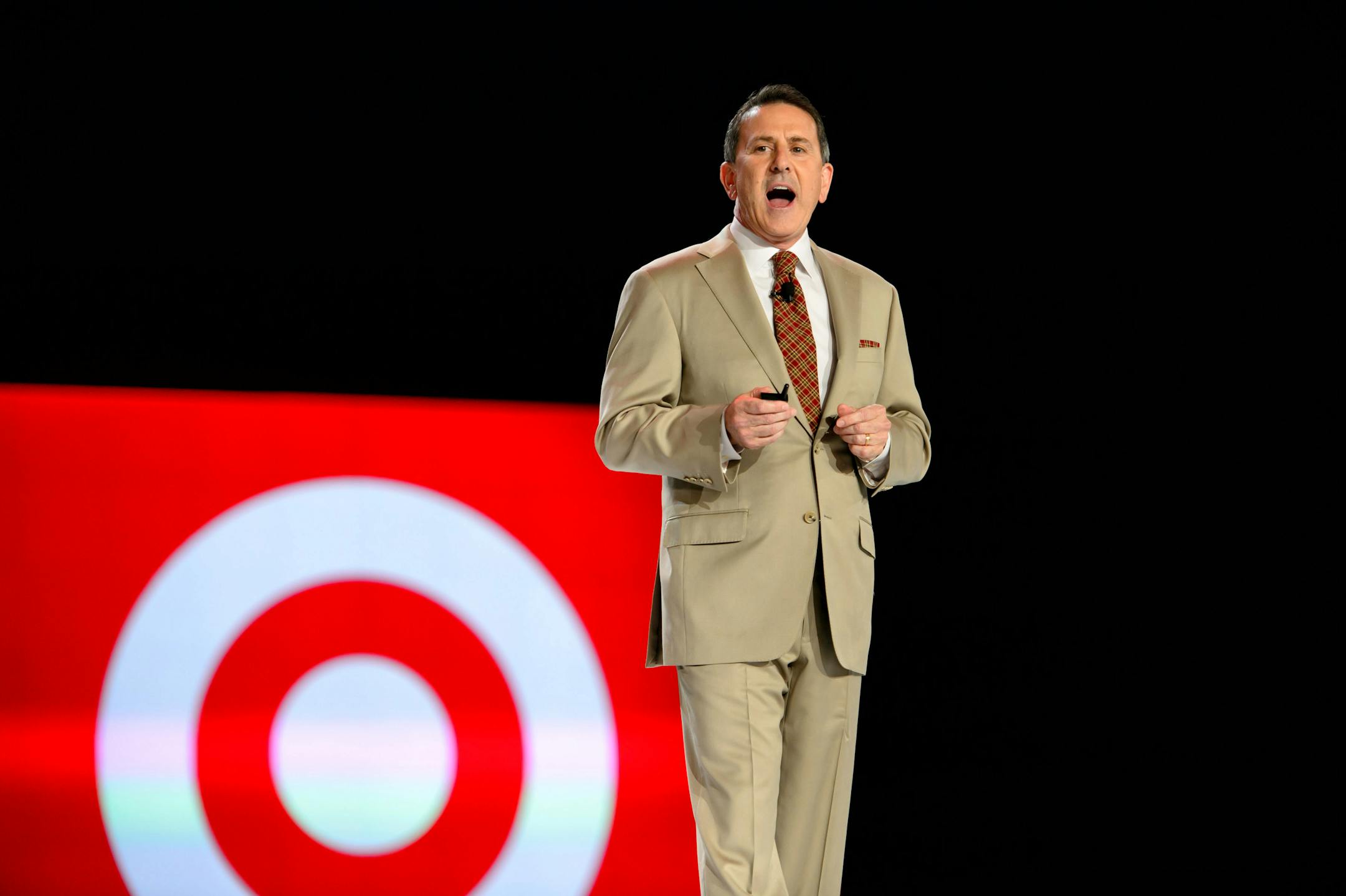
Target CEO Brian Cornell speaks from the stage at Target Center in 2015. (Glen Stubbe/The Minnesota Star Tribune)

6:45 a.m. - Target made the CEO announcement with its second quarter earnings report, which showed the retailer still has a ways to go in its turnaround. Executives pointed out that sales results in all six of its categories were better than the quarter before, but comparable sales still fell 1.9%, with same-store sales falling more than 3%. As a result, profits were down 20% from the same period a year ago. Target’s stock was down nearly 10% in pre-market trading after the report. Shares have fallen 19.4% over the past six months.

— Catherine Roberts

6:40 a.m. - On a media call Tuesday, Fiddelke said his top priorities as CEO are to return Target to its previous status as a leader in style and design, improve consistency of in-store and online experiences and increase technology use across the business.

“We are urgently acting to make changes to reclaim that authority in some categories where we haven’t had it. A category like home, we haven’t been happy with our performance over the last few years,” Fiddelke said. “We saw explosive growth during the pandemic. And on the heels of that growth, we focused a bit too much on the core assortments and lost some of our fashion and design leadership.”

— Carson Hartzog

6:36 a.m. - Fiddelke, who grew up on a farm in Iowa, has a bachelor’s degree in engineering from the University of Iowa and an MBA from Northwestern University’s Kellogg School of Management. Besides three early years working for Deloitte Consulting, his career has been at Target. Fiddelke started in 2003 as a finance intern while still earning his MBA and then moved up through the ranks, serving in positions in finance, merchandising, human resources and operations.

Before being promoted to chief operating officer, he was chief financial officer from 2019 to 2024. He also had served as senior vice president of operations. He sits on the board of Target subsidiary Shipt.

— Carson Hartzog

6:33 a.m. - Michael Fiddelke’s appointment as the next CEO has been widely anticipated after Target reorganized its leadership structure in May, giving Fiddelke additional responsibilities overseeing the company’s newly formed Enterprise Acceleration Office aimed at improving operational efficiency.

The company also announced in May that Christina Hennington, former chief growth officer and potential CEO contender, would depart.

“It is clear that Michael is the right leader to return Target to growth, refocus and accelerate the company’s strategy, and reestablish Target’s position as a leader in the highly dynamic and fast-moving retail environment,” said Christine Leahy, lead independent director of Target’s board, in a news release.

— Carson Hartzog

about the writer

about the writer

Star Tribune staff

See Moreicon

More from Retail

See More
card image
Evan Ramstad/The Minnesota Star Tribune

The small retailer wants to shed the expenses of being traded on the Nasdaq exchange because officials feel the company hasn’t been able to capitalize on being a publicly traded firm.

card image
card image