

Ramstad: Note to Minnesota’s next governor: Get rid of e-bike subsidies!

Economic issues are bound to play a bigger role in the 2026 governor’s race.

Columnist Icon
The Minnesota Star Tribune
July 26, 2025 at 3:19PM
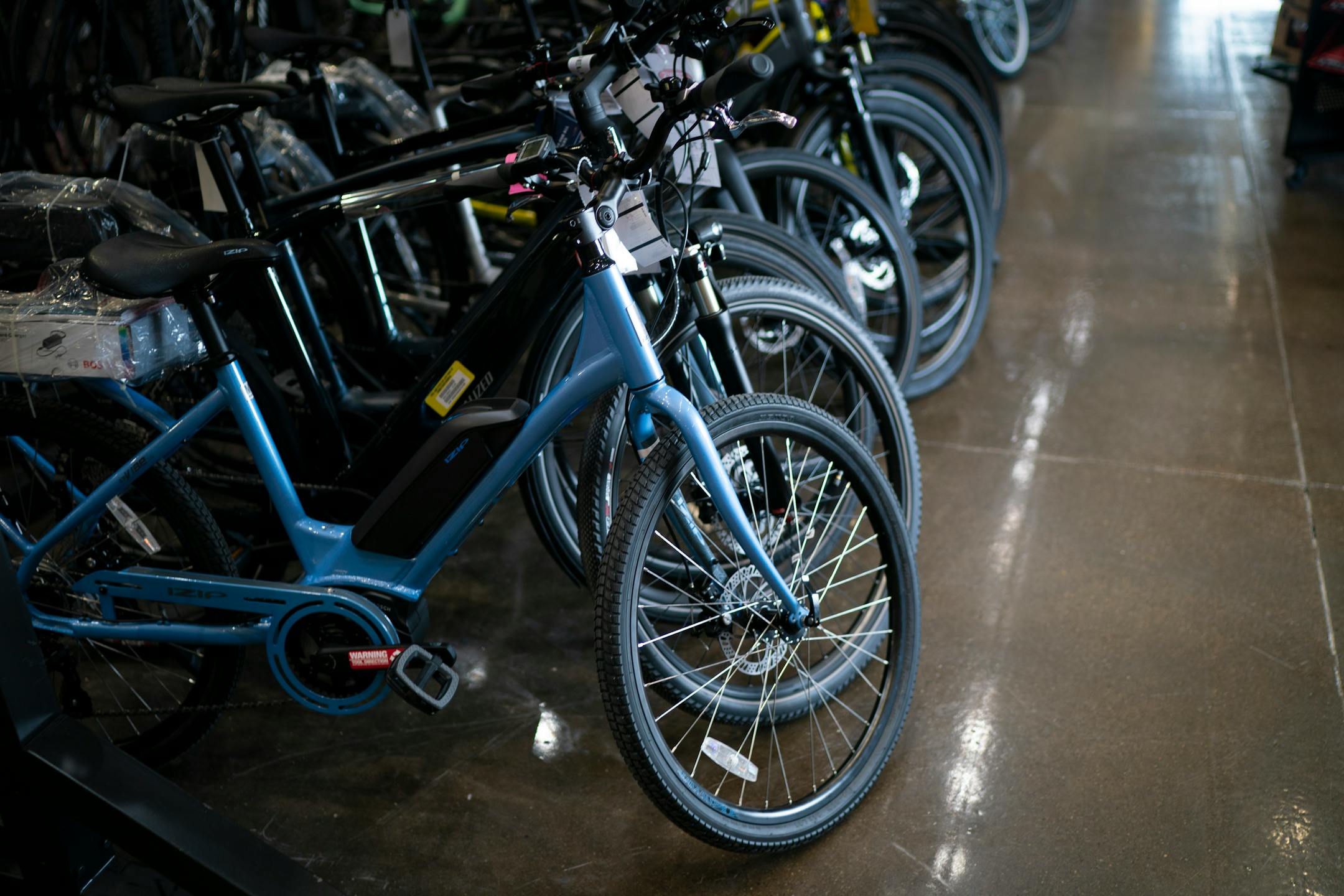
Electric bikes, or e-bikes, are a roaring business that the state doesn't need to help out, our columnist writes. (Renée Jones Schneider/The Minnesota Star Tribune)

I may be a single-issue voter by the time the 2026 election gets here. My vote for governor will go to whoever promises to end the state’s subsidies of e-bikes.

At the moment, the governor’s race of 2026 looks the same as it did in 2022. I’m not eager for another political rerun, but if Minnesota is going to get one, I hope the substance improves considerably — and if we’re talking about e-bikes, then I’ll know it hasn’t.

Gov. Tim Walz, a Democrat, is tiptoeing toward a run for a third term, telling the Minnesota Star Tribune’s editorial board recently that he’ll make a decision after the State Fair.

Scott Jensen, a medical doctor and former state senator who was the Republican nominee in 2022, announced recently he’ll try again.

Three years ago, Walz and Jensen ran dispiriting campaigns centered on the state’s pandemic response, vaccine use, abortion and the Feeding Our Future scandal.

Economics hardly came up. But that’s bound to change in 2026.

By this time next year, Minnesotans will be talking a lot about the implementation of the state’s Paid Leave program, the evaporation of federal health and education benefits due to the “One Big Beautiful Bill” championed by President Donald Trump and perhaps a collapse in housing values if the real estate downturn now unfolding in much of the nation reaches here.

If I could wave a magic wand I’d make everyone running for governor, and every other state office next year, answer this question:

What should be the size and cost of state and local government when Minnesota is growing more slowly than it ever has?

Logically, changes to government services should roughly match changes in population and workforce, while changes in government spending roughly match the rate of inflation.

But since 2022, the growth of Minnesota’s state and local governments far outpaced population and inflation.

One extreme sign of this expansion and related profligacy: Minnesota gives out subsidies for e-bikes, a business that’s roaring along.

Set aside that nuttiness for the moment and use the state’s general fund as a proxy, since it pays for state government functions as well as for schools and local governments.

General fund spending for the 2026-27 biennium, which started this month, will be 29% higher than it was for the 2022-23 biennium, which was nearly three-fourths done by the time voters cast ballots in the November 2022 election.

That’s more than twice the 14% jump in inflation since then. It’s also well above the 11% jump in Minnesotans’ personal income since then, and the 2.5% gain in size of the state’s workforce. The state’s population grew 1.2% from 2022 to 2024.

To be fair and clear, the jump in the size of Minnesota’s government has not outrun Minnesotans’ ability to pay for it.

There hasn’t been a major change to the state’s tax code since 2013, and yet the state’s tax revenue has risen solidly due to growth in Minnesotans’ income and corporate profits.

It’s a trend that continued this spring. The state budget office earlier this month reported that Minnesota’s government finished the fiscal year on June 30 with nearly 3% more revenue than forecasters anticipated it would.

For all the attention and politicking about forecast surpluses and deficits, the Legislature must balance the state’s books, and it does, though not always on time.

The problem, however, is state leaders keep deciding what government does based on the availability of money rather than a clear idea about what Minnesotans need.

In my magic-wand question, I didn’t ask what the size of state and local government can be. I want to know what our potential leaders think it should be.

Minnesota Democrats seem to measure themselves by how much the state spends, while Republicans measure themselves by whether they reduce taxes.

There is little discussion of whether the state and local governments are doing the right things — and, more importantly, the right things when Minnesota is growing more slowly than at any time in its history.

Do Minnesota’s state and local governments need to slow their growth, or even shrink, because the number of people who are paying for it is hardly growing?

Or do they need to be spending more to try to jump-start overall economic growth?

I believe the answers will help arrest Minnesota’s gradual but ongoing descent into economic mediocrity.

It’s much easier to focus on emotional hot buttons, however, and that’s why I’m picking on e-bikes.

I recognize the $2 million e-bike subsidy is a tiny fraction of the $33 billion that state government will spend in the fiscal year that began July 1. And unlike last year, this year’s tax break on e-bikes is directed at people with lower incomes.

And yet, e-bike sales are in that hockey-stick moment of fast-rising growth, and average selling prices for e-bikes are plunging.

Can the state afford the e-bike subsidy? Well, sure. Revenue is exceeding forecast, after all.

Should it? No.

about the writer

about the writer

Evan Ramstad

Columnist

Evan Ramstad is a Star Tribune business columnist.

See Moreicon

More from Economy

See More
card image
Mary Altaffer/The Associated Press

There are seven answers in the form of tech companies like Nvidia, Apple and Microsoft. But their outsized impact could spell disaster if the AI bubble bursts.