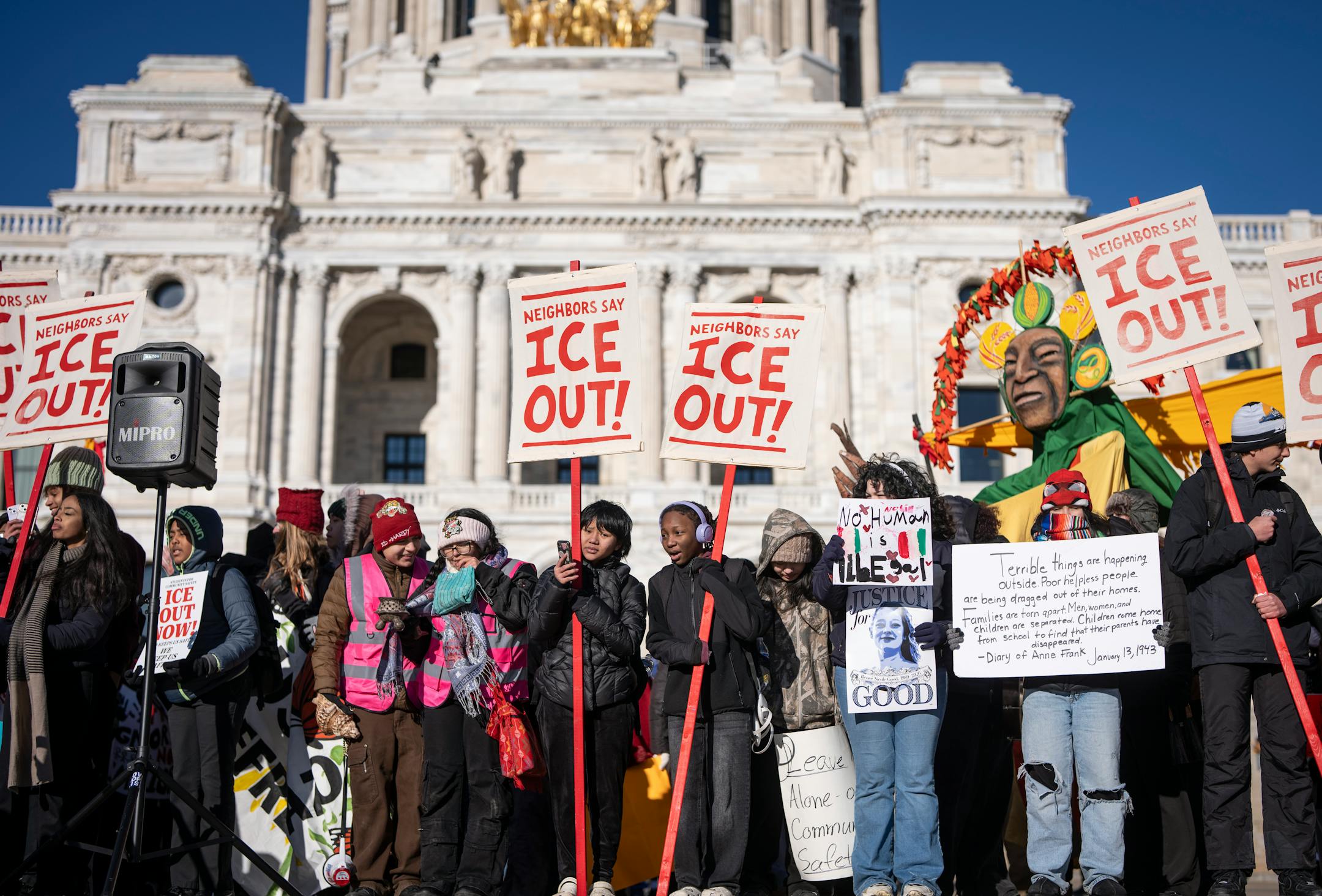
For the people who live in Minnesota or have roots here, seeing the state become the center of international attention for tragic reasons now feels like a recurring nightmare.
Minnesota — especially its urban heart, Minneapolis — has been in the global spotlight since the killing of Renee Good by a federal immigration agent on Jan. 7. For many, the extraordinary scrutiny has been strikingly similar to what followed the murder of George Floyd in 2020.
Last summer’s assassination of Melissa and Mark Hortman and the mass shooting of elementary school students at Annunciation Church also put the state at the epicenter of fiercely partisan political debates.
Whether about race and policing, gun control and mental health, or immigration and federal overreach, Minnesota has been the face of the issues.
It’s a divergence from a fly-over-state image that, until this decade, was easily distilled into a few key themes: the lakes, the cold winters, the Mall of America, Minnesota Nice and hockey.
Minnesotans are fielding messages and calls from loved ones around the nation, checking in and asking if the online images and TV broadcasts are an accurate depiction of life here. Civic leaders are already trying to understand and manage how recent events, and their ripple effects, might shape people’s interest in visiting, establishing or expanding businesses and living here.
“I think it’s less about what the issue is and more about the way we all respond,” said Jennifer Hellman, CEO and president of Goff Public, a St. Paul-based public relations firm.
“That, I think, is going to have more of an impact on our lasting reputation than any of these issues in isolation.”