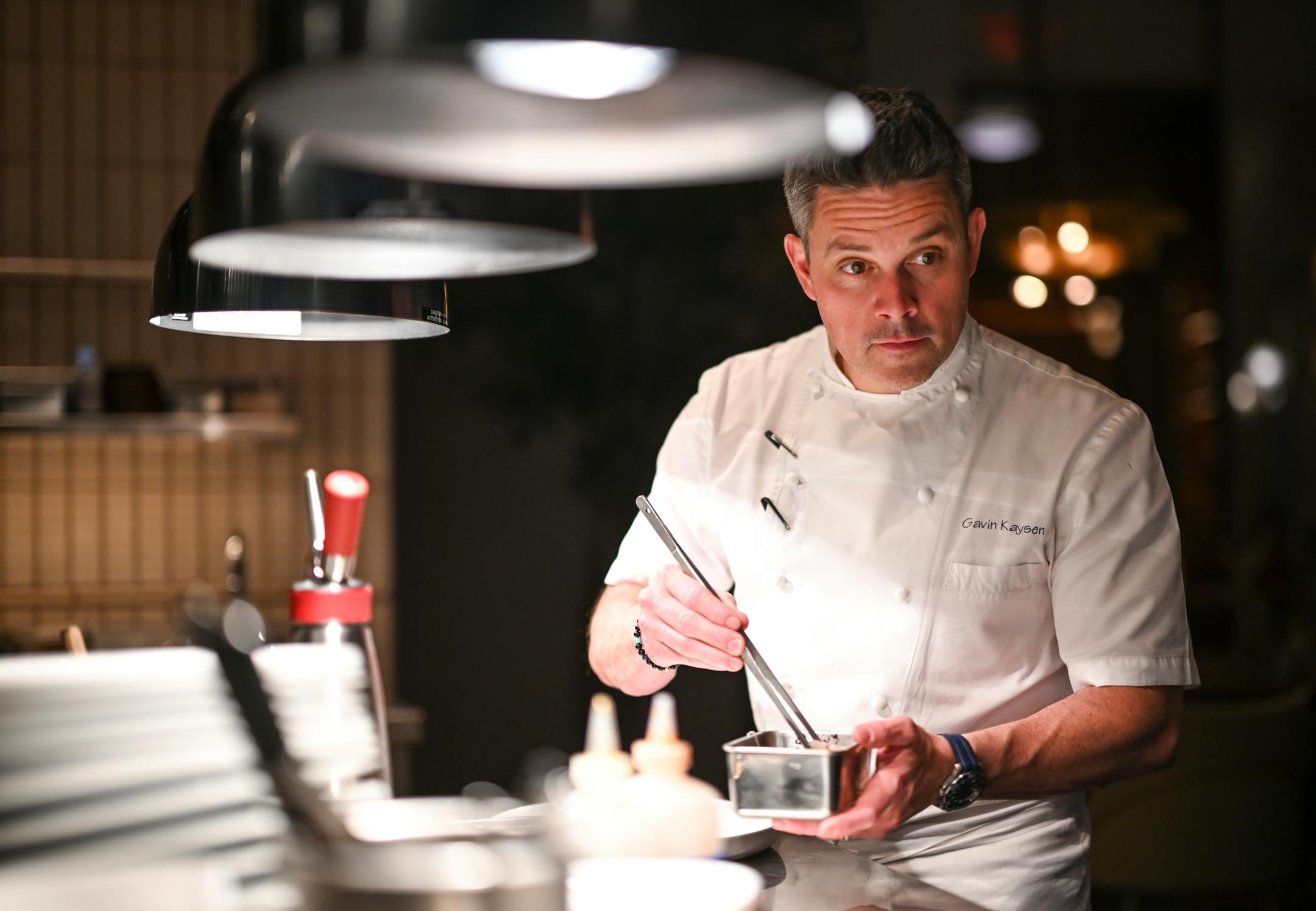
It took three sleepless nights before Gavin Kaysen finally hit send.
The email went out to a core group of friends and regulars who have sustained his Soigné Hospitality restaurant group over the past decade. Showing vulnerability, his email culminated with a plea: “Please come back.”
The situation was bleak. Sales at his flagship North Loop restaurant Spoon and Stable, which he once considered “bulletproof,” were sliding. Two Monday evenings took in the equivalent of a single slow brunch, and in one week it lost $70,000 from canceled events. He was cutting shifts at the new Bellecour in the North Loop, where there weren’t enough diners to account for usual staffing, and sending workers down to Naples, Fla., to spend two months at his new restaurant there. Across his Minneapolis group, business was down about 30% — some days more than 50%.
Kaysen’s email told the raw truth: These last months felt harder than COVID.
From the pandemic and the unrest following the murder of George Floyd, to relentless inflation and economic uncertainty, Minnesota’s restaurant industry was already on edge. Now, Operation Metro Surge might be the final straw. Amid intense immigration enforcement across the state this winter, many restaurant staffers — a lot of them immigrants — stopped coming to work, afraid of being targeted by federal agents.
And diners, for any number of reasons — fear, helplessness, the bitter cold — seemed to stop dining out. Owners, from mom-and-pop shops to fine dining, have been left looking at the books and wondering how long they can stay open.
If customers were waiting until things got better in Minnesota, “I am telling you with conviction, we will not be here in May,” Kaysen said in an interview with the Star Tribune. “And we’re not the only ones.”
When Kaysen rang that alarm bell, federal officials had not yet announced that immigration enforcement would scale back in Minnesota. But by then, the economic damage was already done. January 2026 was one of the worst months many Minnesota restaurants had ever seen, many owners told the Star Tribune.