What it’s like to dine inside Eat Street restaurants right now

You’ll find the food and hospitality one would expect from the Nicollet Avenue restaurants we know and love, with one caveat: Everyone is hurting.

The Minnesota Star Tribune
February 2, 2026 at 6:00PM
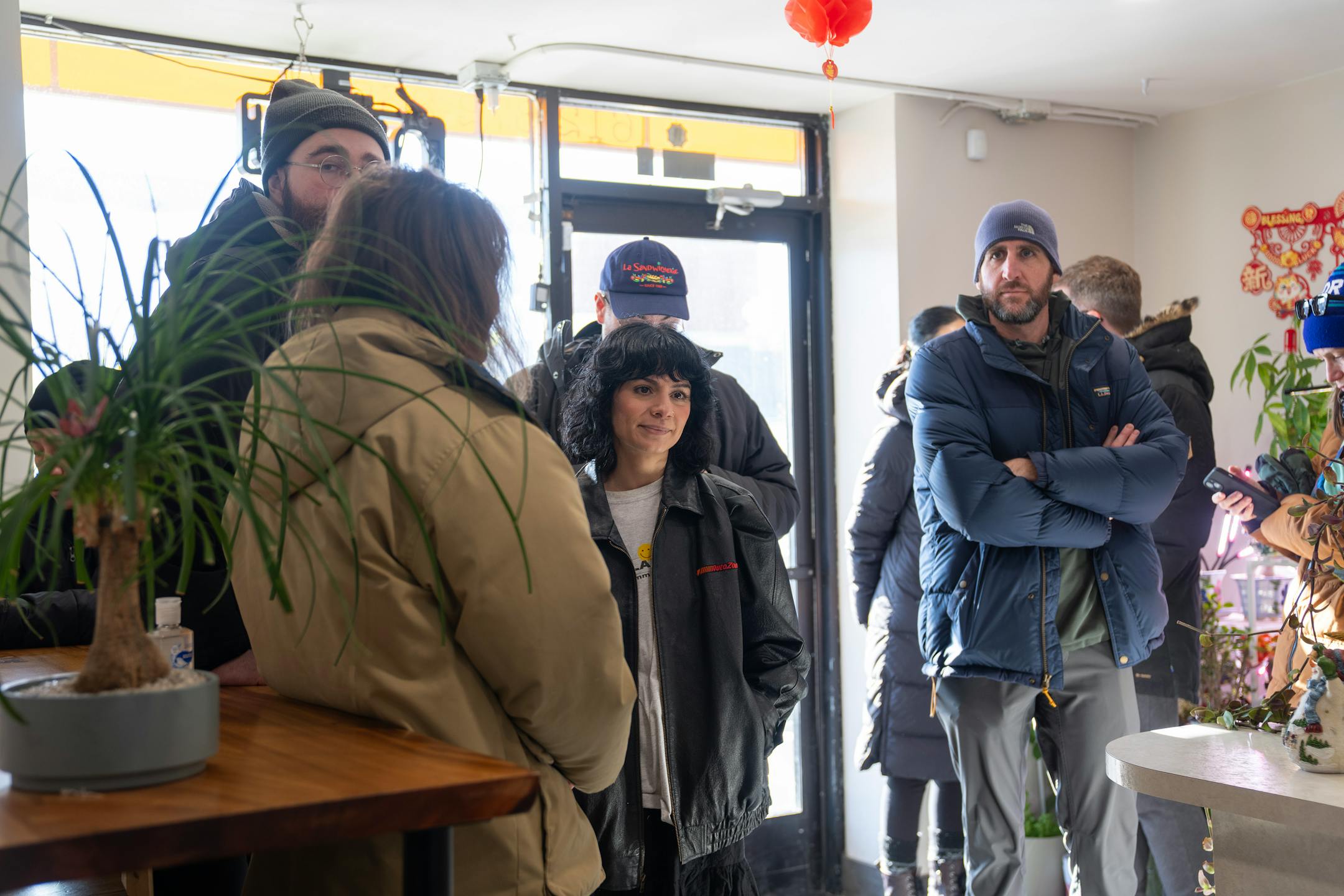
Customers wait for a table inside My Huong Kitchen in Minneapolis on Jan. 27. The restaurant is on Nicollet Avenue near the spot where Alex Pretti was killed by federal agents on Jan. 24. (Alex Kormann/The Minnesota Star Tribune)

It feels like any other frigid January morning on Eat Street. Bitter cold. Gray light. Ice that’s melted and refrozen innumerable times into perilous, slippery patches. Except this January is different. There are a few spent smoke grenade canisters and flash-bangs on the street that days after Alex Pretti’s killing still haven’t been picked up. People move quickly with their heads down.

Inside Spyhouse Coffee, the morning begins quietly. A regular customer stops by to check in with the barista. “I just wanted to see how you are,” the regular says. The answer doesn’t quite form. “Well, yeah, it’s … yeah.” The barista returns to work, pausing for a moment longer than usual, staring out into the cold. They have long forgotten your order; you apologize and remind them. They apologize. When the drink finally makes it your way, it’s excellent, as always.

This is what dining on this stretch of Nicollet Avenue feels like now: people going through the motions, on autopilot, doing what they know how to do. The hospitality is intact; the food’s the same. But the dining rooms are more empty than usual. Everyone seems dazed. People are hurting. Everything is not OK.

January was already going to be hard

January is always a slow month. Restaurateurs brace for it, they survive it. But this January arrived carrying more than cold.

Across Minnesota, restaurants everywhere have been navigating the ripple effects of heightened federal immigration enforcement for several weeks. Workers are terrified to come in. Diners are nervous to go out. Reservations vanish in waves.

Staff shortages are severely affecting operations, resulting in limited menus, slower service, guarded doors, shortened hours, takeout-only pivots, temporary closures with no notice. There were moments of inspiration: Restaurants began stepping up for their community by running food drives, hosting fundraisers and donating profits.

And then came that Saturday morning..
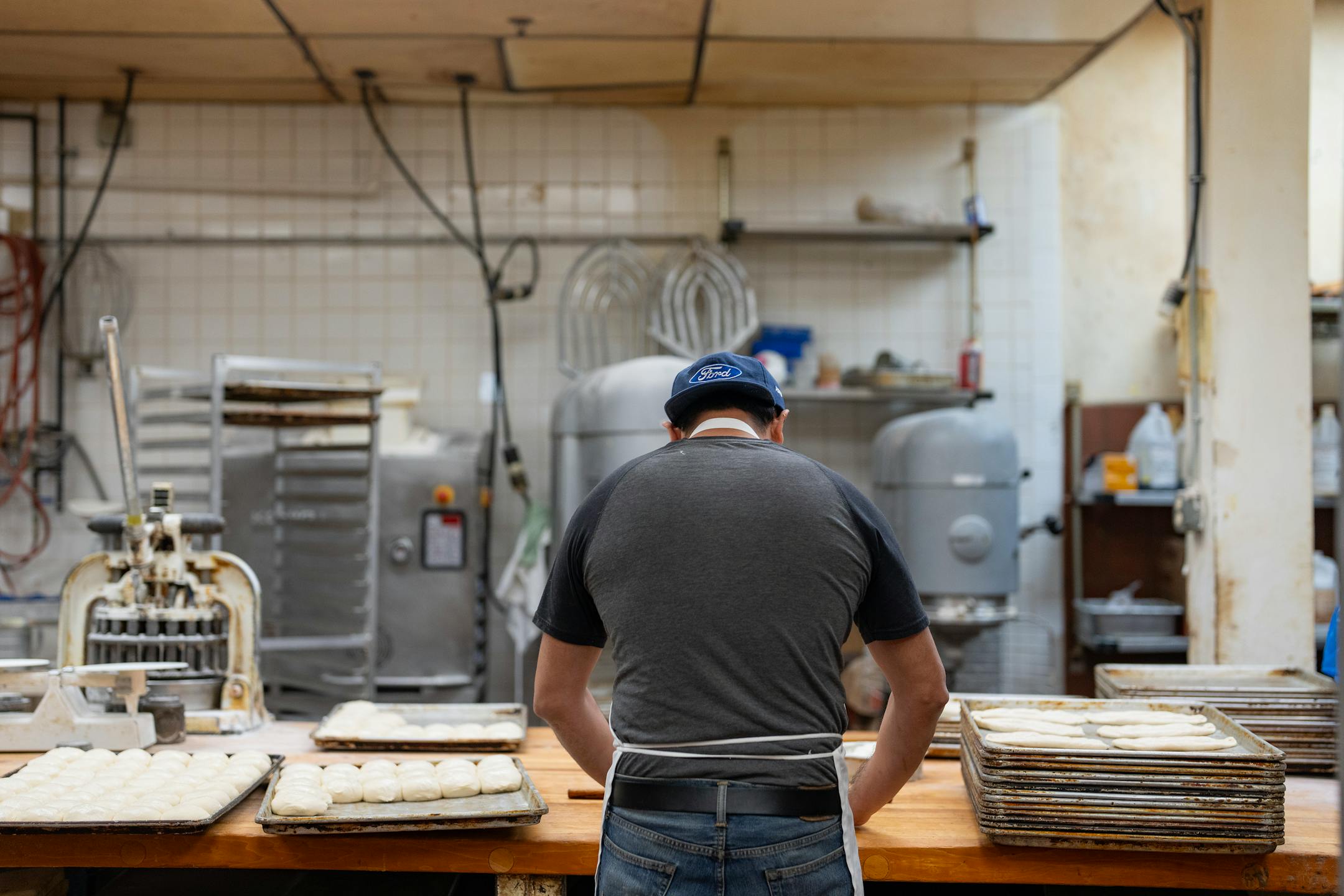
Workers form pastries inside Marissa’s Bakery on Eat Street in Minneapolis on Jan. 27. (Alex Kormann/The Minnesota Star Tribune)

‘How are you?’

Spending the day talking with restaurant owners, staff and customers along the city’s restaurant-rich corridor, it only takes asking, “How are you?” for the truth to spill out. Not once does anyone answer “fine.” People unload, sometimes quietly, sometimes all at once. Dining rooms meant for comfort and pleasure have become where people are at their most vulnerable.
At Marissa’s Bakery, the fryer is down — no churros today — but the conchas and puerquitos are fresh. Checking out, we ask the question. It’s hard, they say. We try. But ... we’re here. The champurrado is molten, hotter than the sun, and it burns the roof of our mouths.

At Marhaba Grill, chef and owner Mohamed Shehata has just set out the lunch buffet. He stands behind the register with a distant stare. Business is slow. He’s been here for 15 years and he’s never seen anything like this. When he realizes we’d never been in, he urges us to stay longer, pressing more food and generosity into our hands. The warmth is palpable. The vegetarian samosas were pretty good, too.

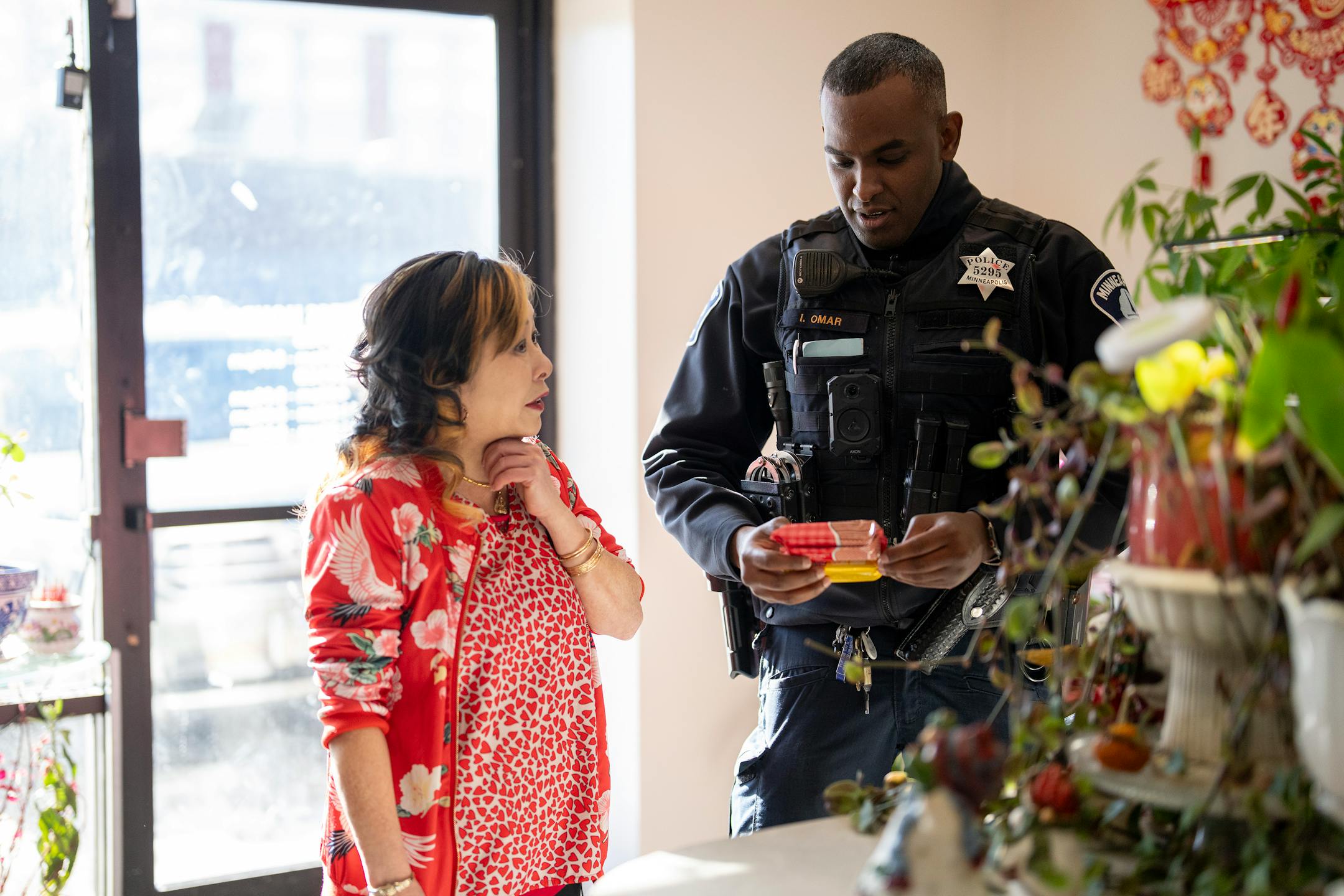
Tracy Wong, owner of My Huong Kitchen, speaks with Minneapolis police officer Omar and gives him free sweets in her restaurant on Eat Street in Minneapolis on Jan. 27. (Alex Kormann/The Minnesota Star Tribune)

When the doors opened

At My Huong Kitchen, the energy is entirely different. Owner Tracy Wong became nationally known after videos showed her rushing protesters and reporters into her restaurant during the tear gas deployment following Pretti’s killing. “Come in! Come in my home!” she called.

Her home is a sunny, cozy restaurant filled with greenery. Much like Wong, it’s bright and exuberant. The restaurant is packed with equal parts customers and press. A couple from Shoreview came because they “saw her good heart on the news.” A protester who fled into the restaurant returns to order spring rolls, leaving a large tip. “Thank you for Saturday,” he tells her. Tracy exudes the energy and tension of someone who is having the best day of her life for the worst possible reason.

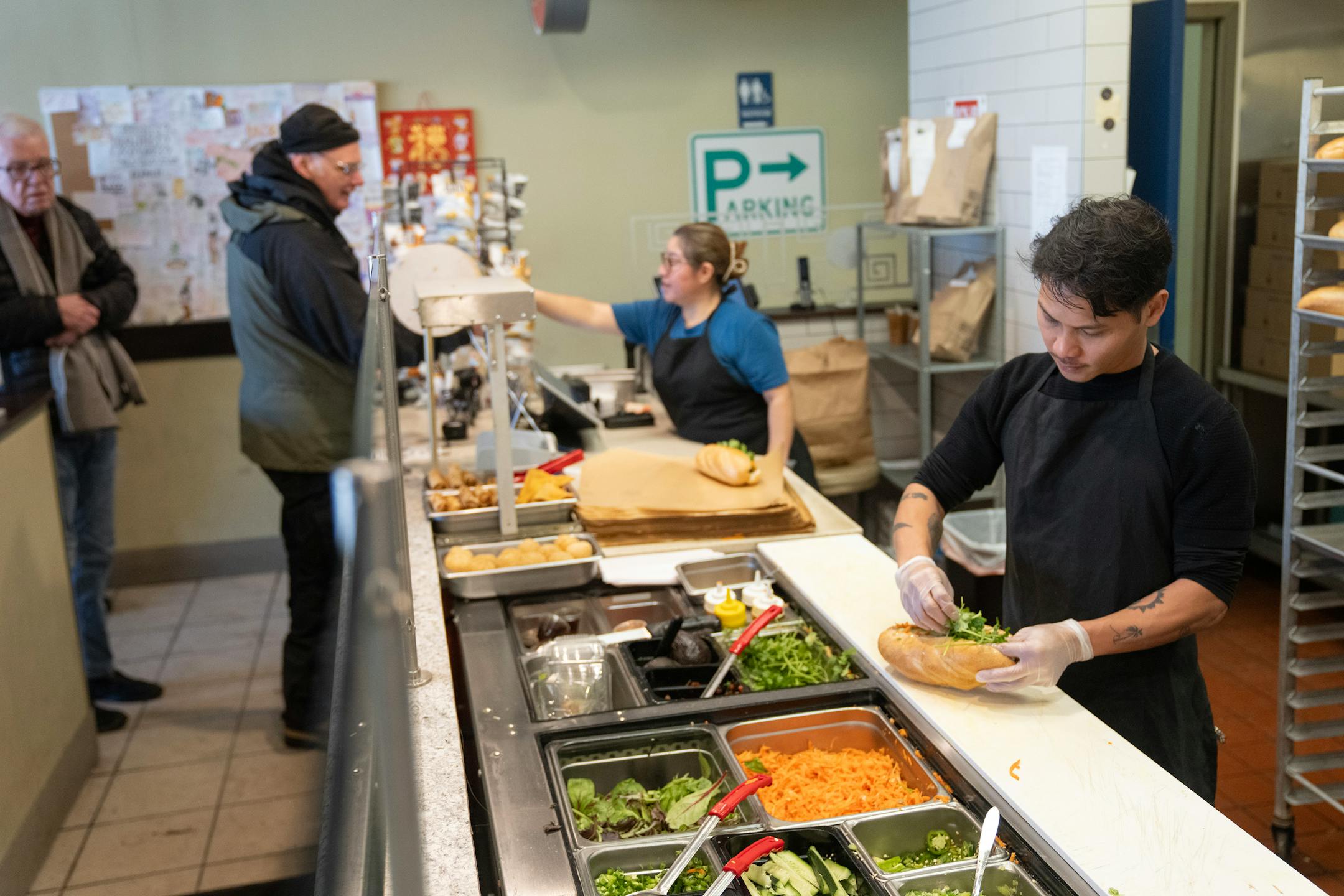
Quang Pham prepares banh mis for customers inside his restaurant, Lu’s Sandwiches, during the lunch rush in Minneapolis on Jan. 27. The restaurant is on Nicollet Avenue near the spot where Alex Pretti was killed by federal agents on Jan. 24. (Alex Kormann/The Minnesota Star Tribune)

Fear travels faster than hunger

At Lu’s Sandwiches, owner Quang Pham watches the sidewalk where a memorial to Pretti grows. His hands know how to do this work — he’s made at least 10,000 bánh mì over time — but he’s on edge. Sales were down more than 25% since December, something that has never happened at this location, one of three. Many of his regulars are immigrants who don’t feel safe leaving home.

On Jan. 24, employees called to say ICE agents were outside. Pham rushed in, told staff to pack up and prepare to leave. Tear gas rolled down Nicollet. Flash-bangs echoed. The next day the street looked different: peaceful, caring, communal. “This is love,” Pham says. “This is the city that we’re fighting for.”

When regulars didn’t return, new faces showed up instead — people coming specifically to support an immigrant-owned restaurant at the epicenter of something larger. “Fifty percent is making great food,” Pham says. “The other 50 percent is the community.”

The memorial, the wound

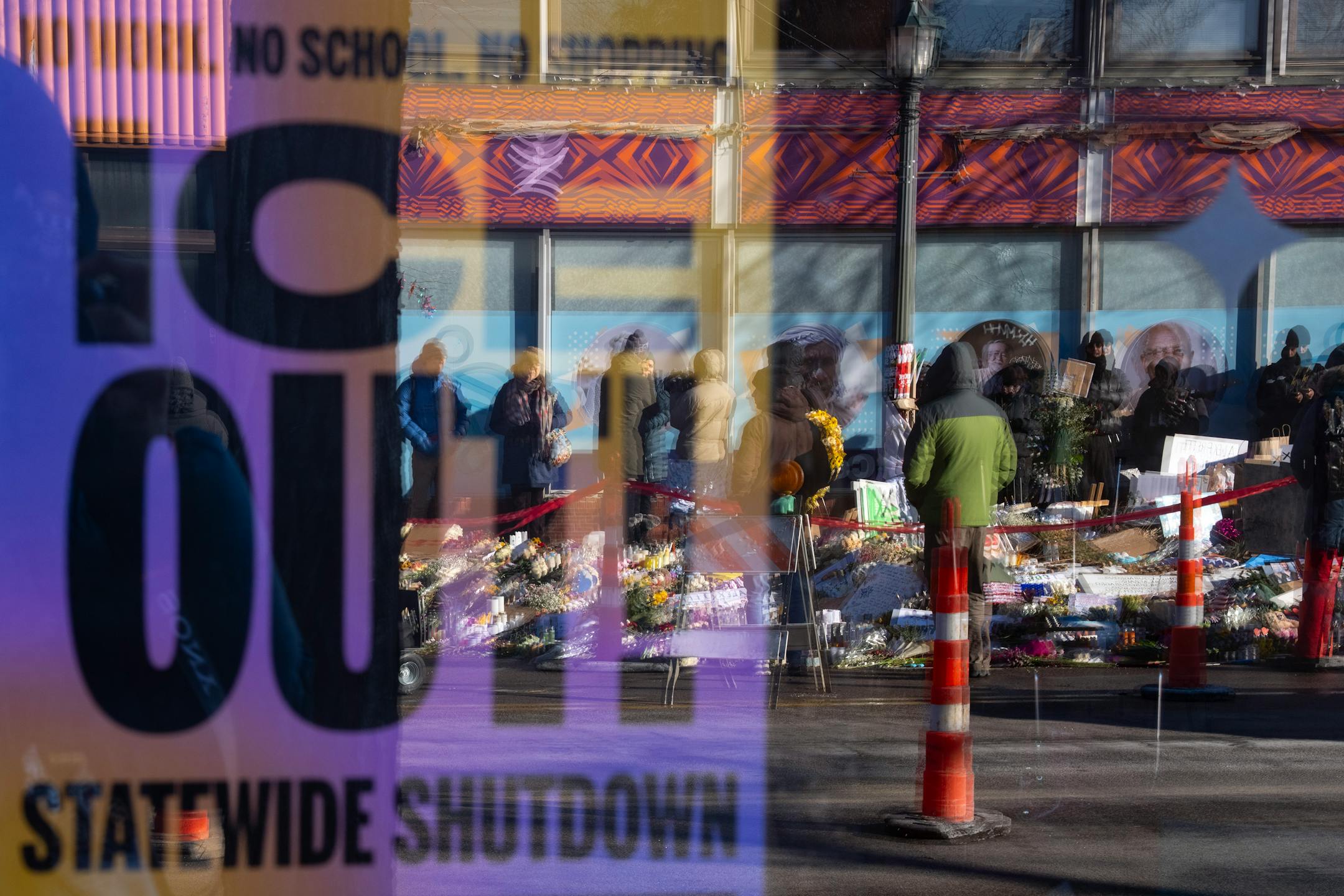
The Pretti memorial is drawing people to Eat Street. It’s an open wound in the middle of the city. But the crowd hasn’t translated into full dining rooms. Operators talk about the disconnect: foot traffic without butts in seats, people paying respects but not staying long.

Some restaurants have locked doors; you ring a doorbell to be let in. Others run skeleton menus, like at Pimento Jamaican Kitchen, where owner Tomme Beevas is outside hugging customers with his melodic accent. Inside, the curry glows sunshine-yellow, food that feels like care.

His Pimento Relief Services has been paying people’s rent and for groceries as fast as donations come in. Elsewhere, workers organize buddy systems to get home safely. They drive each other. They check in. The gripping concern is when someone doesn’t show up for work. “Are they sick or are they just … gone? And how do we find out,” wonders Kara Smith, a local beverage professional and Pho 79 customer.

The memorial for Alex Pretti is reflected in the front window of Glam Doll Donuts in Minneapolis on Jan. 27. (Alex Kormann/The Minnesota Star Tribune)

Showing up anyway

A block away, Glam Doll Donuts reopened to long lines just days after its employees made headlines by recording Pretti’s killing across the street. There’s a steady stream of customers as the memorial grows, surrounded by television cameras and reporters. That impulse — to be physically present, to shop local, to wait in line, to tip generously — keeps repeating across Eat Street. Spending money has become a form of resistance.

At Los Sanchez, joy briefly overtakes the room: globe-sized margaritas, music loud enough to drown out the cold, warm service with the server insisting on calling the women of our table señoritas, and it feels like a compliment. At Luna & the Bear, the happy hour gin-and-jam cocktail tastes like a small mercy.

Some places are a little busy, and don’t seem to have skipped a beat, like the new school food hall Eat Street Crossing, or the Vietnamese stalwart Quang Restaurant. Regulars are turning out, but not in numbers that feel sustainable.

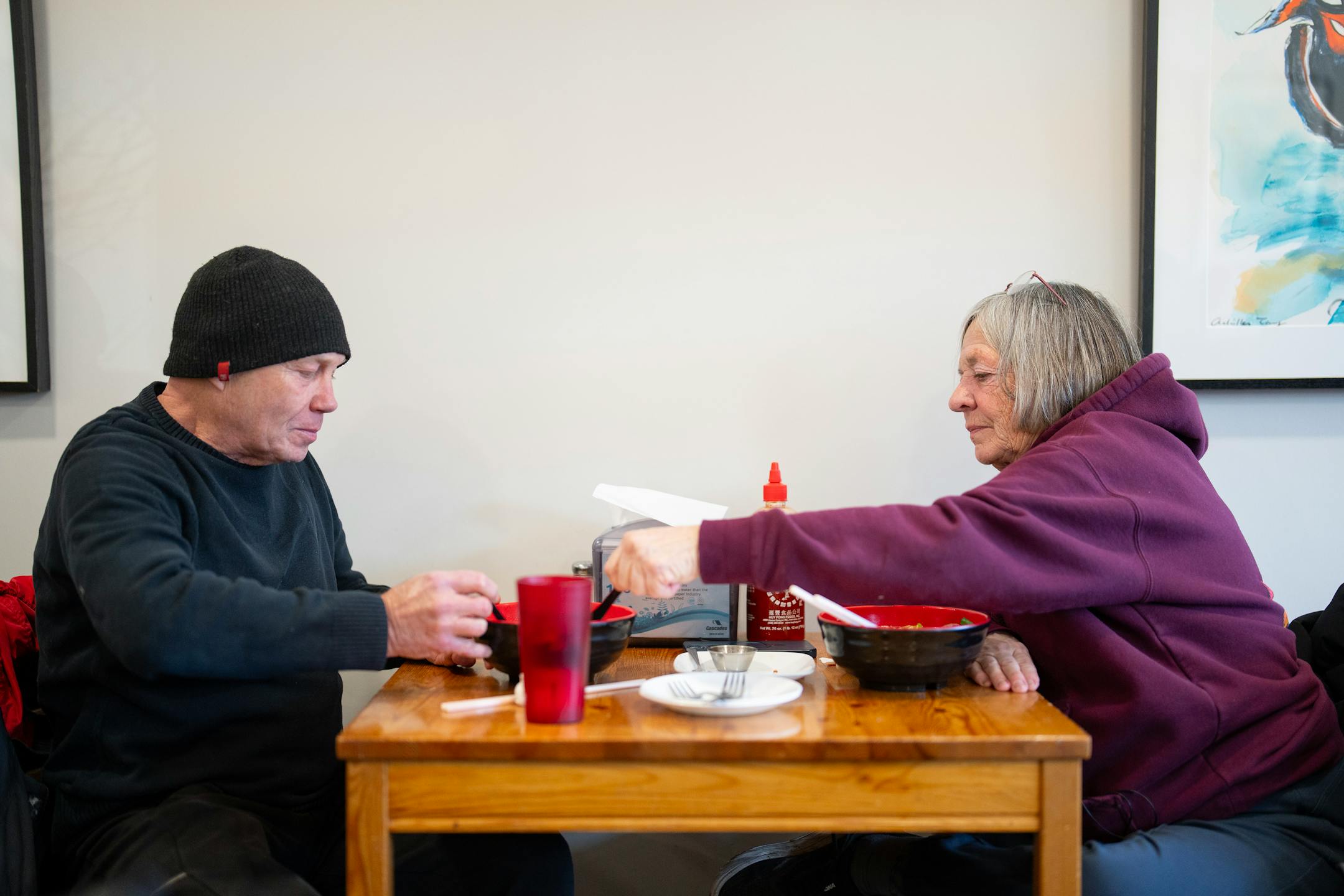
Scott and Cindy Olson share a meal at My Huong Kitchen on Eat Street in Minneapolis on Jan. 27. (Alex Kormann/The Minnesota Star Tribune)

Not OK, but together

During our time on Eat Street, we were told many dark stories. Of people being shipped off to detention centers in Texas, with some having to pay for their flights back to Minnesota. About people afraid to go work, but not having a choice because rent is due. There was the restaurant owner who changed her route to avoid having to drive by the memorial.

At the Black Forest Inn, the German restaurant that’s been open since 1965, signs on the doors say it’s a “Warm place, come on in.” The restaurant has been offering coffee, tea, cocoa and bathrooms for people who need respite from the cold. There’s a heaviness in here, though. The bar is full of people processing their trauma out loud, including a trio watching videos of the shooting that took place literally just outside the walls, with the volume turned all the way up, the sound of whistles shrieking. A server tells them to turn it off. The sausages are overcooked, and the bar is out of straws, but the beer keeps flowing.

At the Irish pub Prodigal Public House, laughter finally breaks through. Still, it has big “bar after a funeral” sort of energy. One of us orders a negroni, and what arrives is a perfect Aperol spritz. But we’re just grateful for the hospitality and warmth, soaking in the soundtrack of rock brogue with electric strum before calling it a night.

On our way out, the barman asked why we didn’t finish the drink. “I asked for a negroni and you made me an Aperol spritz.” “Oh! My! God!” he chortled, clutching an unlit cigarette in one hand. “I did? How do ya make a negroni again? Oh no!” He offers shots of whiskey to make up for it. Any other night, that’d be a fine resolution. But today, it’s time to go home.

Restaurants and bars are supposed to be places of joy, solace and escape. This past week on Eat Street, that spirit hasn’t disappeared, but it’s been refracted through a prism of grief and unease. Everything feels upside down.

The neighborhood is still shaken, but this instinct — to feed people, to unlock the door and welcome them in out of the cold — hasn’t gone away. Recovery and healing will take time, but for now, on Eat Street, there is still warmth and light and hospitality.

Sharyn Jackson and Joy Summers of the Minnesota Star Tribune contributed to this story.

about the writer

about the writer

Raphael Brion

Critic

Raphael Brion is the Minnesota Star Tribune's restaurant critic. He previously wrote about and led restaurant coverage for Food & Wine, Bonappetit.com and Eater National.

See Moreicon

More from Eat & Drink

See More
card image
Alex Kormann/The Minnesota Star Tribune

You’ll find the food and hospitality one would expect from the Nicollet Avenue restaurants we know and love, with one caveat: Everyone is hurting.

Bar Brava
Curry Veggies at Pimento Jamaican Kitchen & Rum Bar in Minneapolis