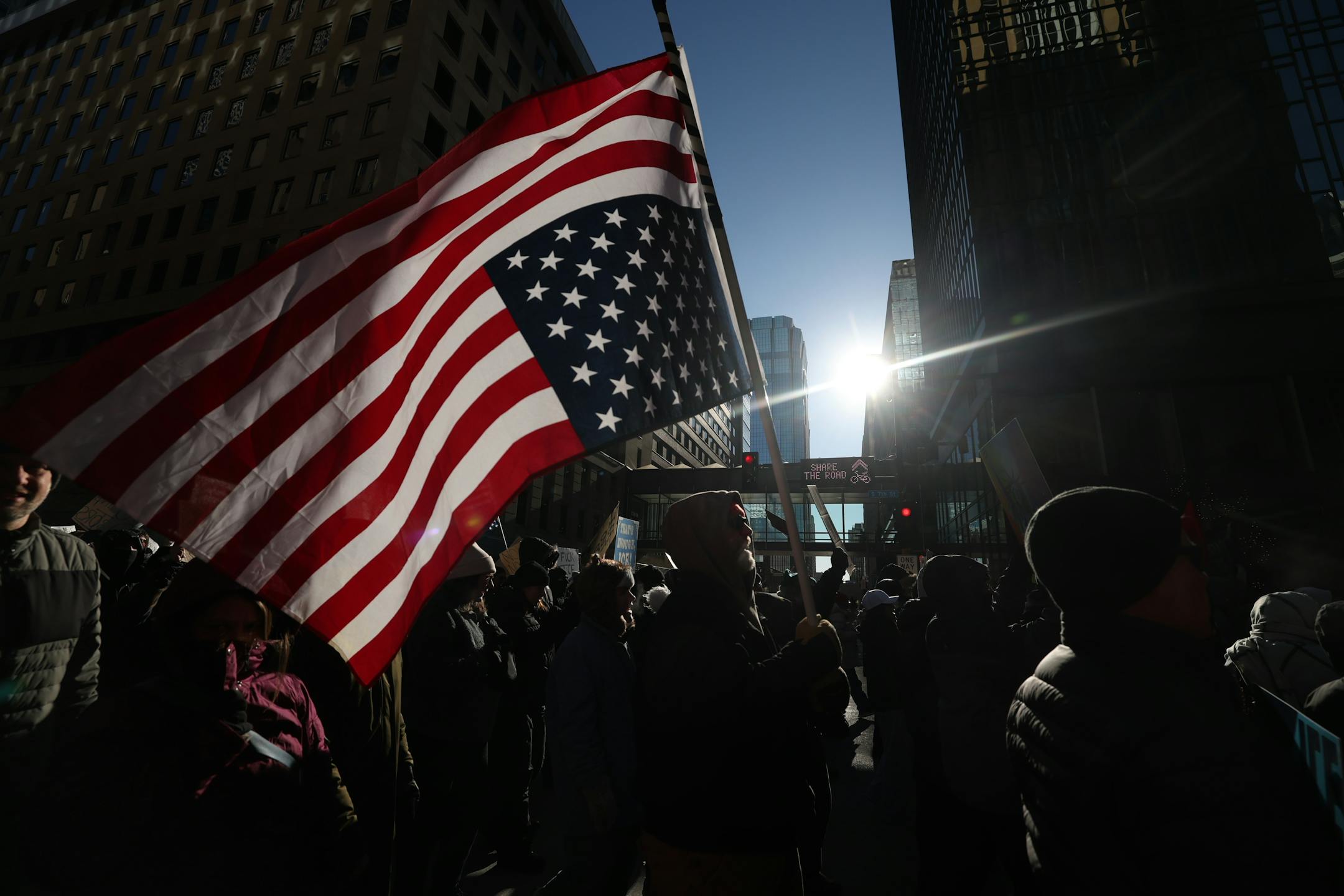
The second planned mass closure of businesses in as many weeks to protest federal immigration enforcement in Minnesota gained more momentum nationally than in the Twin Cities on Jan. 30.
That’s because the state‘s storefronts turned out in the hundreds to protest Jan. 23, and many found it financially unfeasible to miss out on another Friday of revenue so soon. But support for the cause appeared in other ways beyond shuttering for one day.
Labor and faith leaders said they spent weeks planning the Jan. 23 protests. In contrast, Somali and Black-led student groups at the University of Minnesota quickly put together the Jan. 30 iteration after a federal agent shot and killed Alex Pretti on Jan. 24.
The effort — which urged people across the country to refrain from work, school and shopping — garnered the attention of celebrities like Ellen DeGeneres, Ariana Grande and Billie Eilish. All posted information about the strike on social media, as did national organizations like 50501, the group that organized the No Kings marches last year.
But in Minnesota, the second call came as many business owners were feeling fatigued by a nearly two-month deportation operation that has thrust businesses onto the front lines of a battle between the federal government and local communities.
Immigrant-owned and patronized businesses were the first to implement measures to protect vulnerable workers and customers from Immigration and Customs Enforcement (ICE) raids. Many have struggled with labor shortages and plummeting sales since the Trump administration’s crackdown began in early December.
In recent weeks, as the federal operation intensified, the impacts to businesses have been more widespread. For Volstead’s Emporium, a speakeasy-style bar in Minneapolis’ Lyn-Lake neighborhood, closing for a second consecutive Friday was financially unfeasible, owner Bessie Snow said.
A typical Friday and Saturday brings in somewhere between $16,000 and $20,000 in revenue, she said, but last week — when the bar closed Friday for the strike and saw depressed traffic Saturday after the shooting — Volstead’s only made $4,500.