
ICE crackdown chills sales at immigrant-owned businesses

Owners believe many customers are avoiding the businesses for fear of drawing unwanted scrutiny.

The Minnesota Star Tribune
December 24, 2025 at 11:00AM
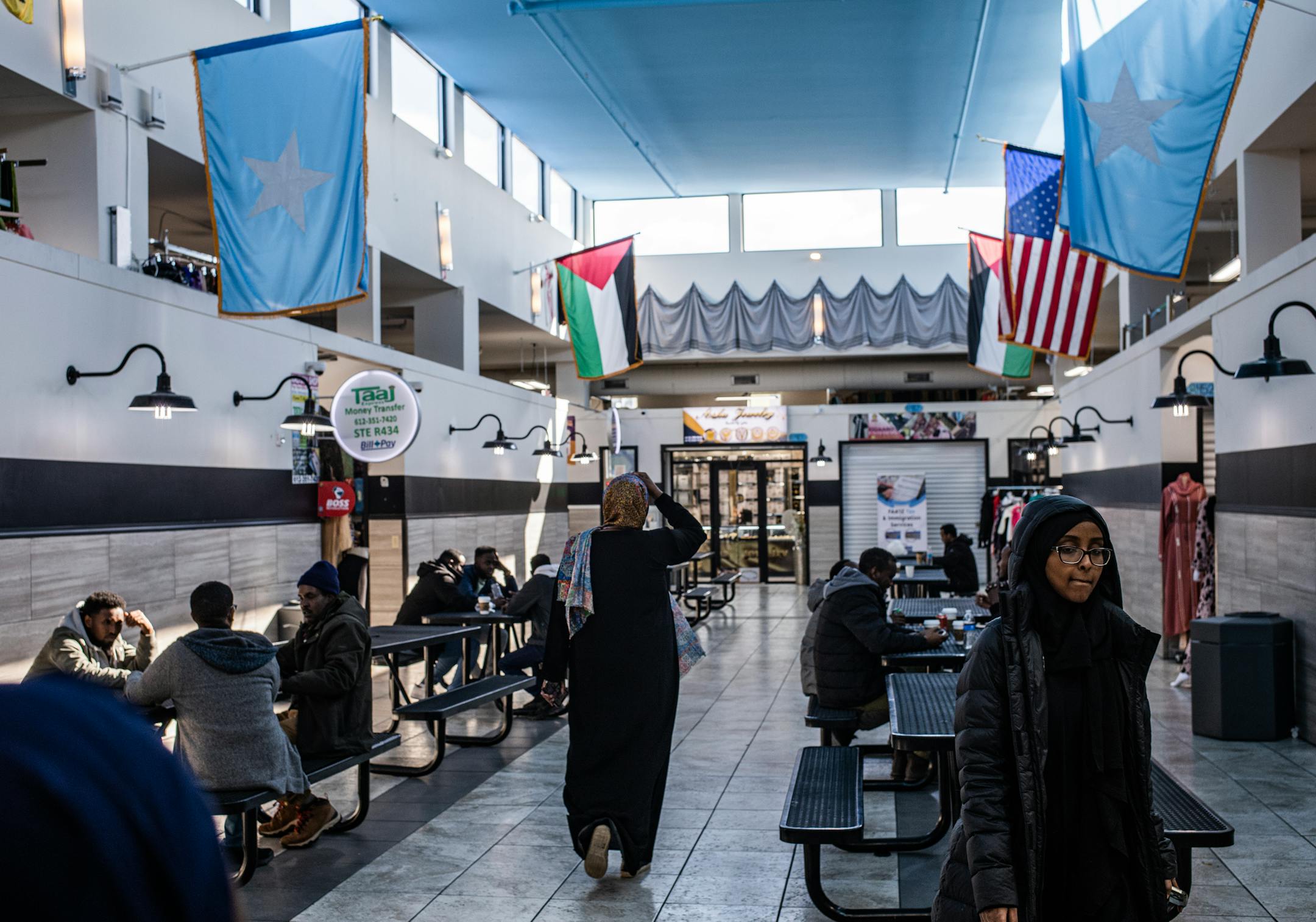
In March 2023, the top floor of the Karmel Mall in Minneapolis was crowded with shoppers enjoying coffee and juice drinks. (Richard Tsong-Taatarii/The Minnesota Star Tribune)

At Quruxlow Restaurant on Lake Street in Minneapolis, only a portion of the dining space is being used because of a drop-off in customers. Business at the African restaurant is also roughly half of what it was before this month’s ICE crackdown, according to the restaurant’s manager.

The restaurant is just one immigrant-owned business seeing a decline in sales and foot traffic this month. Abdi, who asked to only use his first name because of retribution fears, says many reliable customers are afraid to be seen in public as federal immigration authorities continue to confront and arrest people.

Some businesses are locking doors to avoid enforcement. Others are seeing employees avoid work. Five Quruxlow employees are too afraid to come to work despite having green cards, its owner said.

“Everybody’s scared. They will not be in until all this goes away,” Abdi said.

As the immigration enforcement continues — and amid concerns from critics that it will soon escalate — community members are stepping up their spending to help the businesses. St. Joan of Arc Catholic Community recently expanded its “Welcome the Stranger Program.” Dozens of parishioners now intentionally eat breakfast at immigrant-owned restaurants like Quruxlow.

“Our goal is to send a message and to support them in any way we can, “said Joel Racchini, who is helping organize the efforts. “The [Trump] administration may not, but your local community members do value you.”

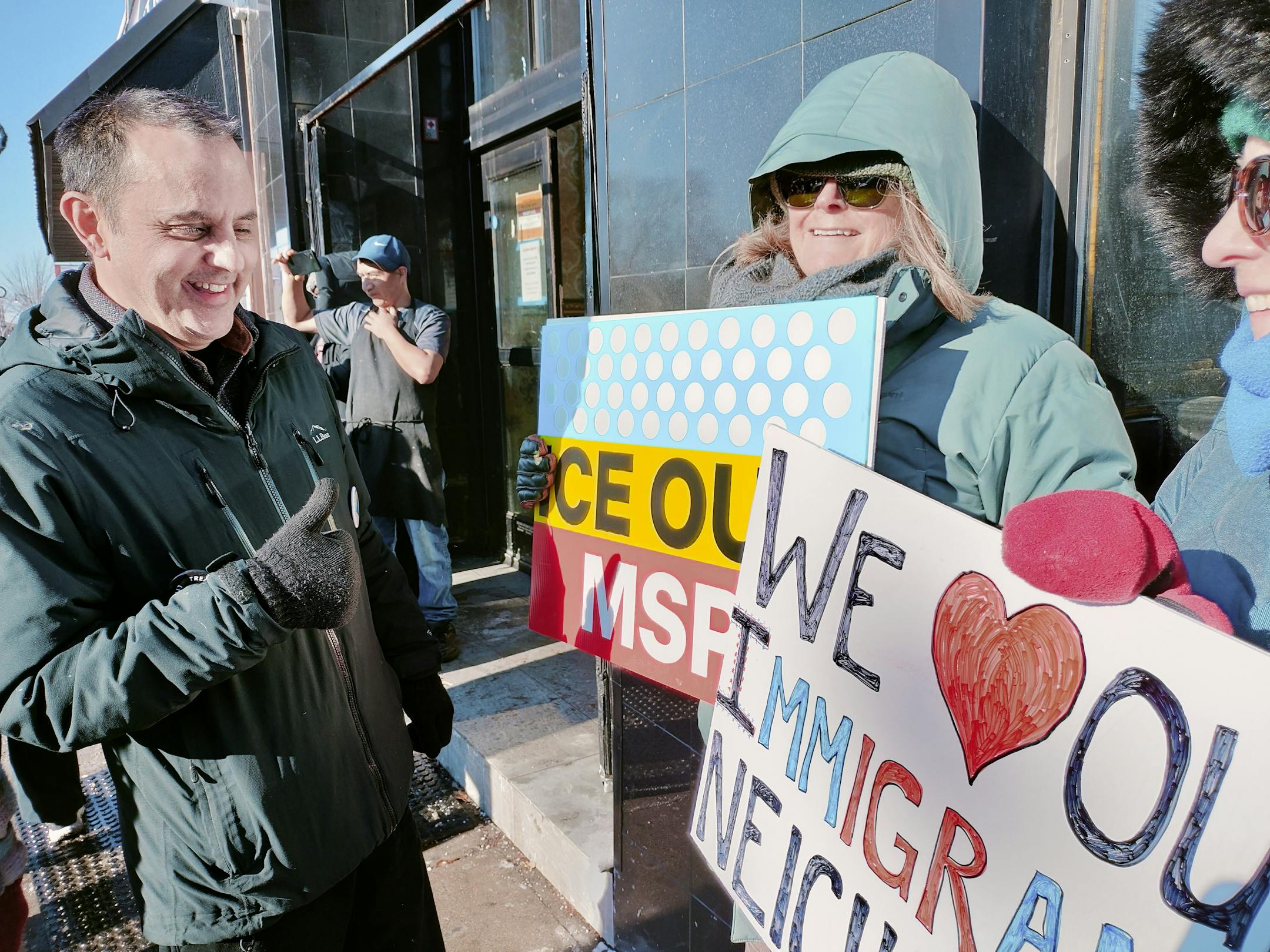
Joel Racchini and Wendy Zeuli of St. Joan of Arc Church order breakfast at a local Somali restaurant on Lake Street to show support for immigrants. (Dee DePass/The Minnesota Star Tribune)

Federal officials say the fears are misplaced, arguing that immigration enforcement is aimed at arresting and deporting criminals.

“Those who are not here illegally and are not breaking other laws have nothing to fear,” said Tricia McLaughlin, assistant secretary for public affairs for the U.S. Department of Homeland Security, in a written statement. “Removing dangerous criminals from our streets makes it safer for everyone — including business owners and their customers.“

Some business owners say the enforcement is going beyond finding undocumented people.

Ghita Worcester, CEO of Hoyo Sambusas, said two adult children of her American employees were recently questioned by ICE while grocery shopping.

One was stopped and questioned at the Target parking lot in south Minneapolis, she said. The next week, the other was questioned as she got out of her car in a Walmart parking lot in Roseville.

The Minneapolis-born women, who are of Somali descent, recently shared their stories at Worcester’s workplace. They now carry their birth certificates with them wherever they go for fear they could be detained, Worcester said.

Marc Sacay and others from St. Joan of Arc Church join protest after having breakfast at a Somali restaurant on Lake Street. (Dee DePass/The Minnesota Star Tribune)

Feds downplay economic impact

Roughly a mile and a half north of Quruxlow, people are still buying goat meat, rice, sambusa meat pies and mandazi fried bread at the Cairo Grill near Franklin and Chicago avenues.

But sales are down 5% to 10% because some Somali families are too afraid to be seen in public, said owner Salim Hassan. His community, he said, has worried since ICE arrested an American-born Somali man from his workplace earlier this month.

That fear has hurt business, Hassan said, “so we need support.”

“ICE bothers you, whether you are the citizen or not. They are not looking at the documents of people. They look at their color,” he said.

While federal agents can stop people based on ethnicity, language, location and type of work when assessing reasonable suspicion, ICE officials dispute allegations that federal agents are racial profiling and said agents are only targeting people who have a reasonable suspicion of being in the country illegally.

”What makes someone a target for immigration enforcement is if they are illegally in the U.S.—NOT their skin color, race, or ethnicity," McLaughlin said in a statement.

Federal officials said over the weekend that more than 670 people have been arrested in this month’s “Operation Metro Surge.” It’s difficult to determine who is being detained since the federal government is offering few specifics and their claims have not been verified.

McLaughlin downplayed the economic impact on immigrant-owned businesses, saying if there were “any correlation between rampant illegal immigration and a good economy, [former President Joe] Biden would have had a booming economy.”

But Basim Sabri, who owns the Somali-run Karmel Mall and the Plaza Mexico mall by Lake Street in Minneapolis, said the frequent presence of ICE in and around his properties has scared off customers and vendors.

At least 50% of vendors at Karmel Mall have stopped coming in since the crackdown, and at Plaza Mexico, it’s 95%, he said.

“They are not coming in to sell,” he said. “They just don’t want the hassle from ICE. They don’t want to deal with intimidation and interrogation. These people have passports.”

Sabri, a Palestinian who immigrated to Minnesota 45 years ago, said he’s seen other “wonderful Minnesotans” show up to try to fill the void of shoppers.

“Sunday, we had a group of 10 African Americans who came after church to shop, eat and support,” Sabri said. “They had never been here before, but want to help,” Sabri said.

'Squeezing the economic lifeblood’

The Rev. Ingrid Rasmussen of Holy Trinity Lutheran Church in Minneapolis recently went to buy tacos for her office staff and found the doors locked to her favorite taqueria on Lake Street.

Fearing immigration officers might barge in and scare workers, the restaurant owner started locking the door and only letting vetted customers in, Rasmussen said.

After being let in and told of the situation, Rasmussen tripled her order. She then went next door to a Mexican bakery and bought a large tres leches cake.

ICE’s actions are prompting fear and “squeezing the economic lifeblood out of Lake Street,” Rasmussen said.

Rasmussen also bought $2,000 worth of tamales to eat after Sunday services on Dec. 14 from a small Mexican shop and just ordered $2,000 worth of Somali sambusas for a coming Sunday.

Trinity’s parishioners followed her lead, buying $20,000 worth of food from Latino and Somali-owned businesses along Lake Street in Minneapolis during the last two weeks. Last week, about 100 Trinity families began buying and delivering groceries to Somali families too afraid to leave their homes.

It is not known how much has been spent to date, but churches and an increasing number of local businesses, attorneys and volunteers from nonprofits like the Advocates for Human Rights and Immigrant Law Center of Minnesota are fanning out to support families and immigrant-owned restaurants and coffee shops. Some are buying groceries and meals. Others are buying gift cards.

Sabri said he appreciates the parents, school leaders and business owners who are protesting the enforcement action and have stepped up their spending.

“People who never knew are suddenly coming here to just show support,” Sabri said. “I don’t know their names. I know they’re standing outside with whistles, or they go inside to the open shops to eat or buy, just to show support. I shake their hands and I thank them.”

Members of St. Joan of Arc Church dine at a Somali restaurant on Lake Street to show support. (Dee DePass/The Minnesota Star Tribune)

about the writer

about the writer

Dee DePass

Reporter

Dee DePass is an award-winning business reporter covering Minnesota small businesses for the Minnesota Star Tribune. She previously covered commercial real estate, manufacturing, the economy, workplace issues and banking.

See Moreicon

More from Business

See More
card image
Renée Jones Schneider/The Minnesota Star Tribune, Leila Navidi/The Minnesota Star Tribune

The holidays aren’t the time to question Minnesotans’ generosity. Neither is an election year.

card image
card image