
The day after in Minneapolis: Whittier neighborhood recovers after Pretti killing, protests

The south Minneapolis neighborhood was filled with visitors and residents attending vigils on Sunday.

January 25, 2026 at 11:53PM
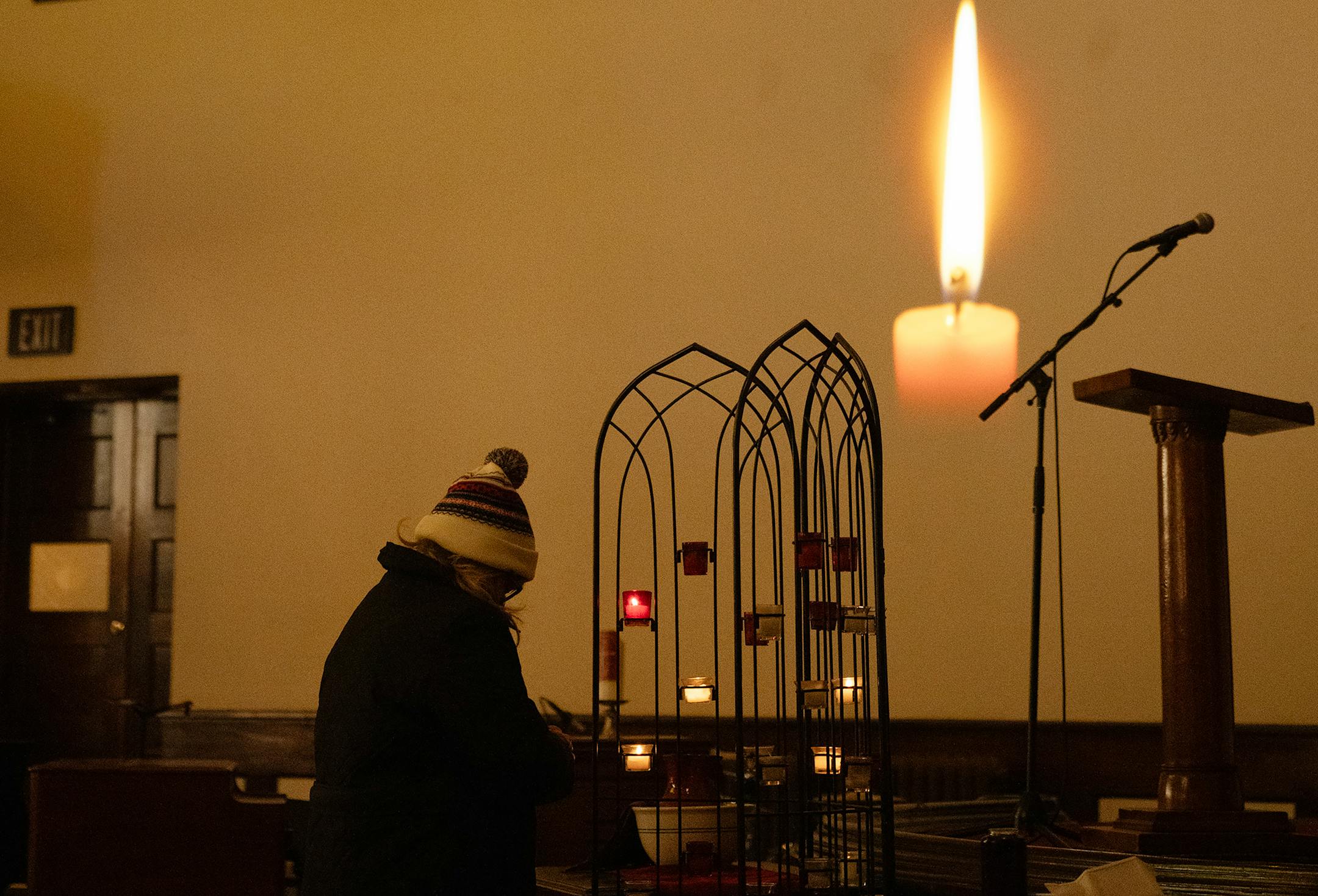
A woman lights a candle at Calvary Baptist Church in the Whittier neighborhood of south Minneapolis on Sunday, Jan. 25. The church opened its doors offering refreshments and a place to pray for the community in the wake of the killing of Alex Pretti by federal agents. (Jerry Holt/The Minnesota Star Tribune)

Ravi and Fiona Pradhan carried a white plastic bag and trash grabber around the Whittier neighborhood on Jan. 25.

The two picked up garbage near the vigil for Alex Pretti, who was fatally shot by federal officers during an immigration enforcement action in Minneapolis on Jan. 24.

The couple, who live in the Lowry Hill East neighborhood, answered a call from members of the adjacent Whittier neighborhood to help clean up after protests.

“We have enough motivated and dedicated people to stand up,” Ravi Pradhan said about south Minneapolis. “It’s our city.”

He visited Pretti’s fourplex home on Garfield Avenue and dropped off the lyrics to a Les Miserable song after reading online about Pretti’s interest in the musical.

“It was striking, the ordinariness,” Ravi said. “He was just another [regular guy].”

The shooting and protests Saturday ruptured normal weekend rhythms in the Whitter neighborhood, home to the Minneapolis Institute of Arts and the restaurants of Eat Street. The neighborhood on the south side is Minneapolis’s second most populous, with more than 14,000 residents in 2022. It’s also diverse, with nearly half its residents being people of color.

On Sunday morning, barricades lingered in some alleys, a vigil site grew — and people looked for ways to help each other.
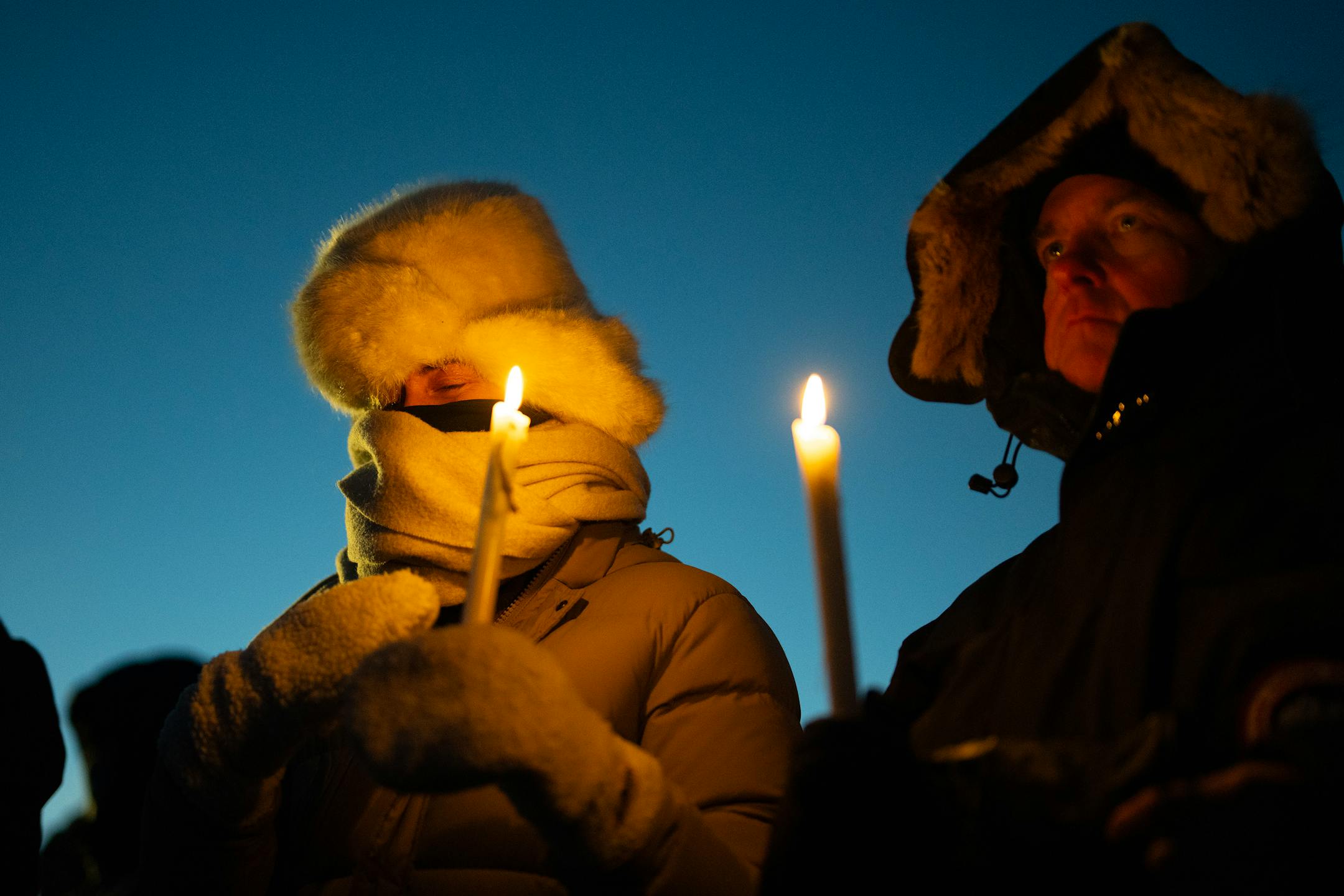
Pausing at the vigil site, Ravi Pradhan said the sense of community reminded him of what he saw after George Floyd’s murder in 2020.

People have flocked to Whittier since Pretti was shot, first to protest federal agents’ presence and then to a vigil in nearby Whittier Park on Saturday night. On Sunday, people arrived in small groups to pay their respects to Pretti, some holding protest signs and Minnesota flags. The neighborhood has welcomed them.

South Minneapolis, including the Whittier neighborhood, has felt the presence of U.S. Immigration and Customs Enforcement (ICE) since November. A person was detained in the parking lot of Calvary Baptist Church, located just two blocks from where Pretti was killed, in late December, according to church administrator Dean Caldwell-Tautges.

The church moved its Jan. 25 Sunday services to Judson Memorial Baptist Church due to safety and security concerns.

“Everyone’s angry, scared, fed up, tired,” Caldwell-Tautges said, “and continues to work for justice.”

The Sunday service had full pews with nearly 100 people in attendance between the two church congregations. Many cried under banners that read “social justice” and “hospitality.” Others, from as far away as New York, watched the church’s livestream and shared their support.

Christian Collins Winn, senior pastor, joined the church less than a year ago.

“We need to remember who we are,” he said. “Because if we give up on who we are, then that’s when it’s over. No one can take that from you.”

Travis Norvell, Judson Memorial Baptist Church’s pastor, used the service as a call to action for his members.

“Put on your high-vis vest of righteousness. As for your shoes, make sure they are snow boots with YakTrax on them,” he said. “Whatever will make you ready to proclaim the gospel of peace with all this, make sure that you have your phone so you can record the truth and stand up to the lies.”

Businesses open their doors

Many Eat Street restaurants became community centers on Sunday. Gina Christ, owner of the longstanding Black Forest Inn, opened her doors to serve free soup and coffee.

Christ said the model of George Floyd Square informed her idea to open as a free community space on Sunday instead of as a business.

“I thought it was a moral imperative,” Christ said. “I knew everyone was going to need a warm spot.”

Pimento Jamaican Kitchen opened its doors to protesters on Saturday as a place of respite from tear gas and noise.

“I was running a restaurant in a war zone,” said Tomme Beevas, Pimento’s chief strategy officer. Amid the chaos, he said he saw some hopeful moments of real conversation between police and protesters.

He pieced the restaurant back together late Saturday and early Sunday, bringing in the yellow tables and chairs that protesters had pulled out as barricades, and calling on friends and volunteers to help staff the kitchen. Beevas said he was planning a Sunday evening block party with more free food for neighbors and protesters.

“This is our block,” he said. “We show up and we are prepared to hold our community.”

Hundreds visit Pretti’s vigil, reflect

Neighbors said they were glad for a place to mourn at the vigil on 26th Street and Nicollet Avenue on Sunday.

After Pretti’s killing, one neighbor said, the vigil was a balm. “We needed to mourn together.”

Like many neighbors at the vigil, she asked not to be identified for fear of retribution after protesting and helping other demonstrators on Saturday.

Residents of nearly every apartment building near the scene of the shooting let protesters into their vestibules and hallways to escape tear gas, wash their eyes, charge their phones and warm up from the biting cold.

Monitoring ICE activity had become a routine in the neighborhood with many immigrant residents and immigrant-owned businesses, so it was not unusual to hear of observers and ICE on Nicollet Avenue.

Activists in the neighborhood were stressed even before the shooting, forming block clubs and Signal chats to watch for ICE and bring supplies to people who have been afraid to leave their homes.

Within 10 minutes of the shooting, one resident, who also requested anonymity, said there were hundreds of neighbors in the street asking for answers and helping anyone in need.

“People are showing up and this is one of the most incredible and resilient places,” he said, “It’s special, and I wouldn’t want to live anywhere else.”

about the writers

about the writers

Eleanor Hildebrandt

Reporter

Eleanor Hildebrandt is a reporter for the Minnesota Star Tribune.

See Moreicon

Josie Albertson-Grove

Reporter

Josie Albertson-Grove covers politics and government for the Star Tribune.

See Moreicon

More from News & Politics

See More
card image
card image