A program that provides support services to Minnesota children with autism has long faced scrutiny for possible Medicaid fraud over accusations of payment for services that were never provided.
Now, a long-awaited report has revealed widespread billing irregularities with the program, which grew exponentially in recent years.
Ninety percent of claims that Medicaid-funded autism intervention providers billed the state for over a four-year period veered from acceptable standards, according to the initial report from an outside firm tasked with improving state fraud protections. But state officials noted that doesn’t mean all of those claims are fraudulent.
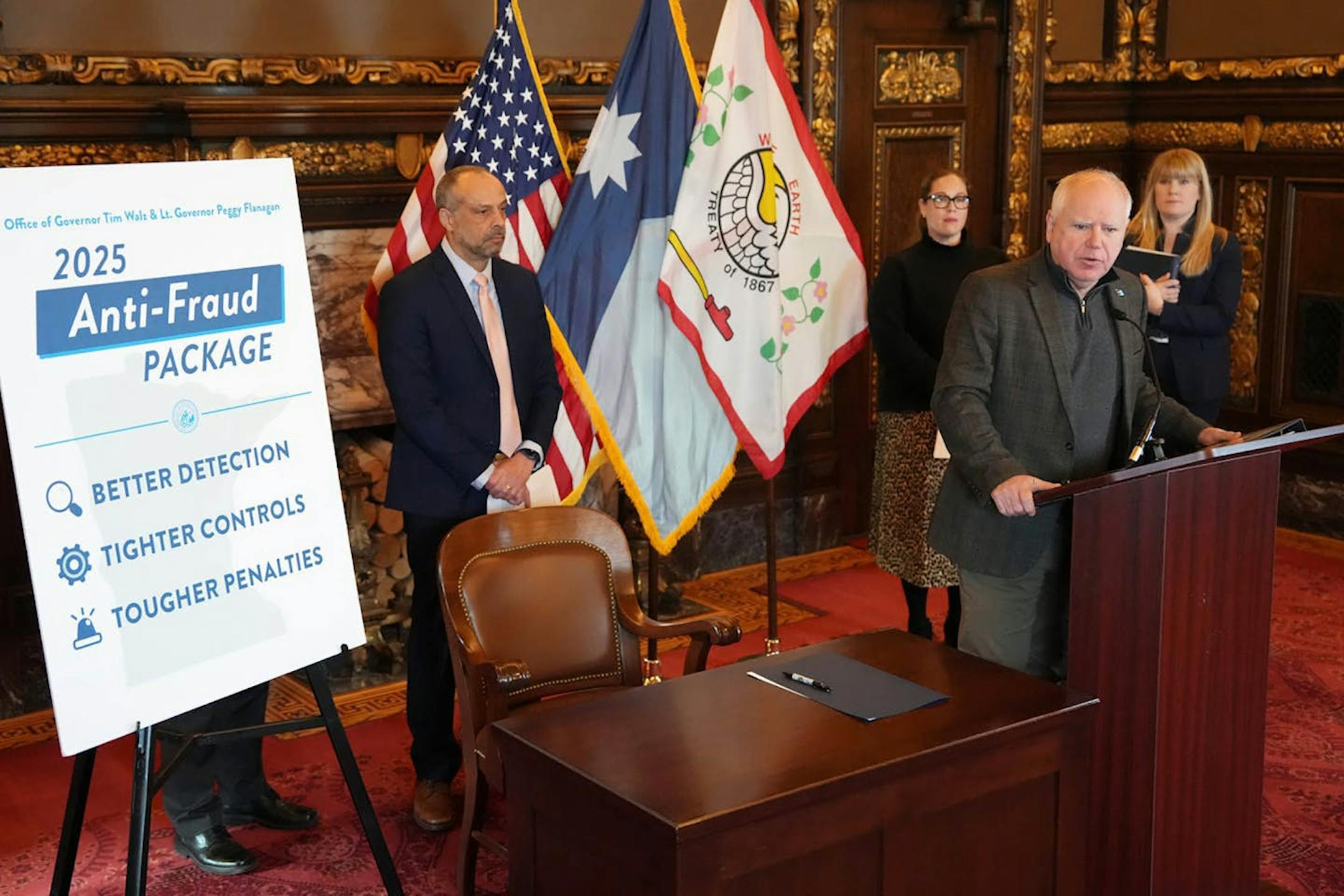
The staggering number of questionable autism claims is just one finding from the Feb. 6 report meant to help the Department of Human Services strengthen its fraud-fighting measures. The agency is contending with a massive welfare scandal that prosecutors say could total billions of dollars in stolen funds. President Donald Trump has pointed to the situation as a reason to send thousands of federal agents to Minnesota.
In October, the state contracted with Optum, a subsidiary of UnitedHealth Group, to spend a year reviewing and developing a stronger oversight system for payments in Medicaid programs.
John Connolly, the agency’s deputy commissioner and state Medicaid director, said at a Feb. 6 news briefing that the department continues to share fraud allegations with the state Attorney General and U.S. Attorney’s Office, but mass resignations of federal prosecutors have complicated efforts to prosecute fraud in Minnesota.
“We’re forwarding the information, as we always have, in the usual channels,” Connolly said. “Who’s receiving that information, and who’s investigating at the U.S. Attorney’s Office? We’re just not sure at this point, given how many folks have departed that office.”
Optum’s findings
DHS publicized the Optum report about a month later than anticipated. The state tasked the firm with conducting a comprehensive evaluation of fraud, waste and abuse in 14 services deemed high risk for misconduct. Those include nonemergency medical transportation, peer recovery support for people with substance use disorder, early autism interventions and a range of other disability services.