Fraud concerns delay funding for above-board home care providers

Home care was one of 14 human services programs the state froze payments to amid a massive fraud scandal. Now, providers not accused of wrongdoing say they can’t afford to stay open.

The Minnesota Star Tribune
January 20, 2026 at 11:30AM
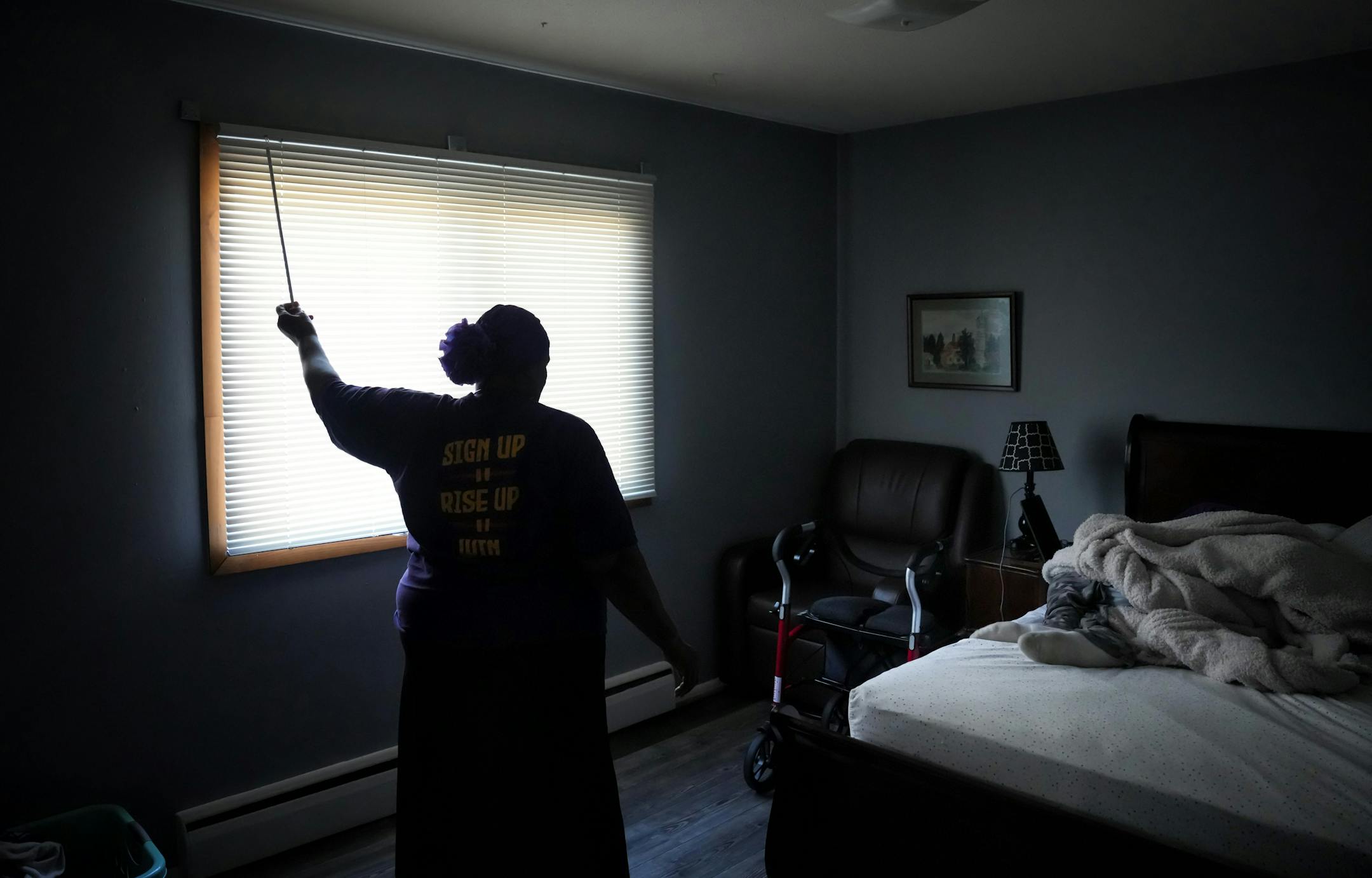
Home care worker Debra Howze opens a client's blinds as she gets him up for breakfast in 2024. (Glen Stubbe)

The widespread fraud that has roiled state programs meant to help Minnesota’s most vulnerable residents could have an unexpected consequence: the looming loss of legitimate home care providers.

A pause in state Medical Assistance payments to businesses that bathe, dress, feed and transport adults who cannot care for themselves is pushing some to the brink of closure.

Home care was one of 14 social services programs that the state froze payments to last year amid a massive fraud investigation that’s attracted national scrutiny, including from the Trump administration.

But what was supposed to be a prepayment review of funds to combat fraud instead froze money that providers need to make payroll.

At Heartland PCA in Duluth, time ran out. They closed for good this week.

“I didn’t see it coming,” said Anna Buchanan, CEO of the company that has 400 clients, 450 employees and provides services in 32 counties. “But I did not drop the ball on this. I did everything in my power.”

Last year, Gov. Tim Walz issued an executive order that directed Minnesota’s Department of Human Services (DHS) to take several measures to combat fraud in social services programs. Federal prosecutors said billions of dollars in taxpayer money may have been abused in the 14 programs.

But as a result, a prepayment review process rolled out differently than what providers expected, delaying payments, said Kathy Messerli, executive director of the Minnesota Home Care Association. Some providers have waited more than a month for state reimbursement, and some workers have gone weeks without pay, she added.

In a business where profit margins are slim and many personal care assistants make $20 or less an hour, the freeze is forcing some providers to scramble to keep their doors open.

Messerli’s group and other provider associations warned the DHS commissioner in a letter that other small and midsize providers will be forced to close their doors, too. Thousands of individuals with disabilities and older Minnesotans will lose access to critical services, they wrote, shifting the burden back onto emergency rooms and state-run institutions at a significantly higher cost to taxpayers. They urged the state to issue emergency payments for December claims.

In a statement, DHS officials said: “We know payment delays can cause real challenges for many providers we work with, the majority of whom are legitimate businesses that work hard to provide important services to Minnesotans.”

The officials said they don’t have a way to expedite payments to individual providers, “but we are committed to making the pre-payment review process as efficient as possible for legitimate providers so that they can continue their important work.”

In Duluth, Buchanan said she couldn’t wait for state reimbursements any longer, and she took out a line of credit so none of her employees at Heartland PCA went without pay. Heartland’s payroll was about $400,000 every two weeks.

Now, Buchanan said, she’s spent the past week finding new providers for clients and new employers for her workers.

Meghann Hussman, owner of Bella Mente, a home care provider in Bovey, Minn.

At Bella Mente, a home care provider in Bovey, Minn. with 140-210 employees and up to 300 clients, owner Meghann Hussman is also taking out a loan — a mortgage on her previously paid-for house — to pay her workers. It shouldn’t have been necessary, she said. The state should have done more to weed out fraud without a freeze.

“This isn’t about stopping fraudsters. Instead, it’s hurting providers who do the right thing because of some bad actors,” Hussman said. “This is squeezing us.”

In its review process, the DHS will send batches of claims every two weeks to a third party for analysis. Those needing further review will be flagged, officials said. Those that do not will be paid in regular two-week cycles.

But providers say it wasn’t just the freeze that hurt them, it was the timing. State Rep. Natalie Zeleznikar, a Republican representing an area outside Duluth, said the DHS changed the billing cycle for reimbursement to Dec. 23. But 40% of providers submitted claims Dec. 24-25.

That’s added additional hardship to the freeze, she said.

Zeleznikar also wonders why a freeze to review payments was necessary. She said the department can already review billing to ensure home care companies are providing the services for which they’re being paid.

“People are really wondering why this was necessary,” she said. “Why are good providers being punished?”

Both she and Messerli say they have been in discussions with DHS officials to get some payments to providers soon.

Some money from December has gone out, Messerli said. But another possible freeze because of fraud — this one from federal officials — might be coming next, she said.

The state is appealing the federal funding freeze, which could amount to more than $2 billion a year in Medicaid funding to Minnesota. Federal officials say the state isn’t complying with rules to protect taxpayer dollars while state officials have called the federal funding freeze “legally baseless” and politically motivated.

about the writer

about the writer

James Walsh

Reporter

James Walsh is a reporter covering social services, focusing on issues involving disability, accessibility and aging. He has had myriad assignments over nearly 35 years at the Star Tribune, including federal courts, St. Paul neighborhoods and St. Paul schools.

See Moreicon

More from News & Politics

See More
card image
Renée Jones Schneider/The Minnesota Star Tribune

Minnesota Attorney General Keith Ellison, along with the cities of Minneapolis and St. Paul, sued the federal government in an attempt to end ICE’s Operation Metro Surge.

card image
card image