
Transit providers say fraud claims could threaten a struggling industry, especially in rural Minnesota

Thousands of Minnesotans rely on the Medicaid-funded transportation program to get to medical appointments.

January 17, 2026 at 12:00PM
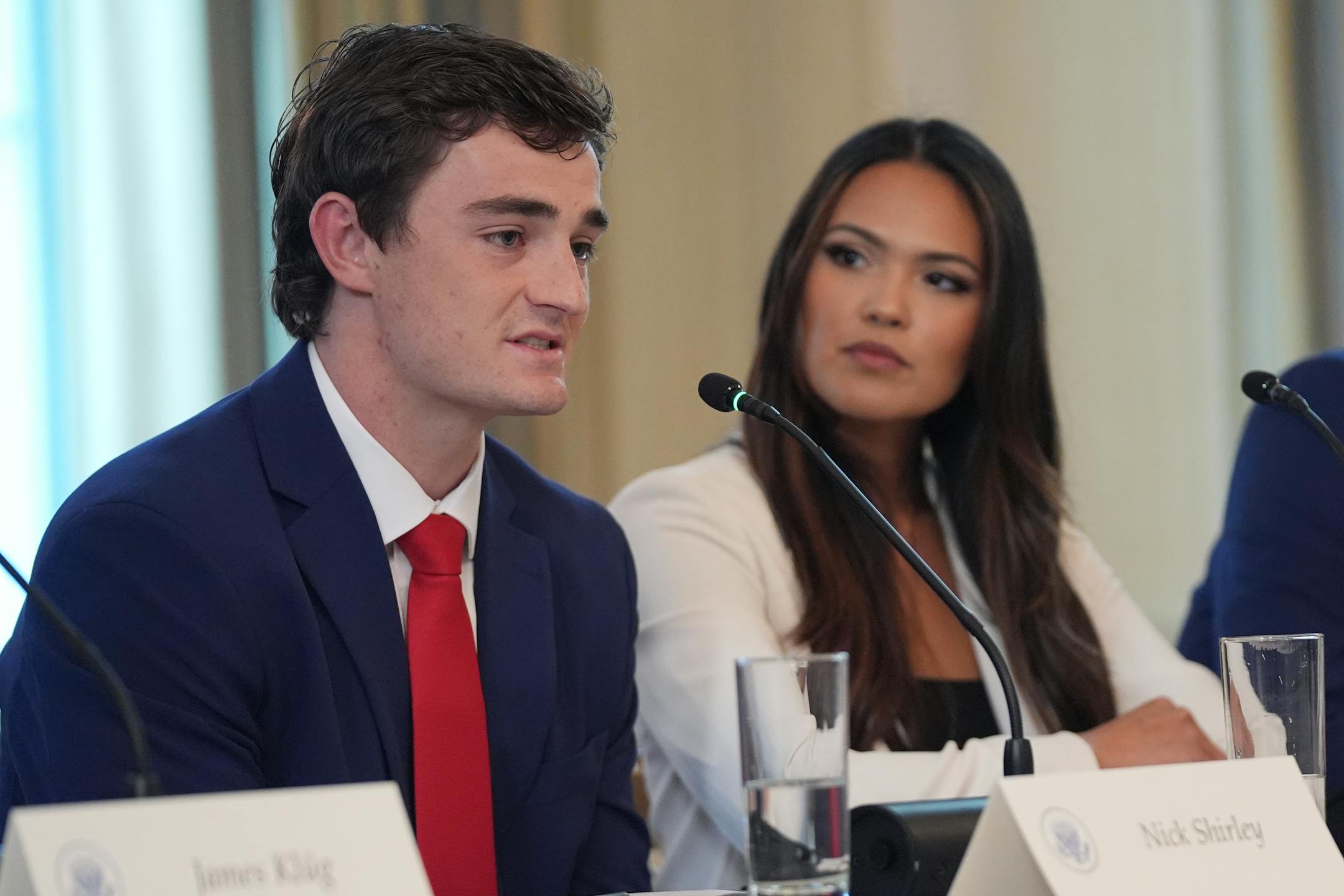
Nick Shirley speaks during a roundtable meeting with President Donald Trump on antifa in the State Dining Room at the White House, Wednesday, Oct. 8, 2025, in Washington, as Savanah Hernandez listens. (AP Photo/Evan Vucci)
Nick Shirley speaks during a roundtable meeting hosted by President Donald Trump in 2025. (Evan Vucci/The Associated Press)

Providers who ferry patients to medical appointments across Minnesota say they’re worried about their survival as scrutiny on the Medicaid-funded program intensifies.

The federally mandated program, known as nonemergency medical transportation, helps thousands of people who lack transit options get to everything from dentist visits to dialysis appointments.

Some providers have for years sounded alarms about peers bilking the program — one of 14 that Gov. Tim Walz flagged last year as vulnerable to fraud as his administration contends with a massive welfare scandal engulfing Minnesota social services that could total billions of dollars.

Scrutiny on the state’s hundreds of providers intensified Jan. 14 after a right-wing YouTuber asserted with minimal evidence that some Medicaid-funded transit providers in Minneapolis and its suburbs are billing the state for rides they’re not providing.

It’s just the latest hurdle for the service: In early January, the state froze enrollment of new providers in the transit program and a slew of other welfare initiatives as part of its anti-fraud push. The federal government has also pledged to withhold millions in Medicaid funding to Minnesota as the Trump administration blasts state leaders for the fraud, using it as a reason to send thousands of federal immigration enforcement agents to Minnesota.

Prosecutors previously charged several people with billing for trips that never happened after a multiyear investigation. But advocates for transit services questioned conservative YouTuber Nick Shirley’s conclusions that widespread wrongdoing is proliferating in a service they say is struggling to stay alive.

“I think that these allegations would lead to even more obstacles put in the way of people who actually need the care,” said Jordan Niles, a public health planner in Faribault and Martin counties. “It’s incredibly frustrating, considering we already have so many hoops to jump through just to get our people care.”

On Jan. 16, a state spokesperson confirmed that all five providers Shirley visited in the Twin Cities didn’t receive any Medicaid payments over the last seven years. And three of them aren’t even enrolled in the transit program that Shirley claims is fraud-ridden.
Providers dispute fraud allegations

Some 339 companies across the state — from rural greater Minnesota to the dense Twin Cities metro — are enrolled in the transit program, according to a Department of Human Services (DHS) spokesperson. They collectively billed the state around $80 million in 2018, DHS data shows. That number shot up to $115 million in 2024 before dipping to 2018-era levels last year.

Shirley, who asserted in an earlier viral video that Somali-run day cares were operating improperly, nevertheless casts the transit providers as compromised. His evidence: Snow-covered vans in parking lots suggest to him that drivers aren’t working, and addresses bring him to places that aren’t obviously transit providers, like a store with mailboxes. All of the groups he singled out appear to be run by East Africans.

The Minnesota Star Tribune contacted all the providers Shirley visited. Most didn’t return requests for comment. Fuad Omar, the president of one provider featured in the video called Safaari Transportation LLC, denied the fraud allegations and clarified the group provides transit services to charter and private schools, not medical appointments as Shirley asserted.

Omar said Shirley visited an old address that the New Brighton-based provider hasn’t occupied since 2018, which explains why he couldn’t find the service.

“Our company was included in this report in error,” Omar wrote in an email to the Minnesota Star Tribune. “We are a legitimate business that has safely transported students for over ten years.”

A DHS spokesperson said Safaari Transportation isn’t enrolled in the Medicaid-funded transit program.

DHS Inspector General James Clark said in a statement that the department is following up with the businesses Shirley named, noting “the video contained speculation, but no evidence that the state was billed for services that were not provided.”

While officials work through the allegations, providers across Minnesota are left to deal with the fallout of a viral video that, they say, could create yet another challenge for a program that’s long faced limited resources. And while some acknowledge wrongdoing exists, they claim Shirley misrepresented the scope of the problem.

Patients face fallout

Scott Isaacson, who runs Pine City-based Lifts Transportation, has watched Shirley’s video three times, each review leaving him increasingly uneasy.

Isaacson has been in the business for 17 years, and he’s adamant that authorities root out fraud. But Shirley’s video, he said, missed the mark.

“We’re all being blanketed as fraudulent,” he said. “And that’s just not the case.”

He pushed back on several claims from Shirley and David Hoch, a failed gubernatorial candidate and self-styled watchdog who also appeared in the YouTuber’s first video. Hoch, for instance, asserts that providers are electronically sending drivers’ mileage to the state and immediately receiving payments.

Isaacson said that’s not how it works.

“There’s more to it than what they alluded to,” he said. “I’m not saying there’s not some degree of fraud going on there, but it’s not happening the way they’re trying to purport it to happen.”

Those specious claims — plus the Trump administration’s threat to freeze Medicaid payments and the shuttering of UCare, a nonprofit health insurer that helped fund transit providers — has left Isaacson fearing for his service’s survival.

“My concern is I’m not going to be able to last,” said Isaacson, who added that he’s had to run two other businesses to make ends meet. He worries most about the impact these compounding pressures — Shirley’s video, funding freezes — could have on patients.

“The people who are really going to pay for this are people who live in rural communities,” he said. “They don’t have a bus, they don’t have public transit, they don’t have Uber, Lyft. All they have is a company like mine to take them to their necessary appointments.”

‘Stripped of all their credibility’

Mark Jones, executive director of the Minnesota Rural Health Association, said potential wrongdoing among providers greatly concerns him.

But Jones said he’s frustrated that it took a YouTube video with 1.2 million views and counting to bring attention to a program facing challenges that have nothing to do with fraud.

Among them: The cost of providing a ride far exceeds the amount of Medicaid reimbursements to providers, who aren’t paid for miles when patients aren’t in the car. Meanwhile, lawmakers recently passed a bill affecting transit providers that politicians claimed would save some $50 million. Jones said that’s made it even more difficult for rural providers to do their jobs.

Jones said three providers that offer thousands of lifts in greater Minnesota were already considering shutting down. Then came Shirley’s video.

“There’s been fraud for years in this program, but this industry has now been stripped of all their credibility,” Jones said, before adding: “We need to protect it and preserve the industry, and we need to make sure that it has good, strong oversight and support from our state. At the end of the day, it’s the people who need the service that need to be the focus of this.”

about the writers

about the writers

Eva Herscowitz

Reporter

Eva Herscowitz covers Dakota and Scott counties for the Star Tribune.

See Moreicon

Eleanor Hildebrandt

Reporter

Eleanor Hildebrandt is a reporter for the Minnesota Star Tribune.

See Moreicon

More from News & Politics

See More
card image
Alex Brandon/The Associated Press

Before threatening the Insurrection Act, Trump officials privately strategized about using the Alien Enemies Act to detain people in Chicago, according to Signal messages reviewed by the Star Tribune.

card image